
Business
Dr. Fauci accused of wasting millions in taxpayer dollars on ‘transgender animal experiments’

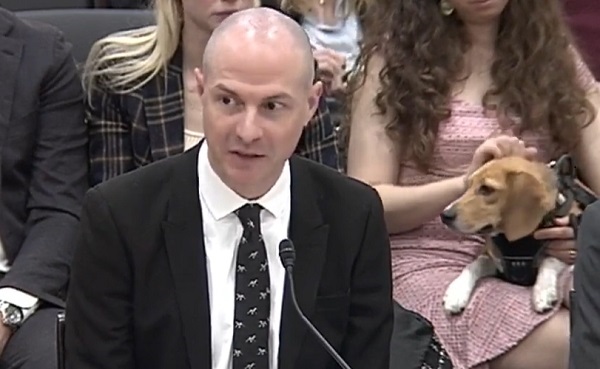

From LifeSiteNews

The days of animal testing may be numbered, having been found to be less reliable than other methods of research.
Experts speaking at a Republican-led congressional hearing revealed the shocking news that at least $10 million had been wasted by government health agencies on “transgender animal testing” and that the number was likely closer to a quarter billion dollars or more.
Justin Goodman, senior vice president of the White Coat Waste Project, shed light on the exorbitant waste of American tax dollars on barbaric animal research that has prioritized woke societal trends over scientific outcomes.
“In our analysis, Dr. (Anthony) Fauci funded about 95% of the transgender animal experiments,” Goodman said.
Goodman told members of the Subcommittee on Cybersecurity, Information Technology, and Government Innovation, chaired by Republican Rep. Nancy Mace of South Carolina, that in his estimation $241 million has been spent on transgender animal testing, adding, “I would say that is the floor, not the ceiling because the information on federal databases is pretty incomplete.”
He described the nature of the transgender experimentation inflicted on the animals:
In a lot of these cases, there are involved mice, rats, monkeys who are being surgically mutilated and subjected to hormone therapies to mimic female to male, or male to female gender transitions … gender-affirming hormone therapies, and then looking at the biological, psychological, and physiological effects of the gender transitions, looking at the effects of taking vaccines after you’ve transitioned these animals from male to female or female to male, looking at the size of their genitals changing after you’ve put them on estrogen or testosterone therapies to transition them.
Rep. Mace explained – and Goodman confirmed – that “DEI grants” included “$1.1 million spent to find out if female rats receiving testosterone therapies to mimic transgender men were more likely to overdose on a party drug commonly used in the LGBTQ community to induce drug-fueled ‘chemsex.’”
Goodman said that the reason the public doesn’t know about these sadistic experiments is that “You essentially need a degree in information technology to navigate the federal spending databases to find any of this stuff.”
“It’s by design,” he added.
Fauci’s barbaric animal testing could lead to a new, deadly pandemic
Goodman went on to point his finger squarely at Dr. Fauci and his U.S.-funded virus research at China’s Wuhan lab and warned about dire future public health risks of continuing with outrageous animal studies.
“We’re flirting with disaster if we continue to fund dangerous virus research,” Goodman said, “like in Colorado where Fauci greenlit this bat lab.”
“They’re trying to import hundreds of bats from Asia (and) build a new lab in Colorado to do virus experiments with Ebola, Nipah, Lassa – deadly viruses for which there is no cure,” he explained.
“It’s just a matter of time before we have another pandemic on our hands if we let mad scientists run amok with our money,” Goodman warned.
Most of the 27 NIH institutes and centers conduct or support animal testing – as does the Food and Drug Administration, the U.S. Department of Agriculture, the Department of Veterans’ Affairs, the Department of Defense, and countless agencies.
Mace’s committee reported that the U.S. government spends in excess of $20 billion every year conducting experiments on animals.
The White Coat Waste Project found in 2021 that the National Institute of Allergy and Infectious Diseases, a component of NIH at the time run by Fauci, spent $1.68 million force-feeding toxic drugs to beagle puppies between six and eight months old before dissecting and killing them.
In 2022, due to public criticism lobbied against Fauci’s HIH by me and other members of Congress, another $1.8 million experiment to abuse beagle puppies in various drug tests was cancelled.
The days of animal testing may be numbered, having been found to be less reliable than other methods of research.
“Scientific progress has given us better tools for toxicology and biomedical research, making animal testing increasingly outdated,” said Dr. Paul Locke, a professor at Johns Hopkins Bloomberg School of Public Health who also testified at the hearing.
“Embracing these alternatives is a win-win,” Locke said. “It reduces animal use while providing data that better reflects human health.”


A new program funded by the Sustainable Canadian Agricultural Partnership will accelerate expansion in Alberta greenhouses and vertical farms.
Albertans want to keep their hard-earned money in the province and support producers by choosing locally grown, high-quality produce. The new three-year, $10-milllion Growing Greenhouses program aims to stimulate industry growth and provide fresh fruit and vegetables to Albertans throughout the year.
“Everything our ministry does is about ensuring Albertans have secure access to safe, high-quality food. We are continually working to build resilience and sustainability into our food production systems, increase opportunities for producers and processors, create jobs and feed Albertans. This new program will fund technologies that increase food production and improve energy efficiency.”
“Through this investment, we’re supporting Alberta’s growers and ensuring Canadians have access to fresh, locally-grown fruits and vegetables on grocery shelves year-round. This program strengthens local communities, drives innovation, and creates new opportunities for agricultural entrepreneurs, reinforcing Canada’s food system and economy.”
The Growing Greenhouses program supports the controlled environment agriculture sector with new construction or expansion improvements to existing greenhouses and vertical farms that produce food at a commercial scale. It also aligns with Alberta’s Buy Local initiative launched this year as consumers will be able to purchase more local produce all year-round.
The program was created in alignment with the needs identified by the greenhouse sector, with a goal to reduce seasonal import reliance entering fall, which increases fruit and vegetable prices.
“This program is a game-changer for Alberta’s greenhouse sector. By investing in expansion and innovation, we can grow more fresh produce year-round, reduce reliance on imports, and strengthen food security for Albertans. Our growers are ready to meet the demand with sustainable, locally grown vegetables and fruits, and this support ensures we can do so while creating new jobs and opportunities in communities across the province. We are very grateful to the Governments of Canada and Alberta for this investment in our sector and for working collaboratively with us.”
Sustainable Canadian Agricultural Partnership (Sustainable CAP)
Sustainable CAP is a five-year, $3.5-billion investment by federal, provincial and territorial governments to strengthen competitiveness, innovation and resiliency in Canada’s agriculture, agri-food and agri-based products sector. This includes $1 billion in federal programs and activities and $2.5 billion that is cost-shared 60 per cent federally and 40 per cent provincially/territorially for programs that are designed and delivered by provinces and territories.
Quick facts
- Alberta’s greenhouse sector ranks fourth in Canada:
- 195 greenhouses produce $145 million in produce and 60 per cent of them operate year-round.
- Greenhouse food production is growing by 6.2 per cent annually.
- Alberta imports $349 million in fresh produce annually.
- The program supports sector growth by investing in renewable and efficient energy systems, advanced lighting systems, energy-saving construction, and automation and robotics systems.
Related information


Beware of government promises that arrive gift-wrapped in moral certainty.
The pattern repeats across the sector: subsidies extracted, production scaled back, workers laid off, taxpayers absorbing losses while executives collect bonuses and move on, and politicians pretend that it never happened. CBC isn’t asking Justin Trudeau, Katherine McKenna or Steven Guilbeault any questions about it. They are not asking Mark Carney.
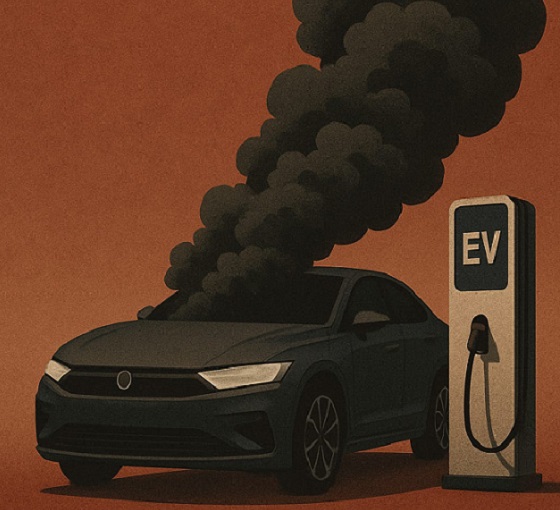
Buy an electric vehicle, they said, and you will save the planet, no questions asked. Justin Trudeau and several of his ministers proclaimed it from podiums. Environmental activists, often cabinet members, chanted it at rallies. Automotive executives leveraged it to extract giant subsidies. For over a decade, the message never wavered: until $50 billion in public money disappeared into corporate failures, and the economic wreckage became impossible to ignore.
Prime Minister Mark Carney, himself a spokesperson for the doomsday culture, inherited the policy disaster from Trudeau and still clings to the wreckage. The 2026 EV sales target sits suspended, a grudging acknowledgment that reality refused to cooperate with radical predictions and Ottawa’s mandates. Yet the 2030 and 2035 targets remain federal law, monuments to a central-planning exercise that delivered the opposite of what it promised.
Their claims were never quite true. Electric vehicles were pure good. They were marketed as unconditionally cleaner than conventional cars, a transformation so obviously beneficial that questioning it invited accusations of climate denial. Government messaging suggested switching to an EV meant immediate environmental virtue. The nuance, the conditions, and the caveats were conveniently omitted from the government sales pitch that justified tens of billions of your money into subsidies for foreign EV manufacturing and corporate advancement.
The Reality Ottawa Is Hiding
Research documented the conditional nature of EV benefits for over a decade, yet Ottawa proceeded as if the complexity didn’t exist. Studies from China, where coal dominates electricity generation, showed as early as 2010 that EVs in coal-dependent regions had “very limited benefits” in reducing emissions compared to gasoline vehicles. In Northern China, where electricity generation is over 80% coal-based, EVs could produce lifecycle emissions comparable to or even higher than those of conventional cars. A 2015 Chinese study found that EVs generated lifecycle emissions that were only 18% lower than those of gasoline vehicles, compared to 40-70% reductions in regions with cleaner grids.
Volvo began publishing transparent lifecycle assessments for its first EV in 2019, making it the first major automaker to document the significant upfront emissions from battery production publicly. Their 2021 C40 Recharge report, released during the COP26 climate summit in Glasgow, revealed that manufacturing an EV produces 70% more emissions than building a comparable conventional vehicle. But there are no CBC reports about that. The Volvo report showed that an EV charged on a coal-heavy global grid required 68,000 to 110,000 miles of driving to break even with a conventional car, potentially more than half the vehicle’s usable lifetime. For drivers with low annual mileage in regions with dirty electricity grids, that breakeven point could take six to nine years to reach, if ever.
Battery manufacturing location proved enormously consequential. Production in China, powered by coal, generates 60-85% higher emissions than manufacturing in Europe or the United States. Yet Canadian subsidies flowed to companies regardless of where batteries were made or where vehicles would be charged. The federal government committed over $50 billion without requiring the environmental due diligence that should precede such massive public investment.
The Canadian government never acknowledged Volvo’s findings. Not once. A search of federal policy documents, ministerial statements, and environmental assessments from 2019 forward reveals no mention of the lifecycle complexities Volvo documented. Ottawa’s silence on inconvenient research speaks loudly about how ideology trumped evidence in shaping EV policy.
You want to build a pipeline in Canada. There will be 8 to 10 years of red tape and environmental impact assessments. But if you say you want to make EVs, Laurentian provincial premiers and the feds will bend over backwards. They handed over billions while the economy and social conditions in their cities decayed.
The environmental promise was conditional: clean electricity grids, high annual mileage, manufacturing in regions with low-carbon energy, and vehicles driven long enough to offset the massive carbon debt from battery production. Remove those conditions, and the environmental case collapses. The subsidies, however, remained unconditional.
The Subsidies Flow, The Companies Fail
Corporate casualties now litter the landscape. Northvolt received $240 million in federal subsidies to build a Quebec battery plant before filing for bankruptcy protection in November. Lion Electric, Quebec’s homegrown EV manufacturer, burned through $100 million in government support before announcing massive layoffs and production cuts. Arrival, which secured subsidies for its electric van facility, collapsed entirely, leaving taxpayers with nothing but broken promises.
Stellantis and LG Energy Solution extracted $15 billion, the most extensive corporate handout in Canadian history, for their Windsor battery plant. Volkswagen secured $13 billion for St. Thomas. Provincial governments layered on additional incentives. The public investment dwarfed any plausible return, yet the money kept flowing based on environmental claims the government either never bothered to verify or suppressed from its own documents and reports.
Despite this flood of subsidies and regulatory coercion, Canadian consumers rejected the offering. Even with massive incentives, EVs accounted for only 15% of new vehicle sales in 2024, far short of the mandated 20% target for 2026, let alone the 60% demanded by 2030. When federal subsidies ended in early 2025, sales collapsed to 9%, revealing the limited consumer demand. Dealer lots overflow with unsold inventory. Manufacturers scaled back production plans. The market spoke; Ottawa is only half listening.
The GM plant in Oshawa serves as a cautionary tale. Thousands of jobs lost. Promises of green manufacturing jobs evaporated. Workers who believed government assurances that EV mandates would secure their livelihoods found themselves unemployed as companies redirected production or collapsed entirely. The pattern repeats across the sector: subsidies extracted, production scaled back, workers laid off, taxpayers absorbing losses while executives collect bonuses and move on, and politicians pretend that it never happened. CBC isn’t asking Justin Trudeau, Katherine McKenna or Steven Guilbeault any questions about it. They are not asking Mark Carney.
The Central Planning Failure
The EV disaster illustrates why economies run by political offices never succeed. Friedrich Hayek observed that “The curious task of economics is to demonstrate to men how little they really know about what they imagine they can design.” Politicians and bureaucrats in Ottawa do not possibly possess the dispersed knowledge embedded in millions of individual economic decisions. But they think that they do.
Markets aggregate information that no central planner can access. Consumer preferences for vehicle range, charging convenience, and total cost of ownership. Regional variations in electricity generation and the pace of grid decarbonization. Battery technology improvements and supply chain vulnerabilities. Resource constraints and mining capacity. These factors interact in ways too complex for any cabinet planning committee to comprehend, yet Ottawa presumed to mandate outcomes a generation in advance.
Federal ministers with no experience in automotive manufacturing or battery chemistry presumed to direct the transformation of a trillion-dollar industry. Career bureaucrats drafted regulations determining which vehicles Canadians could purchase years hence, as if they possessed prophetic knowledge of technological development, grid decarbonization rates, consumer preferences, and global supply chains.
The EV mandate attempted to force a technological transition. It was an economic coup. Environmental claims proved conditional at best. Billions in subsidies flowed to failing companies. Taxpayers absorbed losses while corporations extracted rents and walked away. It worked well for the corporations, but the coup failed Canadians and Canadian workers. They are not building back better.
Green ideology provided perfect cover for this overreach. Invoke climate emergency, and fiscal responsibility vanishes. Question subsidies and you’re labelled a denier. Point out that environmental benefits depend on specific conditions, and you’re accused of spreading misinformation. The rhetorical shield, aided and abetted by a complicit media unable to see past its own financial interests, allowed government to bypass scrutiny that should attend any massive industrial policy intervention.
The Trust Deficit
As Canadians learn that EV environmental benefits depend heavily on electricity sources and driving patterns, as they watch subsidized companies collapse, as they discover how thoroughly the promise was oversold and how completely Ottawa ignored contrary evidence, trust in government erodes. This badly needed skepticism will spread beyond EVs and undermine legitimate government functions.
It would be good if future government claims about environmental policy face rising skepticism. Corporations wrapping themselves in green rhetoric may be viewed as con artists. Environmental activists who championed these policies may see their credibility destroyed. When citizens conclude their government systematically misled them about costs, benefits, and basic facts while suppressing inconvenient research, liberal democracy itself suffers. But that may not happen at all in Laurentian LaLa-land or in the Pacific Lotusland.
Over fifty billion dollars are distributed among local and foreign industrialists, while tens of thousands live in tents in Laurentian cities.
The EV debacle demonstrates that overselling policy benefits, suppressing complexity, and using ideology to short-circuit debate produce a backlash far worse than honest acknowledgment of nuance would have. The damage compounds when governments commit billions based on conditional environmental claims they never verified, then remain silent when industry-leading manufacturers publish data revealing those conditions.
The Path Forward
Canada needs a full repeal of the EV mandate and a complete retreat from Ottawa directing market decisions. The EV law must be struck, not merely paused. The 2030 and 2035 targets must be abandoned entirely. No new subsidies for EV production (or any other production). No bailouts for failed battery plants. No additional funds for charging infrastructure. And absolutely no subsidies for conventional or hybrid vehicle production justified by the same environmental complexity that should have prevented EV mandates in the first place.
Let markets determine which technologies Canadians choose. If EVs deliver genuine value for specific consumers in specific circumstances—those with clean electricity grids, high annual mileage, and long vehicle ownership timelines—those consumers will buy them without mandates or subsidies. If hybrids or improved conventional vehicles better serve other consumers’ needs, manufacturers will produce them without government direction.
The aggregated wisdom of millions of economic actors making decisions based on their actual circumstances will produce better outcomes than any planning committee in Ottawa. Some Canadians will find EVs deliver environmental and financial benefits. Others will not. Both conclusions can be correct simultaneously, a nuance Ottawa spent $50 billion refusing to acknowledge.
Markets work because no one has to know everything. Central planning fails because someone must. I wish I could say that Ottawa has learned this lesson the expensive way. Or whether Laurentians will remember it at the next election. Or whether the same politicians and bureaucrats who delivered this disaster will identify the next technology to mandate and subsidize, armed with new promises that reality will eventually expose as conditional at best.
But let’s keep our dreams in check. It seems more likely, given their ideological make-up and propensities for certainty, that low-information Laurentian and Pacific Coast voters will go right for the next green-washed fantasy that the feds and provincial governments will put in front of them, provided it is coiled into a catchy slogan.
Subscribe to Haultain Research.
For the full experience, and to help us bring you more quality research and commentary,
please upgrade your subscription.

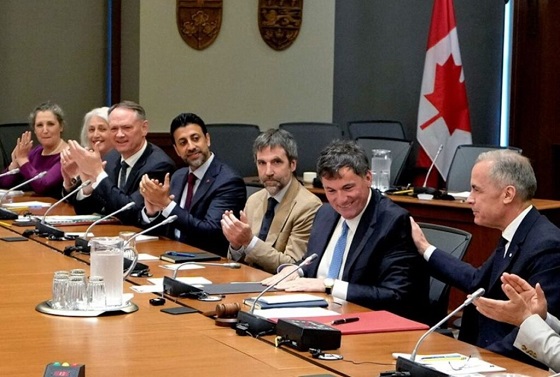
Carney’s Toronto cabinet meetings cost $530,000

The Trickster Politics of the Tanker Ban are Hiding a Much Bigger Reckoning for B.C.

Integration Or Indignation: Whose Strategy Worked Best Against Trump?

While Trump has southern border secure, hundreds of thousands of illegal immigrants still flooding in from Canada

Alberta will use provincial laws to stop Canadian gov’t from trying to confiscate legal firearms

Why Does Canada “Lead” the World in Funding Racist Indoctrination?
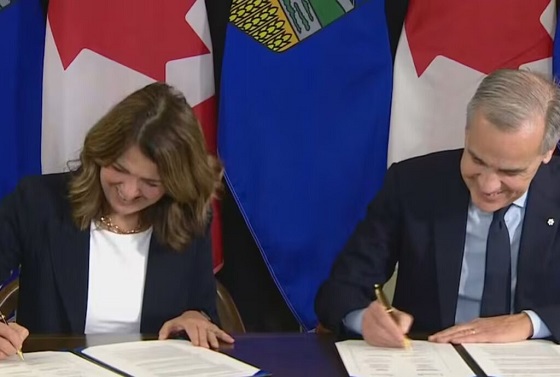
What the Data Shows About the New Canada-Alberta Pipeline Opportunity
-
 Crime2 days ago
Inside the Fortified Sinaloa-Linked Compound Canada Still Can’t Seize After 12 Years of Legal War
-
Automotive15 hours ago
The $50 Billion Question: EVs Never Delivered What Ottawa Promised
-
 Great Reset1 day ago
Proposed ban on euthanasia for mental illness sparks passionate debate in Canada’s Parliament
-
 Censorship Industrial Complex1 day ago
Liberals gain support for ‘hate speech’ bill targeting Bible passages against homosexuality
-
 Business1 day ago
Storm clouds of uncertainty as BC courts deal another blow to industry and investment
-
 National2 days ago
Liberal bill “targets Christians” by removing religious exemption in hate-speech law
-
 C2C Journal14 hours ago
Wisdom of Our Elders: The Contempt for Memory in Canadian Indigenous Policy
-
 Business2 days ago
Canada Can Finally Profit From LNG If Ottawa Stops Dragging Its Feet