
Economy
Deputy PM Freeland doesn’t deny Scott Moe could face charges for not collecting carbon tax


From LifeSiteNews

Premier Scott Moe’s refusal to force Saskatchewan residents to pay the tax comes after Prime Minister Justin Trudeau refused to extend the tax exemption to forms of heating used in Conservative provinces
The Canadian Liberal government refuses to rule out jail time for Saskatchewan Premier Scott Moe if he refuses to collect the carbon tax on home heating.
During a November 3 media meeting, Liberal Finance Minister and Deputy Prime Minister Chrystia Freeland avoided directly answering if Moe would be criminally charged for refusing to collect Trudeau’s controversial carbon tax for home heating within the province.
“What can the federal government do to prevent [Moe] from acting unilaterally?” a reporter questioned. “Will he, will the province, will anyone, incur penalties? Will there be fees? Or perhaps even jail time?”
Freeland did not answer the question directly, instead saying, “The federal government expects everyone in Canada to obey the law. Canada is a country of good peace, order, and good government.”
“I think that is something all Canadians believe in. That’s something we expect,” she added.
Moe’s refusal to force Saskatchewan residents to pay the tax comes after Prime Minister Justin Trudeau suspended his carbon tax last week on home heating oil amid rising costs of living and his decreasing popularity across multiple polls.
Moe pointed out that the tax exemption only applies to home heating oil, which is primarily used in Atlantic provinces, while other forms of heating, including natural gas (the main source of heat in Western provinces), is not exempt.
“I cannot accept the federal government giving an affordability break to people in one part of Canada but not here,” Moe said in a video posted October 30 on X.
“The prime minister chose to make life more affordable for families in one part of the country while leaving Saskatchewan families out in the cold,” he said.
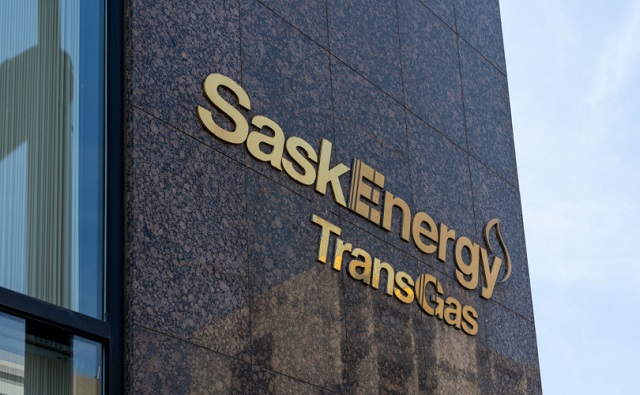
As a result, Moe promised that if the exemption was not extended to other forms of heating, he will direct SaskEnergy to stop collecting carbon tax on natural gas, “effectively providing Saskatchewan residents with the very same exemption that the federal government has given heating oil in Atlantic Canada.”
Following Moe’s demands, Trudeau declared that he will not make any further carve-outs to the carbon tax. Trudeau’s statement was supported by both Natural Resources Minister Jonathan Wilkinson and Environment Minister Steven Guilbeault.
Notably, Freeland’s comments come just months after she faced a massive speeding ticket when defending the Trudeau government’s carbon tax by saying that she does not own a car and bikes instead.
Trudeau’s carbon tax, framed as a way to reduce carbon emissions, has cost Canadians hundreds more annually despite rebates.
The increased costs are only expected to rise, as a recent report revealed that a carbon tax of more than $350 per tonne is needed to reach Trudeau’s net-zero goals by 2050.
Currently, Canadians living in provinces under the federal carbon pricing scheme pay $65 per tonne, but the Trudeau government has a goal of $170 per tonne by 2030.

This article supplied by Troy Media.
 By Pat Murphy
Generous social programs come with trade-offs. Pretending otherwise is political fiction
Nordic societies fund their own benefits through taxes and cost-sharing. Canadians expect someone to foot the bill
Like Donald Trump, one of my favourite words starts with the letter “T.” But where Trump likes the word “tariff,” my choice is “trade-off.” Virtually everything in life is a trade-off, and we’d all be much better off if we instinctively understood that.
Think about it.
If you yield to the immediate pleasure of spending all your money on whatever catches your fancy, you’ll wind up broke. If you regularly enjoy drinking to excess, be prepared to pay the unpleasant price of hangovers and maybe worse. If you don’t bother to acquire some marketable skill or credential, don’t be surprised if your employment prospects are limited. If you succumb to the allure of fooling around, you may well lose your marriage. And so on.
Failing to understand trade-offs also extends into political life. Take, for instance, the current fashion for anti-capitalist democratic socialism. Pushed to explain their vision, proponents will often make reference to the Nordic countries. But they exhibit little or no understanding of how these societies actually work.
As American economist Deirdre Nansen McCloskey notes, “Sweden is pretty much as ‘capitalistic’ as is the United States. If ‘socialism’ means government ownership of the means of production, which is the classic definition, Sweden never qualified.” The central planning/government ownership model isn’t the Swedish way.
What the Nordics do have, however, is a robust social safety net. And it’s useful to look at how they pay for it.
J.P. Morgan’s Michael Cembalest is a man who knows his way around data. He puts it this way: “Copy the Nordic model if you like, but understand that it entails a lot of capitalism and pro-business policies, a lot of taxation on middle-class spending and wages, minimal reliance on corporate taxation and plenty of co-pays and deductibles in its health care system.”
For instance, take the kind of taxes that are often derided as undesirably regressive—sales taxes, social security taxes and payroll taxes. In Sweden, they account for a whopping 27 per cent of gross domestic product. And some 15 per cent of health expenditures are out of pocket.
Charles Lane—formerly with the Washington Post, now with The Free Press—is another who pulls no punches: “Nordic countries are generous, but they are not stupid. They understand there is no such thing as ‘free’ health care, and that requiring patients to have at least some skin in the game, in the form of cost-sharing, helps contain costs.”
In effect, Nordic societies have made an internal bargain. Ordinary people are prepared to fork over large chunks of their own money in return for a comprehensive social safety net. They’re not expecting the good stuff to come to them without a personal cost.
Scandinavians obviously understand the concept of trade-offs, a dimension that seems to be absent from much of the North American discussion. Instead of Nordic-style pragmatism, spending ideas on this side of the Atlantic are floated on the premise of having someone else pay. And the electorally prized middle class is to be protected at all costs.
In the aftermath of Zohran Mamdami’s New York City win, journalist Kevin Williamson had a sobering reality check: “Class warfare isn’t how they roll in Scandinavia. Oslo is a terrific place to be a billionaire—Copenhagen and Stockholm, too … what’s radically different about the Scandinavians is not how they tax the very high-income but how they tax the middle.”
Taxation propensities aside, Nordic societies are different from the United States and Canada.
Denmark, for instance, is very much a “high-trust” society, defined as a place “where interpersonal trust is relatively high and ethical values are strongly shared.” It’s often been said that it works the way it does because it’s full of Danes, which is broadly true—albeit less so than it was 40 years ago.
Denmark, though, has no interest in multiculturalism as we’ve come to know it. Although governed from the centre-left, there’s no state-sponsored focus on systemic discrimination or diversity representation. Instead, the emphasis is on social cohesion and conformity. If you want to create a society like Denmark, it helps to understand the dynamics that make it work.
Reality intrudes on all sorts of other issues. For example, there’s the way in which public discourse is disfigured on the question of climate change and the need to pursue aggressive net-zero policies.
Asked in the abstract, people are generally favourable, which is then touted as evidence of strong public support. But when subsequently asked how much they’re personally prepared to pay to accomplish these ambitious goals, the answer is often little or nothing.
If there’s one maxim we should be taught from childhood, it’s this: there are no panaceas, only trade-offs.
Troy Media columnist Pat Murphy casts a history buff’s eye at the goings-on in our world. Never cynical – well, perhaps a little bit.
Troy Media empowers Canadian community news outlets by providing independent, insightful analysis and commentary. Our mission is to support local media in helping Canadians stay informed and engaged by delivering reliable content that strengthens community connections and deepens understanding across the country.

The Canadian Taxpayers Federation is criticizing the Memorandum of Understanding between the federal and Alberta governments for including higher carbon taxes.
“Hidden carbon taxes will make it harder for Canadian businesses to compete and will push Canadian entrepreneurs to shift production south of the border,” said Franco Terrazzano, CTF Federal Director. “Politicians should not be forcing carbon taxes on Canadians with the hope that maybe one day we will get a major project built.
“Politicians should be scrapping all carbon taxes.”
The federal and Alberta governments released a memorandum of understanding. It includes an agreement that the industrial carbon tax “will ramp up to a minimum effective credit price of $130/tonne.”
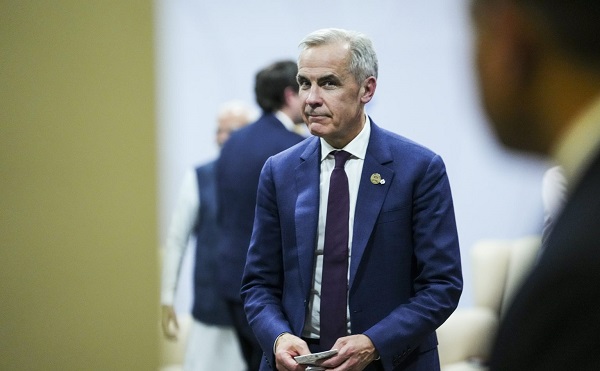
“It means more than a six times increase in the industrial price on carbon,” Prime Minister Mark Carney said while speaking to the press today.
Carney previously said that by “changing the carbon tax … We are making the large companies pay for everybody.”
A Leger poll shows 70 per cent of Canadians believe businesses pass most or some of the cost of the industrial carbon tax on to consumers. Meanwhile, just nine per cent believe businesses pay most of the cost.
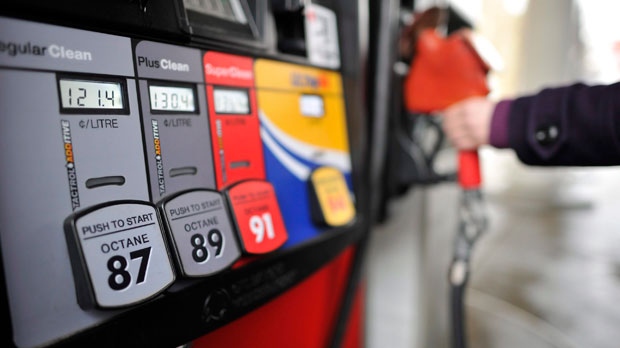
“It doesn’t matter what politicians label their carbon taxes, all carbon taxes make life more expensive and don’t work,” Terrazzano said. “Carbon taxes on refineries make gas more expensive, carbon taxes on utilities make home heating more expensive and carbon taxes on fertilizer plants increase costs for farmers and that makes groceries more expensive.
“The hidden carbon tax on business is the worst of all worlds: Higher prices and fewer Canadian jobs.”


From Underdog to Top Broodmare
Federal major projects list raises questions
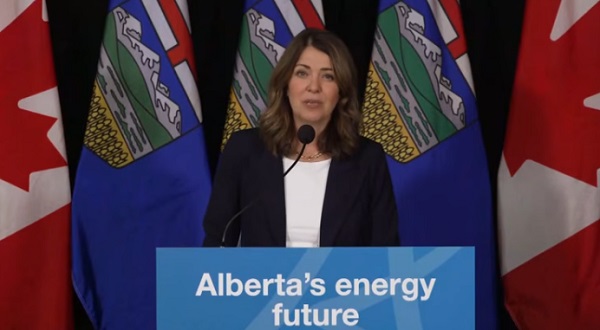
Alberta and Ottawa ink landmark energy agreement

Poilievre says West Coast Pipeline MOU is no guarantee

Afghan Ex–CIA Partner Accused in D.C. National Guard Ambush

Man overboard as HMCS Carney lists to the right

Health Canada indefinitely pauses plan to sell unlabeled cloned meat after massive public backlash
-
 Bruce Dowbiggin2 days ago
Sometimes An Ingrate Nation Pt. 2: The Great One Makes His Choice
-
 Business17 hours ago
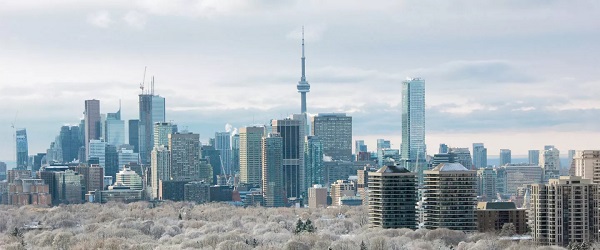
Recent price declines don’t solve Toronto’s housing affordability crisis
-
 Daily Caller16 hours ago
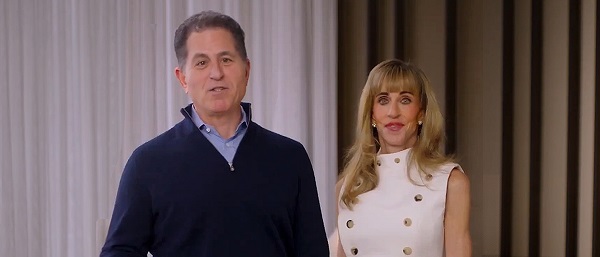
Tech Mogul Gives $6 Billion To 25 Million Kids To Boost Trump Investment Accounts
-
 C2C Journal2 days ago
Learning the Truth about “Children’s Graves” and Residential Schools is More Important than Ever
-
 Business1 day ago
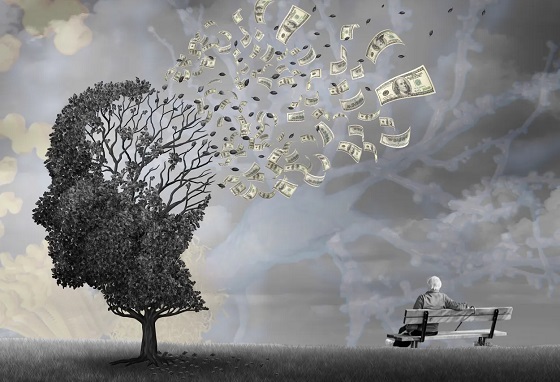
Why Isn’t There a Cure for Alzheimer’s Disease?
-
 armed forces1 day ago
Global Military Industrial Complex Has Never Had It So Good, New Report Finds
-
 National2 days ago
Media bound to pay the price for selling their freedom to (selectively) offend
-
 Alberta2 days ago
New era of police accountability