
Business
Deadlocked Jury Zeroes In on Alleged US$40 Million PPE Fraud in Linda Sun PRC Influence Case

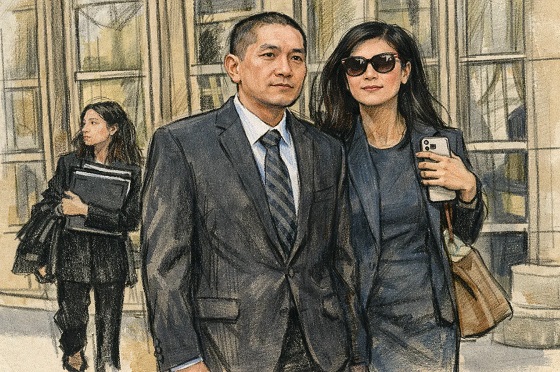




A jury of New Yorkers will return to court Monday, heading into their second week of deliberations in a landmark foreign-agent and corruption trial that reaches into two governors’ offices, struggling to decide whether former state official Linda Sun secretly served Beijing’s interests while she and her husband built a small business and luxury-property empire cashing in on pandemic-era contracts as other Americans were locked down.
On Thursday — the fourth day of deliberations — the jury sent federal Judge Brian Cogan a blunt note saying they were deadlocked on the sprawling case, in which the federal government has asked jurors to accept its account of a complex web of family and Chinese-community financial transactions through which Sun and her husband allegedly secured many millions of dollars in Chinese business deals channeled through “United Front” proxies aligned with Beijing.
The defense, by contrast, argues that Sun and her husband were simply successful through legitimate, culturally familiar transactions, not any covert scheme directed by a foreign state.
“We deeply feel that no progress can be made to change any jurors’ judgment on all counts,” the panel wrote Thursday. “There are fundamental differences on the evidence and the interpretation of the law. We cannot come to a unanimous decision.”
Cogan reportedly responded with a standard “Allen charge” — an instruction often used in deadlock situations, urging jurors to keep an open mind and continue deliberating. Because a juror had to be replaced due to travel commitments, the reconstituted panel will need to restart deliberations from square one on Monday.
According to a message the U.S. Justice Department sent to The Bureau on Wednesday, the panel had already asked for transcripts from four witnesses — Sean Carroll, Mary Beth Hefner, Karen Gallacchi and Jenny Low.
Those requests underline just how dense the case is — and how much money was at stake in the pandemic-era PPE deals at the heart of several key counts. Sun and her husband, businessman Chris Hu, face 19 counts in total, including Sun acting as an unregistered foreign agent for the People’s Republic of China; visa-fraud and alien-smuggling charges tied to a 2019 Henan provincial delegation; a multimillion-dollar pandemic PPE kickback scheme; bank-fraud and identity-misuse allegations; and multiple money-laundering and tax-evasion counts.
Carroll and Hefner’s testimony is central to the government’s key procurement-corruption allegation. Prosecutors say Sun used her influence to help steer more than US$40 million in PPE contracts to companies tied to her husband in China, with an expected profit of roughly US$8 million — money they allege was partly kicked back to Sun and Hu and funneled through accounts opened in Sun’s mother’s name and via friends and relatives.
Prosecutors say the clearest money trail in the Sun case runs through New York’s COVID PPE scramble and a pair of Jiangsu-linked emails.
“What was Linda Sun’s reward for taking official action to steer these contracts through the procurement process? Millions of dollars in kickbacks or bribes. It was money that she knew would be coming her way if she pushed these contracts through,” prosecutor Alexander Solomon told jurors in closing.
He argued that in March 2020, as the pandemic hit, a Jiangsu provincial official in Albany emailed state staff, including Sun, with information on four Chinese PPE and medical suppliers — and that the next day Sun forwarded herself a second email that copied the language about two of those vendors but added a new line claiming that “High Hope comes highly recommended by the Jiangsu Department of Commerce.”
A New York State IT specialist testified that this exact phrase appears only once in the state’s entire email system, in Sun’s self-forwarded message. Prosecutors urged jurors to see it as a fabricated email.
They suggest it is one of a number of frauds and forgeries, including claims that Sun repeatedly faked Governor Kathy Hochul’s signature on invitation letters used to bring Chinese provincial officials into the United States as part of plans to build a large education complex in New York.
On the PPE dealings, prosecutors say that during a period when Sun still had broad latitude to vet vendors, she sent procurement official Sean Carroll a proposal for High Hope to supply five million masks.
Prosecutors say she did not disclose that High Hope was tied to family associate Henry Hua or that she had a financial interest in the deal, but did repeat language that the company “came recommended” by Jiangsu authorities — phrasing Carroll testified he understood as an official validation from the Chinese side.
Prosecutors then linked the High Hope contracts that moved through Carroll’s office to alleged downstream cash flows laid out in a Chris Hu spreadsheet: PPE contract money Hu recorded as owed by Jay Chen, marked as wired into an account called “Golden” and then on to “HC Paradise,” the vehicle Hu allegedly used to pay for a Hawaii property.
In the government’s telling, that is how a doctored Jiangsu government “recommendation” for High Hope ultimately turned into New York taxpayer funds helping to buy a Hawaiian condo.
As The Bureau has reported in detail, prosecutor Alexander Solomon used his closing argument to give jurors one of the clearest open-court narratives yet of how the Chinese Communist Party’s United Front allegedly seeks to shape Western politics through diaspora networks — and to argue that Sun sat at the center of such a network in Albany.
Solomon walked the panel through a cast that ran from Sun’s family and business partners in Queens to United Front–linked association bosses in New York, provincial officials in Henan and Guangdong, and senior staff at China’s New York consulate. In his account, Sun — officially feted in Beijing as an “eminent young overseas Chinese” after a 2017 political tour — became a “trusted insider” who quietly repurposed New York State letterhead, access and messaging to serve Beijing’s priorities on Taiwan, Uyghurs and trade, while keeping that relationship hidden from her own colleagues.
Among the most striking elements of the government’s case, as The Bureau reported from Solomon’s summation, were that Sun allegedly forged Hochul’s signature on multiple invitation letters that Chinese officials then used to secure U.S. visas for provincial delegations — promising meetings in Albany that, Solomon said, no one in state government had actually approved — as part of a broader push by Henan Province to anchor a major education complex in the United States.
He then tied that influence narrative to money: millions in lobster-export deals for Chris Hu, allegedly greased by Chinese officials and New York-based United Front intermediaries; coded “apple” cash drop-offs funneled through third-party accounts; and the pandemic PPE contracts.
In Solomon’s formulation, all of that adds up to clandestine agency for Beijing.
He told jurors that while Sun was boasting to Chinese consulate officials that she could treat Hochul “like her puppet,” she was acting “like an agent,” treating PRC officials as her “real bosses,” and seeking and receiving benefits. Sun kept doing so, Solomon said, even after an FBI agent warned her about the Foreign Agents Registration Act and the risks of working too closely with the consulate.
Defense lawyers for Sun and Hu, in their own summations, urged the jury to reject that picture of a couple monetizing their access to senior American politicians in order to enrich themselves through clandestine business dealings facilitated by community leaders secretly working for Beijing’s United Front units. According to the Global Investigations Review summary and other accounts, they argued that prosecutors have overreached by criminalizing ordinary diaspora politics, networking and pandemic procurement.
On the defense view, much of what the government calls “direction and control” is better understood as routine back-and-forth involving a diaspora liaison in the governor’s office and community or trade groups with ties to China. None of the government’s evidence, they argue, amounts to an agreement to operate under the “direction or control” of a foreign principal — the core FARA requirement.
The Bureau is a reader-supported publication.
To receive new posts and support my work, consider becoming a free or paid subscriber.

This article supplied by Troy Media.

Inflation is down, poverty is falling and Argentina’s economy is growing as Javier Milei pushes reforms many skeptics said would fail
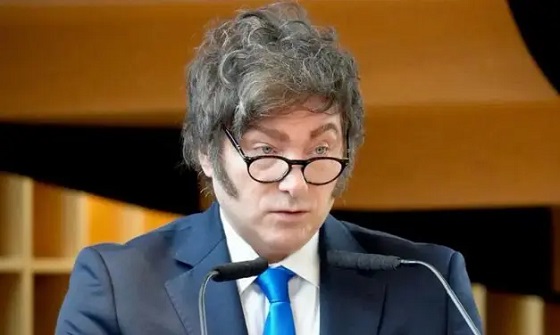
Javier Milei recently passed the two-year mark as president of Argentina. While his personal popularity has been bumpy in recent months—the Americas Society/Council of the Americas suggested his approval rating was a little under 40 per cent this fall—the political climate is still very much in his favour.
His party, La Libertad Avanza, won almost 41 per cent of the vote in the October midterm elections, earning 13 of 24 Senate seats and 64 of the 127 contested lower-house seats.
Few would have expected a libertarian economist who supports small government, lower taxes, more individual rights and freedoms, private enterprise, trade liberalization and anarcho-capitalism to become a success in Argentine politics. The proof has been in the political pudding for quite some time, however.
“As of September, the economy is growing at five per cent on a yearly basis,” the Cato Institute’s Marcos Falcone wrote on Dec. 10. “Poverty, which exceeded 40 per cent before Milei took office and peaked at 52.9 per cent in the first half of 2024, is now down to 31.6 per cent. Monthly inflation, which often surpassed 10 per cent in the pre-Milei era and reached 25 per cent in December 2023, now hovers around two per cent. Both exports and imports are rising rapidly.”
These are all significant benefits for the Argentine economy. Milei wants to accomplish even more. Falcone noted that “the government has already called for special sessions in Congress for its new members to vote on labour, tax and criminal justice reform bills before the end of the year.” Some other legislative goals include “privatization of major state-owned enterprises, pension reform that allows for private retirement plans, the liberalization of education, and further deregulation of the economy, among others.”
Milei’s libertarian philosophy of anarcho-capitalism, which was largely the brainchild of the late American economist Murray Rothbard, rejects statism and socialism. He has worked hard to convince Argentines that free markets, private enterprise, open trade and more will lead to economic success for individuals, families and businesses alike.
That is why Milei remains a “breath of fresh air for Argentina,” as I wrote in a Nov. 20, 2023, National Post column, and “he’s exactly what the doctor ordered for this struggling and impoverished nation.”
He is also an eccentric fellow, to put it mildly. The Argentine president used to be a TV pundit known as El Loco, the madman, who was known for his “profane outbursts,” Time magazine noted on May 23, 2024. He also bragged about being a “tantric sex guru, brandished a chainsaw at rallies to symbolize his plans to slash government spending, dressed up as a superhero who sang about fiscal policy, and told voters that his five cloned English mastiffs, which he reportedly consults in telepathic conversations, are his ‘best strategists.’”
Milei even claimed to have met one of his beloved canines, Conan, in a previous life in the Roman Colosseum more than 2,000 years ago. He was a gladiator, and his four-legged companion was a lion.
Milei’s left-leaning critics have attempted to use these eccentricities to their advantage. They have also called Milei “far right” and claimed he was an Argentine version of U.S. President Donald Trump. None of this is true. Milei has always rejected fascism and totalitarian regimes. He is business-oriented and focused on getting Argentina back on the road to financial success. He wants his home country to be free from government interference, state control and the iron grip of Peronist fanatics. He is getting closer to this goal.
Falcone, the Cato Institute analyst, pointed out in his piece that “a key reform that is still part of Argentina’s unfinished agenda is dollarization.” Milei strongly “advocated” for this policy in 2023, and he has wanted to finish it off for some time. With his party in control of both houses, that time is now.
The Wall Street Journal reported on Dec. 15 that “Argentina’s central bank … would allow the peso to move more freely, responding to investors who have demanded President Javier Milei’s government correct an overvalued currency.” The new policy for the peso will “allow the band to expand at the rate of monthly inflation, which was 2.5 per cent in November, the central bank said. The band currently expands at a monthly rate of one per cent.”
This announcement has been met favourably. “The changes go in the right direction,” Pablo Guidotti, an economist at the Torcuato Di Tella University in Buenos Aires, told the Wall Street Journal. “If the economy expands, this will contribute to higher peso demand allowing Argentina, together with access to capital markets, to accumulate international reserves.”
The quest to achieve dollarization in Argentina has begun.
In summation, Milei’s economic program “is serious and one of the most radical doses of free-market medicine since Thatcherism,” The Economist noted in a Nov. 28, 2024, piece. While the political left “detests him” and the “Trumpian right embraces him,” he does not belong in either camp. “He has shown that the continual expansion of the state is not inevitable,” The Economist continued, and he is a “principled rebuke to opportunistic populism, of the sort practised by Donald Trump. Mr. Milei believes in free trade and free markets, not protectionism; fiscal discipline, not reckless borrowing; and, instead of spinning popular fantasies, brutal public truth-telling.”
There is much that world leaders can learn from the strange, quirky anarcho-capitalist president of Argentina. They should start to take note—and, more importantly, take notes.
Michael Taube is a political commentator, Troy Media syndicated columnist and former speechwriter for Prime Minister Stephen Harper. He holds a master’s degree in comparative politics from the London School of Economics, lending academic rigour to his political insights.
Troy Media empowers Canadian community news outlets by providing independent, insightful analysis and commentary. Our mission is to support local media in helping Canadians stay informed and engaged by delivering reliable content that strengthens community connections and deepens understanding across the country.
This article supplied by Troy Media.
Oil markets are shrugging off war and sanctions, a sign that oversupply now matters more than disruption
Oil producers hoping geopolitics would lift prices are running into a harsh reality. Markets are brushing off wars and sanctions as traders focus instead on expectations of a deep and persistent oil glut.
That shift was evident last week. Despite several geopolitical developments that would once have pushed prices higher, including the U.S. seizure of a Venezuelan crude tanker and fresh Ukrainian strikes on Russian energy infrastructure, oil markets barely reacted, with prices ending the week lower.
Brent crude settled Friday at US$61.12 a barrel and U.S. West Texas Intermediate at US$57.44, capping a weekly drop of more than four per cent.
Instead of responding to disruption headlines, markets were reacting to a different risk. Bearish sentiment, rather than geopolitics, continued to dominate as expectations of a “2026 glut” took centre stage.
At the heart of that outlook is a growing supply overhang. The oil market is grappling with whether sanctioned Russian and Iranian cargoes should still be counted as supply. That uncertainty helps explain why prices have been slow to react to a glut that is already forming on the water, said Carol Ryan, writing for The Wall Street Journal.
The scale of that buildup is significant. There are 1.4 billion barrels of oil “on the water,” 24 per cent higher than the average for this time of year between 2016 and 2024, according to oil analytics firm Vortexa. These figures capture shipments still in transit or cargoes that have yet to find a buyer, a clear sign that supply is running ahead of immediate demand.
Official forecasts have reinforced that view. Last week, the International Energy Agency trimmed its projected 2026 surplus to 3.84 million barrels per day, down from 4.09 million barrels per day projected previously. Even so, the IEA still sees a large oversupply relative to global demand.
Demand growth offers little relief. The IEA expects growth of 830 kb/d (thousand barrels per day) in 2025 and 860 kb/d in 2026, with petrochemical feedstocks accounting for a larger share of incremental demand. That pace remains modest against the volume of supply coming to market.
OPEC, however, has offered a different assessment. In its latest report, the group pointed to a near balance, forecasting demand for OPEC+ crude averaging about 43 million barrels per day in 2026, roughly in line with what it produced in November.
Reflecting that confidence. OPEC+ kept policy steady late in November, pausing planned output hikes for the first quarter of 2026 while more than three million barrels per day of cuts remain in place. Those measures are supportive in theory, but markets have shown little sign of being persuaded.
Recent geopolitical events underline that scepticism. The ongoing Russia-Ukraine war and Ukrainian strikes on Russian energy infrastructure, including reported hits on facilities such as the Slavneft-YANOS refinery in Yaroslavl, again failed to lift prices. Russia-Ukraine headlines pulled prices down more than strikes lifted them, according to media reports, suggesting traders were more attuned to “peace deal” risk than to supply disruption.
Washington’s move against Venezuelan crude shipments offered another test. The U.S. seizure of a Venezuelan tanker, the first formal seizure under the 2019 sanctions framework, had a muted price impact, writes Marcin Frackiewicz of Oilprice.com.
Venezuela’s exports fell sharply in the days that followed, but markets remained largely unmoved. One explanation is that Venezuela’s output is no longer large enough to tighten global balances the way it once did, and that abundant global supply has reduced the geopolitical premium.
Taken together, the signal is hard to miss. Oil producers, including in Canada, face a reality check in a market that no longer rewards headlines, only discipline and demand.
Toronto-based Rashid Husain Syed is a highly regarded analyst specializing in energy and politics, particularly in the Middle East. In addition to his contributions to local and international newspapers, Rashid frequently lends his expertise as a speaker at global conferences. Organizations such as the Department of Energy in Washington and the International Energy Agency in Paris have sought his insights on global energy matters.
Troy Media empowers Canadian community news outlets by providing independent, insightful analysis and commentary. Our mission is to support local media in helping Canadians stay informed and engaged by delivering reliable content that strengthens community connections and deepens understanding across the country.

The Recall Trap: 21 Alberta MLA’s face recall petitions

‘There Will Be Very Serious Retaliation’: Two American Servicemen, Interpreter Killed In Syrian Attack
Tyler Robinson shows no remorse in first court appearance for Kirk assassination
Inflation Reduction Act, Green New Deal Causing America’s Energy Crisis

US Notes 2.5 million illegals out and counting
Politicians should be honest about environmental pros and cons of electric vehicles

Terror in Australia: 12 killed after gunmen open fire on Hanukkah celebration
-
 Crime1 day ago
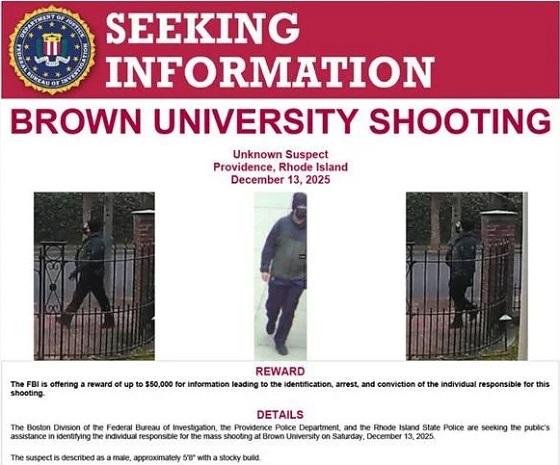
Brown University shooter dead of apparent self-inflicted gunshot wound
-
 Business2 days ago
Canada Hits the Brakes on Population
-
 Frontier Centre for Public Policy2 days ago
Canada Lets Child-Porn Offenders Off Easy While Targeting Bible Believers
-
 Agriculture2 days ago
Why is Canada paying for dairy ‘losses’ during a boom?
-
 Business2 days ago
White House declares inflation era OVER after shock report
-
 Business1 day ago
Trump signs order reclassifying marijuana as Schedule III drug
-
 Censorship Industrial Complex10 hours ago
Canadian university censors free speech advocate who spoke out against Indigenous ‘mass grave’ hoax
-
 Daily Caller1 day ago
‘Almost Sounds Made Up’: Jeffrey Epstein Was Bill Clinton Plus-One At Moroccan King’s Wedding, Per Report