
Canadian Energy Centre
Completing Trans Mountain, Indigenous LNG: What to watch in Canadian energy in 2024

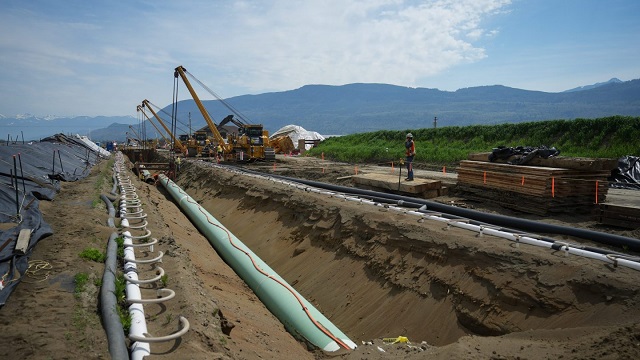

Workers lay pipe during construction of the Trans Mountain pipeline expansion on farmland in Abbotsford, B.C., on May 3, 2023. CP Images photo
From the Canadian Energy Centre
By Deborah JaremkoActivity promises to highlight Canada’s position as a world supplier of choice
It’s going to be a big year for Canadian energy, with major milestones anticipated that will transform Canada from a supplier with a single customer (the United States) to a global player.

Global demand for oil and gas is expected to stay strong in the decades ahead as the world works to reduce emissions, still supplying nearly half of energy needs in 2050, according to the International Energy Agency.
Activity in 2024 promises to highlight Canada’s position as a supplier of choice with a leading approach to reducing emissions and engaging Indigenous communities.
Here are five things to watch.
5. Start-Up Activities for LNG Canada

Construction of the LNG Canada export terminal is now more than 90 per cent complete. Photo courtesy LNG Canada
Against the backdrop of surging liquefied natural gas (LNG) demand – Asia’s consumption hit a record 26.6 million tonnes in December – Canada’s first LNG export terminal is preparing for start-up.
LNG Canada will have among the world’s lowest emissions for LNG supply, at 0.15 tonnes of CO2 equivalent per tonne of LNG, less than half the global average.
This year, the terminal at Kitimat, B.C. will test and fine-tune equipment and the process of producing LNG will begin, the company says.
The start-up program will take more than one year to complete.
Moving into the final stages at LNG Canada follows the recent completion of the Coastal GasLink Pipeline, connecting natural gas supply from northeast B.C.
4. Progress Toward Oil Sands Net Zero

The Pathways Alliance has extensive work underway on the environmental program for its proposed CCS project, involving 135 experts ranging from aquatic and wildlife biologists to archeologists and paleontologists who have spent more than 1,600 hours in the field working to minimize environmental disturbance. Photo courtesy Pathways Alliance
Major regulatory applications are expected in 2024 for one of the world’s largest proposed carbon capture and storage (CCS) networks, located in Canada’s oil sands.
The project would connect CO2 captured at an initial 14 oil sands facilities by pipeline to a shared hub for storage deep underground.
It is the foundation of the plan by the Pathways Alliance – companies representing 95 per cent of oil sands production – to reduce emissions from operations by nearly one third by 2030 on the way to net zero by 2050.
Pathways has said that after regulatory approvals are complete, CO2 injection and storage could begin by late 2026.
3. Growth in Indigenous Ownership

Eva Clayton, back left, President of the Nisga’a Lisims Government (joint venture owner of the proposed Ksi Lisims LNG project), Crystal Smith, back right, Haisla Nation Chief Councillor (joint venture owner of proposed Cedar LNG project), and Karen Ogen, front right, CEO of the First Nations LNG Alliance pose for a photograph on the HaiSea Wamis zero-emission tugboat outside the LNG2023 conference, in Vancouver, B.C., Monday, July 10, 2023. CP Images photo
The rising tide of Indigenous ownership in Canadian energy is likely to continue growing in 2024.
From LNG terminals to oil and gas pipelines, natural gas-fired power plants and CCS projects to reduce emissions, more Indigenous communities are taking on a leadership role.
Since 2022, more than 75 First Nations and Métis communities in Alberta and British Columbia have agreed to ownership stakes in energy projects including the Coastal GasLink pipeline and major oil sands transportation networks.
Indigenous loan guarantee programs like those offered by the Alberta Indigenous Opportunities Corporation (AIOC) are helping communities invest.
So far, the AIOC has underwritten more than $500 million in loan guarantees. This year it has $3 billion of support available, up from $2 billion in 2023.
Details of a proposed national loan guarantee program to help facilitate Indigenous equity ownership in major resource projects are also expected in the federal budget this spring.
2. Green Light for Cedar LNG

Rendering courtesy Cedar LNG
Owners of the world’s first Indigenous-led LNG project – a floating terminal at Kitimat, B.C. –plan to make the final decision to proceed within the next three months.
Cedar LNG, owned jointly by the Haisla Nation and Pembina Pipeline Corporation, would have capacity to export three million tonnes of LNG per year, primarily to Asian markets.
With emissions intensity of 0.08 tonnes of CO2 equivalent per tonne of LNG, it would be one of the lowest carbon footprint LNG projects in the world.
In early January, the partners reached the critical milestone of selecting the primary contractors to engineer, build and deliver the floating LNG unit.
A final investment decision is now expected in the first quarter of 2024.
1. Completion of the Trans Mountain Pipeline Expansion

Worker at Trans Mountain’s Edmonton terminal. Photo courtesy Trans Mountain Corporation
After more than 12 years in the making, Canada’s first large-scale access to growing global oil markets is now weeks away from completion.
The existing Trans Mountain pipeline system from Edmonton, Alberta to Burnaby, B.C. runs consistently at maximum capacity with producers seeking more export space than is available.
The expansion will increase service by about 600,000 barrels per day, bringing more Canadian oil to customers around the world, primarily on the U.S. west coast and Asia.
After the recent resolution of a regulatory delay, Trans Mountain can now proceed with the last two per cent of construction.
The company anticipates oil will flow on the expanded line before the end of March.


Prince Rupert Port Authority CEO Shaun Stevenson. Photo courtesy Prince Rupert Port Authority
From the Canadian Energy Centre
A strategic gateway to the world
Tucked into the north coast of B.C. is the deepest natural harbour in North America and the port with the shortest travel times to Asia.
With growing capacity for exports including agricultural products, lumber, plastic pellets, propane and butane, it’s no wonder the Port of Prince Rupert often comes up as a potential new global gateway for oil from Alberta, said CEO Shaun Stevenson.
Thanks to its location and natural advantages, the port can efficiently move a wide range of commodities, he said.
That could include oil, if not for the federal tanker ban in northern B.C.’s coastal waters.

The Port of Prince Rupert on the north coast of British Columbia. Photo courtesy Prince Rupert Port Authority
“Notwithstanding the moratorium that was put in place, when you look at the attributes of the Port of Prince Rupert, there’s arguably no safer place in Canada to do it,” Stevenson said.
“I think that speaks to the need to build trust and confidence that it can be done safely, with protection of environmental risks. You can’t talk about the economic opportunity before you address safety and environmental protection.”
Safe Transit at Prince Rupert
About a 16-hour drive from Vancouver, the Port of Prince Rupert’s terminals are one to two sailing days closer to Asia than other West Coast ports.
The entrance to the inner harbour is wider than the length of three Canadian football fields.
The water is 35 metres deep — about the height of a 10-storey building — compared to 22 metres at Los Angeles and 16 metres at Seattle.
Shipmasters spend two hours navigating into the port with local pilot guides, compared to four hours at Vancouver and eight at Seattle.
“We’ve got wide open, very simple shipping lanes. It’s not moving through complex navigational channels into the site,” Stevenson said.
A Port on the Rise
The Prince Rupert Port Authority says it has entered a new era of expansion, strengthening Canada’s economic security.
The port estimates it anchors about $60 billion of Canada’s annual global trade today. Even without adding oil exports, Stevenson said that figure could grow to $100 billion.
“We need better access to the huge and growing Asian market,” said Heather Exner-Pirot, director of energy, natural resources and environment at the Macdonald-Laurier Institute.
“Prince Rupert seems purpose-built for that.”
Roughly $3 billion in new infrastructure is already taking shape, including the $750 million rail-to-container CANXPORT transloading complex for bulk commodities like specialty agricultural products, lumber and plastic pellets.

The Ridley Island Propane Export Terminal, Canada’s first marine propane export terminal, started shipping in May 2019. Photo courtesy AltaGas Ltd.
Canadian Propane Goes Global
A centrepiece of new development is the $1.35-billion Ridley Energy Export Facility — the port’s third propane terminal since 2019.
“Prince Rupert is already emerging as a globally significant gateway for propane exports to Asia,” Exner-Pirot said.
Thanks to shipments from Prince Rupert, Canadian propane – primarily from Alberta – has gone global, no longer confined to U.S. markets.
More than 45 per cent of Canada’s propane exports now reach destinations outside the United States, according to the Canada Energy Regulator.
“Twenty-five per cent of Japan’s propane imports come through Prince Rupert, and just shy of 15 per cent of Korea’s imports. It’s created a lift on every barrel produced in Western Canada,” Stevenson said.
“When we look at natural gas liquids, propane and butane, we think there’s an opportunity for Canada via Prince Rupert becoming the trading benchmark for the Asia-Pacific region.”
That would give Canadian production an enduring competitive advantage when serving key markets in Asia, he said.
Deep Connection to Alberta
The Port of Prince Rupert has been a key export hub for Alberta commodities for more than four decades.
Through the Alberta Heritage Savings Trust Fund, the province invested $134 million — roughly half the total cost — to build the Prince Rupert Grain Terminal, which opened in 1985.
The largest grain terminal on the West Coast, it primarily handles wheat, barley, and canola from the prairies.

The Prince Rupert Grain Terminal. Photo courtesy Prince Rupert Port Authority
Today, the connection to Alberta remains strong.
In 2022, $3.8 billion worth of Alberta exports — mainly propane, agricultural products and wood pulp — were shipped through the Port of Prince Rupert, according to the province’s Ministry of Transportation and Economic Corridors.
In 2024, Alberta awarded a $250,000 grant to the Prince Rupert Port Authority to lead discussions on expanding transportation links with the province’s Industrial Heartland region near Edmonton.
Handling Some of the World’s Biggest Vessels
The Port of Prince Rupert could safely handle oil tankers, including Very Large Crude Carriers (VLCCs), Stevenson said.
“We would have the capacity both in water depth and access and egress to the port that could handle Aframax, Suezmax and even VLCCs,” he said.
“We don’t have terminal capacity to handle oil at this point, but there’s certainly terminal capacities within the port complex that could be either expanded or diversified in their capability.”
Market Access Lessons From TMX
Like propane, Canada’s oil exports have gained traction in Asia, thanks to the expanded Trans Mountain pipeline and the Westridge Marine Terminal near Vancouver — about 1,600 kilometres south of Prince Rupert, where there is no oil tanker ban.
The Trans Mountain expansion project included the largest expansion of ocean oil spill response in Canadian history, doubling capacity of the West Coast Marine Response Corporation.

The K.J. Gardner is the largest-ever spill response vessel in Canada. Photo courtesy Western Canada Marine Response Corporation
The Canada Energy Regulator (CER) reports that Canadian oil exports to Asia more than tripled after the expanded pipeline and terminal went into service in May 2024.
As a result, the price for Canadian oil has gone up.
The gap between Western Canadian Select (WCS) and West Texas Intermediate (WTI) has narrowed to about $12 per barrel this year, compared to $19 per barrel in 2023, according to GLJ Petroleum Consultants.
Each additional dollar earned per barrel adds about $280 million in annual government royalties and tax revenues, according to economist Peter Tertzakian.
The Road Ahead
There are likely several potential sites for a new West Coast oil terminal, Stevenson said.
“A pipeline is going to find its way to tidewater based upon the safest and most efficient route,” he said.
“The terminal part is relatively straightforward, whether it’s in Prince Rupert or somewhere else.”
Under Canada’s Marine Act, the Port of Prince Rupert’s mandate is to enable trade, Stevenson said.
“If Canada’s trade objectives include moving oil off the West Coast, we’re here to enable it, presuming that the project has a mandate,” he said.
“If we see the basis of a project like this, we would ensure that it’s done to the best possible standard.”
Alberta
Emissions Reduction Alberta offering financial boost for the next transformative drilling idea
From the Canadian Energy Centre
$35-million Alberta challenge targets next-gen drilling opportunities
‘All transformative ideas are really eligible’
Forget the old image of a straight vertical oil and gas well.
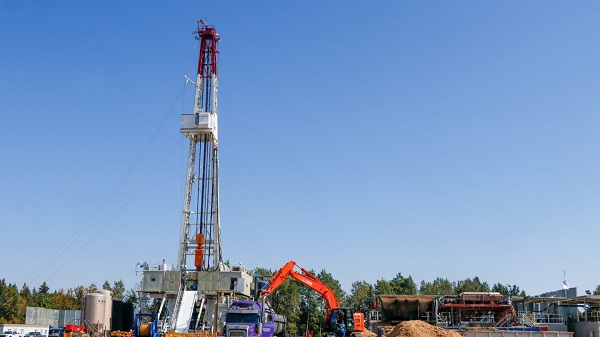
In Western Canada, engineers now steer wells for kilometres underground with remarkable precision, tapping vast energy resources from a single spot on the surface.
The sector is continually evolving as operators pursue next-generation drilling technologies that lower costs while opening new opportunities and reducing environmental impacts.
But many promising innovations never reach the market because of high development costs and limited opportunities for real-world testing, according to Emissions Reduction Alberta (ERA).
That’s why ERA is launching the Drilling Technology Challenge, which will invest up to $35 million to advance new drilling and subsurface technologies.
“The focus isn’t just on drilling, it’s about building our future economy, helping reduce emissions, creating new industries and making sure we remain a responsible leader in energy development for decades to come,” said ERA CEO Justin Riemer.
And it’s not just about oil and gas. ERA says emerging technologies can unlock new resource opportunities such as geothermal energy, deep geological CO₂ storage and critical minerals extraction.
“Alberta’s wealth comes from our natural resources, most of which are extracted through drilling and other subsurface technologies,” said Gurpreet Lail, CEO of Enserva, which represents energy service companies.
ERA funding for the challenge will range from $250,000 to $8 million per project.
Eligible technologies include advanced drilling systems, downhole tools and sensors; AI-enabled automation and optimization; low-impact rigs and fluids; geothermal and critical mineral drilling applications; and supporting infrastructure like mobile labs and simulation platforms.
“All transformative ideas are really eligible for this call,” Riemer said, noting that AI-based technologies are likely to play a growing role.
“I think what we’re seeing is that the wells of the future are going to be guided by smart sensors and real-time data. You’re going to have a lot of AI-driven controls that help operators make instant decisions and avoid problems.”
Applications for the Drilling Technology Challenge close January 29, 2026.


From Underdog to Top Broodmare

Man overboard as HMCS Carney lists to the right

Poilievre says West Coast Pipeline MOU is no guarantee
Higher carbon taxes in pipeline MOU are a bad deal for taxpayers
Alberta and Ottawa ink landmark energy agreement
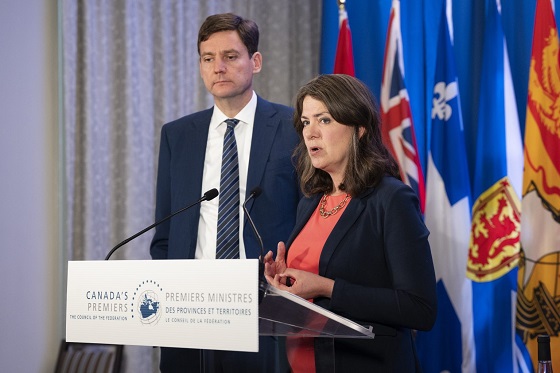
West Coast Pipeline MOU: A good first step, but project dead on arrival without Eby’s assent
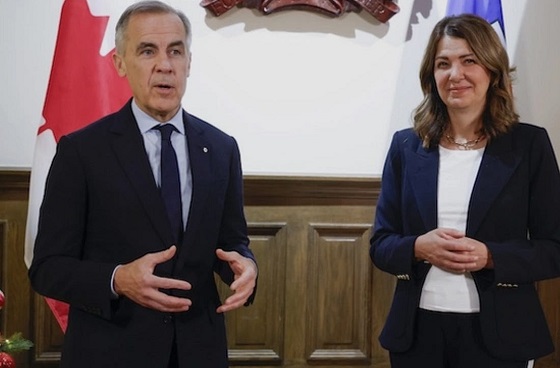
READ IT HERE – Canada-Alberta Memorandum of Understanding – From the Prime Minister’s Office
-
 Censorship Industrial Complex2 days ago
A Democracy That Can’t Take A Joke Won’t Tolerate Dissent
-
 MAiD1 day ago
From Exception to Routine. Why Canada’s State-Assisted Suicide Regime Demands a Human-Rights Review
-
 National2 days ago
Canada Needs an Alternative to Carney’s One Man Show
-
 Alberta2 days ago
Alberta will defend law-abiding gun owners who defend themselves
-
 MAiD2 days ago
Health Canada report finds euthanasia now accounts for over 5% of deaths nationwide
-
 Great Reset2 days ago
Canada’s MAiD (State Sanctioned Murder) Report Just Dropped
-
 Business1 day ago
New Chevy ad celebrates marriage, raising children
-
 Alberta1 day ago
This new Canada–Alberta pipeline agreement will cost you more than you think