
espionage
Chinese-Owned Trailer Park Beside U.S. Stealth Bomber Base Linked to Alleged Vancouver Repression Case





A sprawling U.S. investigative report has placed a Richmond, B.C., couple already identified in a high-profile Chinese-diaspora repression case at the center of an even more explosive national-security controversy south of the border: they are linked to a web of shell companies that own a trailer park beside Whiteman Air Force Base in Missouri — home to the B-2 Spirit stealth bomber and launch point for the June 2025 strike on Iran’s nuclear facilities.
Taken together, the property records unearthed by the Daily Caller News Foundation, along with court and corporate documents reviewed by The Bureau to verify the American reporting, outline a cross-border pattern of potential Chinese state activity, echoing past cases of high-profile actors using Vancouver as a base for operations into the United States.
Raising the stakes, The Bureau has also identified a former Vancouver business entity tied to the couple, involved in hard-rock lithium exploration in Canada’s Northwest Territories — an alarming detail suggesting their network could intersect with China’s drive for critical-minerals supply chains in North America.
The real-estate thread south of the border is clear. Missouri business and environmental filings assembled by investigative reporter Philip Lenczycki show the Knob Noster Trailer Park is registered to Property Solutions 3603 LP, with a state operating permit locating the property directly north of Whiteman — roughly a mile from the runway. Companion filings in Utah and Georgia connect similarly named entities to the Richmond residents, Esther Mei and Cheng Hu. The couple, who share a Richmond home according to court documents, did not respond to repeated requests for comment, Lenczycki reported.
A former CIA operations officer said such thinly veiled ownership structures are typical of state-linked activity, including the use of foreign nationals to place assets near critical infrastructure. Bryan Dean Wright, a former CIA officer, told the Daily Caller there was “zero chance a Chinese couple from Canada rolled into Knob Noster and saw a strictly financial investment in a dumpy plot of land,” arguing that the trailer park “would hypothetically give Xi Jinping a range of options to wreak havoc.”
Wright’s assessment is not proof of wrongdoing, but his conclusion aligns with patterns previously reported by The Bureau.
At a recent hearing in Washington, D.C., Oklahoma Bureau of Narcotics Director Donnie Anderson told lawmakers that investigations into PRC-linked cannabis operations have uncovered claims of Chinese government interests strategically purchasing property near sensitive U.S. infrastructure — including a munitions plant in Oklahoma supplying a large share of the Pentagon’s heavy weapons.
Across North America, cases of PRC-linked farmland acquisitions are moving from headlines to court filings and prompting calls for official investigations. The Bureau has reported on major land purchases in Prince Edward Island allegedly tied to Beijing’s United Front network, and on the premier’s subsequent call for RCMP and FINTRAC investigations.
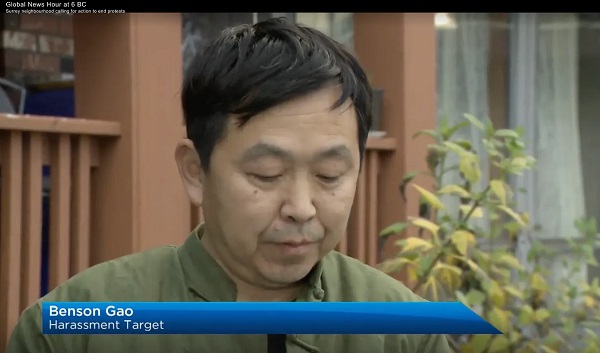
What brings the Richmond couple’s story into sharper focus for Canadian readers is the series of incidents outside Bingchen Gao’s home in 2020 and 2023.
Reporting on charges against Miles Guo in 2024, Global News in British Columbia wrote that demonstrators clad in New Federal State of China clothing protested outside Gao’s home for 77 days in 2020 and returned in January 2023. The outlet noted the group “would say little… save calling Gao ‘very dangerous’ and calling for his expulsion from Canada.”
In an earlier case, the Chinese journalist Gao fought a high-profile defamation battle with Vancouver developer Miaofei Pan, a leader of the Canadian Alliance of Chinese Associations (CACA) — which former PRC diplomat Chen Yonglin has publicly described as operating at a “controlling level” of the United Front Work Department in B.C. Pan and another CACA leader dispute that characterization, but they have also been questioned by the RCMP in probes into alleged PRC “police station” activity in Richmond, where no charges have been laid.
Pan, a prominent Liberal donor, was featured in The Globe and Mail’s reporting on wealthy Chinese immigrants hosting fundraisers attended by Prime Minister Justin Trudeau. In his defamation case against Gao, Pan was awarded $1 in damages after B.C. Supreme Court Justice Neena Sharma rebuked his conduct, writing that she had “serious concerns” about his credibility.
In the subsequent Surrey neighborhood-siege case, civil pleadings and video evidence show Gao alleging an extended campaign by New Federal State of China demonstrators, including Esther Mei and Cheng Hu, outside his residence, followed by online amplification.
Gao’s claim states that from September 15, 2020, to December 3, 2020, and from January 20 to 25, 2023, the defendants appeared in front of his home, holding signs declaring “Gao Bingchen is a spy of the Chinese Communist Party.” The filing names several individuals, including the Richmond couple linked to the Missouri trailer park.
With this network’s legal connections to Miles Guo — also established in B.C. court records reviewed by the Daily Caller — the rabbit hole deepens. The NFSC formally launched in 2020, and Guo was convicted in New York in 2024 in a billion-dollar fraud case. A U.S. bankruptcy adversary filing lists Vancouver Sailing Farm Ltd. among defendants, a documented Canadian arm within the Guo-linked network. Guo has publicly described intelligence “affiliations” and proximity to senior Chinese security figures.
As I reported in Wilful Blindness (pp. 72–78), fugitive smuggling tycoon Lai Changxing — who migrated to Vancouver and was long alleged by police to have Big Circle Boys ties — operated within a PLA military-intelligence milieu overseen by Maj. Gen. Ji Shengde, later purged amid the Yuanhua scandal. U.S. fundraiser Johnny Chung testified that Ji directed $300,000 toward the 1996 Clinton campaign, and Miles Guo has claimed close ties to both Lai and Ji, saying he was asked by Ji to assist the PLA’s 2nd Department — a characterization he later repeated in interviews describing himself as an “affiliate” of Chinese state security.
If the Missouri trailer-park findings ultimately confirm Chinese-state adjacency through direct links to Vancouver-based property owners, they would fit a well-established Canadian pattern.
Historian Dennis Molinaro’s Under Assault traces how Beijing has repeatedly used Canada as a staging ground to reach its true strategic target — the United States. He charts a progression from political influence and industrial theft to targeted scientific infiltration, often leveraging patriotic sentiment and financial inducements within the overseas Chinese diaspora.
The book revisits Su Bin’s Boeing-theft case from Vancouver and a Toronto conduit for U.S. Tesla battery IP — both examples where Canadian enforcement followed only after U.S. intervention.
Su Bin — arrested in Richmond, B.C., in 2014 and later extradited — admitted conspiring with China-based accomplices tied to the People’s Liberation Army to hack major U.S. defense contractors for export-controlled data on flagship air programs, including Boeing’s C-17 Globemaster III and, by tasking, the F-22 and F-35 stealth fighters. He pleaded guilty in March 2016 and was sentenced to 46 months that July, with the plea acknowledging a years-long operation to steal sensitive military information and transmit it to China in violation of computer-intrusion and Arms Export Control statutes.
As former FBI agent Justin Vallese — cited by Molinaro — said after Su Bin’s conviction, he “didn’t know how many Su Bins there are.”



AI-driven surveillance is shifting from spotting suspects to mapping ordinary life, turning everyday travel into a stream of behavioral data
|
|
espionage
Carney Floor Crossing Raises Counterintelligence Questions aimed at China, Former Senior Mountie Argues
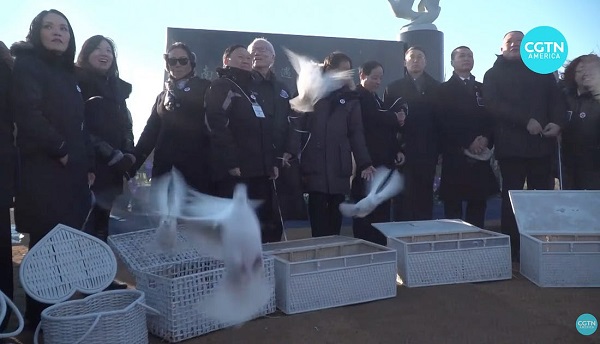
Michael Ma has recently attended events with Chinese consulate officials, leaders of a group called CTCCO, and the Toronto “Hongmen,” where diaspora community leaders and Chinese diplomats advocated Beijing’s push to subordinate Taiwan. These same entities have also appeared alongside Canadian politicians at a “Nanjing” memorial in Toronto.
By Garry Clement
Michael Ma’s meeting with consulate-linked officials proves no wrongdoing—but, Garry Clement writes, the timing and optics highlight vulnerabilities Canada still refuses to treat as a security issue.
I spent years in the Royal Canadian Mounted Police learning a simple rule. You assess risk based on capability, intent, and opportunity — not on hope or assumptions. When those three factors align, ignoring them is negligence.
That framework applies directly to Canada’s relationship with the People’s Republic of China — and to recent political events that deserve far more scrutiny than they have received.
Michael Ma’s crossover to the Liberal Party may be completely legitimate, although numerous observers have noted oddities in the timing, messaging, and execution surrounding Ma’s move, which brings Mark Carney within one seat of majority rule.
There is no evidence of wrongdoing.
But from a law enforcement and national security perspective, that is beside the point. Counterintelligence is not about proving guilt after the fact; it is about identifying vulnerabilities before damage is done — and about recognizing when a situation creates avoidable exposure in a known threat environment.
A constellation of ties and public appearances — reported by The Bureau and the National Post — has fueled questions about Ma’s China-facing judgment and vetting. Those reports describe his engagement with a Chinese-Canadian Conservative network that intervened in party leadership politics by urging Erin O’Toole to resign for his “anti-China” stance after 2021 and later calling for Pierre Poilievre’s ouster — while advancing Beijing-aligned framing on key Canada–China disputes.
The National Post has also reported that critics point to Ma’s pro-Beijing community endorsement during his campaign, and his appearance at a Toronto dinner for the Chinese Freemasons — where consular officials used the forum to promote Beijing’s “reunification” agenda for Taiwan. Ma reportedly offered greetings and praised the organization, but did not indicate support for annexation.
Open-source records also show that the same Toronto Chinese Freemasons and leaders Ma has met from a group called CTCCO sponsored and supported Ontario’s “Nanjing Massacre Commemorative Day” initiative (Bill 79) — a campaign celebrated in Chinese state and Party-aligned media, alongside public praise from PRC consular officials in Canada.
China Daily reported in 2018 that the Nanjing memorial was jointly sponsored by CTCCO and the Chinese Freemasons of Canada (Toronto), supported by more than $180,000 in community donations.
Photos show that PRC consular officials and Toronto politicians appeared at related Nanjing memorial ceremonies, including Zhao Wei, the alleged undercover Chinese intelligence agent later expelled from Canada after The Globe and Mail exposed Zhao’s alleged targeting of Conservative MP Michael Chong and his family in Hong Kong.
The fact that Michael Ma recently met with some of the controversial pro-Beijing community figures and organizations described above — including leaders from the Hongmen ecosystem and the CTCCO — does not prove any nefarious intent in either his Conservative candidacy or his decision to cross the floor to Mark Carney.
But it does demonstrate something Ottawa keeps avoiding: the PRC’s influence work is often conducted in plain sight, through community-facing institutions, elite access, and “normal” relationship networks — the very channels that create leverage, deniability, and political pressure over time.
Canada’s intelligence community has been clear.
The Canadian Security Intelligence Service has repeatedly identified the People’s Republic of China as the most active and persistent foreign interference threat facing Canada. These warnings are not abstract. They are rooted in investigations, human intelligence, and allied reporting shared across the Five Eyes intelligence alliance.
At the center of Beijing’s approach is the United Front Work Department — a Chinese Communist Party entity tasked with influencing foreign political systems, cultivating elites, and shaping narratives abroad. In policing terms, it functions as an influence and access network: operating legally where possible, covertly where necessary, and always in service of the Party’s strategic objectives.
What differentiates the People’s Republic of China from most foreign actors is legal compulsion.
Under China’s National Intelligence Law, Chinese citizens and organizations can be compelled to support state intelligence work and to keep that cooperation secret. In practical terms, that creates an inherent vulnerability for democratic societies: coercive leverage — applied through family, travel, business interests, community pressure, and fear.
This does not mean Chinese-Canadians are suspect.
Quite the opposite — many are targets of intimidation themselves. But it does mean the Chinese Communist Party has a mechanism to exert pressure in ways democratic states do not. Ignoring that fact is not tolerance; it is a failure to understand the threat environment.
In the RCMP, we were trained to recognize that foreign interference rarely announces itself. It operates through relationships, access, favors, timing, and silence. It does not require ideological agreement — only opportunity and leverage.
That is why transparency matters. When political figures engage with representatives of an authoritarian state known for interference operations, the burden is not on the public to “prove” concern is justified. The burden is on officials to explain why there is none — and to demonstrate that basic safeguards are in place.
Canada’s allies have already internalized this reality. Australia, the United States, and the United Kingdom have all publicly acknowledged and legislated against People’s Republic of China political interference. Their assessments mirror ours. Their conclusions are the same.
In the United States, the Linda Sun case — covered by The Bureau — illustrates, in the U.S. government’s telling, how United Front–style influence can be both deniable and effective: built through diaspora-facing proxies, insider access, and relationship networks that rarely look like classic espionage until the damage is done.
And this is not a niche concern.
Think tanks in both the United States and Canada — as well as allied research communities in the United Kingdom and Europe — have documented the scale and persistence of these political-influence ecosystems. Nicholas Eftimiades, an associate professor at Penn State and a former senior National Security Agency analyst, has estimated multiple hundreds of such entities are active in the United States. How many operate in Canada is the question Ottawa still refuses to treat with urgency — and, if an upcoming U.S. report is any indication, the answer may be staggering.
Canada’s hesitation to address United Front networks is not due to lack of information. It is due to lack of resolve.
From a law enforcement perspective, this is troubling. You do not wait for a successful compromise before tightening security. You act when the indicators are present — especially when your own intelligence agencies are sounding the alarm.
National security is not ideological. It is practical.
The Bureau is a reader-supported publication.
To receive new posts and support my work, consider becoming a free or paid subscriber.

The “Disruptor-in-Chief” places Canada in the crosshairs
UK Police Pilot AI System to Track “Suspicious” Driver Journeys

Judge Declares Mistrial in Landmark New York PRC Foreign-Agent Case

Ottawa-Alberta agreement may produce oligopoly in the oilsands

Warning Canada: China’s Economic Miracle Was Built on Mass Displacement

‘The electric story is over’
The Top News Stories That Shaped Canadian Energy in 2025 and Will Continue to Shape Canadian Energy in 2026
-
 Haultain Research2 days ago
Sweden Fixed What Canada Won’t Even Name
-
 Business2 days ago
What Do Loyalty Rewards Programs Cost Us?
-
 Business1 day ago
Land use will be British Columbia’s biggest issue in 2026
-
 Digital ID12 hours ago
The Global Push for Government Mandated Digital IDs And Why You Should Worry
-
 Business10 hours ago
Feds pull the plug on small business grants to Minnesota after massive fraud reports
-
 Energy1 day ago
Why Japan wants Western Canadian LNG
-
 Business23 hours ago
Mainstream media missing in action as YouTuber blows lid off massive taxpayer fraud
-
 Business22 hours ago
Stripped and shipped: Patel pushes denaturalization, deportation in Minnesota fraud