
COVID-19
Canadian couriers fired for refusing COVID vaccine were discriminated against, arbitrator rules


From LifeSiteNews

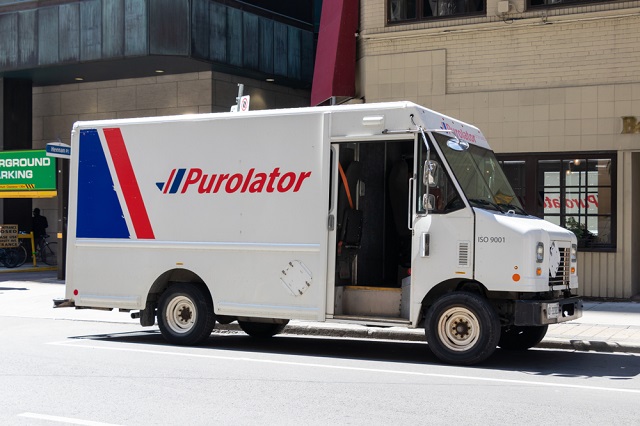
Purolator has been ordered to give compensation to its hourly employees who did not get the COVID shots, which includes lost benefits and wages, between July 1, 2022, and May 1, 2023.
A Canadian arbitrator has ruled members of a local union who worked for courier giant Purolator, and then lost their jobs because they chose to not get the COVID shots, must receive compensation as the mandates were not “valid.”
On January 10, 2022, members of Teamsters Local Union No. 31 in Prince George, British Columbia, including 8 hourly employees and 14 owner-operators, filed many grievances against Purolator concerning its COVID jab policy. This policy mandated employees be jabbed or face discipline. Multiple hearings were then held from September 2022 until September 2023.
The union, on behalf of its grievors, argued that the COVID jabs efficacy was diminished after the Omicron variant became prevalent in the early weeks of 2022, and the policy was not needed.
Arbitrator Nicholas Glass, as per a 196-page ruling made on December 14, 2023, stated that “the grievances complained that the grievors were improperly terminated or placed on involuntary unpaid leaves of absence.”
Glass ruled that the “argument that unvaccinated workers once infected were more infectious than vaccinated workers once infected” was “inconclusive” as it “did not amount to a valid reason for the mandate.”
As per the ruling, Purolator has been ordered to give compensation to its hourly employees who did not get the COVID shots, which includes lost benefits and wages, between July 1, 2022, and May 1, 2023.
Purolator has also been ordered to give compensation to owner-operators beginning from the first date they lost income.
On September 15, 2021, Purolator, like many Canadian companies around that time, mandated that its workers get the COVID shot to be allowed to its workplaces. Workers were given until December 25, 2021, to comply, with the full policy coming into force on January 10, 2022.
The favorable ruling for the Purolator workers is one of the latest positive outcomes from Canadians who lost income, or their jobs outright, for choosing not to get the COVID shots.
Last October, LifeSiteNews reported on how a Canadian arbitrator in Saskatchewan ruled in favor of two oil refinery workers who were discriminated against at their workplace for not complying with COVID dictates.
Some recent rulings have not gone well for the vaccine-free however.
In October of last year, LifeSiteNews reported on how a Canadian nurse who conveyed her opinions against COVID jabs and mandates on social media is currently in a disciplinary hearing before her provincial medical college for doing nothing more than expressing her views.
LifeSiteNews reported in August, 2023, that that an arbitrator from British Columbia ruled in favor of an independent company that fired its COVID vaccine-free employees, saying their dismissal was “reasonable.”
COVID vaccine mandates, which came from provincial governments with the support of Prime Minister Justin Trudeau’s federal government, split Canadian society. The mRNA shots themselves have been linked to a multitude of negative and often severe side effects in children.
The jabs also have connections to cell lines derived from aborted babies. As a result of this, many Catholics and other Christians refused to take them.

From LifeSiteNews
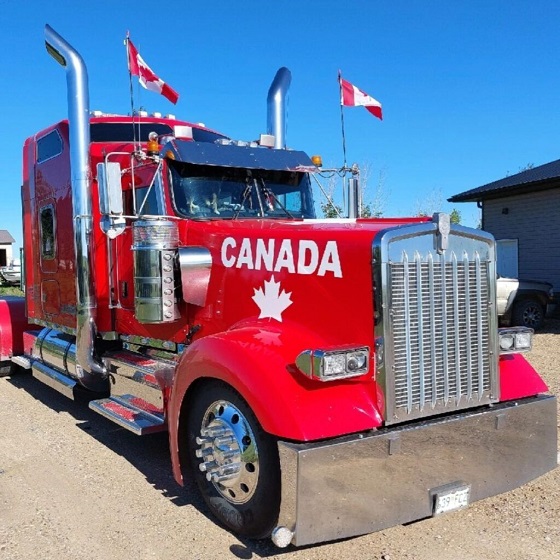
A judge ruled that the Ontario Court of Justice is already ‘satisfied’ with Chris Barber’s sentence and taking away his very livelihood would be ‘disproportionate.’
A Canadian judge has dismissed a demand from Canadian government lawyers to seize Freedom Convoy leader Chris Barber’s “Big Red” semi-truck.
On Friday, Ontario Court of Justice Judge Heather Perkins-McVey denied the Crown’s application seeking to forfeit Barber’s truck.
She ruled that the court is already “satisfied” with Barber’s sentence and taking away his very livelihood would be “disproportionate.”
“This truck is my livelihood,” said Barber in a press release sent to LifeSiteNews.
“Trying to permanently seize it for peacefully protesting was wrong, and I’m relieved the court refused to allow that to happen,” he added.
Criminal defense lawyer Marwa Racha Younes was welcoming of the ruling as well, stating, “We find it was the right decision in the circumstances and are happy with the outcome.”
John Carpay, president of the Justice Centre for Constitutional Freedoms (JCCF), said the decision is “good news for all Canadians who cherish their Charter freedom to assemble peacefully.”
READ: Freedom Convoy protester appeals after judge dismissed challenge to frozen bank accounts
“Asset forfeiture is an extraordinary power, and it must not be used to punish Canadians for participating in peaceful protest,” he added in the press release.
As reported recently by LifeSiteNews, the Canadian government claimed that Barber’s truck is an “offence-related property” relating to his involvement in the 2022 protests against Canada’s COVID mandates.
At this time, the court ruling ends any forfeiture proceedings for the time being, however Barber will continue to try and appeal his criminal conviction and house arrest sentence.
Barber’s truck, a 2004 Kenworth long-haul he uses for business, was a focal point in the 2022 protests. He drove it to Ottawa, where it was parked for an extended period of time, but he complied when officials asked him to move it.
On October 7, 2025, after a long trial, Ontario Court Justice Perkins-McVey sentenced Barber and Tamara Lich, the other Freedom Convoy leader, to 18 months’ house arrest. They had been declared guilty of mischief for their roles as leaders of the 2022 protest against COVID mandates, and as social media influencers.
Lich and Barber have filed appeals of their own against their house arrest sentences, arguing that the trial judge did not correctly apply the law on their mischief charges.
Government lawyers for the Crown have filed an appeal of the acquittals of Lich and Barber on intimidation charges.
The pair’s convictions came after a nearly two-year trial despite the nonviolent nature of the popular movement.

From LifeSiteNews
Protestor Evan Blackman’s legal team argues Trudeau’s Emergencies Act-based bank account freezes were punitive state action tied directly to protest participation.
A Freedom Convoy protester whose bank accounts were frozen by the Canadian government says a judge erred after his ruling did not consider the fact that the funds were frozen under the Emergencies Act, as grounds for a stay of proceedings.
In a press release sent out earlier this week, the Justice Centre for Constitutional Freedoms (JCCF) said that Freedom Convoy protestor Evan Blackman will challenge a court ruling in his criminal case via an appeal with the Ontario Superior Court of Justice.
“This case raises serious questions about how peaceful protest is treated in Canada and about the lasting consequences of the federal government’s unlawful use of the Emergencies Act,” noted constitutional lawyer Chris Fleury. “The freezing of protestors’ bank accounts was part of a coordinated effort to suppress dissent, and courts ought to be willing to scrutinize that conduct.”
Blackman was arrested on February 18, 2022, during the police crackdown on Freedom Convoy protests against COVID restrictions, which was authorized by the Emergencies Act (EA). The EA was put in place by former Prime Minister Justin Trudeau’s Liberal government, which claimed the protests were violent, despite no evidence that this was the case.
Blackman’s three bank accounts with TD Bank were frozen due to his participation in the Freedom Convoy, following a directive ordered by Trudeau.
As reported by LifeSiteNews, in November of this year, Blackman was convicted at his retrial even though he had been acquitted at his original trial. In 2023, Blackman’s “mischief” and “obstructing police” charges were dismissed by a judge due to lack of evidence and the “poor memory of a cop regarding key details of the alleged criminal offences.”
His retrial resulted in Blackman getting a conditional discharge along with 12 months’ probation and 122 hours of community service, along with a $200 victim fine surcharge.
After this, Blackman’s application for a stay of proceedings was dismissed by the court. He had hoped to have his stay of proceedings, under section 24(1) of the Charter of Rights and Freedoms, allowed. However, the judge ruled that the freezing of his bank accounts was legally not related to his arrest, and because of this, the stay of proceedings lacked standing.
The JCCF disagreed with this ruling, noting, it “stands in contrast to a Federal Court decision finding that the government’s invocation of the Emergencies Act was unreasonable and violated Canadians’ Charter rights, including those targeted by the financial measures used against Freedom Convoy protestors.”
As of press time, a hearing date has not been scheduled.
In 2024, Federal Court Justice Richard Mosley ruled that Trudeau was “not justified” in invoking the Emergencies Act.
In early 2022, the Freedom Convoy saw thousands of Canadians from coast to coast come to Ottawa to demand an end to COVID mandates in all forms. Despite the peaceful nature of the protest, Trudeau’s federal government enacted the EA in mid-February.
After the protesters were cleared out, which was achieved through the freezing of bank accounts of those involved without a court order as well as the physical removal and arrest of demonstrators, Trudeau revoked the EA on February 23, 2022.

Canada’s sudden rediscovery of energy ambition has been greeted with a familiar charge: hypocrisy

Paris Climate Deal Now Decade-Old Disaster

Chinese Billionaire Tried To Build US-Born Baby Empire As Overseas Elites Turn To American Surrogates
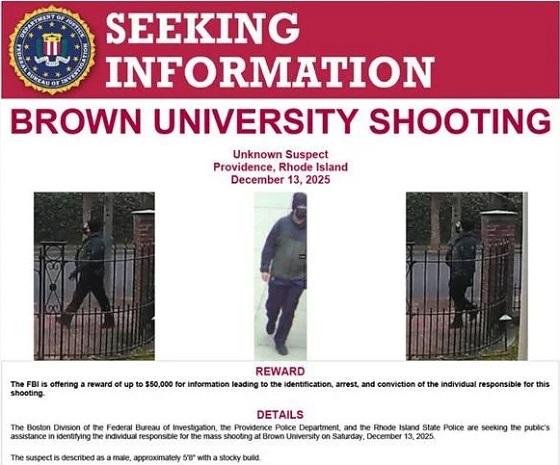
Brown University shooter dead of apparent self-inflicted gunshot wound
Major tax changes in 2026: Report

Canadian gov’t considers sharing census data on gender-confused children

Bondi Beach Survivor Says Cops Prevented Her From Fighting Back Against Terrorists
-
 Business2 days ago
Geopolitics no longer drives oil prices the way it used to
-
 Business2 days ago
Argentina’s Milei delivers results free-market critics said wouldn’t work
-
 Business2 days ago
Deadlocked Jury Zeroes In on Alleged US$40 Million PPE Fraud in Linda Sun PRC Influence Case
-
 Censorship Industrial Complex2 days ago
Canadian university censors free speech advocate who spoke out against Indigenous ‘mass grave’ hoax
-
COVID-192 days ago
Freedom Convoy protester appeals after judge dismissed challenge to frozen bank accounts
-
 Business23 hours ago
Taxing food is like slapping a surcharge on hunger. It needs to end
-
COVID-191 day ago
Judge denies Canadian gov’t request to take away Freedom Convoy leader’s truck
-
 International1 day ago
Ottawa is still dodging the China interference threat