
Alberta
Canadian Christian chiropractor fights ‘illegal’ $65,000 fine for refusing to wear mask


From LifeSiteNews

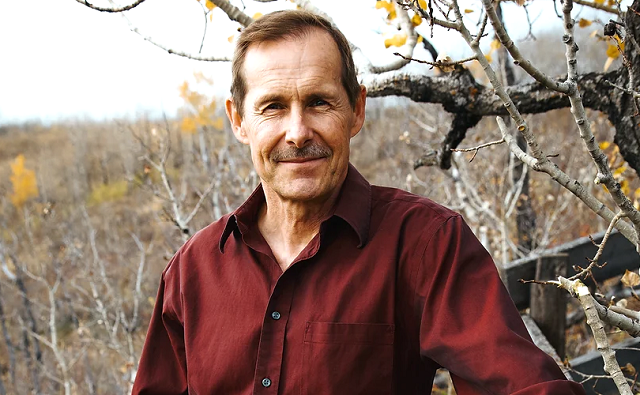
Dr. Curtis Wall went against the College of Chiropractors of Alberta’s COVID mask mandate in 2020 and the organization has been pursuing disciplinary action ever since.
The legal team for Dr. Curtis Wall, a Canadian chiropractor who was recently fined $65,000 by his medical college for not wearing a mask in 2020 despite the fact public health orders last year were nullified by a court, has vowed to fight the “illegal” fine, saying that Wall was targeted because he is a “Christian man of integrity and principle.”
“Dr. Wall should not pay any fines or costs when the public health orders he was charged with not following have been declared void by the courts,” said Wall’s legal team, Liberty Coalition Canada (LCC), in a press release.
“He is a Christian man of integrity and principle — attributes that make him a target for government overreach in the era of COVID.”
Wall was practicing in Calgary in 2020 when the COVID crisis was gearing up, went against Alberta’s public health orders and chose not to wear a mask during patient visits. Many of his patients also decided to not wear masks during their visits, which quickly drew the ire of College of Chiropractors of Alberta, which had mandated that all chiropractors wear masks.
Wall, who has been seeing patients for the last 25 years with a pristine record, was then targeted by the College, which tried to strip him of his license to practice. The College was unable to strip Wall of his license and he continued to practice, sans mask in 2021 and 2022.
In 2021, the College had brought against Wall, as per the LCC, “a long list of charges of unprofessional conduct against Dr. Wall, most of which related to Dr. Wall not wearing a mask while treating patients and permitting his patients to not wear a mask.”
Wall was then brought before a disciplinary hearing Tribunal to mediate his case, which went well into 2022, and had placed a publication ban on all “identities of all witnesses,” including Wall’s.
James Kitchen, Wall’s lawyer from the LCC, was successful in getting the publication ban lifted, as the LCC noted due to the College “wishing to avoid likely defeat before the courts” regarding keeping the ban in place.
Fined chiropractor says college did not recognize his ‘Christian convictions’
In 2023, the Tribunal ruled against Wall entirely and in favor of the College.
The Tribunal’s decision noted the LCC is “riddled with errors of fact and law and is so poorly decided it is an embarrassment to the chiropractic profession.”
Wall spoke with LifeSiteNews and observed that while in his point of view he does not feel his fines and costs imposed on him by the college “are a direct result of my Christian faith,” he did note that the tribunal did “not recognize my honest Christian convictions as a valid reason for my not wearing a mask.”
“They put placed no merit in the argument that as a Christian I believe I am created in the image of God,” Wall said.
“My face is an expression of Him. Having man arbitrarily mandate that I cover my face is an affront to that expression and signifies that I am living in the fear of man, not by faith. So, in all, I don’t feel directly persecuted as a Christian, but certainly indirectly.”
Wall told LifeSiteNews that in his opinion the college could have “handled this issue much differently.”
“There must always be room for exceptions to a rule. I did present a doctor’s note to verify my inability to wear a mask. They did not place any weight on that note. They blamed me for ‘self-diagnosing’ my problem,” Wall said.
“Number one, I’m a doctor. I think eight years of schooling has given me some wisdom to diagnose my own signs and symptoms. Number two, if someone eats a peanut and their throat swells shut, can they not diagnose themselves and stay away from nuts? It’s not a problem to self-diagnose.”
Wall said that despite his legal team presenting four expert witnesses to demonstrate “the obvious inadequacy and lack of efficacy in mask-wearing, not to mention the harms as well,” the college “did not cite the record once in their verdict.”
He noted that “common sense, science and past and present studies overwhelmingly demonstrate” the lack of efficacy regarding mask-wearing.
The LCC noted that although both Kitchen and Wall hoped for an “unbiased decision from the tribunal,” they knew it was more “likely the tribunal members would lack the courage to oppose the government’s COVID narrative by accepting the scientific evidence masks are utterly ineffective at preventing the transmission of COVID and harmful to wearers.”
“Nonetheless, it is shocking the lengths the tribunal went to dismiss the evidence of Dr. Wall, three of his patients, and his four expert witnesses while blithely accepting all the evidence of the College.”
Wall’s charges laid despite a recent court ruling nullifying all Alberta COVID health orders
According to LCC, the charges brought against Wall show that the College of Chiropractors of Alberta has “ignored the law” relating to non-criminal COVID-era charges handed out in the province.
As reported by LifeSiteNews before, last year a judge from Alberta ruled that politicians violated the province’s health act by making decisions regarding COVID mandates without authorization. This ruling came from the Alberta’s Court of Kings Bench’s Ingram v. Alberta decision, which put into doubt all cases involving those facing non-criminal COVID-related charges in the province. In effect, the ruling struck down and nullified all health orders issued by Dr. Deena Hinshaw, Alberta’s former chief medical officer of health.
As a result, multiple people facing charges, such as Dr. Michal Princ, pizzeria owner Jesse Johnson, café owner Chris Scott, and Alberta pastors James Coates, Tim Stephens, and Artur Pawlowski who were jailed for keeping churches open under then-Premier Jason Kenney, have had COVID charges against them dropped due to the court ruling.
The Alberta’s Court of Kings Bench’s Ingram v. Alberta decision put into doubt all cases involving those facing non-criminal COVID-related charges in the province.
As a result of the court ruling, Alberta Crown Prosecutions Service (ACPS) said Albertans facing COVID-related charges will likely not be convicted but instead have their charges stayed.
However, last year, the College, and of important note after the Ingram ruling, ordered Wall to pay $65,000 in fines and costs “under threat of immediately losing his license to practice if he does not pay,” the LCC said.
Chiropractor’s lawyer to fight fine tooth and nail
According to the LCC, the College’s new complaints director said she will enforce the tribunal’s court-defying order and mandate Wall pay the $65,000.
Because of this, Kitchen submitted an application to the College “to prevent this injustice” against Wall, the LCC noted.
“The Application will be heard on June 21. It will be heard virtually and is open to public, although the College has erected a number of barriers to people attending its hearings. For one, people must register with the hearings director and must do so many days in advance,” he told LifeSiteNews.
“The Tribunal elected to ignore the Ingram decision despite issuing its decision over two weeks after Ingram was released by the Court.”
Kitchen noted that the Tribunal had a lawyer advising it who was being paid some $700 an hour. He told LifeSiteNews that “Tribunals can do whatever they want and often do.”
“Only if the affected person takes further legal action can they hold the Tribunals accountable. And even then, that’s very difficult because the first appeals are to the councils of the Colleges, which almost always rubber stamp whatever the Tribunals decide. Real accountability isn’t had until the impugned professional is able to reach the Court of Appeal, which of course takes years and an enormous amount of funding for lawyer fees,” Kitchen said.
Kitchen is working Wall’s case at discounted rates and noted that high legal costs in such cases dealing with tribunals, who can drag things on for years, to him appear to be a tactic the Colleges count on for “avoiding accountability.”
The LCC estimates the College, which is funded through payments from all chiropractors, paid some $600,000 in legal fees to fight Wall.
“LCC asks supporters to donate toward Dr. Wall’s case so he and Mr. Kitchen can hold the College of Chiropractors of Alberta accountable and bring an end to the unjust persecution of Dr. Curtis Wall. Liberty Coalition Canada is assisting Dr. Wall with his legal expenses through the Legal Defense Fund.”
Kenney quit after losing the confidence of his United Conservative Party (UCP) members for backtracking on his promise to not impose a COVID vaccine passport. Under Kenney, thousands of businesses, notably restaurants and small shops, were negatively impacted by severe COVID restrictions, mostly in 2020-21, that forced them to close their doors for a time. Many never reopened. At the same time, as in the rest of Canada, big box stores were allowed to operate unimpeded.
Under Kenney, thousands of nurses, doctors, healthcare and government workers lost their jobs for choosing to not get the jabs, leading Premier Danielle Smith to say – only minutes after being sworn in – that over the past year the “unvaccinated” were the “most discriminated against” people in her lifetime.
Recently, LifeSiteNews reported on how Alberta-based Rath & Company is in the process of putting together a class-action lawsuit against the Alberta government on behalf of many business owners in the province who faced massive losses or permanent closures from what it says were “illegal” COVID public health orders enacted by provincial officials.


From the Fraser Institute
By Tegan Hill and Austin Thompson
According to Calgarians for Thoughtful Growth (CFTG)—an organization advocating against “blanket rezoning”— housing would be more affordable if the mayor and council restricted what homes can be built in Calgary and where. But that gets the economics backwards.
Blanket rezoning—a 2024 policy that allowed homebuilders to construct duplexes, townhomes and fourplexes in most neighbourhoods—allowed more homebuilding, giving Calgarians more choice, and put downward pressure on prices. Mayor Farkas and several councillors campaigned on repealing blanket rezoning and on December 15 council will debate a motion that could start that process. As Calgarians debate the city’s housing rules, residents should understand the trade-offs involved.
When CFTG claims that blanket rezoning does “nothing” for affordability, it ignores a large body of economic research showing the opposite.
New homes are only built when they can be sold to willing homebuyers for a profit. Restrictions that limit the range of styles and locations for new homes, or that lock denser housing behind a long, costly and uncertain municipal approval process, inevitably eliminate many of these opportunities. That means fewer new homes are built, which worsens housing scarcity and pushes up prices. This intuitive story is backed up by study after study. An analysis by Canada’s federal housing agency put it simply: “higher residential land use regulation seems to be associated with lower housing affordability.”
CFTG also claims that blanket rezoning merely encourages “speculation” (i.e. buying to sell in the short-term for profit) by investors. Any profitable housing market may invite some speculative activity. But homebuilders and investors can only survive financially if they make homes that families are willing to buy or rent. The many Calgary families who bought or rented a new home enabled by blanket rezoning did so because they felt it was their best available option given its price, amenities and location—not because they were pawns in some speculative game. Calgarians benefit when they are free to choose the type of home and neighbourhood that best suits their family, rather than being constrained by the political whims of city hall.
And CFTG’s claim that blanket rezoning harms municipal finances also warrants scrutiny. More specifically, CFTG suggests that developers do not pay for infrastructure upgrades in established neighbourhoods, but this is simply incorrect. The City of Calgary charges an “Established Area Levy” to cover the cost of water and wastewater upgrades spurred by redevelopment projects—raising $16.5 million in 2024 alone. Builders in the downtown area must pay the “Centre City Levy,” which funds several local services (and generated $2.5 million in 2024).
It’s true that municipal fees on homes in new communities are generally higher, but that reflects the reality that new communities require far more new pipes, roads and facilities than established neighbourhoods.
Redeveloping established areas of the city means more residents can make use of streets, transit and other city services already in place, which is often the most cost-effective way for a city to grow. The City of Calgary’s own analysis finds that redevelopment in established neighbourhoods saves billions of taxpayer dollars on capital and operating costs for city services compared to an alternative scenario where homebuilding is concentrated in new suburban communities.
An honest debate about blanket rezoning ought to acknowledge the advantages this system has in promoting housing choice, housing affordability and the sustainability of municipal finances.
Clearly, many Calgarians felt blanket rezoning was undesirable when they voted for mayoral and council candidates who promised to change Calgary’s zoning rules. However, Calgarians also voted for a mayor who promised that more homes would be built faster, and at affordable prices—something that will be harder to achieve if city hall imposes tighter restrictions on where and what types of homes can be built. This unavoidable tension should be at the heart of the debate.
CFTG is promoting a comforting fairy tale where Calgary can tighten restrictions on homebuilding without limiting supply or driving up prices. In reality, no zoning regime delivers everything at once—greater neighbourhood control inevitably comes at the expense of housing choice and affordability. Calgarians—including the mayor and council—need a clear understanding of the trade-offs.

Tegan Hill
Director, Alberta Policy, Fraser Institute

Austin Thompson
Senior Policy Analyst, Fraser Institute

From the Canadian Energy Centre
For Canada, the path to a stronger economy — and stronger global influence — runs through energy.
That’s the view of David Detomasi, a professor at the Smith School of Business at Queen’s University.
Detomasi, author of Profits and Power: Navigating the Politics and Geopolitics of Oil, argues that there is a moral case for developing Canada’s energy, both for Canadians and the world.

David Detomasi. Photo courtesy Smith School of Business, Queen’s University
CEC: What does being an energy superpower mean to you?
DD: It means Canada is strong enough to affect the system as a whole by its choices.
There is something really valuable about Canada’s — and Alberta’s — way of producing carbon energy that goes beyond just the monetary rewards.
CEC: You talk about the moral case for developing Canada’s energy. What do you mean?
DD: I think the default assumption in public rhetoric is that the environmental movement is the only voice speaking for the moral betterment of the world. That needs to be challenged.
That public rhetoric is that the act of cultivating a powerful, effective economic engine is somehow wrong or bad, and that efforts to create wealth are somehow morally tainted.
I think that’s dead wrong. Economic growth is morally good, and we should foster it.
Economic growth generates money, and you can’t do anything you want to do in social expenditures without that engine.
Economic growth is critical to doing all the other things we want to do as Canadians, like having a publicly funded health care system or providing transfer payments to less well-off provinces.
Over the last 10 years, many people in Canada came to equate moral leadership with getting off of oil and gas as quickly as possible. I think that is a mistake, and far too narrow.
Instead, I think moral leadership means you play that game, you play it well, and you do it in our interest, in the Canadian way.
We need a solid base of economic prosperity in this country first, and then we can help others.
CEC: Why is it important to expand Canada’s energy trade?
DD: Canada is, and has always been, a trading nation, because we’ve got a lot of geography and not that many people.
If we don’t trade what we have with the outside world, we aren’t going to be able to develop economically, because we don’t have the internal size and capacity.
Historically, most of that trade has been with the United States. Geography and history mean it will always be our primary trade partner.
But the United States clearly can be an unreliable partner. Free and open trade matters more to Canada than it does to the U.S. Indeed, a big chunk of the American people is skeptical of participating in a global trading system.
As the United States perhaps withdraws from the international trading and investment system, there’s room for Canada to reinforce it in places where we can use our resource advantages to build new, stronger relationships.
One of these is Europe, which still imports a lot of gas. We can also build positive relationships with the enormous emerging markets of China and India, both of whom want and will need enormous supplies of energy for many decades.
I would like to be able to offer partners the alternative option of buying Canadian energy so that they are less reliant on, say, Iranian or Russian energy.
Canada can also maybe eventually help the two billion people in the world currently without energy access.
CEC: What benefits could Canadians gain by becoming an energy superpower?
DD: The first and primary responsibility of our federal government is to look after Canada. At the end of the day, the goal is to improve Canada’s welfare and enhance its sovereignty.
More carbon energy development helps Canada. We have massive debt, an investment crisis and productivity problems that we’ve been talking about forever. Economic and job growth are weak.
Solving these will require profitable and productive industries. We don’t have so many economic strengths in this country that we can voluntarily ignore or constrain one of our biggest industries.
The economic benefits pay for things that make you stronger as a country.
They make you more resilient on the social welfare front and make increasing defence expenditures, which we sorely need, more affordable. It allows us to manage the debt that we’re running up, and supports deals for Canada’s Indigenous peoples.
CEC: Are there specific projects that you advocate for to make Canada an energy superpower?
DD: Canada’s energy needs egress, and getting it out to places other than the United States. That means more transport and port facilities to Canada’s coasts.
We also need domestic energy transport networks. People don’t know this, but a big chunk of Ontario’s oil supply runs through Michigan, posing a latent security risk to Ontario’s energy security.
We need to change the perception that pipelines are evil. There’s a spiderweb of them across the globe, and more are being built.
Building pipelines here, with Canadian technology and know-how, builds our competitiveness and enhances our sovereignty.
Economic growth enhances sovereignty and provides the resources to do other things. We should applaud and encourage it, and the carbon energy sector can lead the way.


The Trickster Politics of the Tanker Ban are Hiding a Much Bigger Reckoning for B.C.
What the Data Shows About the New Canada-Alberta Pipeline Opportunity

While Trump has southern border secure, hundreds of thousands of illegal immigrants still flooding in from Canada

Why Does Canada “Lead” the World in Funding Racist Indoctrination?

Can the COVID Scamsters Stick the Landing?
Canada’s EV Mandate Is Running On Empty

Canadian bishops condemn Liberal ‘hate speech’ proposal that could criminalize quoting Scripture
-
 Automotive2 days ago
The $50 Billion Question: EVs Never Delivered What Ottawa Promised
-
 C2C Journal2 days ago
Wisdom of Our Elders: The Contempt for Memory in Canadian Indigenous Policy
-
 Agriculture2 days ago
Growing Alberta’s fresh food future
-
 Alberta2 days ago
Alberta introducing three “all-season resort areas” to provide more summer activities in Alberta’s mountain parks
-
 Digital ID10 hours ago
Canada considers creating national ID system using digital passports for domestic use
-
 Business20 hours ago
Albertans give most on average but Canadian generosity hits lowest point in 20 years
-
 Censorship Industrial Complex2 days ago
Conservative MP calls on religious leaders to oppose Liberal plan to criminalize quoting Scripture
-
 National18 hours ago
Canada’s free speech record is cracking under pressure