
armed forces
Canada’s first ‘transgender’ military chaplain suspended for alleged sexual harassment


From LifeSiteNews

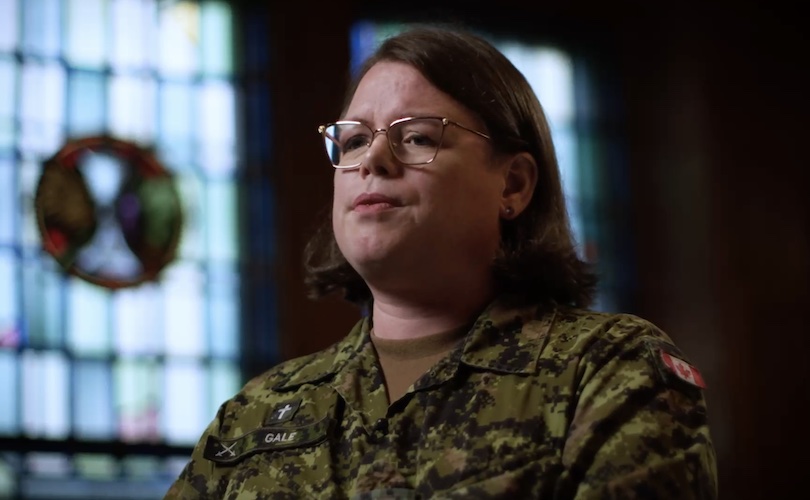
Canadian Armed Forces Captain ‘Beatrice’ Gale reportedly sought to grope a male soldier while drunk and was suspended just a few weeks after the Canadian military promoted him for ‘International Transgender Day of Visibility.’
Canadian Department of National Defence has suspended a “transgender” military chaplain it previously celebrated after he reportedly sought to grope a male soldier at the Royal Military College while drunk.
On March 28, the government highlighted Canadian Armed Forces Captain “Beatrice” Gale, a man who “identifies” as a woman, for “International Transgender Day of Visibility.” The military’s “first openly transgender chaplain” has been “a vocal advocate” for the so-called “rights” of transgender-identifying members, according to the press release, resulting “in policy changes that contributed to more inclusive gender-affirming medical care for CAF members.”
“I hope that being a transgender chaplain [sic] sends a message to the 2SLGBTQI+ community that the Royal Canadian Chaplain Service cares,” he said. “That it cares for that community.”
Just weeks later, however, the chaplain is generating a different kind of publicity.
True North reports that Gale’s chaplaincy has been revoked following a hearing finding he made an “inappropriate comment or request to another individual.”
Gale was determined to have violated the Queen’s Regulations and Orders by “behav[ing] in a manner that adversely affects the discipline, efficiency or morale of the Canadian Forces.” The specific details of the offense have not been officially confirmed, but, according to an anonymous source, he became inebriated at dinner and asked to grope a male lieutenant’s buttocks.
“The mandate for Captain Gale to serve as a Canadian military chaplain remains suspended. The Chaplain General will consider the implications of the summary hearing’s outcome to determine if additional administrative actions within their authority are required,” said DND spokesperson Andrée-Anne Poulin. Gale was docked two days pay and 20 days leave and is currently on administrative duty.
“If a male officer behaved in a similar manner towards a subordinate female, the situation would be dealt with differently, and the offender’s name would be leaked to the press. Unfortunately, there is a lack of equality in how the Canadian Armed Forces handle such allegations,” attorney Phillip Millar, a former combat officer who now represents Canadian soldiers, told True North.
He added that he once had a client who “was not granted the same leniency for much less serious alleged infractions. However, in the case of a transgender offender who held a position of trust as a padre and a senior in rank, the matter was simply swept under the rug.”
As is the case in the United States, Canada’s armed forces are currently struggling to attract recruits in the wake of adopting “woke” policies such as COVID-19 shot mandates, “climate change” lectures, and pro-LGBT “identity” initiatives.
The DND declared last month that increased “diversity and inclusivity” are “vital” to creating an effective military and that they “enrich the workplace.”


From the Frontier Centre for Public Policy
By David Redman
Canada’s Defence Mobilization Plan blurs legal lines, endangers untrained civil servants, and bypasses provinces. The Plan raises serious questions about military overreach, readiness, and political motives behind rushed federal emergency planning.
The new defence plan looks simple on paper. The risks are anything but.
Canadians have grown used to bad news about the Canadian Armed Forces (CAF), but the newly revealed defence mobilization plan is in a category of its own.
After years of controversy over capability, morale, and leadership challenges, the military’s senior ranks now appear willing to back a plan that misunderstands emergency law, sidelines provincial authority, and proposes to place untrained civil servants in harm’s way.
The document is a Defence Mobilization Plan (DMP), normally an internal framework outlining how the military would expand or organize its forces in a major crisis.
The nine-page plan was dated May 30, 2025, but only reached public view when media outlets reported on it. One article reports that the plan would create a supplementary force made up of volunteer public servants from federal and provincial governments. Those who join this civil defence corps would face less restrictive age limits, lower fitness requirements, and only five days of training per year. In that time, volunteers would be expected to learn skills such as shooting, tactical movement, communicating, driving a truck, and flying a drone. They would receive medical coverage during training but not pensionable benefits.
The DMP was circulated to 20 senior commanders and admirals, including leaders at NORAD, NATO, special forces, and Cybercom. The lack of recorded objection can reasonably raise concerns about how thoroughly its implications were reviewed.
The legal context explains much of the reaction. The Emergencies Act places responsibility for public welfare and public order emergencies on the provinces and territories unless they request federal help. Emergency response is primarily a provincial role because provinces oversee policing, natural disaster management, and most front-line public services. Yet the DMP document seems to assume federal and military control in situations where the law does not allow it. That is a clear break from how the military is expected to operate.
The Emergency Management Act reinforces that civilian agencies lead domestic emergencies and the military is a force of last resort. Under the law, this means the CAF is deployed only after provincial and local systems have been exhausted or cannot respond. The Defence Mobilization Plan, however, presents the military as a routine responder, which does not match the legal structure that sets out federal and provincial roles.
Premiers have often turned to the military first during floods and fires, but those political habits do not remove the responsibility of senior military leaders to work within the law and respect their mandate.
Capacity is another issue. Combat-capable personnel take years to train, and the institution is already well below its authorized strength. Any task that diverts resources from readiness weakens national defence, yet the DMP proposes to assign the military new responsibilities and add a civilian component to meet them.
The suggestion that the military and its proposed civilian force should routinely respond to climate-related events is hard to square with the CAF’s defined role. It raises the question of whether this reflects policy misjudgment or an effort to apply military tools to problems that are normally handled by civilian systems.
The plan also treats hazards unrelated to warfighting as if the military is responsible for them. Every province and territory already has an emergency management organization that monitors hazards, coordinates responses and manages recovery. These systems use federal support when required, but the military becomes involved only when they are overwhelmed. If Canada wants to revive a 1950s-style civil defence model, major legislative changes would be needed. The document proceeds as if no such changes are required.
The DMP’s training assumptions deepen the concerns. Suggesting that tasks such as “shooting, moving, communicating, driving a truck and flying a drone” can be taught in a single five-day block does not reflect the standards of any modern military. These skills take time to learn and years to master.
The plan also appears aligned with the government’s desire to show quick progress toward NATO’s defence spending benchmark of two percent of GDP and eventually five percent. Its structure could allow civil servants’ pay and allowances to be counted toward defence spending.
Any civil servant who joins this proposed force would be placed in potentially hazardous situations with minimal training. For many Canadians, that level of risk will seem unreasonable.
The fact that the DMP circulated through senior military leadership without signs of resistance raises concerns about accountability at the highest levels. That the chief of the defence staff reconsidered the plan only after public criticism reinforces those concerns.
The Defence Mobilization Plan risks placing civil servants in danger through a structure that appears poorly conceived and operationally weak. The consequences for public trust and institutional credibility are becoming difficult to ignore.
David Redman had a distinguished military career before becoming the head of the Alberta Emergency Management Agency in 2004. He led the team in developing the 2005 Provincial Pandemic Influenza Plan. He retired in 2013. He writes here for the Frontier Centre for Public Policy.

From the Daily Caller News Foundation
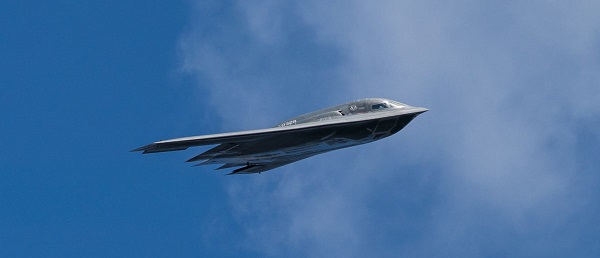
The global war business scored record revenues in 2024 amid multiple protracted proxy conflicts across the world, according to a new industry analysis released on Monday.
The top 100 arms manufacturers in the world raked in $679 billion in revenue in 2024, up 5.9% from the year prior, according to a new Stockholm International Peace Research Institute (SIPRI) study. The figure marks the highest ever revenue for manufacturers recorded by SIPRI as the group credits major conflicts for supplying the large appetite for arms around the world.
“The rise in the total arms revenues of the Top 100 in 2024 was mostly due to overall increases in the arms revenues of companies based in Europe and the United States,” SIPRI said in their report. “There were year-on-year increases in all the geographical areas covered by the ranking apart from Asia and Oceania, which saw a slight decrease, largely as a result of a notable drop in the total arms revenues of Chinese companies.”
Notably, Chinese arms manufacturers saw a large drop in reported revenues, declining 10% from 2023 to 2024, according to SIPRI. Just off China’s shores, Japan’s arms industry saw the largest single year-over-year increase in revenue of all regions measured, jumping 40% from 2023 to 2024.
American companies dominate the top of the list, which measures individual companies’ revenue, with Lockheed Martin taking the top spot with $64,650,000,000 of arms revenue in 2024, according to the report. Raytheon Technologies, Northrop Grumman and BAE Systems follow shortly after in revenue,
The Czechoslovak Group recorded the single largest jump in year-on-year revenue from 2023 to 2024, increasing its haul by 193%, according to SIPRI. The increase is largely driven by their crucial role in supplying arms and ammunition to Ukraine.
The Pentagon contracted one of the group’s subsidiaries in August to build a new ammo plant in the U.S. to replenish artillery shell stockpiles drained by U.S. aid to Ukraine.
“In 2024 the growing demand for military equipment around the world, primarily linked to rising geopolitical tensions, accelerated the increase in total Top 100 arms revenues seen in 2023,” the report reads. “More than three quarters of companies in the Top 100 (77 companies) increased their arms revenues in 2024, with 42 reporting at least double-digit percentage growth.”


The Recall Trap: 21 Alberta MLA’s face recall petitions

‘There Will Be Very Serious Retaliation’: Two American Servicemen, Interpreter Killed In Syrian Attack

Tyler Robinson shows no remorse in first court appearance for Kirk assassination

US Notes 2.5 million illegals out and counting

Inflation Reduction Act, Green New Deal Causing America’s Energy Crisis

Politicians should be honest about environmental pros and cons of electric vehicles

Terror in Australia: 12 killed after gunmen open fire on Hanukkah celebration
-
 Business2 days ago
Canada Hits the Brakes on Population
-
 Crime1 day ago
Brown University shooter dead of apparent self-inflicted gunshot wound
-
 Frontier Centre for Public Policy2 days ago
Canada Lets Child-Porn Offenders Off Easy While Targeting Bible Believers
-
 Health17 hours ago
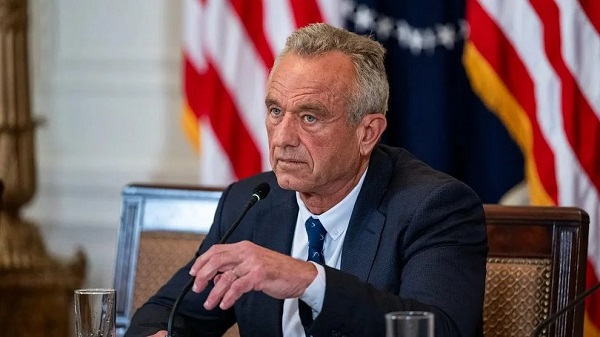
RFK Jr reversing Biden-era policies on gender transition care for minors
-
 Agriculture2 days ago
Why is Canada paying for dairy ‘losses’ during a boom?
-
 Alberta18 hours ago
Alberta’s new diagnostic policy appears to meet standard for Canada Health Act compliance
-
 Business2 days ago
White House declares inflation era OVER after shock report
-
 Business1 day ago
Trump signs order reclassifying marijuana as Schedule III drug