
Automotive
Canada’s EV gamble is starting to backfire

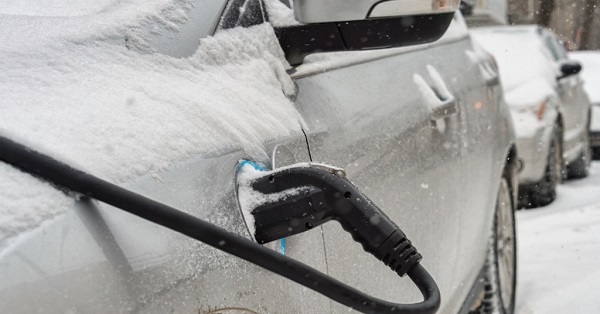


Things have only gone from bad to worse for the global Electric Vehicle industry. And that’s a problem for Canada, because successive Liberal governments have done everything in their power to hitch our cart to that horse.

Earlier this month, the Trump Administration rolled back more Biden-era regulations that effectively served as a back-door EV mandate in the United States. These rules mandated that all passenger cars be able to travel at least 65.1 miles (and for light trucks, 45.2 miles) per gallon of gasoline or diesel, by the year 2031. Since no Internal Combustion Engine (ICE) vehicle could realistically conform to those standards, that would have essentially boxed them out of the market.
Trump’s rolling them back was a fulfillment of his campaign promise to end the Biden Administration’s stealth EV mandates. But it was also a simple recognition of the reality that EVs can’t compete on their own merits.
For proof of that, look no further than our second bit of bad news for EVs: Ford Motor Company has just announced a massive $19.5 billion write-down, almost entirely linked to its aggressive push into EVs. They’ve lost $13 billion on EVs in the past two years alone.
The company invested tens of billions on these go-carts, and lost their shirt when it turned out the market for them was miniscule.
Ford’s EV division president Andrew Frick explained, “Ford is following the customer. We are looking at the market as it is today, not just as everyone predicted it to be five years ago.”
Of course, five years ago, the market was assuming that government subsidies-plus-mandates would create a market for EVs at scale, which hasn’t happened.
As to what this portends for the market, the Wall Street Journal argued, “The company’s pivot from all-electric vehicles is a fresh sign that America’s roadways – after a push to remake them – will continue to look in the near future much like they do today, with a large number of gas-powered cars and trucks and growing use of hybrids.”
And that’s not just true in the U.S. Across the Atlantic, reports suggest the European Union is preparing to delay their own EV mandates to 2040. And the U.K.’s Labour government is considering postponing their own 2030 ICE vehicle ban to align with any EU change in policy.
It’s looking like fewer people around the world will be forced by their governments to buy EVs. Which means that fewer people will be buying EVs.
Now, that is a headache for Canada. Our leaders, at both the federal and provincial levels, have bet big on the success of EVs, investing billions in taxpayer dollars in the hopes of making Canada a major player in the global EV supply chain.
To bolster those investments, Ottawa introduced its Electric Vehicle mandate, requiring 100 per cent of new light-duty vehicle sales to be electric by 2035. This, despite the fact that EVs remain significantly more expensive than gas-and-diesel driven vehicles, they’re poorly suited to Canada’s vast distances and cold climate, and our charging infrastructure is wholly inadequate for a total transition to EVs.
But even if these things weren’t true, there still aren’t enough of us to make the government’s investment make sense. Their entire strategy depends on exporting to foreign markets that are rapidly cooling on EVs.
Collapsing demand south of the border – where the vast majority of the autos we build are sent – means that Canadian EVs will be left without buyers. And postponed (perhaps eventually canceled) mandates in Europe mean that we will be left without a fallback market.
Canadian industry voices are growing louder in their concern. Meanwhile, plants are already idling, scaling back production, or even closing, leaving workers out in the cold.
As GM Canada’s president, Kristian Aquilina, said when announcing her company’s cancellation of the BrightDrop Electric delivery van, “Quite simply, we just have not seen demand for these vehicles climb to the levels that we initially anticipated…. It’s simply a demand and a market-driven response.”
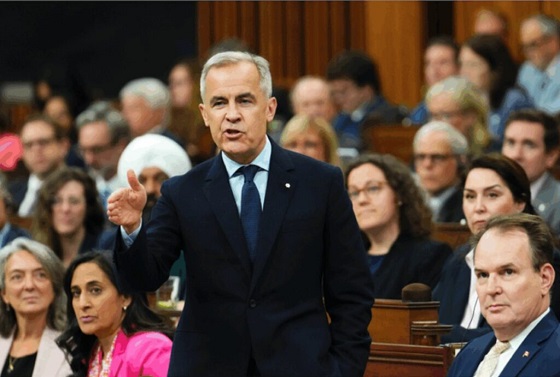
Prime Minister Mark Carney, while sharing much of the same environmental outlook as his predecessor, has already been compelled by economic realities to make a small adjustment – delaying the enforcement of the 2026 EV sales quotas by one year.
But a one-year pause doesn’t solve the problem. It kicks the can down the road.
Mr. Carney must now make a choice. He can double down on this troubled policy, continuing to throw good money after bad, endangering a lot of jobs in our automotive sector, while making transportation more expensive and less reliable for Canadians. Or he can change course: scrap the mandates, end the subsidies, and start putting people and prosperity ahead of ideology.
Here’s hoping he chooses the latter.
The writing is on the wall. Around the world, the forced transition to EVs is crashing into economic reality. If Canada doesn’t wake up soon, we’ll be left holding the bag.



From the Daily Caller News Foundation
I’ve written frequently here in recent years about the financial fiasco that has hit Ford Motor Company and other big U.S. carmakers who made the fateful decision to go in whole hog in 2021 to feed at the federal subsidy trough wrought on the U.S. economy by the Joe Biden autopen presidency. It was crony capitalism writ large, federal rent seeking on the grandest scale in U.S. history, and only now are the chickens coming home to roost.
Ford announced on Monday that it will be forced to take $19.5 billion in special charges as its management team embarks on a corporate reorganization in a desperate attempt to unwind the financial carnage caused by its failed strategies and investments in the electric vehicles space since 2022.
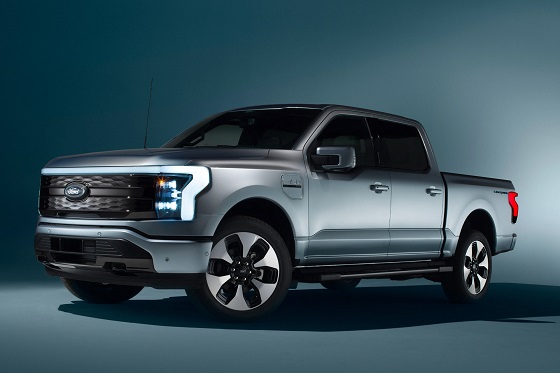
Cancelled is the Ford F-150 Lightning, the full-size electric pickup that few could afford and fewer wanted to buy, along with planned introductions of a second pricey pickup and fully electric vans and commercial vehicles. Ford will apparently keep making its costly Mustang Mach-E EV while adjusting the car’s features and price to try to make it more competitive. There will be a shift to making more hybrid models and introducing new lines of cheaper EVs and what the company calls “extended range electric vehicles,” or EREVs, which attach a gas-fueled generator to recharge the EV batteries while the car is being driven.
Dear Readers:
As a nonprofit, we are dependent on the generosity of our readers.
Please consider making a small donation of any amount here.
Thank you!
“The $50k, $60k, $70k EVs just weren’t selling; We’re following customers to where the market is,” Farley said. “We’re going to build up our whole lineup of hybrids. It’s gonna be better for the company’s profitability, shareholders and a lot of new American jobs. These really expensive $70k electric trucks, as much as I love the product, they didn’t make sense. But an EREV that goes 700 miles on a tank of gas, for 90% of the time is all-electric, that EREV is a better solution for a Lightning than the current all-electric Lightning.”
It all makes sense to Mr. Farley, but one wonders how much longer the company’s investors will tolerate his presence atop the corporate management pyramid if the company’s financial fortunes don’t turn around fast.
To Ford’s and Farley’s credit, the company has, unlike some of its competitors (GM, for example), been quite transparent in publicly revealing the massive losses it has accumulated in its EV projects since 2022. The company has reported its EV enterprise as a separate business unit called Model-E on its financial filings, enabling everyone to witness its somewhat amazing escalating EV-related losses since 2022:
• 2022 – Net loss of $2.2 billion
• 2023 – Net loss of $4.7 billion
• 2024 – Net loss of $5.1 billion
Add in the company’s $3.6 billion in losses recorded across the first three quarters of 2025, and you arrive at a total of $15.6 billion net losses on EV-related projects and processes in less than four calendar years. Add to that the financial carnage detailed in Monday’s announcement and the damage from the company’s financial electric boogaloo escalates to well above $30 billion with Q4 2025’s damage still to be added to the total.
Ford and Farley have benefited from the fact that the company’s lineup of gas-and-diesel powered cars have remained strongly profitable, resulting in overall corporate profits each year despite the huge EV-related losses. It is also fair to point out that all car companies were under heavy pressure from the Biden government to either produce battery electric vehicles or be penalized by onerous federal regulations.
Now, with the Trump administration rescinding Biden’s harsh mandates and canceling the absurdly unattainable fleet mileage requirements, Ford and other companies will be free to make cars Americans actually want to buy. Better late than never, as they say, but the financial fallout from it all is likely just beginning to be made public.
- David Blackmon is an energy writer and consultant based in Texas. He spent 40 years in the oil and gas business, where he specialized in public policy and communications.
From the Fraser Institute
By Annika Segelhorst and Elmira Aliakbari
According to Steven Guilbeault, former environment minister under Justin Trudeau and former member of Prime Minister Carney’s cabinet, “Switching to an electric vehicle is one of the most impactful things Canadians can do to help fight climate change.”
And the Carney government has only paused Trudeau’s electric vehicle (EV) sales mandate to conduct a “review” of the policy, despite industry pressure to scrap the policy altogether.
So clearly, according to policymakers in Ottawa, EVs are essentially “zero emission” and thus good for environment.
But is that true?
Clearly, EVs have some environmental advantages over traditional gasoline-powered vehicles. Unlike cars with engines that directly burn fossil fuels, EVs do not produce tailpipe emissions of pollutants such as nitrogen dioxide and carbon monoxide, and do not release greenhouse gases (GHGs) such as carbon dioxide. These benefits are real. But when you consider the entire lifecycle of an EV, the picture becomes much more complicated.
Unlike traditional gasoline-powered vehicles, battery-powered EVs and plug-in hybrids generate most of their GHG emissions before the vehicles roll off the assembly line. Compared with conventional gas-powered cars, EVs typically require more fossil fuel energy to manufacture, largely because to produce EVs batteries, producers require a variety of mined materials including cobalt, graphite, lithium, manganese and nickel, which all take lots of energy to extract and process. Once these raw materials are mined, processed and transported across often vast distances to manufacturing sites, they must be assembled into battery packs. Consequently, the manufacturing process of an EV—from the initial mining of materials to final assembly—produces twice the quantity of GHGs (on average) as the manufacturing process for a comparable gas-powered car.
Once an EV is on the road, its carbon footprint depends on how the electricity used to charge its battery is generated. According to a report from the Canada Energy Regulator (the federal agency responsible for overseeing oil, gas and electric utilities), in British Columbia, Manitoba, Quebec and Ontario, electricity is largely produced from low- or even zero-carbon sources such as hydro, so EVs in these provinces have a low level of “indirect” emissions.
However, in other provinces—particularly Alberta, Saskatchewan and Nova Scotia—electricity generation is more heavily reliant on fossil fuels such as coal and natural gas, so EVs produce much higher indirect emissions. And according to research from the University of Toronto, in coal-dependent U.S. states such as West Virginia, an EV can emit about 6 per cent more GHG emissions over its entire lifetime—from initial mining, manufacturing and charging to eventual disposal—than a gas-powered vehicle of the same size. This means that in regions with especially coal-dependent energy grids, EVs could impose more climate costs than benefits. Put simply, for an EV to help meaningfully reduce emissions while on the road, its electricity must come from low-carbon electricity sources—something that does not happen in certain areas of Canada and the United States.
Finally, even after an EV is off the road, it continues to produce emissions, mainly because of the battery. EV batteries contain components that are energy-intensive to extract but also notoriously challenging to recycle. While EV battery recycling technologies are still emerging, approximately 5 per cent of lithium-ion batteries, which are commonly used in EVs, are actually recycled worldwide. This means that most new EVs feature batteries with no recycled components—further weakening the environmental benefit of EVs.
So what’s the final analysis? The technology continues to evolve and therefore the calculations will continue to change. But right now, while electric vehicles clearly help reduce tailpipe emissions, they’re not necessarily “zero emission” vehicles. And after you consider the full lifecycle—manufacturing, charging, scrapping—a more accurate picture of their environmental impact comes into view.

Annika Segelhorst
Junior Economist

Elmira Aliakbari


Residential school burials controversy continues to fuel wave of church arsons, new data suggests
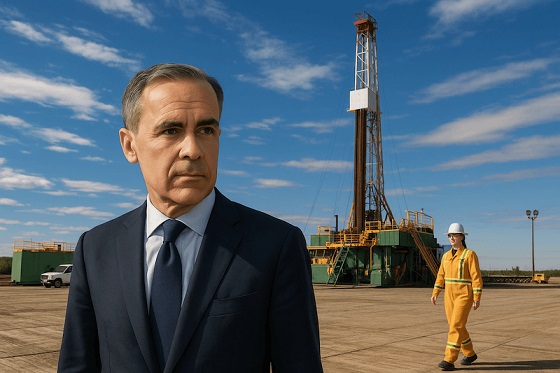
Canada’s sudden rediscovery of energy ambition has been greeted with a familiar charge: hypocrisy

Chinese Billionaire Tried To Build US-Born Baby Empire As Overseas Elites Turn To American Surrogates

Canadian gov’t considers sharing census data on gender-confused children

Brown University shooter dead of apparent self-inflicted gunshot wound

Paris Climate Deal Now Decade-Old Disaster
Major tax changes in 2026: Report
-
 International2 days ago
Ottawa is still dodging the China interference threat
-
 Business2 days ago
Taxing food is like slapping a surcharge on hunger. It needs to end
-
 Business23 hours ago
There’s No Bias at CBC News, You Say? Well, OK…
-
 COVID-192 days ago
Judge denies Canadian gov’t request to take away Freedom Convoy leader’s truck
-
 espionage2 days ago
Carney Floor Crossing Raises Counterintelligence Questions aimed at China, Former Senior Mountie Argues
-
 Energy2 days ago
75 per cent of Canadians support the construction of new pipelines to the East Coast and British Columbia
-
 Health1 day ago
FDA warns ‘breast binder’ manufacturers to stop marketing to gender-confused girls
-
 International1 day ago
2025: The Year The Narrative Changed