
Energy
Canada’s Climate Fetish Could Decimate Key Industry For First Nations


 From the Daily Caller News Foundation

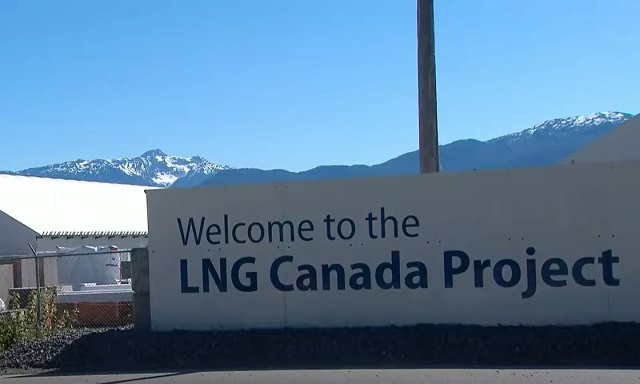
Obsessed with the faux climate crisis, the Canadian government in Ottawa seemingly discounts altogether the social and economic benefits of natural gas to First Nations communities of the country’s western region.
Approximately 5% of the world’s gas comes from Canada, mainly from the vast Western Canadian Sedimentary Basin underlying several provinces, including British Columbia, Alberta and Saskatchewan. In 2023, the country ranked fifth in global production behind the U.S., Russia, Iran and China.
Some First Nations communities — a designation that takes in indigenous people living south of the Arctic Circlehave — historically faced challenges in terms of economic development and social well-being. Limited access to education, healthcare and infrastructure has resulted in lower living standards compared to the national averagea — fact that I observed firsthand as a researcher in British Columbia. Unemployment rates are often higher in First Nations communities, and poverty remains a persistent issue.
However, oil and gas development has provided a pathway to prosperity for many of these communities. Liquified natural gas (LNG) projects, for example, require a significant workforce in both construction and operational phases. This translates into direct employment opportunities and much needed income for First Nations people otherwise lacking financial security.
The development of natural gas resources also necessitates infrastructure upgrades in nearby communities. These can include the construction or enhancements of roads, bridges and communication networks. Such improvements benefit the entire community by providing access to markets, educational opportunities and other essential services.
“For far too long, First Nations could only watch as others built generational wealth from the resources of our traditional lands” says Eva Clayton, president of the Nisga’a Lisims government. “But times are changing.”
First Nations participation in natural gas development goes beyond economic benefits. It represents an opportunity for communities to assert their self-determination and participate in shaping their own future. Communities can participate in natural gas projects through equity ownership and various arrangements, including Impact Benefit Agreements. According to the Canada Energy Centre, more than 75 First Nations and Métis communities in Alberta and British Columbia have agreed to ownership stakes in energy projects, including the Coastal GasLink pipeline and major transportation networks for oil sands production.
One such example is the recent Musqueam Partnership agreement by FortisBC, which will share the benefits of the Tilbury LNG facility’s expansion phase to begin in 2025. First Nations beneficiaries will include communities of the Snuneymuxw, T’Sou-ke, Esquimalt, Scia’new, Pacheedaht, Pauquachin, Huu-ay-aht, Kyuquot/Checleseht, Toquaht, Uchucklesaht and Ucluelet. Similarly, the Woodfibre LNG project to begin production in 2027 will directly benefit the Squamish community.
DemandObsessed with the faux climate crisis, the Canadian government in Ottawa seemingly discounts altogether the social and economic benefits of natural gas to First Nations communities for natural gas in North America and across the world should ensure increasing prosperity into the future, unless the federal government’s climate fetish undermines the industry.
Just such a possibility has prompted an alarm to be sounded by the First Nations LNG Alliance—a collective of communities supportive of LNG development in British Columbia.
“First Nations have made their choice about the LNG opportunity, informed by research and consultation,” says Karen Ogen, CEO of the LNG Alliance.
“However, when 88 environmental groups and other organizations recently demanded an end to LNG, no one bothered to talk to us,” she said. “I view that as a ‘re-colonization’ of energy by environmentalists. It’s a type of eco-colonialism that First Nations people like me are all-too familiar with, particularly as we seek to diversify our economies and provide opportunities for young people and future generations.”
Ms. Ogen’s complaint of “eco-colonialism” is not unlike the charge of “climate imperialism” that has been leveled against Western elites by leaders of the Global South who bristle at being pressured to adopt “green” agendas at the expense of actual economic development supported gas and other fossil fuels.
Indeed, the sentiments of Ms. Ogen almost certainly resonate with those who favor common sense over ideology. “Canadian LNG is Indigenous LNG, and that is good for the world and good for all of us here,” she says.
Vijay Jayaraj is a Research Associate at the CO2 Coalition, Arlington, Virginia. He holds a master’s degree in environmental sciences from the University of East Anglia, U.K.


From the Daily Caller News Foundation
During the latest marathon cabinet meeting on Dec. 2, Energy Secretary Chris Wright made news when he told President Donald Trump that “The biggest determinant of the price of energy is politicians, political leaders, and polices — that’s what drives energy prices.”
He’s right about that, and it is why the back-and-forth struggle over federal energy and climate policy plays such a key role in America’s economy and society. Just 10 months into this second Trump presidency, the administration’s policies are already having a profound impact, both at home and abroad.
While the rapid expansion of AI datacenters over the past year is currently being blamed by many for driving up electric costs, power bills were skyrocketing long before that big tech boom began, driven in large part by the policies of the Obama and Biden administration designed to regulate and subsidize an energy transition into reality. As I’ve pointed out here in the past, driving up the costs of all forms of energy to encourage conservation is a central objective of the climate alarm-driven transition, and that part of the green agenda has been highly effective.
Dear Readers:
As a nonprofit, we are dependent on the generosity of our readers.
Please consider making a small donation of any amount here.
Thank you!
President Trump, Wright, and other key appointees like Interior Secretary Doug Burgum and EPA Administrator Lee Zeldin have moved aggressively throughout 2025 to repeal much of that onerous regulatory agenda. The GOP congressional majorities succeeded in phasing out Biden’s costly green energy subsidies as part of the One Big Beautiful Bill Act, which Trump signed into law on July 4. As the federal regulatory structure eases and subsidy costs diminish, it is reasonable to expect a gradual easing of electricity and other energy prices.
This year’s fading out of public fear over climate change and its attendant fright narrative spells bad news for the climate alarm movement. The resulting cracks in the green facade have manifested rapidly in recent weeks.
Climate-focused conflict groups that rely on public fears to drive donations have fallen on hard times. According to a report in the New York Times, the Sierra Club has lost 60 percent of the membership it reported in 2019 and the group’s management team has fallen into infighting over elements of the group’s agenda. Greenpeace is struggling just to stay afloat after losing a huge court judgment for defaming pipeline company Energy Transfer during its efforts to stop the building of the Dakota Access Pipeline.
350.org, an advocacy group founded by Bill McKibben, shut down its U.S. operations in November amid funding woes that had forced planned 25 percent budget cuts for 2025 and 2026. Employees at EDF voted to form their own union after the group went through several rounds of budget cuts and layoffs in recent months.
The fading of climate fears in turn caused the ESG management and investing fad to also fall out of favor, leading to a flood of companies backtracking on green investments and climate commitments. The Net Zero Banking Alliance disbanded after most of America’s big banks – Goldman Sachs, J.P. Morgan Chase, Citigroup, Wells Fargo and others – chose to drop out of its membership.
The EV industry is also struggling. As the Trump White House moves to repeal Biden-era auto mileage requirements, Ford Motor Company is preparing to shut down production of its vaunted F-150 Lightning electric pickup, and Stellantis cancelled plans to roll out a full-size EV truck of its own. Overall EV sales in the U.S. collapsed in October and November following the repeal of the $7,500 per car IRA subsidy effective Sept 30.
The administration’s policy actions have already ended any new leasing for costly and unneeded offshore wind projects in federal waters and have forced the suspension or abandonment of several projects that were already moving ahead. Capital has continued to flow into the solar industry, but even that industry’s ability to expand seems likely to fade once the federal subsidies are fully repealed at the end of 2027.
Truly, public policy matters where energy is concerned. It drives corporate strategies, capital investments, resource development and movement, and ultimately influences the cost of energy in all its forms and products. The speed at which Trump and his key appointees have driven this principle home since Jan. 20 has been truly stunning.
David Blackmon is an energy writer and consultant based in Texas. He spent 40 years in the oil and gas business, where he specialized in public policy and communications.
From Resource Works
Innovative housing solution minimizes community impact while supporting the massive labour force needed for the Woodfibre LNG project.
The Woodfibre LNG project — a national leader in Indigenous partnerships and a cornerstone of global energy security — relies on a large construction workforce that drives economic prosperity across the region. For many of these workers, “home” is a ship.
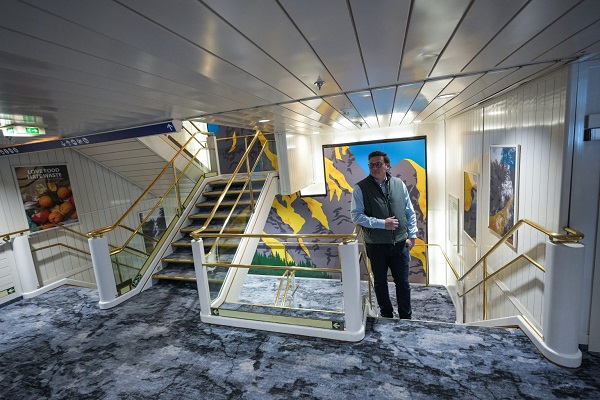
Refitted from a cruise liner into a dedicated accommodation vessel, or “floatel,” this innovative solution houses up to 600 workers near Squamish, B.C., while keeping pressure off local housing and minimizing the project’s community footprint.
These exclusive images, captured a year ago, offer a rare retrospective look inside the original floatel. MV Isabelle X. With a second accommodation ship, the MV Saga X, recently arrived, this photo essay gives a timely, ground-level view of life aboard: individual cabins, a full-service dining hall, recreation spaces and custom laundry facilities. It’s a glimpse into the offshore dormitory that anchors daily life for the crew bringing this vital energy project to completion.

An arcade room is seen on a “floatel” that Woodfibre LNG plans to use to house 600 construction workers at a liquefied natural gas export facility being built near Squamish, during a media tour in Vancouver, on Thursday, May 9, 2024. The ship arrived in B.C. waters in January after a 40-day journey from Estonia, where it had sheltered Ukrainian refugees, but the District of Squamish council voted three to four against a one-year permit for its use last week.

A dining area is seen on a “floatel” that Woodfibre LNG plans to use to house 600 construction workers at a liquefied natural gas export facility being built near Squamish, during a media tour in Vancouver, on Thursday, May 9, 2024. The ship arrived in B.C. waters in January after a 40-day journey from Estonia, where it had sheltered Ukrainian refugees, but the District of Squamish council voted three to four against a one-year permit for its use last week.

A cabin is seen on a “floatel” that Woodfibre LNG plans to use to house 600 construction workers at a liquefied natural gas export facility being built near Squamish, during a media tour in Vancouver, on Thursday, May 9, 2024. The ship arrived in B.C. waters in January after a 40-day journey from Estonia, where it had sheltered Ukrainian refugees, but the District of Squamish council voted three to four against a one-year permit for its use last week.

Bridgemans Services Group president Brian Grange stands at the stern on a renovated cruise ship known as a “floatel” that Woodfibre LNG plans to use to house 600 construction workers at a liquefied natural gas export facility being built near Squamish, during a media tour in Vancouver, on Thursday, May 9, 2024. The ship arrived in B.C. waters in January after a 40-day journey from Estonia, where it had sheltered Ukrainian refugees, but the District of Squamish council voted three to four against a one-year permit for its use last week.

A custom built heat pump unit that allows the ship to avoid using diesel while docked and at anchor is seen on a “floatel” that Woodfibre LNG plans to use to house 600 construction workers at a liquefied natural gas export facility being built near Squamish, during a media tour in Vancouver, on Thursday, May 9, 2024. The ship arrived in B.C. waters in January after a 40-day journey from Estonia, where it had sheltered Ukrainian refugees, but the District of Squamish council voted three to four against a one-year permit for its use last week.

The main entry and exit area for workers is seen on a “floatel” that Woodfibre LNG plans to use to house 600 construction workers at a liquefied natural gas export facility being built near Squamish, during a media tour in Vancouver, on Thursday, May 9, 2024. The ship arrived in B.C. waters in January after a 40-day journey from Estonia, where it had sheltered Ukrainian refugees, but the District of Squamish council voted three to four against a one-year permit for its use last week.

A renovated cruise ship known as a “floatel” that Woodfibre LNG plans to use to house 600 construction workers at a liquefied natural gas export facility being built near Squamish, is seen at anchor in the harbour in Vancouver, on Thursday, May 9, 2024. The ship arrived in B.C. waters in January after a 40-day journey from Estonia, where it had sheltered Ukrainian refugees, but the District of Squamish council voted three to four against a one-year permit for its use last week.

A tugboat and water taxi are seen docked at a renovated cruise ship known as a “floatel” that Woodfibre LNG plans to use to house 600 construction workers at a liquefied natural gas export facility being built near Squamish, at anchor in the harbour in Vancouver, on Thursday, May 9, 2024. The ship arrived in B.C. waters in January after a 40-day journey from Estonia, where it had sheltered Ukrainian refugees, but the District of Squamish council voted three to four against a one-year permit for its use last week.
All photos credited to THE CANADIAN PRESS/Darryl Dyck
Resource Works News


From Underdog to Top Broodmare

Man overboard as HMCS Carney lists to the right

Higher carbon taxes in pipeline MOU are a bad deal for taxpayers
READ IT HERE – Canada-Alberta Memorandum of Understanding – From the Prime Minister’s Office
IEA peak-oil reversal gives Alberta long-term leverage
Healthcare And Pipelines Are The Front Lines of Canada’s Struggle To Stay United

Net Zero goal is a fundamental flaw in the Ottawa-Alberta MOU
-
 MAiD2 days ago
From Exception to Routine. Why Canada’s State-Assisted Suicide Regime Demands a Human-Rights Review
-
 Alberta1 day ago
Alberta Sports Hall of Fame Announces Class of 2026 Inductees
-
 Business1 day ago
Canada’s climate agenda hit business hard but barely cut emissions
-
 Business2 days ago
Carney government should privatize airports—then open airline industry to competition
-
 Business17 hours ago
Carney’s Toronto cabinet meetings cost $530,000
-
 Business2 days ago
Is Carney Falling Into The Same Fiscal Traps As Trudeau?
-
 Alberta2 days ago
Carney’s pipeline deal hits a wall in B.C.
-
 Artificial Intelligence1 day ago
AI is accelerating the porn crisis as kids create, consume explicit deepfake images of classmates