
Energy
Canada following Europe’s stumble by ignoring energy reality

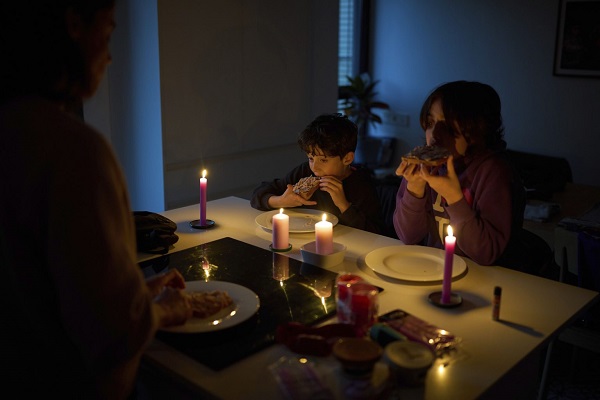

Family in Spain eating by candlelight during a blackout, April 2025
From Resource Works

Canada’s own 2024 grid scare proves we’re on the same path unless we change course.
Europe’s green-energy unraveling is no longer a distant cautionary tale. It’s a mirror — and Canada is already seeing the first cracks.
A new Wall Street Journal investigation lays out the European story in stark detail: a continent that slashed emissions faster than anyone else, only to discover that doing so by tearing down firm power before its replacement existed comes with brutal consequences — collapsing industry, sky-high electricity prices, political fragmentation, and a public increasingly unwilling to subsidize wishful thinking.
The tragedy isn’t that Europe tried to decarbonize quickly.
The tragedy is how they did it: by insisting on an “or” transition — renewables or fossil fuels — instead of what every energy-literate nation outside Europe pursued: renewables and fossil fuels, working together while the system evolves.
And here’s the uncomfortable truth:
Canada has already had its first European-style crisis. It happened in January 2024.
Canada’s early warning: the January 2024 electricity crunch
Most people have already forgotten it, because our political class desperately wanted you to. But in January 2024, Western Canada came within a whisker of a full-blown energy security breakdown. Alberta, Saskatchewan, and B.C. were stretched to their limit. The grid was under cascading stress. Contingency plans were activated. Alberta came terrifyingly close to rolling blackouts.
It wasn’t caused by climate change. It wasn’t caused by a mysterious cyberattack.
It was caused by the same structural brittleness now crippling Europe:
- Insufficient firm power, after years of political messaging that we could “electrify everything” without adding real generating capacity.
- Overreliance on intermittent sources not backed by storage or gas.
- A planning system that punted risk into the future, betting the grid could be stretched indefinitely.
The January 2024 event was not a blip. It was a preview.
Our European moment in miniature.
But instead of treating it as the national wake-up call it should have been, B.C. did something telling — and deeply damaging.
The B.C. government’s response: attack the messenger
Just a couple of years ago, an economist publicly warned about the economic price of emerging system vulnerabilities due to a groaning stack of “clean economy” policies.
The B.C. government didn’t respond with data, evidence, or even curiosity. Instead, a cabinet minister used the safety of legislative privilege — that gold-plated shield against accountability — to launch nasty personal attacks on the economist who raised the concerns, which themselves had originated in the government’s own analysis.
No engagement.
No counter-analysis.
No willingness to consider the system risks.
Just slurs — the very definition of anti-intellectual governance.
It was a moment that told the whole story:
Too many policymakers in this province believe that energy systems obey politics, not physics.
Physics always gets the last word.
Europe shows us what political denial turns into
The WSJ reporting couldn’t be clearer about the consequences of that denial:
- Germany: highest domestic electricity prices in the developed world.
- U.K.: highest industrial electricity rates among major economies.
- Industrial flight: chemical plants closing, data centres frozen, major players hinting at exiting Europe entirely.
- Grid instability: wind farms paid tens of millions not to generate because the grid can’t handle it.
- Public revolt: rising support for parties rejecting the entire green-transition agenda.
- Policy whiplash: governments rushing to build gas plants they swore they’d never need.
Europe is now an object lesson in how good intentions, executed poorly, can produce the exact opposite of what was promised: higher prices, higher volatility, declining competitiveness, and a public ready to abandon climate policy altogether.
This is precisely what January 2024 warned us about — but on a continental scale.
The system cost we keep pretending doesn’t exist
Every serious energy expert knows the truth Europe is now living: intermittent renewables require massive amounts of redundant capacity, storage, and backup generation. That’s why the U.K. now needs 120 gigawatts of capacity to serve a demand previously met with 60–70 gigawatts, even though electricity use hasn’t meaningfully grown.
This is the math policymakers prefer not to show the public.
And it’s why B.C.’s refusal to have an honest conversation about firm power is so dangerous.
If we electrify everything without ensuring affordable and abundant natural gas generation, we’re not building a green future.
We’re building Europe, 10 years early.
The lesson for Canada — especially for B.C.
Here is what Europe and January 2024 together say, in one clear voice:
1. There is no energy transition without firm power.
Renewables are part of the system, but they don’t run the system. Natural gas does. Hydro does. Nuclear does. Pretending otherwise is how you end up with rolling blackouts.
2. Political denial makes crises worse.
When ministers attack economists instead of answering them, it signals that ideology is running the show. Europe learned the cost of that. We will too, unless we change course.
3. Affordability is the foundation of public consent.
Europe lost the room. Once people see their bills double while factories close, the climate agenda becomes politically radioactive.
4. B.C. has an advantage Europe would kill for.
Europe dreams of having an abundant, local, low-carbon firm-power fuel like northeastern B.C.’s natural gas. We treat it like a political liability. That’s not strategy. It’s negligence.
5. The transition will fail if we don’t treat electricity like the national security asset it is.
Without energy, there is no industry.
Without industry, there is no prosperity.
Without prosperity, there is no climate policy that survives the next election cycle.
What we need now
Canada must embrace an “and” strategy:
Renewables and natural gas. Electrification and realism. Climate ambition and economic competitiveness.
January 2024 showed us the future in a flash. Europe shows us the end state if we keep ignoring the warning.
We can still choose something better. But only if we stop pretending that energy systems bend to political narratives — and start treating them with the seriousness they demand.
Resource Works News

This article supplied by Troy Media.

Carney’s attempt to ease Canada’s dependence on the U.S. stirs a backlash in B.C., raises Indigenous concerns and rattles his own party
The Memorandum of Understanding (MOU) between Prime Minister Mark Carney and Alberta Premier Danielle Smith has opened a political hornet’s nest, exposing deep divisions within the Liberal Party and forcing a national debate that has been avoided for years.
Carney was under mounting pressure to respond to U.S. tariffs that threaten to carve billions out of Canada’s economy. The United States buys more than 95 per cent of Canada’s oil exports, leaving the country highly exposed to U.S. policy decisions. That pressure is now driving his push for a route to the Pacific, a project that could change Canada’s economic future but also destabilize his already fragile minority government.
Carney knows the political risk. His government could fall at any time, which only raises the stakes. Even so, he has pressed ahead. The agreement with Alberta lays early groundwork for a new pipeline to the Pacific. It would expand the oil sands, ease some environmental obligations and revive a proposal industry leaders have pushed for years.
The route is far from settled, but it is expected to run to B.C.’s northern coast and open access to Asian buyers. A Pacific route would finally give Canada a direct path into Asian energy markets, where demand remains strong and prices are often higher than in the United States.
If Carney expected broad support, he did not get it, especially in British Columbia. Because B.C. is the only province with a deep-water port capable of handling large crude carriers, it is the only path a west-coast pipeline can take. The province is now the central battleground, and whether the project succeeds will depend on what happens there.
B.C. Premier David Eby criticized the lack of consultation. “It would have been good for B.C. to be at the table,” he said, warning that the project risks undermining Indigenous support for the province’s liquefied natural gas plans. He also noted that the pipeline has no private backer and no commitments from First Nations, two obstacles that have tripped up projects before.
The backlash quickly spread to Ottawa. Steven Guilbeault, the former environment minister and the most prominent environmentalist ever to serve in a federal cabinet, resigned from cabinet in direct response to the MOU. He said the proposed pipeline “would have major environmental impacts”. Green Party Leader Elizabeth May said his departure “dashes the last hope that Mark Carney is going to have a good climate record ever.”
Several B.C. Liberal MPs echoed concerns about the political cost. CBC News reported anger inside the caucus, with some MPs “seething” over the agreement and worried about losing climate-focused voters.
The voters those MPs fear may not be as opposed as they think. An October Angus Reid Institute survey found that a solid majority of Canadians support a pipeline from northern Alberta to the northwest B.C. coast. In British Columbia, support outweighs opposition by a wide margin. That challenges Eby’s claim that the project lacks public backing. Carney may have more room to manoeuvre than his critics admit.
The most significant challenge, however, comes from Indigenous leaders. British Columbia is the only province that has formally adopted the United Nations Declaration on the Rights of Indigenous Peoples (UNDRIP) into law, giving First Nations a stronger legal position in major project decisions. Court rulings over the past two decades have affirmed a duty to consult and, in some cases, accommodate Indigenous communities, giving them major influence over large projects.
A group representing Coastal First Nations in B.C. said the pipeline “will never happen”. The Union of B.C. Indian Chiefs said it is “loudly objecting” to the MOU, arguing it was drafted without involvement from coastal First Nations and does not meet consultation standards outlined in UNDRIP. “The answer is still no and always will be,” said UBCIC Grand Chief Stewart Phillip. He also said lifting the crude oil tanker ban would amount to bulldozing First Nation rights. Without Indigenous consent, the project cannot proceed, and Carney knows this is the single largest barrier he faces.
Carney’s reasoning is straightforward. The long-term danger of relying on one market outweighs the short-term turbulence created by the pipeline fight. The MOU suggests Ottawa is prepared to reconsider projects once thought politically impossible in order to protect Canada’s economic future. He is betting that doing nothing is the bigger risk.
Whether this pipeline moves forward is uncertain, and the obstacles are real. One fact, however, remains clear. Canada cannot keep betting its stability on a single market.
Toronto-based Rashid Husain Syed is a highly regarded analyst specializing in energy and politics, particularly in the Middle East. In addition to his contributions to local and international newspapers, Rashid frequently lends his expertise as a speaker at global conferences. Organizations such as the Department of Energy in Washington and the International Energy Agency in Paris have sought his insights on global energy matters.
Troy Media empowers Canadian community news outlets by providing independent, insightful analysis and commentary. Our mission is to support local media in helping Canadians stay informed and engaged by delivering reliable content that strengthens community connections and deepens understanding across the country.

Tsawwassen Speaker Squiqel Tony Jacobs arrives for a legislative sitting. THE CANADIAN PRESS/Darryl Dyck
From Resource Works
Cowichan case underscores case for fast-tracking treaties
If there are any doubts over the question of which route is best for settling aboriginal title and reconciliation – the courts or treaty negotiations – a new economic snapshot on the Tsawwassen First Nation should put the question to rest.
Thanks to a modern day treaty, implemented in 2009, the Tsawwassen have leveraged land, cash and self-governance to parlay millions into hundreds of millions a year, according to a new report by Deloitte on behalf of the BC Treaty Commission.
With just 532 citizens, the Tsawwassen First Nation now provides $485 million in annual employment and 11,000 permanent retail and warehouse jobs, the report states.
Deloitte estimates modern treaties will provide $1 billion to $2 billion in economic benefits over the next decade.
“What happens, when you transfer millions to First Nations, it turns into billions, and it turns into billions for everyone,” Sashia Leung, director of international relations and communication for the BC Treaty Commission, said at the Indigenous Partnership Success Showcase on November 13.
“Tsawwassen alone, after 16 years of implementing their modern treaty, are one of the biggest employers in the region.”

BC Treaty Commission’s Sashia Leung speaks at the Indigenous Partnerships Success Showcase 2025.
Nisga’a success highlights economic potential
The Nisga’a is another good case study. The Nisga’a were the first indigenous group in B.C. to sign a modern treaty.
Having land and self-governance powers gave the Nisga’a the base for economic development, which now includes a $22 billion LNG and natural gas pipeline project – Ksi Lisims LNG and the Prince Rupert Gas Transmission line.
“This is what reconciliation looks like: a modern Treaty Nation once on the sidelines of our economy, now leading a project that will help write the next chapter of a stronger, more resilient Canada,” Nisga’a Nation president Eva Clayton noted last year, when the project received regulatory approval.
While the modern treaty making process has moved at what seems a glacial pace since it was established in the mid-1990s, there are some signs of gathering momentum.
This year alone, three First Nations signed final treaty settlement agreements: Kitselas, Kitsumkalum and K’omoks.
“That’s the first time that we’ve ever seen, in the treaty negotiation process, that three treaties have been initialed in one year and then ratified by their communities,” Treaty Commissioner Celeste Haldane told me.
Courts versus negotiation
When it comes to settling the question of who owns the land in B.C. — the Crown or First Nations — there is no one-size-fits-all pathway.
Some First Nations have chosen the courts. To date, only one has succeeded in gaining legal recognition of aboriginal title through the courts — the Tsilhqot’in.
The recent Cowichan decision, in which a lower court recognized aboriginal title to a parcel of land in Richmond, is by no means a final one.
That decision opened a can of worms that now has private land owners worried that their properties could fall under aboriginal title. The court ruling is being appealed and will almost certainly end up having to go to the Supreme Court.
This issue could, and should, be resolved through treaty negotiations, not the courts.
The Cowichan, after all, are in the Hul’qumi’num treaty group, which is at stage 5 of a six-stage process in the BC Treaty process. So why are they still resorting to the courts to settle title issues?
The Cowichan title case is the very sort of legal dispute that the B.C. and federal governments were trying to avoid when it set up the BC Treaty process in the mid-1990s.
Accelerating the process
Unfortunately, modern treaty making has been agonizingly slow.
To date, there are only seven modern implemented treaties to show for three decades of works — eight if you count the Nisga’a treaty, which predated the BC Treaty process.
Modern treaty nations include the Nisga’a, Tsawwassen, Tla’amin and five tribal groups in the Maa-nulth confederation on Vancouver Island.
It takes an average of 10 years to negotiate a final treaty settlement. Getting a court ruling on aboriginal title can take just as long and really only settles one question: Who owns the land?
The B.C. government has been trying to address rights and title through other avenues, including incremental agreements and a tripartite reconciliation process within the BC Treaty process.
It was this latter tripartite process that led to the Haida agreement, which recognized Haida title over Haida Gwaii earlier this year.
These shortcuts chip away at issues of aboriginal rights and title, self-governance, resource ownership and taxation and revenue generation.
Modern treaties are more comprehensive, settling everything from who owns the land and who gets the tax revenue from it, to how much salmon a nation is entitled to annually.
Once modern treaties are in place, it gives First Nations a base from which to build their own economies.
The Tsawwassen First Nation is one of the more notable case studies for the economic and social benefits that accrue, not just to the nation, but to the local economy in general.
The Tsawwassen have used the cash, land and taxation powers granted to them under treaty to create thousands of new jobs. This has been done through the development of industrial, commercial and residential lands.
This includes the development of Tsawwassen Mills and Tsawwassen Commons, an Amazon warehouse, a container inspection centre, and a new sewer treatment plant in support of a major residential development.
“They have provided over 5,000 lease homes for Delta, for Vancouver,” Leung noted. “They have a vision to continue to build that out to 10,000 to 12,000.”
Removing barriers to agreement
For First Nations, some of the reticence in negotiating a treaty in the past was the cost and the loss of tax exemptions. But those sticking points have been removed in recent years.
First Nations in treaty negotiations were originally required to borrow money from the federal government to participate, and then that loan amount was deducted from whatever final cash settlement was agreed to.
That requirement was eliminated in 2019, and there has been loan forgiveness to those nations that concluded treaties.
Another sticking point was the loss of tax exemptions. Under Section 87 of Indian Act, sales and property taxes do not apply on reserve lands.
But under modern treaties, the Indian Act ceases to apply, and reserve lands are transferred to title lands. This meant giving up tax exemptions to get treaty settlements.
That too has been amended, and carve-outs are now allowed in which the tax exemptions can continue on those reserve lands that get transferred to title lands.
“Now, it’s up to the First Nation to determine when and if they want to phase out Section 87 protections,” Haldane said.
Haldane said she believes these recent changes may account for the recent progress it has seen at the negotiation table.
“That’s why you’re seeing K’omoks, Kitselas, Kitsumkalum – three treaties being ratified in one year,” she said. “It’s unprecedented.”
The Mark Carney government has been on a fast-tracking kick lately. But we want to avoid the kind of uncertainty that the Cowichan case raises, and if the Carney government is looking for more things to fast-track that would benefit First Nations and the Canadian economy, perhaps treaty making should be one of them.
Resource Works News


From Underdog to Top Broodmare
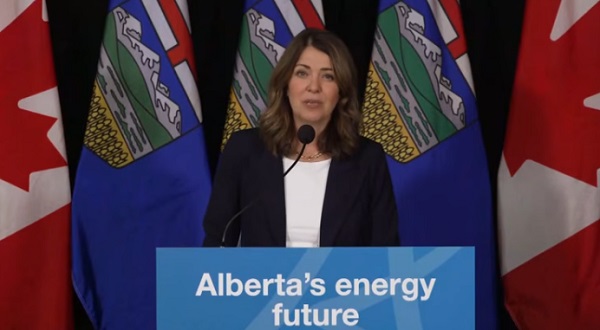
Alberta and Ottawa ink landmark energy agreement

Poilievre says West Coast Pipeline MOU is no guarantee
Carney’s ‘Shared Sacrifice’ Is a Lie. Only Veterans Are Bleeding for This Budget

Afghan Ex–CIA Partner Accused in D.C. National Guard Ambush

Man overboard as HMCS Carney lists to the right

Higher carbon taxes in pipeline MOU are a bad deal for taxpayers
-
 Censorship Industrial Complex1 day ago
A Democracy That Can’t Take A Joke Won’t Tolerate Dissent
-
 Business1 day ago
Recent price declines don’t solve Toronto’s housing affordability crisis
-
 Daily Caller1 day ago
Tech Mogul Gives $6 Billion To 25 Million Kids To Boost Trump Investment Accounts
-
 Artificial Intelligence2 days ago
The Emptiness Inside: Why Large Language Models Can’t Think – and Never Will
-
 Business1 day ago
Canada’s future prosperity runs through the northwest coast
-
 MAiD9 hours ago
From Exception to Routine. Why Canada’s State-Assisted Suicide Regime Demands a Human-Rights Review
-
 National1 day ago
Canada Needs an Alternative to Carney’s One Man Show
-
 Alberta1 day ago
Alberta will defend law-abiding gun owners who defend themselves