
Economy
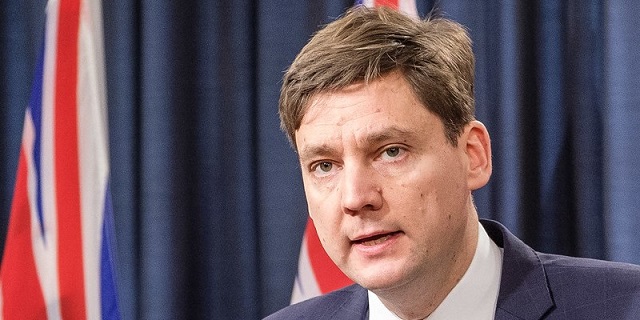
British Columbia’s finances go from bad to worse during Eby’s first full year


From the Fraser Institute
By Tegan Hill and Grady Munro

You might be able to justify higher spending if it improved programs and services for British Columbians—but it hasn’t. In fact, despite substantial increases in spending in recent years, the province’s health-care wait times have increased and student test scores have declined.
The recent move by BC United to suspend its campaign, essentially clearing the way for a two-party race in this fall’s provincial election, made headlines across British Columbia. But another recent event, which failed to garner much media attention, included some jaw-dropping numbers that will impact provincial finances for years to come.
Last week, the Eby government recently released its year-end report for the 2023/24 fiscal year—this government’s first full year in office. Unfortunately for British Columbians, provincial finances went from bad to worse as the government ran a larger-than-projected budget deficit and accumulated significant debt.
First, let’s take a closer look at the government’s budget—David Eby’s first official budget as premier—which projected a $4.2 billion operating deficit for the 2023/24 fiscal year (the government expected to spend $81.2 billion while only bringing in $77.7 billion in total revenues). For context, in its last budget the Horgan government had also planned to run a $4.2 billion deficit in 2023/24, but expected to take in $7.5 billion less in revenues. Put differently, the Eby government could have ran a budget surplus if it stuck to Horgan’s spending plan. Instead, the Eby government chose to spend away that $7.5 billion.
Given that per-person (inflation-adjusted) program spending was already at its highest level since 1965 (the earliest year of available data) under the Horgan government in 2021 (even excluding COVID-related spending), that’s a massive influx of new spending.
Now, the year-end report shows that the Eby government increased spending even further—$3.5 billion more than its original plan in the 2023 budget. Overall, it ran a $5.0 billion operating deficit in 2023/24, despite once again taking in more revenues ($1.9 billion) than it had originally planned. Again, the government chose to spend away every single dollar of extra revenue, and then some.
And the eye-popping deficit is only part of the picture as longer-term spending on things such as schools, highways and bridges, isn’t included. After accounting for long-term spending on capital projects, the B.C. government accumulated $11.3 billion in net debt (total debt minus financial assets) in a single year from 2022/23 to 2023/24. Government debt must ultimately be financed by taxpayers who spent $3.3 billion in debt interest payments in 2023/24. That’s money no longer available for programs such as health care or education.
According to the Eby government, “with a slower world economy and a growing population, we cannot afford to have a deficit of services. When we provide the services and support people need to have a good life, it makes our economy stronger and more resilient.”
You might be able to justify higher spending if it improved programs and services for British Columbians—but it hasn’t. In fact, despite substantial increases in spending in recent years, the province’s health-care wait times have increased and student test scores have declined. Put differently, according to key indicators, B.C.’s performance on health care and education—the two largest areas of government spending—have worsened despite higher spending.
Higher spending also hasn’t paid off for the B.C. economy, which is stagnating. The province’s per-person GDP, a broad measure of living standards, is expected to be lower this year than in 2018. And the Eby government expects negative growth in per-person GDP this fiscal year.
Unfortunately for British Columbians, the latest year-end report on B.C.’s finances shows the Eby government took a bad fiscal situation and made it worse with higher spending and an even larger budget deficit. The next government, whoever that may be, must deal will this fiscal mess.
Authors:





The population drops for the first time in years, exposing an economy built on temporary residents, tuition cash, and government debt rather than real productivity
Canadians have been told for years that population decline was unthinkable, that it was an economic death spiral, that only mass immigration could save us. That was the line. Now the numbers are in, and suddenly the people who said that are very quiet.
Statistics Canada reports that between July 1 and October 1, 2025, Canada’s population fell by 76,068 people, a decline of 0.2 percent, bringing the total population to 41,575,585. This is not a rounding error. It is not a model projection. It is an official quarterly population loss, outside the COVID period, confirmed by the federal government’s own data
The reason matters. This did not happen because Canadians suddenly stopped having children or because of a natural disaster. It happened because the number of non‑permanent residents dropped by 176,479 people in a single quarter, the largest quarterly decline since comparable records began in 1971. Permit expirations outpaced new permits by more than two to one. Outflows totaled 339,505, while inflows were just 163,026
That is the so‑called growth engine shutting down.
Permanent immigration continued at roughly the same pace as before. Canada admitted 102,867 permanent immigrants in the quarter, consistent with recent levels. Births minus deaths added another 17,600 people. None of that was enough to offset the collapse in temporary residency. Net international migration overall was negative, at minus 93,668
And here’s the part you’re not supposed to say out loud. For the Liberal‑NDP government, this is bad news. Their entire economic story has rested on population‑driven GDP growth, not productivity. Add more people, claim the economy is growing, borrow more money, and run the national credit card a little harder. When population growth reverses, that illusion collapses. GDP per capita does not magically improve. Housing shortages do not disappear. The math just stops working.
The regional numbers make that clear. Ontario’s population fell by 0.4 percent in the quarter. British Columbia fell by 0.3 percent. Every province and territory lost population except Alberta and Nunavut, and even Alberta’s growth was just 0.2 percent, its weakest since the border‑closure period of 2021
Now watch who starts complaining first. Universities are already bracing for it. Study permit holders alone fell by 73,682 people in three months, with Ontario losing 47,511 and British Columbia losing 14,291. These are the provinces with the largest university systems and the highest dependence on international tuition revenue
You’re going to hear administrators and activists say this is a crisis. What they mean is that fewer students are paying international tuition to subsidize bloated campuses and programs that produce no measurable economic value. When the pool of non‑permanent residents shrinks, departments that exist purely because enrollment was artificially inflated start to disappear. That’s not mysterious. That’s arithmetic.
For years, Canadians were told that any slowdown in population growth was dangerous. The truth is more uncomfortable. What’s dangerous is building a national economic model on temporary residents, borrowed money, and headline GDP numbers while productivity stagnates. The latest StatsCan release doesn’t just show a population decline. It shows how fragile the story really was, and how quickly it unravels when the numbers stop being padded.
Subscribe to The Opposition with Dan Knight


The White House on Thursday declared a decisive turn in the inflation fight, pointing to new data showing core inflation has fallen to its lowest level in nearly five years — a milestone the administration says validates President Donald Trump’s economic reset after inheriting what it calls a historic cost-of-living crisis from the Biden era. In a statement accompanying the report, White House Press Secretary Karoline Leavitt said inflation “came in far lower than market expectations,” drawing a sharp contrast with the 9 percent peak under President Joe Biden and arguing the numbers reflect sustained relief for American households. “Core inflation is at a new multi-year low, as prices for groceries, medicine, gas, airfare, car rentals, and hotels keep falling,” Leavitt said, adding that lower prices and rising paychecks are expected to continue into the new year.
According to the White House, core inflation — widely viewed by economists as the most reliable gauge because it strips out volatile food and energy costs — is now down roughly 70 percent from its Biden-era high. Officials noted that if inflation continues at the pace of the last two months, it would be running at an annualized rate of about 1.2 percent, well below the Federal Reserve’s 2 percent target. The report also highlighted broad-based price moderation across consumer staples and services, with declines in groceries, dairy, fruits and vegetables, prescription drugs, clothing, airfares, natural gas, car and truck rentals, and hotel prices. Average gas prices have fallen to multi-year lows, while rent inflation has dropped to its lowest level since October 2021, a shift the administration attributes in part to tougher enforcement against illegal immigration and reduced pressure on housing demand.
Wages, the White House says, are rising alongside easing prices. Private-sector workers are on track to see real wages increase by about $1,300 in President Trump’s first full year back in office, clawing back purchasing power lost during the inflation surge of the previous administration. Gains are strongest among blue-collar workers, with annualized real earnings up roughly $1,800 for construction workers and $1,600 for manufacturing employees. Administration officials also took aim at critics who warned Trump’s tariff policies would reignite inflation, arguing the data shows no demonstrable inflationary impact despite repeated predictions from Wall Street and academic economists.
NEC Director Kevin Hassett on the latest inflation report: "It was just an absolute blockbuster report… We looked at 61 forecasts, and this number came in better than every single one of them." 🔥 pic.twitter.com/rBJpkmjuNa
— Rapid Response 47 (@RapidResponse47) December 18, 2025
Even commentators across the media spectrum acknowledged the strength of the report. CNBC’s Steve Liesman called it “a very good number,” while CNN’s Matt Egan said it was “another step in the right direction.” Harvard economist Ken Rogoff described the reading as “a better number than anyone was expecting,” adding, “There’s no other way to spin it.” Bloomberg’s Chris Anstey noted the figure came in two-tenths below the lowest estimate in a survey of 62 economists, calling it “remarkable,” while The Washington Post’s Andrew Ackerman wrote that inflation “cooled unexpectedly,” easing pressure on household budgets.
For the White House, the message was blunt: the inflation era is over. Officials framed Thursday’s report as proof that Trump has followed through on his promise to defeat the cost-of-living crisis he inherited, laying what they called the groundwork for a strong year ahead. As the president told the nation this week, the administration insists the progress is real — and that, in his words, the best is yet to come.

The Recall Trap: 21 Alberta MLA’s face recall petitions

Canada considers creating national ID system using digital passports for domestic use

Claims about ‘unmarked graves’ don’t withstand scrutiny

Here’s why city hall should save ‘blanket rezoning’ in Calgary

Too nice to fight, Canada’s vulnerability in the age of authoritarian coercion

US Notes 2.5 million illegals out and counting
Tyler Robinson shows no remorse in first court appearance for Kirk assassination
-
 Daily Caller2 days ago
Paris Climate Deal Now Decade-Old Disaster
-
 Business1 day ago
Ottawa Pretends To Pivot But Keeps Spending Like Trudeau
-
 Alberta2 days ago
Alberta’s huge oil sands reserves dwarf U.S. shale
-
 International2 days ago
FBI didn’t think it had cause to raid Trump but DOJ did it anyway
-
 Energy1 day ago
Liberals Twisted Themselves Into Pretzels Over Their Own Pipeline MOU
-
 Censorship Industrial Complex1 day ago
How Wikipedia Got Captured: Leftist Editors & Foreign Influence On Internet’s Biggest Source of Info
-
 Indigenous2 days ago
Residential school burials controversy continues to fuel wave of church arsons, new data suggests
-
 Daily Caller2 days ago
Hegseth Planning Huge Shakeup Of Top Military Command: REPORT