
Uncategorized
Bill Cosby, now inmate NN7687, placed in single cell


Bill Cosby spent his first night in prison alone, in a single cell near the infirmary, as he began his three-to-10-year sentence for sexual assault.

Corrections officials announced Wednesday that Cosby — now known as Inmate No. NN7687 — will serve his sentence at SCI Phoenix, a new state prison about 20 miles from the gated estate where a jury concluded he drugged and molested a woman in 2004. The $400 million lockup opened two months ago and can hold 3,830 inmates.
Cosby will meet with prison medical staff, psychologists and others as the staff assesses his needs. Under prison policy, the 81-year-old comedian will be allowed phone calls and visits and will get a chance to exercise.
The prison’s long-term goal is to place Cosby in the general population, officials said.
“We are taking all of the necessary precautions to ensure Mr. Cosby’s safety and general welfare in our institution,” Corrections Secretary John Wetzel said in a statement.
As Cosby began adjusting to life behind bars, his family and publicists vowed he’ll appeal his conviction on three felony sexual assault counts after the first celebrity trial of the #MeToo era.
Calling Cosby “one of the greatest civil rights leaders in the United States for over the past 50 years,” spokesman Andrew Wyatt on Tuesday decried the trial as the “most sexist and racist” in the country’s history.
The judge, prosecutor and jury saw it differently.
“No one is above the law. And no one should be treated disproportionately because of who they are, where they live, or even their wealth, celebrity or philanthropy,” Montgomery County Judge Steven O’Neill said in sentencing Cosby to an above-average sentence.
Cosby’s
“We prosecute where the evidence takes us and that was done in this case,” District Attorney Kevin Steele said Tuesday.
After his first trial ended in a hung jury, Cosby was convicted in April of drugging and sexually assaulting Temple University women’s basketball administrator Andrea Constand. He has faced a barrage of similar accusations from more than 60 women over the past five decades, but Constand’s case is the only one that went to trial.
In a statement submitted to the court, Constand, 45, said the assault and Cosby’s subsequent attacks on her character had crushed her spirit, adding: “We may never know the full extent of his double life as a sexual predator, but his decades-long reign of terror as a serial rapist is over.”
Prosecutor Kristen Feden said Constand told her she was happy with the sentence.
“I always look for my strength in the victims, and Andrea Constand was amazing,” Feden said on NBC’s “Today” show Wednesday. “Her courage and her strength was enough for me to say, ‘Let’s keep going.'”
Women’s advocates hailed Cosby’s sentence as a landmark #MeToo moment.
“Bill Cosby seeing the inside of a prison cell sends a strong message that predators — no matter who they are, from Hollywood to Wall Street to the Supreme Court — can no longer be protected at the expense of victims,” said Sonia Ossorio, president of the National Organization for Women of New York.
Cosby’s lawyers asked that he be allowed to remain free on bail while he appeals his conviction, but the judge ordered him locked up immediately, saying that “he could quite possibly be a danger to the community.”
Cosby — who is legally blind and uses a cane — removed his watch, tie and jacket and walked out in a white dress shirt and red suspenders, his hands cuffed in front of him.
Cosby must serve the minimum of three years before becoming eligible for parole.
Cosby’s punishment, which also included a $25,000 fine, came at the end of a two-day hearing at which the judge declared him a “sexually violent predator” — a designation that subjects him to monthly
Constand testified that Cosby gave her what she thought were herbal pills to ease stress, then penetrated her with his fingers as she lay immobilized on a couch. Cosby claimed the encounter was consensual, and his lawyers branded her a “con artist” who framed the comedian to get a big payday — a $3.4 million settlement she received over a decade ago.
The AP does not typically identify people who say they are victims of sexual assault unless they come forward publicly, which Constand and other accusers have done.
Five other accusers took the stand at the trial as part of an effort by prosecutors to portray Cosby — once known as America’s Dad for his role on the top-rated “Cosby Show” in the 1980s — as a serial predator.
Constand went to police a year after waking up in a fog at Cosby’s estate, her clothes askew, only to have the district attorney pass on the case. Another DA reopened the file a decade later and charged the TV star after stand-up comic Hannibal Buress’ riff about Cosby’s being a rapist prompted other women to come forward, and after a federal judge, acting on a request from The Associated Press, unsealed some of Cosby’s startling, decade-old testimony in Constand’s related civil suit.
In his testimony, Cosby described sexual encounters with a string of actresses, models and other young women and talked about obtaining quaaludes to give to those he wanted to sleep with.
___
Associated Press writer Claudia Lauer contributed to this report. For more coverage, visit: https://apnews.com/tag/BillCosby
Maryclaire Dale And Michael R. Sisak, The Associated Press

Uncategorized
Mortgaging Canada’s energy future — the hidden costs of the Carney-Smith pipeline deal


Much of the commentary on the Carney-Smith pipeline Memorandum of Understanding (MOU) has focused on the question of whether or not the proposed pipeline will ever get built.
That’s an important topic, and one that deserves to be examined — whether, as John Robson, of the indispensable Climate Discussion Nexus, predicted, “opposition from the government of British Columbia and aboriginal groups, and the skittishness of the oil industry about investing in a major project in Canada, will kill [the pipeline] dead.”
But I’m going to ask a different question: Would it even be worth building this pipeline on the terms Ottawa is forcing on Alberta? If you squint, the MOU might look like a victory on paper. Ottawa suspends the oil and gas emissions cap, proposes an exemption from the West Coast tanker ban, and lays the groundwork for the construction of one (though only one) million barrels per day pipeline to tidewater.
But in return, Alberta must agree to jack its industrial carbon tax up from $95 to $130 per tonne at a minimum, while committing to tens of billions in carbon capture, utilization, and storage (CCUS) spending, including the $16.5 billion Pathways Alliance megaproject.
Here’s the part none of the project’s boosters seem to want to mention: those concessions will make the production of Canadian hydrocarbon energy significantly more expensive.
As economist Jack Mintz has explained, the industrial carbon tax hike alone adds more than $5 USD per barrel of Canadian crude to marginal production costs — the costs that matter when companies decide whether to invest in new production. Layer on the CCUS requirements and you get another $1.20–$3 per barrel for mining projects and $3.60–$4.80 for steam-assisted operations.
While roughly 62% of the capital cost of carbon capture is to be covered by taxpayers — another problem with the agreement, I might add — the remainder is covered by the industry, and thus, eventually, consumers.
Total damage: somewhere between $6.40 and $10 US per barrel. Perhaps more.
“Ultimately,” the Fraser Institute explains, “this will widen the competitiveness gap between Alberta and many other jurisdictions, such as the United States,” that don’t hamstring their energy producers in this way. Producers in Texas and Oklahoma, not to mention Saudi Arabia, Venezuela, or Russia, aren’t paying a dime in equivalent carbon taxes or mandatory CCUS bills. They’re not so masochistic.
American refiners won’t pay a “low-carbon premium” for Canadian crude. They’ll just buy cheaper oil or ramp up their own production.
In short, a shiny new pipe is worthless if the extra cost makes barrels of our oil so expensive that no one will want them.
And that doesn’t even touch on the problem for the domestic market, where the higher production cost will be passed onto Canadian consumers in the form of higher gas and diesel prices, home heating costs, and an elevated cost of everyday goods, like groceries.
Either way, Canadians lose.
So, concludes Mintz, “The big problem for a new oil pipeline isn’t getting BC or First Nation acceptance. Rather, it’s smothering the industry’s competitiveness by layering on carbon pricing and decarbonization costs that most competing countries don’t charge.” Meanwhile, lurking underneath this whole discussion is the MOU’s ultimate Achilles’ heel: net-zero.
The MOU proudly declares that “Canada and Alberta remain committed to achieving Net-Zero greenhouse gas emissions by 2050.” As Vaclav Smil documented in a recent study of Net-Zero, global fossil-fuel use has risen 55% since the 1997 Kyoto agreement, despite trillions spent on subsidies and regulations. Fossil fuels still supply 82% of the world’s energy.
With these numbers in mind, the idea that Canada can unilaterally decarbonize its largest export industry in 25 years is delusional.
This deal doesn’t secure Canada’s energy future. It mortgages it. We are trading market access for self-inflicted costs that will shrink production, scare off capital, and cut into the profitability of any potential pipeline. Affordable energy, good jobs, and national prosperity shouldn’t require surrendering to net-zero fantasy.If Ottawa were serious about making Canada an energy superpower, it would scrap the anti-resource laws outright, kill the carbon taxes, and let our world-class oil and gas compete on merit. Instead, we’ve been handed a backroom MOU which, for the cost of one pipeline — if that! — guarantees higher costs today and smothers the industry that is the backbone of the Canadian economy.
This MOU isn’t salvation. It’s a prescription for Canadian decline.


The cost of the bureaucracy increased by $6 billion last year, according to newly released numbers in Public Accounts disclosures. The Canadian Taxpayers Federation is calling on Prime Minister Mark Carney to immediately shrink the bureaucracy.
“The Public Accounts show the cost of the federal bureaucracy is out of control,” said Franco Terrazzano, CTF Federal Director. “Tinkering around the edges won’t cut it, Carney needs to take urgent action to shrink the bloated federal bureaucracy.”
The federal bureaucracy cost taxpayers $71.4 billion in 2024-25, according to the Public Accounts. The cost of the federal bureaucracy increased by $6 billion, or more than nine per cent, over the last year.
The federal bureaucracy cost taxpayers $39.6 billion in 2015-16, according to the Public Accounts. That means the cost of the federal bureaucracy increased 80 per cent over the last 10 years. The government added 99,000 extra bureaucrats between 2015-16 and 2024-25.
Half of Canadians say federal services have gotten worse since 2016, despite the massive increase in the federal bureaucracy, according to a Leger poll.
Not only has the size of the bureaucracy increased, the cost of consultants, contractors and outsourcing has increased as well. The government spent $23.1 billion on “professional and special services” last year, according to the Public Accounts. That’s an 11 per cent increase over the previous year. The government’s spending on professional and special services more than doubled since 2015-16.
“Taxpayers should not be paying way more for in-house government bureaucrats and way more for outside help,” Terrazzano said. “Mere promises to find minor savings in the federal bureaucracy won’t fix Canada’s finances.
“Taxpayers need Carney to take urgent action and significantly cut the number of bureaucrats now.”
Table: Cost of bureaucracy and professional and special services, Public Accounts
| Year | Bureaucracy | Professional and special services |
|
$71,369,677,000 |
$23,145,218,000 |
|
|
$65,326,643,000 |
$20,771,477,000 |
|
|
$56,467,851,000 |
$18,591,373,000 |
|
|
$60,676,243,000 |
$17,511,078,000 |
|
|
$52,984,272,000 |
$14,720,455,000 |
|
|
$46,349,166,000 |
$13,334,341,000 |
|
|
$46,131,628,000 |
$12,940,395,000 |
|
|
$45,262,821,000 |
$12,950,619,000 |
|
|
$38,909,594,000 |
$11,910,257,000 |
|
|
$39,616,656,000 |
$11,082,974,000 |


Chinese Billionaire Tried To Build US-Born Baby Empire As Overseas Elites Turn To American Surrogates

Canadian gov’t considers sharing census data on gender-confused children

Residential school burials controversy continues to fuel wave of church arsons, new data suggests
Canada’s sudden rediscovery of energy ambition has been greeted with a familiar charge: hypocrisy
Paris Climate Deal Now Decade-Old Disaster
Major tax changes in 2026: Report
Canada Hits the Brakes on Population
-
 Business2 days ago
Taxing food is like slapping a surcharge on hunger. It needs to end
-
 Health1 day ago
FDA warns ‘breast binder’ manufacturers to stop marketing to gender-confused girls
-
 International1 day ago
2025: The Year The Narrative Changed
-
 Business1 day ago
There’s No Bias at CBC News, You Say? Well, OK…
-
 Energy2 days ago
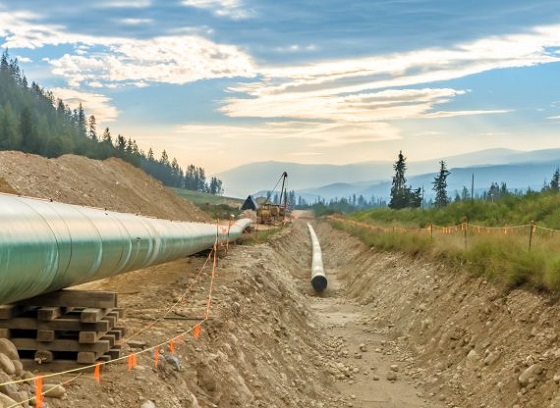
75 per cent of Canadians support the construction of new pipelines to the East Coast and British Columbia
-
 Health2 days ago
All 12 Vaccinated vs. Unvaccinated Studies Found the Same Thing: Unvaccinated Children Are Far Healthier
-
 Agriculture1 day ago
Supply Management Is Making Your Christmas Dinner More Expensive
-
 Daily Caller1 day ago
Trump Reportedly Escalates Pressure On Venezuela With Another Oil Tanker Seizure