
Alberta
Big bug benefits: Alberta scientist releases guide identifying cow dung insects

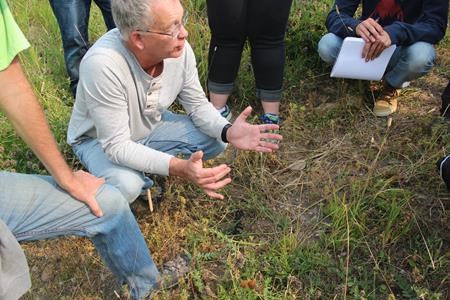

Alberta entomologist Kevin Floate is ready to start spreading the news that he has compiled a comprehensive guide into insects that live in cow dung in Canada.

Floate — a scientist with Agriculture and Agri-Food Canada at the Lethbridge Research and Development Centre in southern Alberta — said he started studying insects in cattle dung about 30 years ago.
At the time, he realized he needed one source of information to help get him started.
“It didn’t exist. So, here we are 30 years later, and I’ve written that guide and it’s intended for ranchers and farmers and students and naturalists,” said Floate, who has a doctorate in entomology and penned “Cow Patty Critters: A New Guide on Canada’s Faecal Friends.”
“Anyone who’s ever asked the question ‘What’s in dung?’ This is the guide that I’ve written for you.”
The humble cow turd, sometimes known as a cow patty, cow pie or cow chip, has a soft texture and tends to be deposited in circular shapes, inspiring its various monikers.
Beaver, Okla., has held the World Cow Chip Throwing Contest since 1969 and singer Jim Stafford penned the tongue-in-cheek 1981 hit “Cow Patti.”
Despite the potential for numerous scatological jokes, Floate said he doesn’t mind a bit of ribbing about his profession.
“I embrace it because it’s an unusual topic, yet it’s everywhere, ” Floate said with a laugh. “So, I don’t mind a bad pun, and when you work in cow pies, you get a lot of bad puns.”
Floate said he has spent much of his career looking at the effects of chemicals that end up in cattle dung, and the impact on the insects that live there.
He said an estimated 110 million dung pats are deposited every year in Canada.
He’s identified more than 300 insects in his dung detective’s handbook and only three are considered harmful: horn flies, face flies and stable flies.
He said others, like the dung beetle, can play an important role, especially in the pasture.
“Some of those beetles will put the dung underground in tunnels. The tunnelling increases the permeability of the soil to water and oxygen and the little packages of dung the beetles push underground are like little parcels of fertilizer and help the plants grow,” Floate said.
He said the actions of the beetles also disperse seeds and pollinate plants before they are eventually consumed by birds and smaller mammals higher up the food chain.
Float said the scattering of the fecal matter also reduces the number of pest insects that breed and bother cattle.
This report by The Canadian Press was first published May 13, 2023.
Bill Graveland, The Canadian Press


Alberta’s government will introduce a motion under the Alberta Sovereignty within a United Canada Act to defend law-abiding firearms owners.
A new motion under the Alberta Sovereignty within a United Canada Act will, if passed by the legislature, instruct all provincial entities, including law-enforcement agencies such as municipal police services and the RCMP, to decline to enforce or implement the federal gun seizure program. The motion also makes clear that Albertans have the right to use reasonable force to defend themselves, their families and their homes from intruders.
This builds on the steps Alberta has already taken to reduce crime, strengthen public safety and assert provincial jurisdiction over firearms. This includes passing the Alberta Firearms Act to establish the Alberta Chief Firearms Office, along with the Alberta Firearms Regulation and the Seizure Agent and Provider Licensing Regulation.
“It’s time for Ottawa to stop targeting the wrong people. Albertans have the right to protect their homes and their families. No one should hesitate to defend themselves when faced with a threat at their own doorway. Law-abiding citizens, hunters, farmers and sport shooters are not the source of violent crime, yet the federal government wants to confiscate their property while illegal guns pour across our borders. Alberta will not stand by while responsible gun owners are treated like criminals. This motion is about using every legal tool we have to protect their rights, uphold public safety and push back on federal overreach into provincial jurisdiction.”
“When someone breaks into your home, the law recognizes that you have enhanced rights to protect yourself and your family. Alberta is making that principle unmistakably clear: lawful, reasonable self-defence will be respected, not criminalized.”
“As an experienced former law enforcement officer, law-abiding gun owners have never been an issue, in my own personal experience, nor has there been any data to support that law-abiding gun owners are the ones that are committing violent gun crimes. The illegal guns that you see being used by criminals are typically being smuggled in from the United States. The federal government should help us strengthen the border, helping us to stop illegal guns from coming into Canada. This would further enhance safety and security for the people of Alberta and Canada as opposed to going after lawful gun owners.”
Under the Alberta Firearms Regulation, municipalities, law enforcement and police commissions must obtain approval from Alberta’s Minister of Justice before accepting funding to participate in the Assault-Style Firearms Compensation Program.
“Misguided federal initiatives such as the handgun transfer ban and the Order in Council firearms prohibitions of 2020, 2024 and 2025 have had a devastating impact on the safe, legitimate activities of the firearms community and the businesses that support it, while having no discernible effect on criminal activity. I am proud to see that the Alberta government is pushing back and supporting lawful firearms owners through these measures.”
“Licensed gun owners and all Albertans can rest assured that their government, under the leadership of the UCP, is laser focused on protecting law abiding citizens while prioritizing real public safety.”
“The Alberta Hunter Education Instructors Association will continue to support our government and the Alberta chief firearms officer in our joint quest to use safety training and education as the key tools to ensure we have safer streets and communities. Safe and responsible use of firearms in Alberta is a key part of our heritage, culture, and our rich and precious heritage.”
Key facts:
- Pursuant to the Attorney General’s recent guidance protocols, Alberta’s prosecutors will decline to prosecute offences under the federal gun seizure program when it is not in the public interest.
- The Attorney General’s recent guidance protocol directs prosecutors to not prosecute home defence offences when it is not in the public interest.
- Total spending on the federal Assault-Style Firearms Compensation Program is expected to exceed $750 million.
- The firearms motion considers the Alberta Bill of Rights, the Constitution Act, 1867 and the Criminal Code.
- Currently 10 per cent of adult Albertans are licenced to use and own firearms. There are 381,900 firearms licences in Alberta.
- Alberta has 638 licensed firearms businesses, 138 shooting ranges and 91 shooting clubs.
Alberta
Emissions Reduction Alberta offering financial boost for the next transformative drilling idea

From the Canadian Energy Centre
$35-million Alberta challenge targets next-gen drilling opportunities
‘All transformative ideas are really eligible’
Forget the old image of a straight vertical oil and gas well.
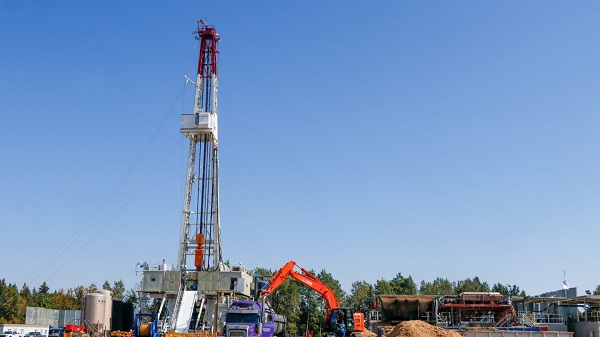
In Western Canada, engineers now steer wells for kilometres underground with remarkable precision, tapping vast energy resources from a single spot on the surface.
The sector is continually evolving as operators pursue next-generation drilling technologies that lower costs while opening new opportunities and reducing environmental impacts.
But many promising innovations never reach the market because of high development costs and limited opportunities for real-world testing, according to Emissions Reduction Alberta (ERA).
That’s why ERA is launching the Drilling Technology Challenge, which will invest up to $35 million to advance new drilling and subsurface technologies.
“The focus isn’t just on drilling, it’s about building our future economy, helping reduce emissions, creating new industries and making sure we remain a responsible leader in energy development for decades to come,” said ERA CEO Justin Riemer.
And it’s not just about oil and gas. ERA says emerging technologies can unlock new resource opportunities such as geothermal energy, deep geological CO₂ storage and critical minerals extraction.
“Alberta’s wealth comes from our natural resources, most of which are extracted through drilling and other subsurface technologies,” said Gurpreet Lail, CEO of Enserva, which represents energy service companies.
ERA funding for the challenge will range from $250,000 to $8 million per project.
Eligible technologies include advanced drilling systems, downhole tools and sensors; AI-enabled automation and optimization; low-impact rigs and fluids; geothermal and critical mineral drilling applications; and supporting infrastructure like mobile labs and simulation platforms.
“All transformative ideas are really eligible for this call,” Riemer said, noting that AI-based technologies are likely to play a growing role.
“I think what we’re seeing is that the wells of the future are going to be guided by smart sensors and real-time data. You’re going to have a lot of AI-driven controls that help operators make instant decisions and avoid problems.”
Applications for the Drilling Technology Challenge close January 29, 2026.


From Underdog to Top Broodmare

Federal major projects list raises questions

Poilievre says West Coast Pipeline MOU is no guarantee

Google denies scanning users’ email and attachments with its AI software

Crown seeks to punish peaceful protestor Chris Barber by confiscating his family work truck “Big Red”

Health Canada indefinitely pauses plan to sell unlabeled cloned meat after massive public backlash

Higher carbon taxes in pipeline MOU are a bad deal for taxpayers
-
 Artificial Intelligence2 days ago
‘Trouble in Toyland’ report sounds alarm on AI toys
-
 Business10 hours ago
Recent price declines don’t solve Toronto’s housing affordability crisis
-
 National1 day ago
Media bound to pay the price for selling their freedom to (selectively) offend
-
 Daily Caller9 hours ago
Tech Mogul Gives $6 Billion To 25 Million Kids To Boost Trump Investment Accounts
-
 Daily Caller2 days ago
Tom Homan Predicts Deportation Of Most Third World Migrants Over Risks From Screening Docs
-
 Artificial Intelligence18 hours ago
The Emptiness Inside: Why Large Language Models Can’t Think – and Never Will
-
 Energy2 days ago
Canadians will soon be versed in massive West Coast LPG mega-project
-
 Bruce Dowbiggin1 day ago
Sometimes An Ingrate Nation Pt. 2: The Great One Makes His Choice