
International
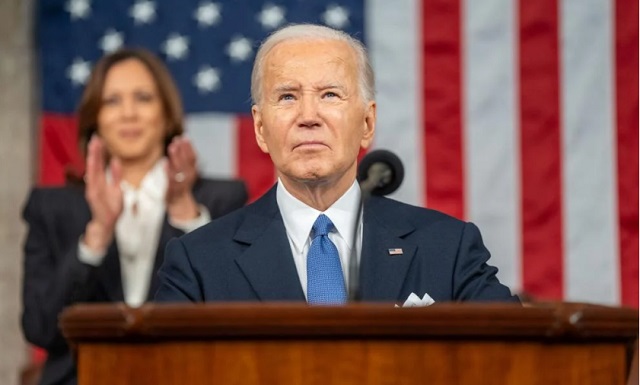
Biden explains why he dropped out of presidential race


From The Center Square
By

President Joe Biden explained to reporters Tuesday in more detail his rationale for suddenly ending his reelection bid earlier this year.
Biden told reporters that his race against former President Donald Trump would have been close and that he “could have won.” Biden said he wasn’t “that far behind” but that he was worried that he would hurt Senate and House Democrats running for their seats.
“What have happened though, if the discussion had been, was I going to cost seats for Democrats, that would have been the whole subject matter for the remainder of the campaign,” Biden told reporters at Chicago O’Hare International Airport before boarding Air Force One. “You’d have to cover it, that would be the issue, and it would give him an advantage.”
A reporter asked Biden if he was angry with Former House Speaker Nancy Pelosi, who reportedly helped lead the pressure to push Biden out of the race. Several news outlets have reported that leading Democrats forced Biden out because of his poor polling.
“No, I haven’t spoken to Nancy at all,” Biden said. “I mean, look, I made — no — no one influenced my decision. No one knew it was coming. What I decided to do was — I didn’t want to — to the extent that the party thought they’d lose Senate seats or House seats, it — that would have been the topic you would have had to cover the entire remainder of the campaign, and it wasn’t worth it.”
Biden’s campaign implosion began after his disastrous performance at the presidential debate against Trump in June. Biden fumbled, faltered, trailed off and at times was incoherent at the debate, prompting Democrats in Congress, traditionally liberal media, and a range of political pundits to call for Biden to step aside.
Biden initially remained defiant but after a few weeks Biden announced on social media that he was stepping out of the race. He endorsed his Vice President Kamala Harris, who is expected to receive the nomination at the Democratic National Convention this week.
Biden spoke at that convention Monday night where he received a standing ovation, and Harris thanked him.
Biden’s comments Tuesday about his concern for losing House and Senate seats are a new, more revealing admission from the president. In a speech last month where Biden addressed the nation to explain his departure and endorse Harris again, he focused on touting his record in office and “passing the torch” to Harris to “save our Democracy.”
Biden’s remarks Tuesday show that the down-ballot fears played a much larger role. Polling before Biden’s withdrawal showed Trump leading Biden nationally by about 3 points but leading with much larger margins in several key swing states. In fact, Trump was dominating Biden in the swing states before Biden’s withdrawal.
Former President Donald Trump has publicly attacked Democrats for switching out Harris for Biden, who did win the delegates in primary states only to have those delegates endorse Harris.
“The Democrats staged the first ever ‘Coup’ in America,” Trump said in a statement Monday. “Crooked Joe Biden was told, ‘Sorry Joe, you’re losing to Trump, BIG, and you can’t beat him – You’re Fired.’ So now, for the first time in American history, I’ll have to beat TWO Candidates, the second being a Radical Left Marxist, Comrade Kamala Harris. It’s not fair, perhaps even another form of Election Interference, but the good news is that she should be easier than to beat than Crooked Joe in that the USA will never allow itself to become a Communist Country. THE DEMOCRATS ARE, ‘A THREAT TO DEMOCRACY?’”
When asked about those coup comments, Biden made a quip questioning Trump’s “stability” and later added that no one “took me out.”

Casey Harper
D.C. Bureau Reporter

Business
Federal funds FROZEN after massive fraud uncovered: Trump cuts off Minnesota child care money


The Trump administration has cut off all federal child care payments to Minnesota, ordering a sweeping audit of the state’s day care system as investigators dig into what officials describe as one of the largest fraud schemes ever tied to social service programs.
“We have frozen all child care payments to the state of Minnesota,” Deputy Health and Human Services Secretary Jim O’Neill wrote Tuesday afternoon, saying the move comes after mounting evidence that taxpayer dollars were being siphoned to sham or non-operational day care centers. The freeze follows a viral investigative video that put a national spotlight on facilities across Minneapolis that were receiving large sums of public money despite appearing closed or barely functioning.
According to Alex Adams, assistant secretary at HHS’s Administration for Children and Families, Minnesota has already received roughly $185 million in federal child care funding this year alone. Those funds, the administration says, will remain locked down until the state can demonstrate that payments are being used lawfully. “Funds will be released only when states prove they are being spent legitimately,” Adams said.
We have frozen all child care payments to the state of Minnesota.
You have probably read the serious allegations that the state of Minnesota has funneled millions of taxpayer dollars to fraudulent daycares across Minnesota over the past decade.
Today we have taken three actions… pic.twitter.com/VYbyf3WGop
— Deputy Secretary Jim O'Neill (@HHS_Jim) December 30, 2025
O’Neill accused Minnesota officials of allowing abuse to fester for years, alleging the state has “funneled millions of taxpayer dollars to fraudulent daycares across Minnesota over the past decade.” To halt further losses, HHS outlined a series of immediate enforcement steps. Going forward, states seeking reimbursement through the Administration for Children and Families will be required to provide receipts or photographic proof documenting how funds are spent.
The department has also formally demanded that Gov. Tim Walz order a “comprehensive audit” of the day care centers flagged by investigators. O’Neill said the review must include attendance records, licensing documents, complaints, investigative files, and inspection reports. He pointed directly to a video published Friday by YouTuber Nick Shirley, who visited multiple Minneapolis-area centers listed as receiving millions in public funds but found locations that appeared closed or inactive.
In addition, HHS has launched a dedicated fraud hotline and email address at childcare.gov to encourage tips from parents, providers, and the public. “We have turned off the money spigot and we are finding the fraud,” O’Neill said, urging anyone with information to come forward.
Federal prosecutors say the scope of the alleged abuse is staggering. Authorities have already confirmed at least $1 billion in fraud tied to Minnesota child care programs, with 92 people charged so far. The U.S. Attorney’s Office has warned the total could ultimately reach as high as $9 billion as investigators continue combing through records.
The funding freeze marks one of the most aggressive crackdowns yet by the Trump administration on state-run social programs accused of lax oversight, sending a clear message that federal dollars will not flow until Minnesota can account for where the money went — and who was cashing in.


From the Daily Caller News Foundation
A resurfaced 2018 video from a Minneapolis-area TV station shows how Somali scammers allegedly bilked Minnesota out of millions of dollars for services that they never provided.
Independent journalist Nick Shirley touched off a storm on social media Friday after he posted a photo of one day-care center, which displayed a banner calling it “The Greater Learing Center” on X, along with a 42-minute video that went viral showing him visiting that and other day-care centers. The surveillance video, which aired on Fox 9 in 2018 after being taken in 2015, showed parents taking kids into the center, then leaving with them minutes later, according to Fox News.
“They were billing too much, they went up to high,” Hennepin County attorney Mike Freeman told Fox 9 in 2018. “It’s hard to imagine they were serving that many people. Frankly if you’re going to cheat, cheat little, because if you cheat big, you’re going to get caught.”
Dear Readers:
As a nonprofit, we are dependent on the generosity of our readers.
Please consider making a small donation of any amount here.
Thank you!
Democratic Gov. Tim Walz of Minnesota was accused of engaging in “systemic” retaliation against whistleblowers in a Nov. 30 statement by state employees. Assistant United States Attorney Joe Thompson announced on Dec. 18 that the amount of suspected fraud in Minnesota’s Medicaid program had reached over $9 billion.
After Shirley’s video went viral, FBI Director Kash Patel announced the agency was already sending additional resources in a Sunday post on X, citing the case surrounding Feeding Our Future, which at one point accused the Minnesota government of racism during litigation over the suspension of funds after earlier allegations of fraud.
KSTP reported that the Quality Learning Center, one of the centers visited by Shirley, had 95 citations for violations from one Minnesota agency between 2019 to 2023.
President Donald Trump announced in a Nov. 21 post on Truth Social that he would end “Temporary Protected Status” for Somalis in the state in response to allegations of welfare fraud and said that the influx of refugees had “destroyed our country.”


Remembering Afghanistan and the sacrifices of our military families

How to talk about housing at the holiday dinner table

Largest fraud in US history? Independent Journalist visits numerous daycare centres with no children, revealing massive scam

US Under Secretary of State Slams UK and EU Over Online Speech Regulation, Announces Release of Files on Past Censorship Efforts

“Magnitude cannot be overstated”: Minnesota aid scam may reach $9 billion

US Halts Construction of Five Offshore Wind Projects Due To National Security
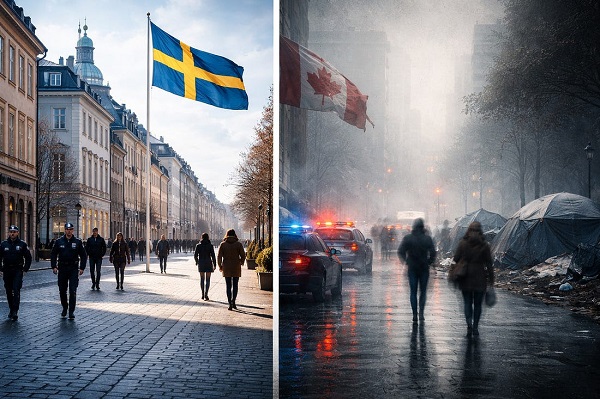
Sweden Fixed What Canada Won’t Even Name
-
 Alberta1 day ago
The Canadian Energy Centre’s biggest stories of 2025
-
Business1 day ago
Resurfaced Video Shows How Somali Scammers Used Day Care Centers To Scam State
-
 Business15 hours ago
Dark clouds loom over Canada’s economy in 2026
-
 Addictions12 hours ago
Coffee, Nicotine, and the Politics of Acceptable Addiction
-
 Business2 days ago
Canada needs serious tax cuts in 2026
-
 Business2 days ago
Ottawa Is Still Dodging The China Interference Threat
-
Business2 days ago
Minneapolis day care filmed empty suddenly fills with kids
-
 Business1 day ago
Disclosures reveal Minnesota politician’s husband’s companies surged thousands-fold amid Somali fraud crisis