
Business
Bank of Canada missteps helped fuel today’s inflation



The correlation between the quantity of money and inflation shown is not perfect but strong enough to justify the conclusion that Canada would have avoided the inflation starting in early 2021 had the Bank not increased the money supply so dramatically during the first year of the pandemic.
According to Statistics Canada’s latest consumer price index report, in February the annual inflation rate fell to 2.8 per cent, raising the prospect of interest rate cuts by the Bank of Canada sometime this year. “Inflation is caused by too many dollars chasing too few goods” used to be the traditional diagnosis of the cause of inflation, prompting central banks to fight it by slowing the growth of the money supply. This approach is based on what is known as the “monetarist” theory of inflation, which suggests that supply shocks such as those associated with the COVID pandemic do not cause inflation but only a temporary increase in the price level, which is reversed once the cause of the shock ends—unless the money supply has increased.
In recent decades, central banks have fought inflation using interest rates instead of monetary growth. This switch followed the postwar success of Keynesian theory, which blames inflation on excess aggregate demand, which higher interest rates are supposed to curtail.
Targeting interest rates can work if central banks simultaneously pay attention to money growth, but too often they’ve failed to do so. Equally, targeting the money supply can create inflation-fighting interest rates. However, interest rate targeting in practice has a serious shortcoming. Aggregate spending is influenced by real interest rates while central banks can set only nominal rates and real rates are beyond their control because they cannot change inflation by any direct policy.
This important problem arises because, for example, a nominal interest rate of 6 per cent turns into a real rate of minus 2 per cent if the expected inflation is 8 per cent. At that rate, investors can borrow $1 million at 6 per cent, use the money to buy real estate, sell it a year later after it has appreciated at the expected 8 per cent, repay the $1 million and take home a capital gain of $20,000. In other words, the high expected inflation rate incentivizes consumers and businesses to borrow more, which results in faster money growth and risks even higher inflation.
The expected rate of inflation exists only in peoples’ minds and is determined by many factors. The Bank of Canada collects as much information as it can, drawing on the results of public surveys, the information contained in the prices of so-called Real Return Yields, and sophisticated economic models produced by the Bank’s economists. But these efforts do not result in reliable information, as evidenced by the uncertain and speculative nature of economic forecasts found in its economic updates.
The problems associated with not knowing the real rate of interest have persuaded some economists, called “monetarists,” to urge central banks to target the money supply including famed economist Milton Friedman whose monumental study of the history of U.S. money supply and inflation inspired many including David Laidler, emeritus professor at the University of Western Ontario, and Britain’s John Greenwood who maintains a large database he used to create the accompanying graph.

This graph shows Canada’s annual rate of inflation (measured on the left axis) and the annual rate of growth of the money supply (M3) (measured on the right axis) for the years 2014 to 2024 using data published by the Bank of Canada and Statistics Canada, which require little manipulation. The annual percentage change in the money supply is averaged over 12-months, as is done widely to smooth data that fluctuate much over short periods; and the resultant time series is shifted forward 18 months, to achieve the best fit between changes in money growth and changes in inflation in the monetarist tradition, which has found the lag to have been variable historically between 12 and 18 months. (Thus, the peak smoothed money supply growth rate of more than 13 per cent occurred in February/March 2021, but is shown as occurring in August/September 2022, some 18 months later and close to the peak of inflation in June 2022.)
The correlation between the quantity of money and inflation shown is not perfect but strong enough to justify the conclusion that Canada would have avoided the inflation starting in early 2021 had the Bank not increased the money supply so dramatically during the first year of the pandemic.
In 1994, John Crow, then-governor of the Bank of Canada, presented to a parliamentary finance committee a report on the economic outlook. One of the authors of this op-ed (Grubel) was at this meeting. In response to his question, Crow said that the Bank’s econometric forecasting model did not include data on the money supply but that he always looked over his shoulders to ensure it does not get out of line. If his successors had followed his practice, perhaps Canada’s present inflation would have been avoided.
But then it would not be possible to test the usefulness of the model, which draws on money supply growth data over the last 18 months to predict that inflation should fall to 2 per cent near year-end 2024 or early 2025.
If the prediction is realized, however, Canadians should not expect the lower inflation rate to result in lower costs of living. That would happen only if the Bank made the money growth rate negative, something history suggests is unlikely because it usually resulted in recessions. How much better it would have been if the inflation genie had never been allowed out of the lamp.
Authors:

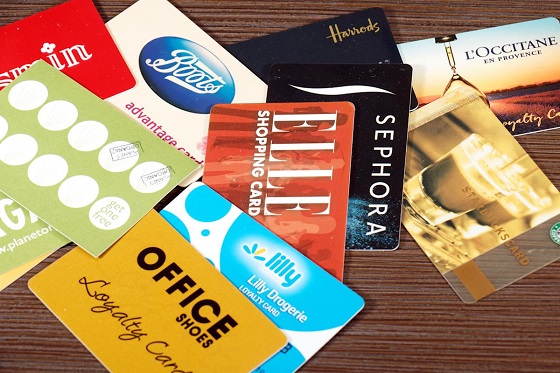

You’ve certainly been asked (begged!) to join up for at least one loyalty “points” program – like PC Optimum, Aeroplan, or Hilton Honors – over the years. And the odds are that you’re currently signed up for at least one of them. In fact, the average person apparently belongs to at no less than 14 programs. Although, ironically, you’ll need to sign up to an online equivalent of a loyalty program to read the source for that number.

Well all that warm, fuzzy “belonging” comes with some serious down sides. Let’s see how much they might cost us.
To be sure, there’s real money involved here. Canadians redeem at least two billion dollars in program rewards each year, and payouts will often represent between one and ten percent of the original purchase value.
At the same time, it’s estimated that there could be tens of billions of unredeemed dollars due to expirations, shifting program terms, and simple neglect. So getting your goodies isn’t automatic.
The Audit is a reader-supported publication.
To receive new posts and support my work, consider becoming a free or paid subscriber.
Just why do consumer-facing corporations agree to give away so much money in the fist place?
As you probably already know, it’s about your data. Businesses are willing to pay cold, hard cash in exchange for detailed descriptions of your age, sex, ethnicity, wealth, location, employment status, hobbies, preferences, medical conditions, political leanings, and, of course, shopping habits.
Don’t believe it works? So then why, after all these years, are points programs still giving away billions of dollars?
Every time you participate in such a program, the data associated with that activity will be collected and aggregated along with everything else known about you. It’s more than likely that points-based data is being combined with everything connected to your mobile phone account, email addresses, credit cards, provincial health card, and – possibly – your Social Insurance number. The depth and accuracy of your digital profile improves daily.
What happens to all that data? A lot of it is shared with – or sold to – partners or affiliates for marketing purposes. Some of it is accidentally (or intentionally) leaked to organized criminal gangs driving call center-related scams. But it’s all about getting to know you better in ways that maximize someone’s profits.
One truly scary way this data is used involves surveillance pricing (also known as price discrimination) – particularly as it’s described in a recent post by Professor Sylvain Charlebois.
The idea is that retailers will use your digital profile to adjust the prices you pay at the cash register or when you’re shopping online. The more loyal you are as a customer, the more you’ll pay. That’s because regular (“loyal”) customers are already reliable revenue sources. Companies don’t need to spend anything to build a relationship with you. But they’re more than willing to give up a few percentage points to gain new friends.
I’m not talking about the kind of price discrimination that might lead to higher prices for sales in, say, urban locations to account for higher real estate and transportation costs. Those are just normal business decisions.
What Professor Charlebois described is two customers paying different prices for the same items in the same stores. In fact, a recent Consumer Reports experiment in the U.S. involving 437 shoppers in four cities found the practice to be quite common.
But the nasty bit here is that there’s growing evidence that retailers are using surveillance pricing in grocery stores for basic food items. Extrapolating from the Consumer Reports study, such pricing could be adding $1,200 annually to a typical family’s spending on basic groceries.
I’m not sure what the solution is. It’s way too late to “unenroll” from our loyalty accounts. And government intervention would probably just end up making things worse.
But perhaps getting the word out about what’s happening could spark justified mistrust in the big retailers. No retailer enjoys dealing with grumpy customers.
Be grumpy.
The Audit is a reader-supported publication.
To receive new posts and support my work, consider becoming a free or paid subscriber.
Business
Largest fraud in US history? Independent Journalist visits numerous daycare centres with no children, revealing massive scam


A young journalist has uncovered perhaps the largest fraud scheme in US history.
He certainly isn’t a polished reporter with many years of experience, but 23 year old independent journalist Nick Shirley seems to be getting the job done. Shirley has released an incredible video which appears to outline fraud after fraud after fraud in what appears to be a massive taxpayer funded scheme involving up to $9 Billion Dollars.
In one day of traveling around Minneapolis-St. Paul, Shirley appears to uncover over $100 million in fraudulent operations.
🚨 Here is the full 42 minutes of my crew and I exposing Minnesota fraud, this might be my most important work yet. We uncovered over $110,000,000 in ONE day. Like it and share it around like wildfire! Its time to hold these corrupt politicians and fraudsters accountable
We ALL… pic.twitter.com/E3Penx2o7a
— Nick shirley (@nickshirleyy) December 26, 2025


Australian PM booed at Bondi vigil as crowd screams “shame!”

Mortgaging Canada’s energy future — the hidden costs of the Carney-Smith pipeline deal
Canada’s EV gamble is starting to backfire

The “Disruptor-in-Chief” places Canada in the crosshairs

End Supply Management—For the Sake of Canadian Consumers

UK Police Pilot AI System to Track “Suspicious” Driver Journeys

Canadian government launches trial version of digital ID for certain licenses, permits
-
 Business1 day ago
“Magnitude cannot be overstated”: Minnesota aid scam may reach $9 billion
-
 Haultain Research6 hours ago
Sweden Fixed What Canada Won’t Even Name
-
Business1 day ago
Largest fraud in US history? Independent Journalist visits numerous daycare centres with no children, revealing massive scam
-
 Censorship Industrial Complex1 day ago
US Under Secretary of State Slams UK and EU Over Online Speech Regulation, Announces Release of Files on Past Censorship Efforts
-
 Daily Caller2 days ago
Is Ukraine Peace Deal Doomed Before Zelenskyy And Trump Even Meet At Mar-A-Lago?
-
Business6 hours ago
What Do Loyalty Rewards Programs Cost Us?