
Alberta
B.C. would benefit from new pipeline but bad policy stands in the way


From the Fraser Institute
By Julio Mejía and Elmira Aliakbari

Bill C-69 (a.k.a. the “no pipelines act”) has added massive uncertainty to the project approval process, requiring proponents to meet vague criteria that go far beyond any sensible environmental concerns—for example, assessing any project’s impact on the “intersection of sex and gender with other identity factors.”
In case you haven’t heard, the Alberta government plans to submit a proposal to the federal government to build an oil pipeline from Alberta to British Columbia’s north coast.
But B.C. Premier Eby dismissed the idea, calling it a project imported from U.S. politics and pursued “at the expense of British Columbia and Canada’s economy.” He’s simply wrong. A new pipeline wouldn’t come at the expense of B.C. or Canada’s economy—it would strengthen both. In fact, particularly during the age of Trump, provinces should seek greater cooperation and avoid erecting policy barriers that discourage private investment and restrict trade and market access.
The United States remains the main destination for Canada’s leading exports, oil and natural gas. In 2024, nearly 96 per cent of oil exports and virtually all natural gas exports went to our southern neighbour. In light of President Trump’s tariffs on Canadian energy and other goods, it’s long past time to diversify our trade and find new export markets.
Given that most of Canada’s oil and gas is landlocked in the Prairies, pipelines to coastal terminals are the only realistic way to reach overseas markets. After the completion of the Trans Mountain Pipeline Expansion (TMX) project in May 2024, which transports crude oil from Alberta to B.C. and opened access to Asian markets, exports to non-U.S. destinations increased by almost 60 per cent. This new global reach strengthens Canada’s leverage in trade negotiations with Washington, as it enables Canada to sell its energy to markets beyond the U.S.
Yet trade is just one piece of the broader economic impact. In its first year of operation, the TMX expansion generated $13.6 billion in additional revenue for the economy, including $2.0 billion in extra tax revenues for the federal government. By 2043, TMX operations will contribute a projected $9.2 billion to Canada’s economic output, $3.7 billion in wages, and support the equivalent of more than 36,000 fulltime jobs. And B.C. stands to gain the most, with $4.3 billion added to its economic output, nearly $1 billion in wages, and close to 9,000 new jobs. With all due respect to Premier Eby, this is good news for B.C. workers and the provincial economy.
In contrast, cancelling pipelines has come at a real cost to B.C. and Canada’s economy. When the Trudeau government scrapped the already-approved Northern Gateway project, Canada lost an opportunity to increase the volume of oil transported from Alberta to B.C. and diversify its trading partners. Meanwhile, according to the Canadian Energy Centre, B.C. lost out on nearly 8,000 jobs a year (or 224,344 jobs in 29 years) and more than $11 billion in provincial revenues from 2019 to 2048 (inflation-adjusted).
Now, with the TMX set to reach full capacity by 2027/28, and Premier Eby opposing Alberta’s pipeline proposal, Canada may miss its chance to export more to global markets amid rising oil demand. And Canadians recognize this opportunity—a recent poll shows that a majority of Canadians (including 56 per cent of British Columbians) support a new oil pipeline from Alberta to B.C.
But, as others have asked, if the economic case is so strong, why has no private company stepped up to build or finance a new pipeline?
Two words—bad policy.
At the federal level, Bill C-48 effectively bans large oil tankers from loading or unloading at ports along B.C.’s northern coast, undermining the case for any new private-sector pipeline. Meanwhile, Bill C-69 (a.k.a. the “no pipelines act”) has added massive uncertainty to the project approval process, requiring proponents to meet vague criteria that go far beyond any sensible environmental concerns—for example, assessing any project’s impact on the “intersection of sex and gender with other identity factors.” And the federal cap on greenhouse gas (GHG) emissions exclusively for the oil and gas sector will inevitably force a reduction in oil and gas production, again making energy projects including pipelines less attractive to investors.
Clearly, policymakers in Canada should help diversify trade, boost economic growth and promote widespread prosperity in B.C., Alberta and beyond. To achieve this goal, they should put politics aside, focus of the benefits to their constituents, and craft regulations that more thoughtfully balance environmental concerns with the need for investment and economic growth.

Alberta
Alberta introducing three “all-season resort areas” to provide more summer activities in Alberta’s mountain parks

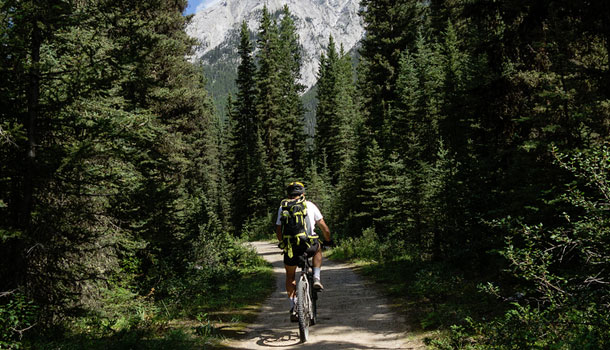
Three iconic ski resorts to become summer hiking, mountain biking, zip-lining destinations.
Castle, Fortress and Nakiska have been designated as Alberta’s first all-season resort areas, making it easier for people to stay and play year-round.

For decades, red tape has restricted these resorts to winter operations and limited the ability to make facility upgrades or simply maintain existing facilities. These resorts are central to Alberta’s outdoor heritage, inspiring generations of athletes and outdoor enthusiasts. They have hosted world-class events such as the 1988 Olympics and served as the backdrop for cinematic blockbusters like The Revenant and Jumanji: The Next Level. All-season resort area designations support the revitalization of iconic resorts while maintaining strong environmental protections.
All-season resort areas will offer a wider variety of affordable and accessible recreation experiences for families, outdoor enthusiasts and visitors. These designations simplify regulatory processes while maintaining Alberta’s high environmental standards.
“Our government is proud to champion former Premier Peter Lougheed’s vision for Alberta’s Rockies, ensuring future generations can continue to access and enjoy these beautiful areas. By helping revitalize Alberta’s legendary ski resorts, we are striking the right balance of economic growth, environmental stewardship and Indigenous opportunity.”
Environmental excellence remains a core requirement. All projects must meet Alberta’s existing environmental standards, including the Public Lands Act, Water Act, and Environmental Protection and Enhancement Act, and will be subject to environmental assessment. Plans must address wildlife protection, water conservation, wildfire mitigation and sustainable visitor behaviour.
Since 2019, Alberta has expanded provincial parks and recreation areas by more than 300,000 hectares. As part of these designations, minor boundary adjustments ensure long-standing ski terrain is placed under the appropriate regulator, affecting less than 0.03 per cent of Alberta’s parks system.
“All-season destinations are all about serving community and building community. The new all-season policy will bring both social and economic opportunities to Alberta.”
Over the next decade, these three all-season resort areas have the potential to create 24,000 new jobs, $3.6 billion in GDP, and $4 billion in visitor spending. All-season resort developers and operators will be encouraged to partner with local businesses and use locally sourced materials, workforce talent, suppliers and service providers.
“Alberta’s outdoor recreation and resort potential was held back for decades by an unworkable land-use framework, even as our population grew. The new all-season resort regulations will now help catalyze responsible, year-round, nature-based development that draws new rural investment and strengthens Alberta’s culture of stewardship through lived connections with the land.”
All-season resorts present the opportunity to further support Indigenous economic participation, leadership and cultural inclusion in Alberta’s visitor economy. Alberta’s government is committed to continuing meaningful engagement with Indigenous communities, including ensuring that Treaty rights and traditional practices are respected.
To foster trust, transparency and collaboration in the development and management of all-season resorts, Indigenous groups were formally consulted by Alberta’s government as part of designation evaluations. Prospective project proponents must undertake consultations in accordance with Government of Alberta consultation policies and guidelines.
“Alberta’s first all-season resort areas mark an important step forward, and we are encouraged by the ongoing engagement between our Nations and proponents. When development respects our land and is built on true partnership with our communities, it creates meaningful opportunities for Indigenous Peoples, supporting economic growth, strengthening leadership and sharing our culture with visitors.”
“We look forward to working with the province to make sure that Treaty rights are upheld, protect the land and maintain open dialogue with our communities as these resorts move forward, ensuring Indigenous Peoples play a leading role in shaping Alberta’s visitor economy for generations to come.”
“The All-Seasons Resort Act presents a significant opportunity for meaningful Indigenous economic participation in the tourism sector. By capitalizing on this potential, Indigenous tourism can propel Alberta’s tourism sector to become a national leader and serve as a tangible tool for economic reconciliation, including job creation, language revitalization and cultural pride.”
Alberta’s government has created a clear regulatory pathway for all-season resorts. Designation is the first step in the regulatory process. Prospective project proponents can now begin Indigenous consultation, public engagement and proposal submissions to the regulator. Each proposal will be carefully reviewed by the regulator with input from subject matter experts and affected municipalities.
Revitalizing Alberta’s iconic ski resorts – STAKEHOLDER QUOTES
“Alberta’s outdoor recreation and resort potential was held back for decades by an unworkable land-use framework, even as our population grew. The new all-season resort regulations will now help catalyze responsible, year-round, nature-based development that draws new rural investment and strengthens Alberta’s culture of stewardship through lived connections with the land.”
“The All-Seasons Resort Act is exciting news for Alberta’s tourism sector. We welcome the clarity it gives to plan for the future of Kananaskis. We look forward to working with our partners and the province to support sustainable, year-round growth in a way that benefits our communities and protects what makes this place so special.”
“The All-Seasons Resort Act presents a significant opportunity for meaningful Indigenous economic participation in the tourism sector. By capitalizing on this potential, Indigenous tourism can propel Alberta’s tourism sector to become a national leader and serve as a tangible tool for economic reconciliation, including job creation, language revitalization and cultural pride.”
“All-season destinations are all about serving community and building community. The new all-season policy will bring both social and economic opportunities to Alberta.”
“Alberta’s first all-season resort areas mark an important step forward, and we are encouraged by the ongoing engagement between our Nations and proponents. When development respects our land and is built on true partnership with our communities, it creates meaningful opportunities for Indigenous Peoples, supporting economic growth, strengthening leadership and sharing our culture with visitors.”
“We look forward to working with the province to make sure that Treaty rights are upheld, protect the land and maintain open dialogue with our communities as these resorts move forward, ensuring Indigenous Peoples play a leading role in shaping Alberta’s visitor economy for generations to come.”
“Alberta Municipalities appreciates the provincial government’s commitment to municipal collaboration with the new All Season Resort Policy. Early consultation with municipalities results in stronger partnerships and better regional decisions that benefit Albertans.”
“AIOC welcomes the Government of Alberta’s leadership in ensuring Indigenous Nations and groups are engaged early in all-season tourism development. That approach supports reconciliation through responsible land stewardship, and long-term economic prosperity. With our expanded mandate, AIOC is ready to advance Indigenous-led tourism projects that drive investment and sustainable growth across the province.”
From Melissa Lantsman
Turns out the anti-development wing of the Liberal Party never stopped running the show.
Today, we’ll see if the Liberals vote for the pipeline they just finished bragging about.
Spoiler: they won’t. Because with the Liberals, the announcements are real, but the results never are.

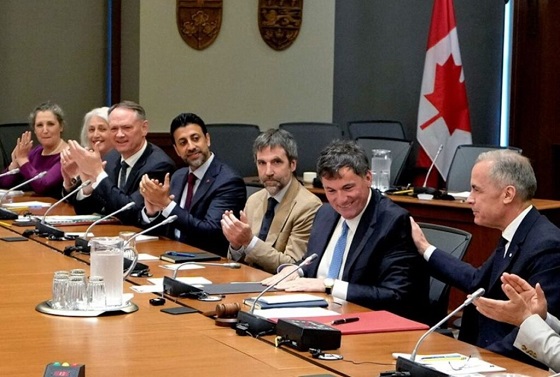
Carney’s Toronto cabinet meetings cost $530,000

Integration Or Indignation: Whose Strategy Worked Best Against Trump?
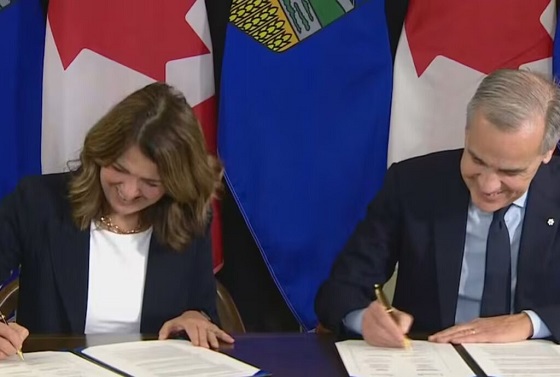
What the Data Shows About the New Canada-Alberta Pipeline Opportunity

While Trump has southern border secure, hundreds of thousands of illegal immigrants still flooding in from Canada

Alberta Sports Hall of Fame Announces Class of 2026 Inductees

Alberta will use provincial laws to stop Canadian gov’t from trying to confiscate legal firearms

The Trickster Politics of the Tanker Ban are Hiding a Much Bigger Reckoning for B.C.
-
 Business2 days ago
Canada invests $34 million in Chinese drones now considered to be ‘high security risks’
-
 Great Reset2 days ago
Surgery Denied. Death Approved.
-
 Business2 days ago
The Climate-Risk Industrial Complex and the Manufactured Insurance Crisis
-
 Economy2 days ago
Affordable housing out of reach everywhere in Canada
-
 Health2 days ago
The Data That Doesn’t Exist
-
 Crime1 day ago
Inside the Fortified Sinaloa-Linked Compound Canada Still Can’t Seize After 12 Years of Legal War
-
 Business1 day ago
Canada Can Finally Profit From LNG If Ottawa Stops Dragging Its Feet
-
 Great Reset15 hours ago
Proposed ban on euthanasia for mental illness sparks passionate debate in Canada’s Parliament