
Uncategorized
Avenatti hit with Nike extortion claims, other charges


LOS ANGELES — A year ago, Michael Avenatti’s star was rising as the combative, media-savvy lawyer representing porn actress Stormy Daniels in her legal battles against President Donald Trump.

He hammered the president as a regular fixture on cable news and baited and bashed critics on Twitter while flirting with his own run for the White House.
Those days seemed like a distant memory as Avenatti was arrested Monday and federal prosecutors on both coasts announced charges that could send him to prison for the rest of his life.
Avenatti tried to shake down Nike for as much as $25 million by using his prominent position to threaten the company with bad publicity, federal prosecutors said. He was also accused of stealing a client’s settlement money to pay his own expenses and filing fake tax returns to get $4 million in loans from a Mississippi bank to fund a lavish lifestyle.
He was arrested at a New York law firm where he had gone to meet with Nike executives. It was just minutes after he tweeted that he planned to hold a news conference Tuesday to “disclose a major high school/college basketball scandal perpetrated by @Nike that we have uncovered.”
“When lawyers use their law licenses as weapons, as a guise to extort payments for themselves, they are no longer acting as attorneys. They are acting as criminals,” said Geoffrey S. Berman, the U.S. attorney in New York.
Prosecutors in New York said their investigation began only last week while California investigators had been building a tax case against Avenatti for more than a year.
The allegations “paint an ugly picture of lawless conduct and greed,” said U.S. Attorney Nick Hanna in Los Angeles. Avenatti describes himself on Twitter as “fighter for good,” but the accusations describe “a corrupt lawyer who instead fights for his own selfish interests.”
Avenatti, 48, was ordered released on $300,000 bond after a brief court appearance Monday evening in New York. He did not enter a plea. Emerging from the courthouse, he said he expected to be cleared of the charges.
“For the entirety of my career, I have fought against the powerful. Powerful people and powerful corporations. I will never stop fighting that good fight,” he said. “I am highly confident that when all the evidence is laid bare in connection with these cases, when it is all known, when due process occurs, that I will be fully exonerated and justice will be done.”
Avenatti’s fame from the Daniels case made him a leading figure in the anti-Trump movement, with relentless cable news appearances, a hard-punching style and a knack for obtaining information about others’ wrongdoing.
His sharp reversal of fortune led critics to hit back on Twitter. Donald Trump Jr., whom Avenatti inaccurately predicted would be charged in the investigation into ties between his father’s 2016 presidential campaign and Russia, gloated.
“Good news for my friend @MichaelAvenatti, if you plead fast enough, you might just get to share a cell with Michael Cohen!” he wrote, referring to the former Trump lawyer set to go to prison next month for crimes that include orchestrating hush-money payments to Daniels. Trump Jr. mocked Avenatti by ending with the lawyer’s trademark hashtag #basta, an Italian word meaning “enough.”
Prosecutors said Avenatti and a co-conspirator initially approached Nike on behalf of a client who coached an Amateur Athletic Union basketball program sponsored by the company in California.
They claimed to have evidence of misconduct by Nike employees and threatened to hold a news conference last week on the eve of a company’s quarterly earnings call and the start of the NCAA tournament. Avenatti told Nike the company could either pay them $15 million to $25 million to investigate the allegations, or pay him more than $22 million for his silence, the criminal complaint said.
Two people familiar with the investigation confirmed the unidentified co-conspirator was Mark Geragos , a Los Angeles criminal
Geragos, a CNN contributor, has a client list that has included Michael Jackson, Winona Ryder, Scott Peterson, Colin Kaepernick and most recently Jussie Smollett, the actor accused of fabricating a racist, anti-gay attack in Chicago. Geragos did not respond to messages seeking comment. Within hours, CNN cut ties with him.
While lawyers sometimes make demands to seek out-of-court settlements, it crosses the line to extortion if they threaten to go public with damaging information to get something of value or gain leverage in a civil dispute, attorney Neama Rahmani said.
“The Department of Justice historically has been very cautious when charging attorneys, so they likely have evidence that Avenatti seriously crossed this line,” said Rahmani, a former federal prosecutor.
Nike officials told investigators Avenatti claimed to know of rules violations by an amateur basketball team sponsored by Nike. Executives immediately reported the threats to federal authorities.
The company “firmly believes in ethical and fair play, both in business and sports, and will continue to assist the prosecutors,” Nike said in a statement.
Avenatti rose to national prominence by representing Daniels, whose real name is Stephanie Clifford, in a lawsuit to break a confidentiality agreement to speak about her alleged affair with Trump. He also made headlines in recent weeks representing two women who accused R&B star R. Kelly of sexual abuse.
Daniels said she was “saddened but not shocked” by the arrest. She issued a statement Monday on Twitter saying she fired Avenatti a month ago after “discovering that he had dealt with me extremely dishonestly.” She said she would not elaborate.
While Avenatti’s lawsuit effectively tore up the gag order that threatened financial penalties if Daniels spoke about the case, a defamation lawsuit filed on her behalf against Trump backfired, and a court ordered her to pay the president’s $293,000 in legal fees.
Avenatti himself has been dogged with tax and financial troubles in recent years.
A U.S. bankruptcy court ordered his former firm to pay $10 million to a lawyer who claimed it had misstated its profits.
The bank fraud case involved $4 million in loans he got from The Peoples Bank in Biloxi, which prosecutors said he obtained by filing fraudulent tax returns claiming $14 million in income over three years. However, he never filed tax returns those years, nor paid the $2.8 million he reported on the forms. In fact, he still owed more than $850,000 to the IRS at the time for previous income.
Mark Pearson, the assistant agent in charge of IRS criminal investigations in Los Angeles, said Avenatti’s crimes supported a $200,000-a-month lifestyle, a car racing venture and pricey homes in the wealthy Orange County communities of Newport Beach and Laguna Beach.
Convictions on all charges carry up to 47 years in the New York case and 50 years in the California case, prosecutors said.
___
Melley reported from Los Angeles. Associated Press writers Jim Mustian in New York, Michael Balsamo in Washington and John Antczak in Los Angeles also contributed to this report.
Brian Melley And Larry Neumeister, The Associated Press

Uncategorized
Mortgaging Canada’s energy future — the hidden costs of the Carney-Smith pipeline deal


Much of the commentary on the Carney-Smith pipeline Memorandum of Understanding (MOU) has focused on the question of whether or not the proposed pipeline will ever get built.
That’s an important topic, and one that deserves to be examined — whether, as John Robson, of the indispensable Climate Discussion Nexus, predicted, “opposition from the government of British Columbia and aboriginal groups, and the skittishness of the oil industry about investing in a major project in Canada, will kill [the pipeline] dead.”
But I’m going to ask a different question: Would it even be worth building this pipeline on the terms Ottawa is forcing on Alberta? If you squint, the MOU might look like a victory on paper. Ottawa suspends the oil and gas emissions cap, proposes an exemption from the West Coast tanker ban, and lays the groundwork for the construction of one (though only one) million barrels per day pipeline to tidewater.
But in return, Alberta must agree to jack its industrial carbon tax up from $95 to $130 per tonne at a minimum, while committing to tens of billions in carbon capture, utilization, and storage (CCUS) spending, including the $16.5 billion Pathways Alliance megaproject.
Here’s the part none of the project’s boosters seem to want to mention: those concessions will make the production of Canadian hydrocarbon energy significantly more expensive.
As economist Jack Mintz has explained, the industrial carbon tax hike alone adds more than $5 USD per barrel of Canadian crude to marginal production costs — the costs that matter when companies decide whether to invest in new production. Layer on the CCUS requirements and you get another $1.20–$3 per barrel for mining projects and $3.60–$4.80 for steam-assisted operations.
While roughly 62% of the capital cost of carbon capture is to be covered by taxpayers — another problem with the agreement, I might add — the remainder is covered by the industry, and thus, eventually, consumers.
Total damage: somewhere between $6.40 and $10 US per barrel. Perhaps more.
“Ultimately,” the Fraser Institute explains, “this will widen the competitiveness gap between Alberta and many other jurisdictions, such as the United States,” that don’t hamstring their energy producers in this way. Producers in Texas and Oklahoma, not to mention Saudi Arabia, Venezuela, or Russia, aren’t paying a dime in equivalent carbon taxes or mandatory CCUS bills. They’re not so masochistic.
American refiners won’t pay a “low-carbon premium” for Canadian crude. They’ll just buy cheaper oil or ramp up their own production.
In short, a shiny new pipe is worthless if the extra cost makes barrels of our oil so expensive that no one will want them.
And that doesn’t even touch on the problem for the domestic market, where the higher production cost will be passed onto Canadian consumers in the form of higher gas and diesel prices, home heating costs, and an elevated cost of everyday goods, like groceries.
Either way, Canadians lose.
So, concludes Mintz, “The big problem for a new oil pipeline isn’t getting BC or First Nation acceptance. Rather, it’s smothering the industry’s competitiveness by layering on carbon pricing and decarbonization costs that most competing countries don’t charge.” Meanwhile, lurking underneath this whole discussion is the MOU’s ultimate Achilles’ heel: net-zero.
The MOU proudly declares that “Canada and Alberta remain committed to achieving Net-Zero greenhouse gas emissions by 2050.” As Vaclav Smil documented in a recent study of Net-Zero, global fossil-fuel use has risen 55% since the 1997 Kyoto agreement, despite trillions spent on subsidies and regulations. Fossil fuels still supply 82% of the world’s energy.
With these numbers in mind, the idea that Canada can unilaterally decarbonize its largest export industry in 25 years is delusional.
This deal doesn’t secure Canada’s energy future. It mortgages it. We are trading market access for self-inflicted costs that will shrink production, scare off capital, and cut into the profitability of any potential pipeline. Affordable energy, good jobs, and national prosperity shouldn’t require surrendering to net-zero fantasy.If Ottawa were serious about making Canada an energy superpower, it would scrap the anti-resource laws outright, kill the carbon taxes, and let our world-class oil and gas compete on merit. Instead, we’ve been handed a backroom MOU which, for the cost of one pipeline — if that! — guarantees higher costs today and smothers the industry that is the backbone of the Canadian economy.
This MOU isn’t salvation. It’s a prescription for Canadian decline.

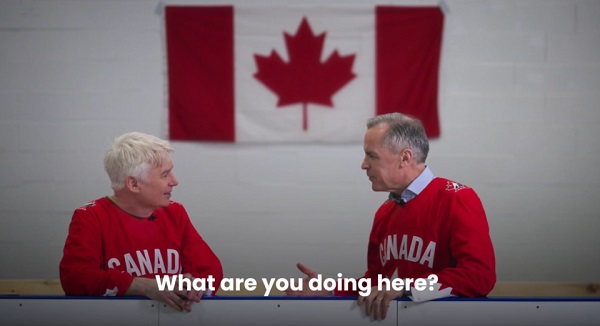

The cost of the bureaucracy increased by $6 billion last year, according to newly released numbers in Public Accounts disclosures. The Canadian Taxpayers Federation is calling on Prime Minister Mark Carney to immediately shrink the bureaucracy.
“The Public Accounts show the cost of the federal bureaucracy is out of control,” said Franco Terrazzano, CTF Federal Director. “Tinkering around the edges won’t cut it, Carney needs to take urgent action to shrink the bloated federal bureaucracy.”
The federal bureaucracy cost taxpayers $71.4 billion in 2024-25, according to the Public Accounts. The cost of the federal bureaucracy increased by $6 billion, or more than nine per cent, over the last year.
The federal bureaucracy cost taxpayers $39.6 billion in 2015-16, according to the Public Accounts. That means the cost of the federal bureaucracy increased 80 per cent over the last 10 years. The government added 99,000 extra bureaucrats between 2015-16 and 2024-25.
Half of Canadians say federal services have gotten worse since 2016, despite the massive increase in the federal bureaucracy, according to a Leger poll.
Not only has the size of the bureaucracy increased, the cost of consultants, contractors and outsourcing has increased as well. The government spent $23.1 billion on “professional and special services” last year, according to the Public Accounts. That’s an 11 per cent increase over the previous year. The government’s spending on professional and special services more than doubled since 2015-16.
“Taxpayers should not be paying way more for in-house government bureaucrats and way more for outside help,” Terrazzano said. “Mere promises to find minor savings in the federal bureaucracy won’t fix Canada’s finances.
“Taxpayers need Carney to take urgent action and significantly cut the number of bureaucrats now.”
Table: Cost of bureaucracy and professional and special services, Public Accounts
| Year | Bureaucracy | Professional and special services |
|
$71,369,677,000 |
$23,145,218,000 |
|
|
$65,326,643,000 |
$20,771,477,000 |
|
|
$56,467,851,000 |
$18,591,373,000 |
|
|
$60,676,243,000 |
$17,511,078,000 |
|
|
$52,984,272,000 |
$14,720,455,000 |
|
|
$46,349,166,000 |
$13,334,341,000 |
|
|
$46,131,628,000 |
$12,940,395,000 |
|
|
$45,262,821,000 |
$12,950,619,000 |
|
|
$38,909,594,000 |
$11,910,257,000 |
|
|
$39,616,656,000 |
$11,082,974,000 |


Rulings could affect energy prices everywhere: Climate activists v. the energy industry in 2026

China Stages Massive Live-Fire Encirclement Drill Around Taiwan as Washington and Japan Fortify
The Canadian Energy Centre’s biggest stories of 2025

The Global Push for Government Mandated Digital IDs And Why You Should Worry

Minneapolis day care filmed empty suddenly fills with kids

Resurfaced Video Shows How Somali Scammers Used Day Care Centers To Scam State

Dark clouds loom over Canada’s economy in 2026
-
 Business2 days ago
Vacant Somali Daycares In Viral Videos Are Also Linked To $300 Million ‘Feeding Our Future’ Fraud
-
 Energy2 days ago
The U.S. Just Removed a Dictator and Canada is Collateral Damage
-
 Haultain Research1 day ago
Trying to Defend Maduro’s Legitimacy
-
International2 days ago
Trump Says U.S. Strike Captured Nicolás Maduro and Wife Cilia Flores; Bondi Says Couple Possessed Machine Guns
-
 International2 days ago
“Captured and flown out”: Trump announces dramatic capture of Maduro
-
 International2 days ago
U.S. Claims Western Hemispheric Domination, Denies Russia Security Interests On Its Own Border
-
International2 days ago
US Justice Department Accusing Maduro’s Inner Circle of a Narco-State Conspiracy
-
International1 day ago
“It’s Not Freedom — It’s the First Step Toward Freedom”