
COVID-19
Australian court rules COVID jab mandate for first responders violated Human Rights Act



From LifeSiteNews
By David James

Mining billionaire Clive Palmer, founder of the United Australia Party, funded the action and said afterwards that he was willing to back other class actions by affected workers. He called for the presidents and executives of the Queensland Police and Ambulance unions to “do the honourable thing and resign from their roles
In another blow to the legitimacy of Australian governments’ anti-COVID-19 measures, among the most severe in the world, a judge in the Queensland Supreme Court has ruled that the COVID shot mandates for police and ambulance staff were unlawful.
The judge, Glenn Martin, found that there was a breach under the Human Rights Act: specifically the right not to be subjected to non-consensual medical treatment. He ruled there was a failure “to give proper consideration to a human right relevant to the decision,” rendering the mandate unlawful.
The judge ordered that the police commissioner no longer take steps to enforce the mandates or continue any disciplinary proceedings. He ordered that the director general of Queensland Health also be restrained from any enforcement of the vaccine direction, and that no disciplinary proceedings could be taken against those applicants.
READ: South Australian court rules employers who mandated COVID jabs can be held liable for injuries
Although on the face of it the decision has potentially far reaching consequences for the many Australian workers who refused to comply with mandates, the finding was based on a technicality, rather than a matter of ethical or legal principle.
Health Minister Shannon Fentiman said the ruling was made “in relation to how the directives were made, not the directives themselves.” She said the judge found that limiting people’s human rights in having healthcare imposed upon them without consent was “justified because of the pandemic.”
It indicates that Australian judges continue to work on the basis that COVID-19 was a deadly pandemic, which justified suppressing individuals’ right to make decisions about their own health. Contrary to that assumption, the Australian Bureau of Statistics (ABS), which compiles its records from death certificates, found that 2020 and 2021 had the lowest level of deaths from respiratory diseases since records have been kept.
So where was the pandemic? The answer is in computer modelling that turned out to be totally wrong. An example of this irresponsible use of modelling, rather than actual evidence, was referenced in the case. The police service claimed that “modelling” indicated that Queensland Police Service (QPS) personnel would have over two million contacts with the community every year. The judge criticized this, noting that it was for 2019/20 and “did not provide any predictions of the effect of the pandemic on the QPS.” Queensland Police Commissioner Katarina Carroll resigned the day before the decision was handed down.
All Australian state governments relied on deeply flawed modelling, especially the former premier of Victoria, Daniel Andrews.
For the law to work properly the assumption that there was a pandemic in Australia needs to be exposed as incorrect. There was only a pandemic of testing, from which illogical or flawed conclusions were drawn. It triggered panic in the Australian community. For the first time in human history people were considered to have a disease, to be a “case,” when they were healthy. Problems include:
- The PCR test used to identify COVID “cases” was not suitable as a diagnostic tool, as the inventor Kary Mullis noted.
- Because the specifics of the Sars-CoV-2 virus were not available in the early stages due to Chinese reluctance to provide details, the PCR test was based on an old flu virus. The FDA admitted that the test was developed not with actual samples of COVID-19, but with what appears to be genetic material from a common cold virus. Tellingly, in 2019 the ABS recorded 4,124 deaths from flu. In 2021 it recorded only two.
- According to the Worldometer, 80 percent of people in Australia who tested positive to COVID-19 experienced no symptoms. This meant either that the test was flawed or their immune systems had dealt with it.
- Mortality from respiratory disease in the period when there was supposed to be a pandemic was unusually low. According to the ABS deaths from COVID-19 in 2020-21 were under 2,000 – far lower than the 4,124 in 2019 from flu.
- The epidemiological modelling was based on “cases,” following positive testing from the PCR or lateral flow tests. This resulted in an absurdly inflated picture of the risks.
Even if it is accepted that these were understandable mistakes, the fact remains that the Australian authorities got it completely wrong; that should have legal implications for the people who lost their livelihoods. Courts, after all, typically focus on evidence, not speculation, even when that guessing comes from complex computer modelling.
Mining billionaire Clive Palmer, founder of the United Australia Party, funded the action and said afterwards that he was willing to back other class actions by affected workers. He called for the presidents and executives of the Queensland Police and Ambulance unions to “do the honourable thing and resign from their roles in supporting the decisions to have officers vaccinate against their wishes.”
If there is to be widespread justice, however, it would seem to be necessary to go beyond just the wording of the vaccine mandate directives and expose how wrong the authorities were when they imposed savage restrictions on the Australian work force and community.
Until judges realise that their assumptions about the “pandemic” are wrong they will continue to put a false idea of the common good above respect for individual rights.

From LifeSiteNews
A judge ruled that the Ontario Court of Justice is already ‘satisfied’ with Chris Barber’s sentence and taking away his very livelihood would be ‘disproportionate.’
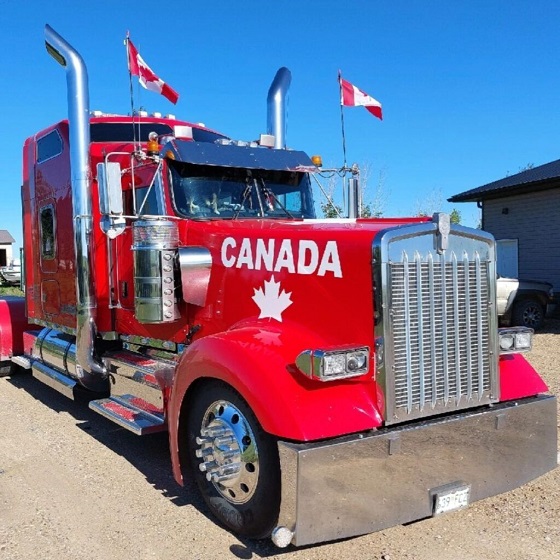
A Canadian judge has dismissed a demand from Canadian government lawyers to seize Freedom Convoy leader Chris Barber’s “Big Red” semi-truck.
On Friday, Ontario Court of Justice Judge Heather Perkins-McVey denied the Crown’s application seeking to forfeit Barber’s truck.
She ruled that the court is already “satisfied” with Barber’s sentence and taking away his very livelihood would be “disproportionate.”
“This truck is my livelihood,” said Barber in a press release sent to LifeSiteNews.
“Trying to permanently seize it for peacefully protesting was wrong, and I’m relieved the court refused to allow that to happen,” he added.
Criminal defense lawyer Marwa Racha Younes was welcoming of the ruling as well, stating, “We find it was the right decision in the circumstances and are happy with the outcome.”
John Carpay, president of the Justice Centre for Constitutional Freedoms (JCCF), said the decision is “good news for all Canadians who cherish their Charter freedom to assemble peacefully.”
READ: Freedom Convoy protester appeals after judge dismissed challenge to frozen bank accounts
“Asset forfeiture is an extraordinary power, and it must not be used to punish Canadians for participating in peaceful protest,” he added in the press release.
As reported recently by LifeSiteNews, the Canadian government claimed that Barber’s truck is an “offence-related property” relating to his involvement in the 2022 protests against Canada’s COVID mandates.
At this time, the court ruling ends any forfeiture proceedings for the time being, however Barber will continue to try and appeal his criminal conviction and house arrest sentence.
Barber’s truck, a 2004 Kenworth long-haul he uses for business, was a focal point in the 2022 protests. He drove it to Ottawa, where it was parked for an extended period of time, but he complied when officials asked him to move it.
On October 7, 2025, after a long trial, Ontario Court Justice Perkins-McVey sentenced Barber and Tamara Lich, the other Freedom Convoy leader, to 18 months’ house arrest. They had been declared guilty of mischief for their roles as leaders of the 2022 protest against COVID mandates, and as social media influencers.
Lich and Barber have filed appeals of their own against their house arrest sentences, arguing that the trial judge did not correctly apply the law on their mischief charges.
Government lawyers for the Crown have filed an appeal of the acquittals of Lich and Barber on intimidation charges.
The pair’s convictions came after a nearly two-year trial despite the nonviolent nature of the popular movement.

From LifeSiteNews
Protestor Evan Blackman’s legal team argues Trudeau’s Emergencies Act-based bank account freezes were punitive state action tied directly to protest participation.
A Freedom Convoy protester whose bank accounts were frozen by the Canadian government says a judge erred after his ruling did not consider the fact that the funds were frozen under the Emergencies Act, as grounds for a stay of proceedings.
In a press release sent out earlier this week, the Justice Centre for Constitutional Freedoms (JCCF) said that Freedom Convoy protestor Evan Blackman will challenge a court ruling in his criminal case via an appeal with the Ontario Superior Court of Justice.
“This case raises serious questions about how peaceful protest is treated in Canada and about the lasting consequences of the federal government’s unlawful use of the Emergencies Act,” noted constitutional lawyer Chris Fleury. “The freezing of protestors’ bank accounts was part of a coordinated effort to suppress dissent, and courts ought to be willing to scrutinize that conduct.”
Blackman was arrested on February 18, 2022, during the police crackdown on Freedom Convoy protests against COVID restrictions, which was authorized by the Emergencies Act (EA). The EA was put in place by former Prime Minister Justin Trudeau’s Liberal government, which claimed the protests were violent, despite no evidence that this was the case.
Blackman’s three bank accounts with TD Bank were frozen due to his participation in the Freedom Convoy, following a directive ordered by Trudeau.
As reported by LifeSiteNews, in November of this year, Blackman was convicted at his retrial even though he had been acquitted at his original trial. In 2023, Blackman’s “mischief” and “obstructing police” charges were dismissed by a judge due to lack of evidence and the “poor memory of a cop regarding key details of the alleged criminal offences.”
His retrial resulted in Blackman getting a conditional discharge along with 12 months’ probation and 122 hours of community service, along with a $200 victim fine surcharge.
After this, Blackman’s application for a stay of proceedings was dismissed by the court. He had hoped to have his stay of proceedings, under section 24(1) of the Charter of Rights and Freedoms, allowed. However, the judge ruled that the freezing of his bank accounts was legally not related to his arrest, and because of this, the stay of proceedings lacked standing.
The JCCF disagreed with this ruling, noting, it “stands in contrast to a Federal Court decision finding that the government’s invocation of the Emergencies Act was unreasonable and violated Canadians’ Charter rights, including those targeted by the financial measures used against Freedom Convoy protestors.”
As of press time, a hearing date has not been scheduled.
In 2024, Federal Court Justice Richard Mosley ruled that Trudeau was “not justified” in invoking the Emergencies Act.
In early 2022, the Freedom Convoy saw thousands of Canadians from coast to coast come to Ottawa to demand an end to COVID mandates in all forms. Despite the peaceful nature of the protest, Trudeau’s federal government enacted the EA in mid-February.
After the protesters were cleared out, which was achieved through the freezing of bank accounts of those involved without a court order as well as the physical removal and arrest of demonstrators, Trudeau revoked the EA on February 23, 2022.

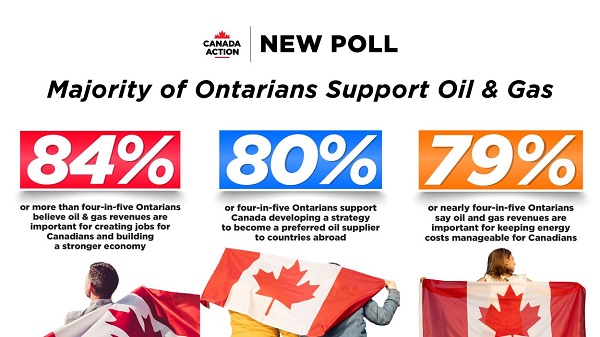
New Poll Shows Ontarians See Oil & Gas as Key to Jobs, Economy, and Trade

Largest fraud in US history? Independent Journalist visits numerous daycare centres with no children, revealing massive scam
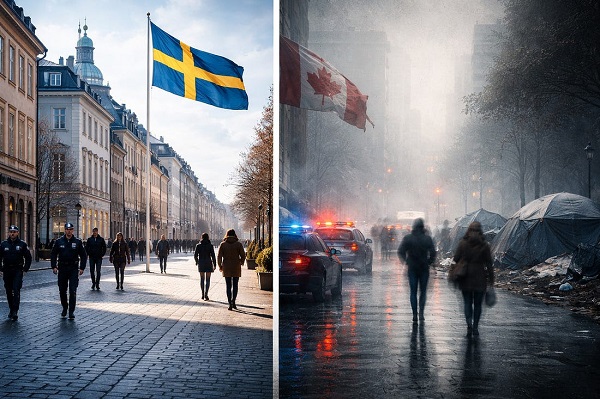
Sweden Fixed What Canada Won’t Even Name

“Magnitude cannot be overstated”: Minnesota aid scam may reach $9 billion

US Under Secretary of State Slams UK and EU Over Online Speech Regulation, Announces Release of Files on Past Censorship Efforts

Socialism vs. Capitalism
Residents in economically free states reap the rewards
-
 Business2 days ago
Dark clouds loom over Canada’s economy in 2026
-
 Business2 days ago
The Real Reason Canada’s Health Care System Is Failing
-
 Business2 days ago
Federal funds FROZEN after massive fraud uncovered: Trump cuts off Minnesota child care money
-
 Addictions2 days ago
Coffee, Nicotine, and the Politics of Acceptable Addiction
-
 Opinion2 days ago
Globally, 2025 had one of the lowest annual death rates from extreme weather in history
-
 International23 hours ago
Trump confirms first American land strike against Venezuelan narco networks
-
 Business23 hours ago
How convenient: Minnesota day care reports break-in, records gone
-
 Business22 hours ago
The great policy challenge for governments in Canada in 2026