
COVID-19
AstraZeneca withdraws COVID vaccines worldwide amid lawsuits alleging severe harm



From LifeSiteNews

The manufacturer insists that its intention of pulling the COVID-19 vaccine from markets around the globe is based solely on decreased demand, but the shots have been linked to a condition that can cause fatal blood clots.
The European Medicines Agency (EMA) has withdrawn the marketing authorization for AstraZeneca’s COVID-19 vaccine at the manufacturer’s request.
AstraZeneca insists that its intention of pulling it COVID-19 vaccine, Vaxzevria, from markets around the globe is based solely on decreased demand as other more effective vaccines have become available.
However, the announcement comes as the pharmaceutical giant faces lawsuits concerning severe harm — including death — to some of the vaccine’s recipients.
AstraZeneca admitted in a court document submitted in February that Vaxzevria, “can, in very rare cases, cause TTS,” while adding, “The causal mechanism is not known.”
TTS (Thrombosis with Thrombocytopenia Syndrome) is perhaps better described as VITT, “Vaccine-Induced Immune Thrombotic Thrombocytopenia,” coined in March 2021, not long after the COVID-19 vaccines were being mandated around the globe.
VITT denotes a condition where blood clots form, reducing normal blood flow after reception of certain COVID-19 vaccines.
Young people were soon found to be at higher risk for developing the condition.
As early as May 2021, those under age 40 were being directed away from taking the AstraZeneca jab.
The UK government revealed in 2022 that 247 cases of fatal blood clots in those who had received AstraZeneca’s COVID-19 vaccine had been reported up until March 31 of that year. During that same period, 3,385 non-fatal blood clots were reported.
More than 50 cases have been lodged in a U.K. High Court, “with victims and grieving relatives seeking damages estimated to be worth up to £100 million,” according to a report by the UK Telegraph.
“It has taken AstraZeneca a year to formally admit that their vaccine can cause the devastating blood clots, when this fact has been widely accepted by the clinical community since the end of 2021,” Sarah Moore, a partner at law firm Leigh Day representing the victims, told The Telegraph in April.
Today’s news of Astrazeneca’s withdrawal of its vaccine European markets “will be seen as a decision linked with AstraZeneca’s recent admission that the vaccine can cause TTS, and the fact that regulators across the world suspended or stopped usage of the vaccine following concerns regarding TTS.”
Despite the acknowledgement of cases of TTS contracted by recipients of its COVID-19 vaccine, AstraZeneca has insisted that its product met industry standards.
“Our sympathy goes out to anyone who has lost loved ones or reported health problems,” the Big Pharma corporation said in a statement. “Patient safety is our highest priority, and regulatory authorities have clear and stringent standards to ensure the safe use of all medicines, including vaccines.
“AstraZeneca’s COVID-19 vaccine was first given the nod by the EMA in January 2021,” a report by the Associated Press (AP) noted. “Within weeks, however, concerns grew about the vaccine’s safety, when dozens of countries suspended the vaccine’s use after unusual but rare blood clots were detected in a small number of immunized people. The EU regulator concluded AstraZeneca’s shot didn’t raise the overall risk of clots, but doubts remained.”
“Partial results from its first major trial — which Britain used to authorize the vaccine — were clouded by a manufacturing mistake that researchers didn’t immediately acknowledge,” the AP report continued. Sadly, “Insufficient data about how well the vaccine protected older people led some countries to initially restrict its use to younger populations before reversing course.”
Some are questioning the morality of AstraZeneca’s leadership, fully supportive of its mandated vaccine even as evidence of serious side effects arose.
“When I met the AstraZeneca boss in Davos, he claimed Covid vaccine mandates were needed to PROTECT as many people as possible,” Rebel News reporter Avi Yemini recounted on X.
“Today, his drug was pulled off the market after it was revealed it HURT the same people forced to have it,” Yemini said. “Let that sink in.”

From LifeSiteNews
A judge ruled that the Ontario Court of Justice is already ‘satisfied’ with Chris Barber’s sentence and taking away his very livelihood would be ‘disproportionate.’
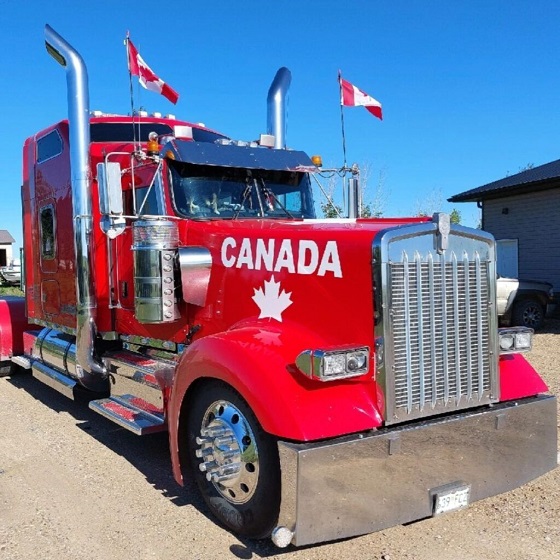
A Canadian judge has dismissed a demand from Canadian government lawyers to seize Freedom Convoy leader Chris Barber’s “Big Red” semi-truck.
On Friday, Ontario Court of Justice Judge Heather Perkins-McVey denied the Crown’s application seeking to forfeit Barber’s truck.
She ruled that the court is already “satisfied” with Barber’s sentence and taking away his very livelihood would be “disproportionate.”
“This truck is my livelihood,” said Barber in a press release sent to LifeSiteNews.
“Trying to permanently seize it for peacefully protesting was wrong, and I’m relieved the court refused to allow that to happen,” he added.
Criminal defense lawyer Marwa Racha Younes was welcoming of the ruling as well, stating, “We find it was the right decision in the circumstances and are happy with the outcome.”
John Carpay, president of the Justice Centre for Constitutional Freedoms (JCCF), said the decision is “good news for all Canadians who cherish their Charter freedom to assemble peacefully.”
READ: Freedom Convoy protester appeals after judge dismissed challenge to frozen bank accounts
“Asset forfeiture is an extraordinary power, and it must not be used to punish Canadians for participating in peaceful protest,” he added in the press release.
As reported recently by LifeSiteNews, the Canadian government claimed that Barber’s truck is an “offence-related property” relating to his involvement in the 2022 protests against Canada’s COVID mandates.
At this time, the court ruling ends any forfeiture proceedings for the time being, however Barber will continue to try and appeal his criminal conviction and house arrest sentence.
Barber’s truck, a 2004 Kenworth long-haul he uses for business, was a focal point in the 2022 protests. He drove it to Ottawa, where it was parked for an extended period of time, but he complied when officials asked him to move it.
On October 7, 2025, after a long trial, Ontario Court Justice Perkins-McVey sentenced Barber and Tamara Lich, the other Freedom Convoy leader, to 18 months’ house arrest. They had been declared guilty of mischief for their roles as leaders of the 2022 protest against COVID mandates, and as social media influencers.
Lich and Barber have filed appeals of their own against their house arrest sentences, arguing that the trial judge did not correctly apply the law on their mischief charges.
Government lawyers for the Crown have filed an appeal of the acquittals of Lich and Barber on intimidation charges.
The pair’s convictions came after a nearly two-year trial despite the nonviolent nature of the popular movement.

From LifeSiteNews
Protestor Evan Blackman’s legal team argues Trudeau’s Emergencies Act-based bank account freezes were punitive state action tied directly to protest participation.
A Freedom Convoy protester whose bank accounts were frozen by the Canadian government says a judge erred after his ruling did not consider the fact that the funds were frozen under the Emergencies Act, as grounds for a stay of proceedings.
In a press release sent out earlier this week, the Justice Centre for Constitutional Freedoms (JCCF) said that Freedom Convoy protestor Evan Blackman will challenge a court ruling in his criminal case via an appeal with the Ontario Superior Court of Justice.
“This case raises serious questions about how peaceful protest is treated in Canada and about the lasting consequences of the federal government’s unlawful use of the Emergencies Act,” noted constitutional lawyer Chris Fleury. “The freezing of protestors’ bank accounts was part of a coordinated effort to suppress dissent, and courts ought to be willing to scrutinize that conduct.”
Blackman was arrested on February 18, 2022, during the police crackdown on Freedom Convoy protests against COVID restrictions, which was authorized by the Emergencies Act (EA). The EA was put in place by former Prime Minister Justin Trudeau’s Liberal government, which claimed the protests were violent, despite no evidence that this was the case.
Blackman’s three bank accounts with TD Bank were frozen due to his participation in the Freedom Convoy, following a directive ordered by Trudeau.
As reported by LifeSiteNews, in November of this year, Blackman was convicted at his retrial even though he had been acquitted at his original trial. In 2023, Blackman’s “mischief” and “obstructing police” charges were dismissed by a judge due to lack of evidence and the “poor memory of a cop regarding key details of the alleged criminal offences.”
His retrial resulted in Blackman getting a conditional discharge along with 12 months’ probation and 122 hours of community service, along with a $200 victim fine surcharge.
After this, Blackman’s application for a stay of proceedings was dismissed by the court. He had hoped to have his stay of proceedings, under section 24(1) of the Charter of Rights and Freedoms, allowed. However, the judge ruled that the freezing of his bank accounts was legally not related to his arrest, and because of this, the stay of proceedings lacked standing.
The JCCF disagreed with this ruling, noting, it “stands in contrast to a Federal Court decision finding that the government’s invocation of the Emergencies Act was unreasonable and violated Canadians’ Charter rights, including those targeted by the financial measures used against Freedom Convoy protestors.”
As of press time, a hearing date has not been scheduled.
In 2024, Federal Court Justice Richard Mosley ruled that Trudeau was “not justified” in invoking the Emergencies Act.
In early 2022, the Freedom Convoy saw thousands of Canadians from coast to coast come to Ottawa to demand an end to COVID mandates in all forms. Despite the peaceful nature of the protest, Trudeau’s federal government enacted the EA in mid-February.
After the protesters were cleared out, which was achieved through the freezing of bank accounts of those involved without a court order as well as the physical removal and arrest of demonstrators, Trudeau revoked the EA on February 23, 2022.


Canadian gov’t considers sharing census data on gender-confused children

Residential school burials controversy continues to fuel wave of church arsons, new data suggests
Canada’s sudden rediscovery of energy ambition has been greeted with a familiar charge: hypocrisy
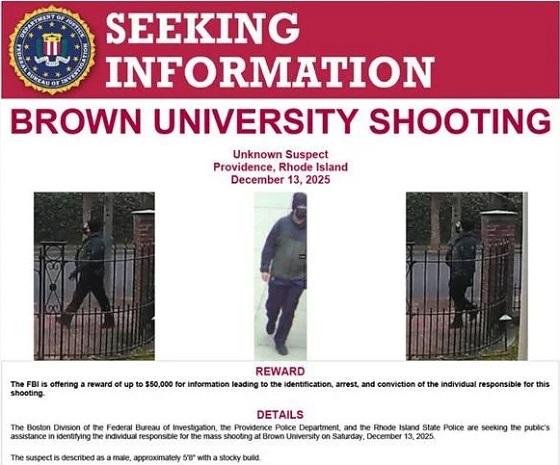
Brown University shooter dead of apparent self-inflicted gunshot wound

Paris Climate Deal Now Decade-Old Disaster

Alberta’s new diagnostic policy appears to meet standard for Canada Health Act compliance
RFK Jr reversing Biden-era policies on gender transition care for minors
-
 Business2 days ago
Taxing food is like slapping a surcharge on hunger. It needs to end
-
 Health2 days ago
FDA warns ‘breast binder’ manufacturers to stop marketing to gender-confused girls
-
 International2 days ago
2025: The Year The Narrative Changed
-
 Business1 day ago
There’s No Bias at CBC News, You Say? Well, OK…
-
 Uncategorized17 hours ago
Mortgaging Canada’s energy future — the hidden costs of the Carney-Smith pipeline deal
-
 Agriculture2 days ago
Supply Management Is Making Your Christmas Dinner More Expensive
-
 Daily Caller2 days ago
Trump Reportedly Escalates Pressure On Venezuela With Another Oil Tanker Seizure
-
 Health2 days ago
All 12 Vaccinated vs. Unvaccinated Studies Found the Same Thing: Unvaccinated Children Are Far Healthier