
Uncategorized
A Matter of Fact: The IEA’s updated net zero scenario is still unrealistic

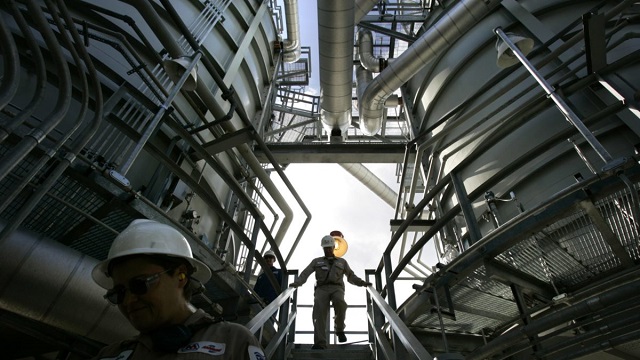

From the Canadian Energy Centre
By Deborah JaremkoCanada can lead the world with reliable, affordable energy supply and clean technology as countries work to reduce emissions
The International Energy Agency (IEA) has updated its net zero scenario, pushing for governments to implement more aggressive climate policies on the energy industry.

The IEA itself acknowledges the scenario is “a pathway, but not the only one” for the energy sector to reduce emissions to net zero by 2050.
The agency acknowledges the world is not on this trajectory, but the Government of Canada uses the net zero scenario as the basis for policies like its proposed oil and gas emissions cap, which will hurt Canadians without environmental gain.
“We’re the fourth-largest oil producing country, and we’re the only ones that are saying oil and gas is not here to stay. That’s a huge roadblock for all of us,” Gurpreet Lail, CEO of Enserva, the national trade organization representing energy service and supply companies, told the Globe and Mail during the World Petroleum Congress last week.
Canada can lead the world with reliable, affordable energy supply and clean technology as countries work to reduce emissions. But the sector needs to be allowed to thrive rather than being phased out while it is needed.
Here are the facts.
Fact: The IEA net zero scenario is not a forecast
The IEA’s updated net zero scenario envisions that the world does not need any new coal, oil and natural gas projects. By 2030, it imagines world oil demand will drop by 23 per cent, natural gas demand by 18 per cent, and coal demand by 44 per cent.
It’s difficult to see how this could actually come about, given that even with accelerating investment in low carbon energy resources the world’s consumption of oil, gas and coal is as high or higher than it has ever been. And rising.
The IEA reports both oil and coal demand are at record levels. The agency itself projects the world’s total energy consumption – which increased by 15 per cent over the last decade – will increase by a further 24 per cent by 2050.
On the world’s current trajectory, the IEA says oil, gas and coal will still account for 62 per cent of world energy supply in 2050, compared to 78 per cent in 2021.
“There’s no evidence that oil demand is going to peak any time soon,” Arjun Murti, former partner with Goldman Sachs, said at the recent Global Business Forum in Banff.
“Oil is not in its sunset phase.”
Fact: The IEA net zero scenario is unrealistic
The IEA’s net zero scenario includes components that are unrealistic.
For example, it says electricity transmission and distribution grids need to expand by around two million kilometres each year to 2030. But it also acknowledges that today, building these grids can take more than a decade, putting that scale and timeline already out of reach.
The net zero scenario also hinges on a “unified effort in which governments put tensions aside and find ways to work together.” But the IEA also acknowledges the world today is “a complex and low-trust geopolitical environment.”
Consider that Russia is trying to boost trade with Asia as economic ties with the West shrivel over Moscow’s actions in Ukraine, according to Reuters News. In just one example, state-owned Gazprom plans to start gas deliveries to China through the Power of Siberia pipeline in 2025 and expand that service in 2030 with Power of Siberia-2.
Russia’s invasion of Ukraine accentuated the world’s reversal away from the concept of globalization, where everyone benefits from the global economy, leading energy analyst and Pulitzer Prize-winning author Daniel Yergin said on a recent ARC Energy Ideas podcast.
“The era of globalization was what I call the WTO consensus: we’re all in this global economy together. In China, hundreds of millions of people come out of poverty. India enters the global economy, standards of living go up and you get really impressive economic performance,” Yergin said.
“Well, that era is ending and it’s heading pretty fast now as we move into this new era of great power competition, which hopefully does not become great power confrontation.”
Energy is at the heart of the “new map,” as Yergin calls it.
Responsibly produced, reliable energy from Canada can benefit world energy security while helping reduce emissions. That is why it is essential the sector is not phased out through government policy.
Fact: Canadian energy and clean technology can help reduce world emissions
One of the fastest and most effective ways to reduce emissions is to switch from coal-fired power to power generated from natural gas, traded globally as LNG.
Consider that between 2005 and 2019, emissions from the U.S power sector dropped by 32 per cent because of coal-to-gas switching, according to the U.S. Energy Information Administration.
Natural gas from the LNG Canada project alone could reduce emissions in Asia by up to 90 million tonnes annually, or the equivalent of shutting down up to 60 Asian coal plants, the project says.
That’s a reduction of more than the entire emissions of the province of British Columbia, which were 64 million tonnes in 2022.
Expanding Canada’s LNG exports to Asia could reduce emissions by 188 million tonnes per year, or the annual equivalent of taking all internal combustion engine vehicles off Canadian roads, according to a 2022 study by Wood Mackenzie.
One of the reasons LNG from Canada has a lower emissions intensity than LNG from other jurisdictions is the success producers have seen reducing methane emissions. It’s an opportunity for technology exports.
The IEA views cutting methane emissions from oil and gas as a critical component of achieving climate targets.
The latest data shows that oil and gas producers in Alberta decreased methane emissions by 44 per cent between 2014 and 2021, a 10 per cent drop from 2020. The sector is expected to surpass the target of reducing methane emissions by 45 per cent by 2025.
“I don’t know of any other jurisdiction that is as far forward in terms of its methane management as Canada,” says Allan Fogwill, chief operating officer of Petroleum Technology Alliance Canada.
“There’s nothing to suggest we couldn’t have similar impacts in the United States, the Middle East, or former Soviet countries that also are involved in oil and natural gas production.”
Fact: Canada’s carbon capture and storage leadership can benefit the world
The IEA says “rapid progress” is required to deploy more carbon capture, utilization and storage (CCUS) projects to reduce emissions.
This is another area where Canada’s energy sector can take the lead.
Since 2000, CCS projects in Saskatchewan and Alberta have removed more than 47 million tonnes of emissions, or the equivalent of taking more than 10 million cars off the road. This work has helped inform development of major CCS projects globally including Northern Lights in Norway.
Canada has five of the world’s 30 commercial CCS facilities, accounting for about 15 per cent of global CCS capacity even though Canada generates less than two per cent of global CO2 emissions, according to the Global CCS Knowledge Centre.
Among CCS projects under development in Canada is one of the largest in the world, proposed by the Pathways Alliance of oil sands producers.
The first phase of the Pathways CCS project will connect 14 oil sands facilities to a CO2 storage hub in northern Alberta. The target is to reduce emissions from operations by 22 megatonnes by 2030 on the way to net zero in 2050.
Fact: Oil and gas still needed in IEA net zero scenario
Even in the IEA’s net zero scenario, in 2050 about 14 per cent of world energy needs are still supplied by oil and gas.
This includes non-combustion uses like petrochemical feedstock and asphalt, which crude from Canada’s oil sands is particularly well suited to supply. Researchers with Queen’s University recently found that asphalt from Alberta’s oil sands can extend pavement lifespan by 30 to 50 per cent.
The world needs more Canadian oil and gas, not less.



The cost of the bureaucracy increased by $6 billion last year, according to newly released numbers in Public Accounts disclosures. The Canadian Taxpayers Federation is calling on Prime Minister Mark Carney to immediately shrink the bureaucracy.
“The Public Accounts show the cost of the federal bureaucracy is out of control,” said Franco Terrazzano, CTF Federal Director. “Tinkering around the edges won’t cut it, Carney needs to take urgent action to shrink the bloated federal bureaucracy.”
The federal bureaucracy cost taxpayers $71.4 billion in 2024-25, according to the Public Accounts. The cost of the federal bureaucracy increased by $6 billion, or more than nine per cent, over the last year.
The federal bureaucracy cost taxpayers $39.6 billion in 2015-16, according to the Public Accounts. That means the cost of the federal bureaucracy increased 80 per cent over the last 10 years. The government added 99,000 extra bureaucrats between 2015-16 and 2024-25.
Half of Canadians say federal services have gotten worse since 2016, despite the massive increase in the federal bureaucracy, according to a Leger poll.
Not only has the size of the bureaucracy increased, the cost of consultants, contractors and outsourcing has increased as well. The government spent $23.1 billion on “professional and special services” last year, according to the Public Accounts. That’s an 11 per cent increase over the previous year. The government’s spending on professional and special services more than doubled since 2015-16.
“Taxpayers should not be paying way more for in-house government bureaucrats and way more for outside help,” Terrazzano said. “Mere promises to find minor savings in the federal bureaucracy won’t fix Canada’s finances.
“Taxpayers need Carney to take urgent action and significantly cut the number of bureaucrats now.”
Table: Cost of bureaucracy and professional and special services, Public Accounts
| Year | Bureaucracy | Professional and special services |
|
$71,369,677,000 |
$23,145,218,000 |
|
|
$65,326,643,000 |
$20,771,477,000 |
|
|
$56,467,851,000 |
$18,591,373,000 |
|
|
$60,676,243,000 |
$17,511,078,000 |
|
|
$52,984,272,000 |
$14,720,455,000 |
|
|
$46,349,166,000 |
$13,334,341,000 |
|
|
$46,131,628,000 |
$12,940,395,000 |
|
|
$45,262,821,000 |
$12,950,619,000 |
|
|
$38,909,594,000 |
$11,910,257,000 |
|
|
$39,616,656,000 |
$11,082,974,000 |


From the Daily Caller News Foundation
By Jason Hopkins
The Trump administration is creating a first-of-its-kind task force aimed at ushering in a new “Golden Age” of beautiful infrastructure across the U.S.
The Department of Transportation (DOT) will announce the establishment of the Beautifying Transportation Infrastructure Council (BTIC) on Thursday, the Daily Caller News Foundation exclusively learned. The BTIC seeks to advise Transportation Secretary Sean Duffy on design and policy ideas for key infrastructure projects, including highways, bridges and transit hubs.
“What happened to our country’s proud tradition of building great, big, beautiful things?” Duffy said in a statement shared with the DCNF. “It’s time the design for America’s latest infrastructure projects reflects our nation’s strength, pride, and promise.”
“We’re engaging the best and brightest minds in architectural design and engineering to make beautiful structures that move you and bring about a new Golden Age of Transportation,” Duffy continued.
Mini scoop – here is the DOT’s rollout of its Beautifying Transportation Infrastructure Council, which will be tasked with making our buildings beautiful again. pic.twitter.com/
9iV2xSxdJM — Jason Hopkins (@jasonhopkinsdc) October 23, 2025
The DOT is encouraging nominations of the country’s best architects, urban planners, artists and others to serve on the council, according to the department. While ensuring that efficiency and safety remain a top priority, the BTIC will provide guidance on projects that “enhance” public areas and develop aesthetic performance metrics.
The new council aligns with an executive order signed by President Donald Trump in August 2025 regarding infrastructure. The “Making Federal Architecture Beautiful Again” order calls for federal public buildings in the country to “respect regional architectural heritage” and aims to prevent federal construction projects from using modernist and brutalist architecture styles, instead returning to a classical style.
“The Founders, in line with great societies before them, attached great importance to Federal civic architecture,” Trump’s order stated. “They wanted America’s public buildings to inspire the American people and encourage civic virtue.”
“President George Washington and Secretary of State Thomas Jefferson consciously modeled the most important buildings in Washington, D.C., on the classical architecture of ancient Athens and Rome,” the order continued. “Because of their proven ability to meet these requirements, classical and traditional architecture are preferred modes of architectural design.”
The DOT invested millions in major infrastructure projects since Trump’s return to the White House. Duffy announced in August a $43 million transformation initiative of the New York Penn Station in New York City and in September unveiledmajor progress in the rehabilitation and modernization of Washington Union Station in Washington, D.C.
The BTIC will comprise up to 11 members who will serve two-year terms, with the chance to be reappointed, according to the DOT. The task force will meet biannually. The deadline for nominations will end Nov. 21.


From Underdog to Top Broodmare
Federal major projects list raises questions
Alberta and Ottawa ink landmark energy agreement

Poilievre says West Coast Pipeline MOU is no guarantee

Afghan Ex–CIA Partner Accused in D.C. National Guard Ambush

Man overboard as HMCS Carney lists to the right

Health Canada indefinitely pauses plan to sell unlabeled cloned meat after massive public backlash
-
 Business16 hours ago
Recent price declines don’t solve Toronto’s housing affordability crisis
-
 Bruce Dowbiggin2 days ago
Sometimes An Ingrate Nation Pt. 2: The Great One Makes His Choice
-
 National2 days ago
Media bound to pay the price for selling their freedom to (selectively) offend
-
 Daily Caller15 hours ago
Tech Mogul Gives $6 Billion To 25 Million Kids To Boost Trump Investment Accounts
-
 C2C Journal1 day ago
Learning the Truth about “Children’s Graves” and Residential Schools is More Important than Ever
-
 Business1 day ago
Why Isn’t There a Cure for Alzheimer’s Disease?
-
 armed forces1 day ago
Global Military Industrial Complex Has Never Had It So Good, New Report Finds
-
 Artificial Intelligence23 hours ago
The Emptiness Inside: Why Large Language Models Can’t Think – and Never Will