
Agriculture
How those cute little baby carrots went from hero to villain!


Baby carrots are a staple of the pre-package food section in grocery stores, but do you know why baby carrots are so popular, or why some people are against them? Learn how baby carrots were a solution to food waste, but may have also contributed to food waste in the long run. Take a look!

Is there a conspiracy afoot involving baby carrots?!? Not really.
But as we’ve seen many times with food production, the intricacies aren’t always understood by the general public, and details can often be taken out of context, and blown way out of proportion. Baby carrots are indeed given a chlorine bath before packaging, but it’s not something to be afraid of, it’s simply another thing to learn the reasoning behind.
A NOTE:
Another thing that I didn’t mention in the video that is kind of interesting about baby carrots: They were the first pre-processed vegetable product. Baby carrots started the fad of buying our food pre-sliced, or pre-peeled. There are certainly pros and cons to that in terms of food waste, but baby carrots themselves, when considered from the perspective of food waste, are a total win.
ABOUT KNOW IDEAS
The KNOW IDEAS mission is to entertain and inform audiences by presenting rationally optimistic, trustworthy, scientifically-based solutions to highly controversial subjects.
The world has been crippled by meaningless controversy. We need answers, but pessimists aren’t the sort of people that tackle seemingly insurmountable problems. In response, the father and son team of Rob and Nick Saik champion a rationally optimistic approach to resolving the world’s challenges, and they use science as the common ground on which we all can meet.
Despite often having very different views from very different generations, through their work Nick and Rob prove that important discussions are always most productive when they are based on scientifically tested facts, and are conducted in an honest and respectful manner.
No one can pay Know Ideas to change its mind, it courageously follows proven scientific evidence to wherever it leads. Our first project, Know GMO is a demonstration of this commitment in that our funding has come directly from family farmers and we have intentionally avoided any support from any seed or chemical companies that could be seen to influence our findings.
We post our sources. If we’ve said it we’ve checked it, and if it changes we’ll change too. If you’re looking for an information source you can trust on whether we should all go no GMO or pro-GMO, then join us for on our journey by watching our series Learn GMO.


A new program funded by the Sustainable Canadian Agricultural Partnership will accelerate expansion in Alberta greenhouses and vertical farms.
Albertans want to keep their hard-earned money in the province and support producers by choosing locally grown, high-quality produce. The new three-year, $10-milllion Growing Greenhouses program aims to stimulate industry growth and provide fresh fruit and vegetables to Albertans throughout the year.
“Everything our ministry does is about ensuring Albertans have secure access to safe, high-quality food. We are continually working to build resilience and sustainability into our food production systems, increase opportunities for producers and processors, create jobs and feed Albertans. This new program will fund technologies that increase food production and improve energy efficiency.”
“Through this investment, we’re supporting Alberta’s growers and ensuring Canadians have access to fresh, locally-grown fruits and vegetables on grocery shelves year-round. This program strengthens local communities, drives innovation, and creates new opportunities for agricultural entrepreneurs, reinforcing Canada’s food system and economy.”
The Growing Greenhouses program supports the controlled environment agriculture sector with new construction or expansion improvements to existing greenhouses and vertical farms that produce food at a commercial scale. It also aligns with Alberta’s Buy Local initiative launched this year as consumers will be able to purchase more local produce all year-round.
The program was created in alignment with the needs identified by the greenhouse sector, with a goal to reduce seasonal import reliance entering fall, which increases fruit and vegetable prices.
“This program is a game-changer for Alberta’s greenhouse sector. By investing in expansion and innovation, we can grow more fresh produce year-round, reduce reliance on imports, and strengthen food security for Albertans. Our growers are ready to meet the demand with sustainable, locally grown vegetables and fruits, and this support ensures we can do so while creating new jobs and opportunities in communities across the province. We are very grateful to the Governments of Canada and Alberta for this investment in our sector and for working collaboratively with us.”
Sustainable Canadian Agricultural Partnership (Sustainable CAP)
Sustainable CAP is a five-year, $3.5-billion investment by federal, provincial and territorial governments to strengthen competitiveness, innovation and resiliency in Canada’s agriculture, agri-food and agri-based products sector. This includes $1 billion in federal programs and activities and $2.5 billion that is cost-shared 60 per cent federally and 40 per cent provincially/territorially for programs that are designed and delivered by provinces and territories.
Quick facts
- Alberta’s greenhouse sector ranks fourth in Canada:
- 195 greenhouses produce $145 million in produce and 60 per cent of them operate year-round.
- Greenhouse food production is growing by 6.2 per cent annually.
- Alberta imports $349 million in fresh produce annually.
- The program supports sector growth by investing in renewable and efficient energy systems, advanced lighting systems, energy-saving construction, and automation and robotics systems.
Related information


From the Fraser Institute
By Annika Segelhorst and Elmira Aliakbari
Canadians care about the environment and breathing clean air. In 2023, the share of Canadians concerned about the state of outdoor air quality was 7 in 10, according to survey results from Abacus Data. Yet Canada outperforms most comparable high-income countries on air quality, suggesting a gap between public perception and empirical reality. Overall, Canada ranks 8th for air quality among 31 high-income countries, according to our recent study published by the Fraser Institute.
A key determinant of air quality is the presence of tiny solid particles and liquid droplets floating in the air, known as particulates. The smallest of these particles, known as fine particulate matter, are especially hazardous, as they can penetrate deep into a person’s lungs, enter the blood stream and harm our health.
Exposure to fine particulate matter stems from both natural and human sources. Natural events such as wildfires, dust storms and volcanic eruptions can release particles into the air that can travel thousands of kilometres. Other sources of particulate pollution originate from human activities such as the combustion of fossil fuels in automobiles and during industrial processes.
The World Health Organization (WHO) and the Canadian Council of Ministers of the Environment (CCME) publish air quality guidelines related to health, which we used to measure and rank 31 high-income countries on air quality.
Using data from 2022 (the latest year of consistently available data), our study assessed air quality based on three measures related to particulate pollution: (1) average exposure, (2) share of the population at risk, and (3) estimated health impacts.
The first measure, average exposure, reflects the average level of outdoor particle pollution people are exposed to over a year. Among 31 high-income countries, Canadians had the 5th-lowest average exposure to particulate pollution.
Next, the study considered the proportion of each country’s population that experienced an annual average level of fine particle pollution greater than the WHO’s air quality guideline. Only 2 per cent of Canadians were exposed to fine particle pollution levels exceeding the WHO guideline for annual exposure, ranking 9th of 31 countries. In other words, 98 per cent of Canadians were not exposed to fine particulate pollution levels exceeding health guidelines.
Finally, the study reviewed estimates of illness and mortality associated with fine particle pollution in each country. Canada had the fifth-lowest estimated death and illness burden due to fine particle pollution.
Taken together, the results show that Canada stands out as a global leader on clean air, ranking 8th overall for air quality among high-income countries.

Canada’s record underscores both the progress made in achieving cleaner air and the quality of life our clean air supports.

Annika Segelhorst
Junior Economist

Elmira Aliakbari


US Condemns EU Censorship Pressure, Defends X

The day the ‘King of rock ‘n’ roll saved the Arizona memorial

CDC Vaccine Panel Votes to End Universal Hep B Vaccine for Newborns

Canada invests $34 million in Chinese drones now considered to be ‘high security risks’

Western Campuses Help Build China’s Digital Dragnet With U.S. Tax Funds, Study Warns

Wayne Gretzky’s Terrible, Awful Week.. And Soccer/ Football.

Common Vaccines Linked to 38-50% Increased Risk of Dementia and Alzheimer’s
-
 Alberta1 day ago
The Recall Trap: 21 Alberta MLA’s face recall petitions
-
 illegal immigration1 day ago
US Notes 2.5 million illegals out and counting
-
 International1 day ago
Tyler Robinson shows no remorse in first court appearance for Kirk assassination
-
 Energy2 days ago
Canada’s future prosperity runs through the northwest coast
-
 Daily Caller1 day ago
‘There Will Be Very Serious Retaliation’: Two American Servicemen, Interpreter Killed In Syrian Attack
-
 Business15 hours ago
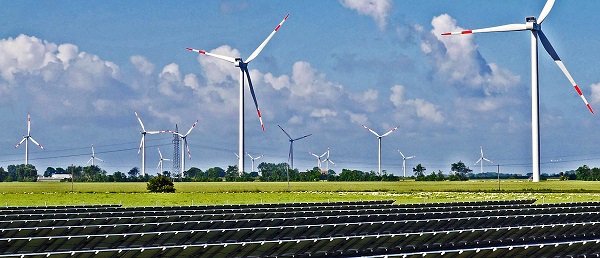
Inflation Reduction Act, Green New Deal Causing America’s Energy Crisis
-
 Automotive1 day ago
Politicians should be honest about environmental pros and cons of electric vehicles
-
 Crime8 hours ago
Terror in Australia: 12 killed after gunmen open fire on Hanukkah celebration