
Uncategorized
2 dead, motive unclear in North Carolina campus shooting


CHARLOTTE, N.C. — A student with a pistol and no motive that was immediately apparent killed two people and wounded four others at the University of North Carolina-Charlotte before campus police disarmed and arrested him, authorities said.

“I just went into a classroom and shot the guys,” the suspect, Trystan Andrew Terrell, told reporters Tuesday as officers led him away in handcuffs.
The shooting had people scrambling to find safe spaces and enduring a lengthy lockdown as officers secured the campus on the last day of classes. A vigil was planned for Wednesday, and the governor vowed a hard look to see what can be done to prevent future attacks.
“A student should not have to fear for his or her life when they are on our campuses,” Gov. Roy Cooper, a Democrat, told reporters. “Parents should not have to worry about their students when they send them off to school. And I know that this violence has to stop. … In the coming days we will take a hard look at all of this to see what we need to do going forward.”
Campus Police Chief Jeff Baker said authorities received a call in the late afternoon that someone with a pistol had shot several students. Officers assembling nearby for a concert rushed to the classroom building and arrested the gunman in the room where the shooting took place.
“Our officers’ actions definitely saved lives,” Baker said at a news conference.
Two people were killed, and three remained in critical condition late Tuesday. Baker said a fourth person’s injuries were less serious. Students were among the victims, but officials would not say how many.
Terrell, 22, was booked into the Mecklenburg County jail on two counts of murder, four counts of attempted murder, possessing and firing a weapon on educational property, and assault with a deadly weapon.
The suspect’s grandfather, Paul Rold of Arlington, Texas, said Terrell and his father moved to Charlotte from the Dallas area about two years ago after his mother died. Terrell taught himself French and Portuguese with the help of a language learning program his grandfather bought him and was attending UNC-Charlotte, Rold said. But Terrell never showed any interest in guns or other weapons, and the news he may have been involved in a mass shooting was stunning, said Rold, who had not heard about the Charlotte attack before being contacted by an Associated Press reporter.
“You’re describing someone foreign to me,” Rold said in a telephone interview Tuesday night. “This is not in his DNA.”
Monifa Drayton, an adjunct professor, was walking onto campus when she heard the shots. She said she directed students fleeing the scene to take cover inside a parking deck.
“I heard one final gunshot and I saw all the children running toward me,” she said. “We started to get all the children pulled into the second floor of the parking deck and the rationale was if we’re in the parking deck and there’s a shooter and we don’t know where he is, he won’t have a clear shot.”
She added: “My thought was, I’ve lived my life, I’ve had a really good life, so, these students deserve the same. And so, whatever I could do to help any child to safety, that’s what I was going to do.”
The shooting prompted a lockdown and caused panic across campus. Aerial shots from local television news outlets showed police officers running toward a building, while another view showed students running on a campus sidewalk.
“Just loud bangs. A couple loud bangs and then we just saw everyone run out of the building, like nervous, like a scared run like they were looking behind,” said Antonio Rodriguez, 24, who was visiting campus for his friend’s art show.
The university has more than 26,500 students and 3,000 faculty and staff. The campus is northeast of the city
Spenser Gray, a junior, said she was watching another student’s presentation in a nearby campus building when the alert about the shooting popped up on everyone’s computer screens.
She said she panicked: “We had no idea where he was … so we were just expecting them at any moment coming into the classroom.”
Susan Harden, an UNCC professor and Mecklenburg County Commissioner, left home when she heard of the shooting and went to a staging area to provide support.
Harden said she has taught inside the Kennedy building, where the shootings happened.
“It breaks my heart. We’re torn up about what’s happened,” Harden said. “Students should be able to learn in peace and in safety and professors ought to be able to do their jobs in safety.”
___
Associated Press writers Martha Waggoner and Emery Dalesio in Raleigh contributed to this report.
Tom Foreman Jr. And Sarah Blake Morgan, The Associated Press


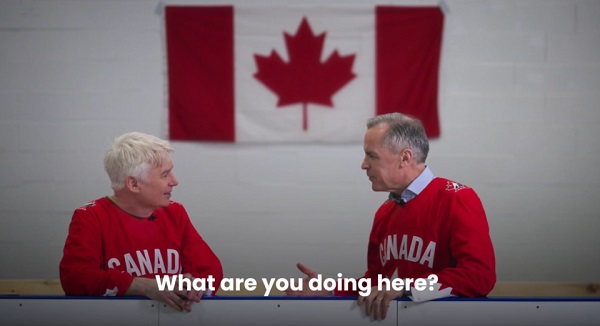

The cost of the bureaucracy increased by $6 billion last year, according to newly released numbers in Public Accounts disclosures. The Canadian Taxpayers Federation is calling on Prime Minister Mark Carney to immediately shrink the bureaucracy.
“The Public Accounts show the cost of the federal bureaucracy is out of control,” said Franco Terrazzano, CTF Federal Director. “Tinkering around the edges won’t cut it, Carney needs to take urgent action to shrink the bloated federal bureaucracy.”
The federal bureaucracy cost taxpayers $71.4 billion in 2024-25, according to the Public Accounts. The cost of the federal bureaucracy increased by $6 billion, or more than nine per cent, over the last year.
The federal bureaucracy cost taxpayers $39.6 billion in 2015-16, according to the Public Accounts. That means the cost of the federal bureaucracy increased 80 per cent over the last 10 years. The government added 99,000 extra bureaucrats between 2015-16 and 2024-25.
Half of Canadians say federal services have gotten worse since 2016, despite the massive increase in the federal bureaucracy, according to a Leger poll.
Not only has the size of the bureaucracy increased, the cost of consultants, contractors and outsourcing has increased as well. The government spent $23.1 billion on “professional and special services” last year, according to the Public Accounts. That’s an 11 per cent increase over the previous year. The government’s spending on professional and special services more than doubled since 2015-16.
“Taxpayers should not be paying way more for in-house government bureaucrats and way more for outside help,” Terrazzano said. “Mere promises to find minor savings in the federal bureaucracy won’t fix Canada’s finances.
“Taxpayers need Carney to take urgent action and significantly cut the number of bureaucrats now.”
Table: Cost of bureaucracy and professional and special services, Public Accounts
| Year | Bureaucracy | Professional and special services |
|
$71,369,677,000 |
$23,145,218,000 |
|
|
$65,326,643,000 |
$20,771,477,000 |
|
|
$56,467,851,000 |
$18,591,373,000 |
|
|
$60,676,243,000 |
$17,511,078,000 |
|
|
$52,984,272,000 |
$14,720,455,000 |
|
|
$46,349,166,000 |
$13,334,341,000 |
|
|
$46,131,628,000 |
$12,940,395,000 |
|
|
$45,262,821,000 |
$12,950,619,000 |
|
|
$38,909,594,000 |
$11,910,257,000 |
|
|
$39,616,656,000 |
$11,082,974,000 |

From the Daily Caller News Foundation
By Jason Hopkins
The Trump administration is creating a first-of-its-kind task force aimed at ushering in a new “Golden Age” of beautiful infrastructure across the U.S.
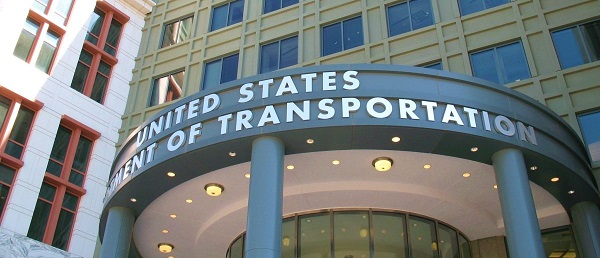
The Department of Transportation (DOT) will announce the establishment of the Beautifying Transportation Infrastructure Council (BTIC) on Thursday, the Daily Caller News Foundation exclusively learned. The BTIC seeks to advise Transportation Secretary Sean Duffy on design and policy ideas for key infrastructure projects, including highways, bridges and transit hubs.
“What happened to our country’s proud tradition of building great, big, beautiful things?” Duffy said in a statement shared with the DCNF. “It’s time the design for America’s latest infrastructure projects reflects our nation’s strength, pride, and promise.”
“We’re engaging the best and brightest minds in architectural design and engineering to make beautiful structures that move you and bring about a new Golden Age of Transportation,” Duffy continued.
Mini scoop – here is the DOT’s rollout of its Beautifying Transportation Infrastructure Council, which will be tasked with making our buildings beautiful again. pic.twitter.com/
9iV2xSxdJM — Jason Hopkins (@jasonhopkinsdc) October 23, 2025
The DOT is encouraging nominations of the country’s best architects, urban planners, artists and others to serve on the council, according to the department. While ensuring that efficiency and safety remain a top priority, the BTIC will provide guidance on projects that “enhance” public areas and develop aesthetic performance metrics.
The new council aligns with an executive order signed by President Donald Trump in August 2025 regarding infrastructure. The “Making Federal Architecture Beautiful Again” order calls for federal public buildings in the country to “respect regional architectural heritage” and aims to prevent federal construction projects from using modernist and brutalist architecture styles, instead returning to a classical style.
“The Founders, in line with great societies before them, attached great importance to Federal civic architecture,” Trump’s order stated. “They wanted America’s public buildings to inspire the American people and encourage civic virtue.”
“President George Washington and Secretary of State Thomas Jefferson consciously modeled the most important buildings in Washington, D.C., on the classical architecture of ancient Athens and Rome,” the order continued. “Because of their proven ability to meet these requirements, classical and traditional architecture are preferred modes of architectural design.”
The DOT invested millions in major infrastructure projects since Trump’s return to the White House. Duffy announced in August a $43 million transformation initiative of the New York Penn Station in New York City and in September unveiledmajor progress in the rehabilitation and modernization of Washington Union Station in Washington, D.C.
The BTIC will comprise up to 11 members who will serve two-year terms, with the chance to be reappointed, according to the DOT. The task force will meet biannually. The deadline for nominations will end Nov. 21.


The Recall Trap: 21 Alberta MLA’s face recall petitions

US Notes 2.5 million illegals out and counting
Tyler Robinson shows no remorse in first court appearance for Kirk assassination
MPs who cross the floor are dishonourable members
Too Close for Comfort: Carney Floor Crosser Comes From a Riding Tainted by PRC Interference

‘There Will Be Very Serious Retaliation’: Two American Servicemen, Interpreter Killed In Syrian Attack

The world is no longer buying a transition to “something else” without defining what that is
-
 Crime3 hours ago
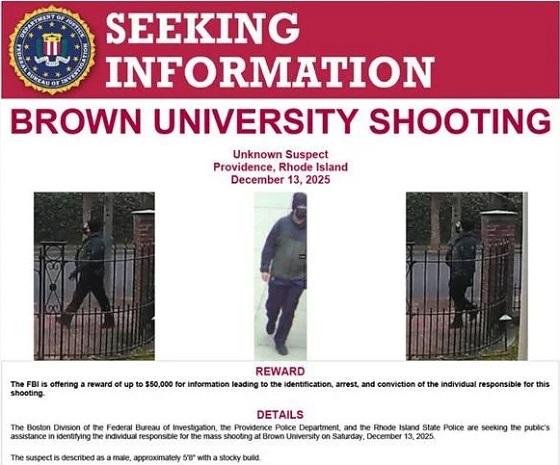
Brown University shooter dead of apparent self-inflicted gunshot wound
-
 Business2 days ago
Ottawa Pretends To Pivot But Keeps Spending Like Trudeau
-
 Business14 hours ago
Canada Hits the Brakes on Population
-
 Crime1 day ago
Bondi Beach Survivor Says Cops Prevented Her From Fighting Back Against Terrorists
-
 International1 day ago
House Rejects Bipartisan Attempt To Block Trump From Using Military Force Against Venezuela
-
 Energy2 days ago
Liberals Twisted Themselves Into Pretzels Over Their Own Pipeline MOU
-
 Frontier Centre for Public Policy16 hours ago
Canada Lets Child-Porn Offenders Off Easy While Targeting Bible Believers
-
 Censorship Industrial Complex2 days ago
How Wikipedia Got Captured: Leftist Editors & Foreign Influence On Internet’s Biggest Source of Info