
armed forces
10 ways Justin Trudeau made Canada even worse in 2023

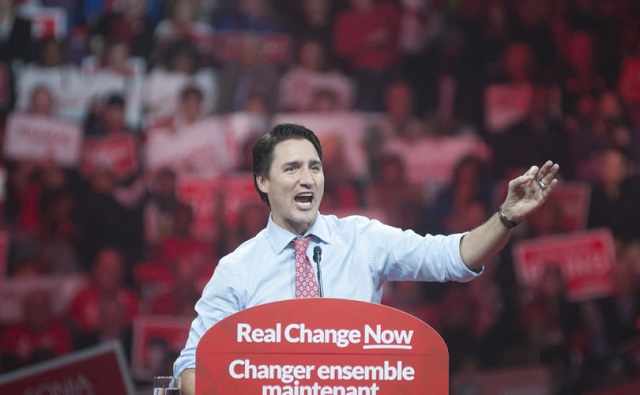

From LifeSiteNews

Many Canadians have woken up this year to find themselves living in the dystopian nation that is Prime Minister Justin Trudeau’s Canada.
According to polling, Canadians ranked Trudeau as the most disliked prime minister in 55 years. Countless other polls reveal Trudeau’s decline in popularity, with 371,169 Canadians calling for him to step down before the next election.
How did Trudeau finally lose popularity with Canadians after serving as prime minister for 8 years? Perhaps the destructive nature of his policies have finally been realized by Canadians. Or maybe the rising cost of living has caused Canadians to wake up to the reality of Trudeau’s Canada.
In any case, here are ten ways Trudeau and his government have destroyed Canada this year.
10. Destroying the integrity and morality of the Canadian military
In June, the Canadian military was roundly condemned for “raising the pride flag” in honor of the “2SLGBTQI+ communities.”
The same month, Canadian troops in Latvia were forced to purchase their own helmets and food when the Trudeau government failed to provide proper supplies, instead spending their resources on Danish soldiers. Weeks later, Trudeau lectured the same troops on “climate change” and disinformation.
In November, officials admitted that the nation’s military is shrinking to dangerously low numbers as Trudeau continues to push the LGBT agenda on Canadian soldiers. In addition to low recruitment, the military is struggling to retain soldiers.
A Canadian Armed Force member previously told LifeSiteNews that between the COVID vaccine mandates and pushing the LGBT agenda, Canadians soldiers have lost confidence in the military.
9. The seemingly never-ending Trudeau Foundation scandal
The Pierre Elliot Trudeau Foundation, named after Justin’s father, has undergone increased scrutiny regarding its connection to China this year.
In late September, MPs from the House of Commons unanimously voted to have the country’s Auditor General investigate the $125 million taxpayer endowment given to help found the Trudeau Foundation in 2001.
This investigation came just months after Canadian MPs from the House of Commons Public Accounts voted to begin an examination after a report surfaced detailing how the non-profit group received a $200,000 donation alleged to be connected to the Chinese Communist Party (CCP).
Following the release of this report, the entire board of directors, including the president and CEO, resigned.
Since then, Conservatives have accused Trudeau’s Liberal government of having ignored foreign interference because it was to their political benefit, an accusation that was only made more poignant when Trudeau appointed a “family friend” to be the “independent” investigator into alleged Chinese election meddling
8. Giving a carbon tax exemption, but only for Liberal-voting Canadians
In October, Trudeau announced he was pausing the collection of the carbon tax on home heating oil for three years, a provision that primarily benefits the Liberal-held Atlantic provinces. Most Canadians heat their homes with clean-burning natural gas, a fuel that will not be exempted from the carbon tax.
The biased exemption was roundly condemned by Canadians as well as many politicians, including Premiers Tim Houston of Nova Scotia, Blaine Higgs of New Brunswick, Doug Ford of Ontario, Danielle Smith of Alberta, and Scott Moe of Saskatchewan, who called for a carbon tax relief for all Canadians.
The carbon tax, framed as a way to reduce carbon emissions, has cost individual Canadians hundreds of extra dollars annually despite government rebates.
The increased costs are again expected to rise, as a recent report revealed that a carbon tax of more than $350 per tonne is needed to reach Trudeau’s net-zero goals by 2050.
Currently, Canadians living in provinces under the federal carbon pricing scheme pay $65 per tonne, but the Trudeau government has a goal of Canadians paying $170 per tonne by 2030.
Despite both Canadians and politicians supporting carbon tax exemptions for all, Trudeau and his government refuse to provide relief to Canadians.
7. Stripping Canada of her Christian heritage
In May, following the Coronation of King Charles III, the Trudeau government redesigned the Canadian crown that sits on the Royal Coat of Arms by removing all religious symbols.
The new design removed all religious symbols, replacing crosses and fleur-de-lis with maple leaves, snowflakes, and stars. The move caused some to accuse the Liberal Party of politicizing the symbol of the Crown and the Royal Coat of Arms.
This change is not Trudeau’s first attempt at removing religious symbols from Canada, despite the fact he is a baptized Catholic. In 2019, the government of Quebec passed a bill forbidding civil servants to display religious symbols on their persons while at work.
Additionally, Trudeau was forced to admit that “Christmas is not racist” following a Canadian Human Rights Commission report claiming that holidays such as Christmas and Easter are forms of discrimination and religious intolerance, and that observing the birth of Jesus Christ is “an obvious example” of a type of religious bias that is rooted in colonialism.
6. Restricting Canadians right to bear arms
This month, the Canadian federal government’s controversial gun grab bill, C-21, which bans many types of guns including all handguns while mandating a buyback program for certain rifles and shotguns, became law after Senators voted 60- 24 in favor of the bill.
In May, it passed in the House of Commons. After initially denying the bill would impact hunters, Trudeau eventually admitted that C-21 would indeed ban certain types of hunting rifles.
Alberta Premier Danielle Smith, along with premiers from no less than four additional provinces, opposed C-21. But, as with the carbon tax, the concerns of Canadians seemed to be of no concern to Trudeau.
5. Driving up food prices for Canadians through climate regulations
According to a November report, food costs for a family of four in Canada will increase by $700 in 2024 along with increases in household expenses like rent and utilities.
At the time, Canadian Taxpayer Federation Director Franco Terrazzano told LifeSiteNews, “The carbon tax makes grocery prices more expensive.”
“When Trudeau’s carbon tax makes it more expensive for farmers to grow food and truckers to deliver food, his carbon tax makes it more expensive for families to buy food,” he explained.
The report should not come as a surprise to Canadians considering a September report by Statistics Canada revealing that food prices are rising faster than the headline inflation rate – the overall inflation rate in the country – as staple food items are increasing at a rate of 10 to 18 percent year-over-year.
4. Wasting millions of taxpayer dollars on promoting the LGBT agenda
In June, the designated month of gay “pride,” the Trudeau government pledged $1.5 million in what it claims is “emergency funding” for “pride” month to fund increased security to organizations running parades.
Later in June, records revealed that the Liberal government gave $12 million for “pride” events during COVID lockdown years.
3. Blocking Canadians from viewing and sharing news on Facebook and Instagram
In June, Trudeau’s internet censorship law, Bill C-18, the Online News Act, was passed by the Senate. This law mandates that Big Tech companies pay to publish Canadian content on their platforms.
As a result, Meta, the parent company of Facebook and Instagram, blocked all access to news content in Canada, while Google has agreed to pay Canadian legacy media $100 million under the new legislation.
Critics of Trudeau’s recent laws, such as tech mogul Elon Musk, have commented that the legislation shows that “Trudeau is trying to crush free speech in Canada.”
Musk made the comments after the nation’s telecommunications regulator announced that due to new powers granted to it via the Online Streaming Act, certain podcasters will now have to “register” with the government.
2. Promoting increased access to abortion and spending taxpayer dollars to kill unborn Canadians
Like his father, Trudeau is a staunch supporter of killing unborn babies, and 2023 was not an exception. In January, Trudeau affirmed a woman’s “right to choose” when he was confronted with abortion victim photography on the streets of Hamilton, Ontario.
Additionally, Trudeau’s 2023 budget included a $36 million fund for abortion while at the same time including text which blasted America’s 2022 overturning of Roe v. Wade.
The Liberal government also promised it would supply American women with abortion pills if the pills were banned due to the country’s new pro-life laws.
1. Making Canada a leading provider of euthanasia worldwide
According to Health Canada, in 2022, 13,241 Canadians died by MAiD (Medical Assistance in Dying) lethal injections, which accounts for 4.1 percent of all deaths in the country for that year, and a 31.2 percent increase from 2021.
While the numbers for 2023 have yet to be released, all indications point to a situation even more grim than 2022.
The most recent reports show that MAiD is the sixth highest cause of death. But, in typical Trudeau fashion, it was not listed as such in Statistics Canada’s top 10 leading causes of death from 2019 to 2022. When asked why MAiD was suspiciously left off the list, the agency explained that it records the illnesses that led Canadians to choose to end their lives via euthanasia as the primary cause of death, not the actual cause of death.
Sickeningly, on March 9, 2024, MAiD is set to expand to include those suffering solely from mental illness. This is a result of the 2021 passage of Bill C-7, which first allowed the chronically ill – not just the terminally ill – to qualify for so-called doctor-assisted death.
The expansion of euthanasia to those with mental illness even has the far-left New Democratic Party (NDP) concerned. Dismissing these concerns, a Trudeau Foundation fellow actually called Trudeau’s euthanasia regime one of “privilege,” assuring the Canadian people that most of those being put to death are “white,” “well off,” and “highly educated.”

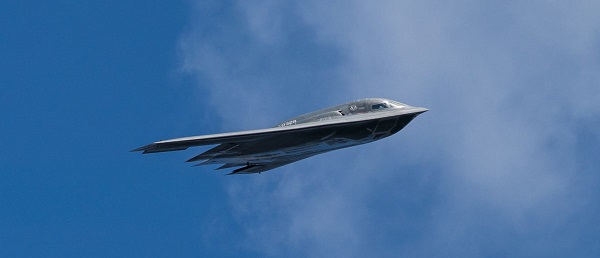

From the Daily Caller News Foundation
The global war business scored record revenues in 2024 amid multiple protracted proxy conflicts across the world, according to a new industry analysis released on Monday.
The top 100 arms manufacturers in the world raked in $679 billion in revenue in 2024, up 5.9% from the year prior, according to a new Stockholm International Peace Research Institute (SIPRI) study. The figure marks the highest ever revenue for manufacturers recorded by SIPRI as the group credits major conflicts for supplying the large appetite for arms around the world.
“The rise in the total arms revenues of the Top 100 in 2024 was mostly due to overall increases in the arms revenues of companies based in Europe and the United States,” SIPRI said in their report. “There were year-on-year increases in all the geographical areas covered by the ranking apart from Asia and Oceania, which saw a slight decrease, largely as a result of a notable drop in the total arms revenues of Chinese companies.”
Notably, Chinese arms manufacturers saw a large drop in reported revenues, declining 10% from 2023 to 2024, according to SIPRI. Just off China’s shores, Japan’s arms industry saw the largest single year-over-year increase in revenue of all regions measured, jumping 40% from 2023 to 2024.
American companies dominate the top of the list, which measures individual companies’ revenue, with Lockheed Martin taking the top spot with $64,650,000,000 of arms revenue in 2024, according to the report. Raytheon Technologies, Northrop Grumman and BAE Systems follow shortly after in revenue,
The Czechoslovak Group recorded the single largest jump in year-on-year revenue from 2023 to 2024, increasing its haul by 193%, according to SIPRI. The increase is largely driven by their crucial role in supplying arms and ammunition to Ukraine.
The Pentagon contracted one of the group’s subsidiaries in August to build a new ammo plant in the U.S. to replenish artillery shell stockpiles drained by U.S. aid to Ukraine.
“In 2024 the growing demand for military equipment around the world, primarily linked to rising geopolitical tensions, accelerated the increase in total Top 100 arms revenues seen in 2023,” the report reads. “More than three quarters of companies in the Top 100 (77 companies) increased their arms revenues in 2024, with 42 reporting at least double-digit percentage growth.”
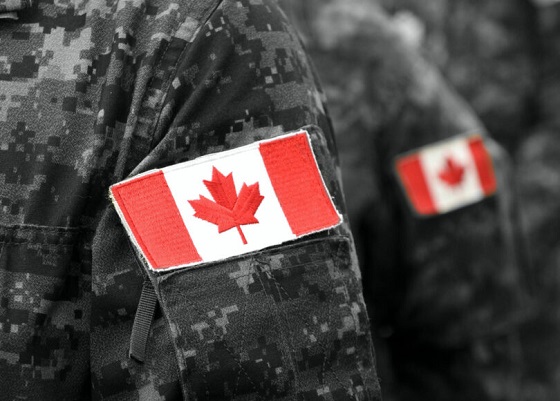

How the 2025 Federal Budget Demands More From Those Who’ve Already Given Everything
I’ve lived the word sacrifice.
Not the political kind that comes in speeches and press releases the real kind. The kind Mark Carney wouldn’t know if it slapped him in the face. The kind that costs sleep, sanity, blood. I’ve watched friends trade comfort for duty, and I’ve watched some of them leave in body bags while the rest of us carried the weight of their absence. So when the Prime Minister stood up this year and told Canadians the new budget would “require sacrifice,” I felt that familiar tightening in the gut the one every veteran knows. You brace for impact. You hope the pain lands in a place that makes sense.
It didn’t.
Kelsi Sheren is a reader-supported publication.
To receive new posts and support my work, consider becoming a free or paid subscriber.
Six months into Mark Carney’s limp imitation of leadership, it’s painfully clear who’s actually paying the bill. The 2025 budget somehow managing to bleed the country dry while still projecting a $78-billion deficit shields the political class, funnels money toward his network of insiders, and then quietly hacks away at the one department that should be sacrosanct: Veterans Affairs Canada.
If there’s one group that’s earned the right to be spared from government-imposed scarcity, it’s the people who carried this country’s flag into danger. Veterans don’t “symbolize” sacrifice they embody it on the daily And when Ottawa tightens the belt on VAC, the consequences aren’t abstract. They’re brutal and direct, causing nothing but more death and destruction. But Mark Carney doesn’t lose sleep over veterans killing themselves.
Punishment disguised as budgeting for a veteran means the difference between keeping a roof or sleeping in a truck. Punishment disguised as budgeting means PTSD left untreated until it turns a human being into another suicide statistic. Punishment disguised as budgeting means a veteran choosing between groceries and medication because some number-shuffler in Ottawa wants to pretend they’re being “responsible.”
This isn’t fiscal restraint it’s political betrayal wrapped in government stationery. Ottawa sells it as hard choices, but the hardness always falls on the backs of the same people: the ones who already paid more than their share, the ones who can’t afford another hit. Carney and his cabinet won’t feel a thing. Not one missed meal. Not one sleepless night. Not one flashback.
But the men and women who already paid in flesh? They’re the ones being told to give more.
That’s not sacrifice.
That’s abandonment dressed up as fiscal policy.
And Canadians need to recognize it for what it is a government that demands loyalty while refusing to give any in return. The fine print in the government’s own documents reveals what the slogans won’t.
Over the next two years, VAC plans to cut $2.227 billion from its “Benefits, Services and Support” programs. [2] Broader “savings initiatives” reach $4.4 billion over four years, much of it through reductions to the medical-cannabis program that thousands of veterans rely on to manage chronic pain and PTSD. [3] Independent analysts estimate yearly losses of roughly $900 million once the cuts are fully implemented. [4]
To put that in perspective: no other department is seeing reductions on this scale. Not Defence, not Infrastructure, not the Prime Minister’s Office thats for damn sure. Only the people who’ve already paid their debt to this country are being asked to give again.
The government’s line is tidy: “We’re not cutting services we’re modernizing. Artificial Intelligence will streamline processing and improve efficiency.”
That sounds fine until you read the departmental notes. The “modernization” translates into fewer human case managers, longer waits, and narrower eligibility. It’s austerity dressed up as innovation. I’ve coached veterans through the system. They don’t need algorithms; they need advocates who understand trauma, identity loss, and the grind of reintegration. They need empathy, not automation.
This isn’t abstract accounting. Behind every dollar is a life on the edge, the human cost and toll is very real.
- Homelessness: Veterans make up a disproportionate number of Canada’s homeless population. Cutting benefits only deepens that crisis.
- Mental Health: Parliament’s ongoing study on veteran suicide shows rising rates of despair linked to delays and denials in VAC services. [5] Knowing MAID for mental illness alone in 2027 will take out a significant amount of us.
- Food Insecurity: A 2024 VAC survey found nearly one in four veterans reported struggling to afford basic groceries. That’s before these cuts.
We talk about “service” like it ends with deployment. It doesn’t. Service continues in how a nation cares for those who carried its battles, and this doesn’t include the cannabis cut to medication or the fight’s we have to fight when they tell us our injuries are “not service related”
The insult is magnified by the timing. These cuts were announced just days before November 11 Remembrance Day, when Canadians bow their heads and say, “We will remember them.”
Apparently, the government remembered to draft the talking points but forgot the meaning behind them, not a single one of the liberal government should have been allowed to show their faces to veteran’s or at a ceremony. They’re nothing but liars, grifters and traitors to this nation. Yes I’m talking about Jill McKnight and Mark Carney.
The budget still runs the second-largest deficit in Canadian history. [6]
Veteran cuts don’t fix that. They barely dent it. What they do is let the government say it’s “finding efficiencies” while avoiding the real structural overspending that created the problem in the first place. When a government chooses to protect its pet projects and insider contracts while pulling support from veterans, that’s not fiscal discipline it’s moral cowardice. The worst part is that This isn’t an isolated move. It fits a six-month pattern: large, attention-grabbing announcements about “reform,” followed by fine print that concentrates power and shifts burden downward. Veterans just happen to be the first visible casualty.
The same budget expands spending in other politically convenient areas green-transition subsidies, digital-governance infrastructure, and administration while the people who once embodied service are told to tighten their belts.
As a combat veteran, I know what it’s like to come home and realize that the fight didn’t end overseas it just changed terrain. We fought for freedom abroad only to watch bureaucratic neglect wage a quieter war here at home. Veterans don’t ask for privilege. They ask for respect, for competence, for follow-through on the promises this country made when it sent them into harm’s way.
Here’s what really needs to change, the liberal government has to go, thats step one. Restore VAC funding immediately. Any “savings” plan that touches benefits, services, or support should be scrapped. End the AI façade. Efficiency can’t replace empathy. Keep human case workers who understand the veteran experience. Audit and transparency. Publish a detailed breakdown of where VAC funds are cut and who approved it. Canadians deserve to see the receipts. National accountability. Every MP who voted for this budget should face veterans in their constituency and explain it, face-to-face.
Budgets are moral documents. They show what a country values. By slashing VAC while running record deficits, this government declared that veterans are expendable line items, not national obligations. The Prime Minister promised “shared sacrifice.” But the only people truly sacrificing are the ones who already gave more than most Canadians ever will.
Sacrifice isn’t about spreadsheets; it’s about service. It’s what every veteran understood when they raised their right hand. This government’s brand of sacrifice asking wounded soldiers to pay for political mismanagement isn’t austerity. It’s abandonment.
Canada owes its veterans more than a wreath once a year. It owes them respect written into every budget, not erased from it.
KELSI SHEREN
Footnotes
[1] The Guardian, “Canada’s 2025 Federal Budget Adds Tens of Billions to Deficit as Carney Spends to Dampen Tariffs Effect,” Nov 5 2025.
[2] True North Wire, “Liberal Budget to Cut $4.23 Billion from Veterans Affairs,” Nov 2025.
[3] StratCann, “Budget 2025 Includes Goal of Saving $4.4 Billion in Medical Cannabis Benefits,” Nov 2025.
[4] Canadian Centre for Policy Alternatives, “Where Will the Federal Government Cut to Pay for Military Spending and Tax Cuts?” Nov 2025.
[5] House of Commons Standing Committee on Veterans Affairs, “Study on Veteran Suicide and Sanctuary Trauma,” ongoing 2025.
[6] CBC News, “Federal Budget 2025 Deficit Second Largest in Canadian History,” Nov 2025.
Kelsi Sheren is a reader-supported publication.
To receive new posts and support my work, consider becoming a free or paid subscriber.

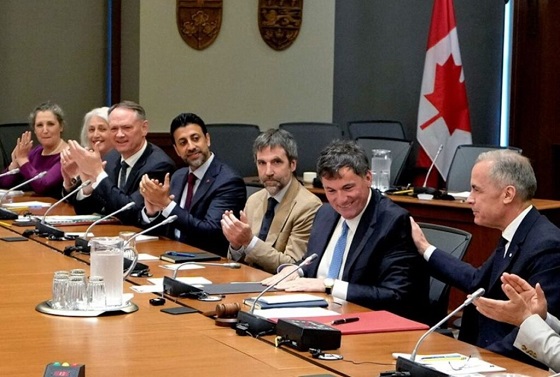
Carney’s Toronto cabinet meetings cost $530,000

Integration Or Indignation: Whose Strategy Worked Best Against Trump?

Health Canada report finds euthanasia now accounts for over 5% of deaths nationwide
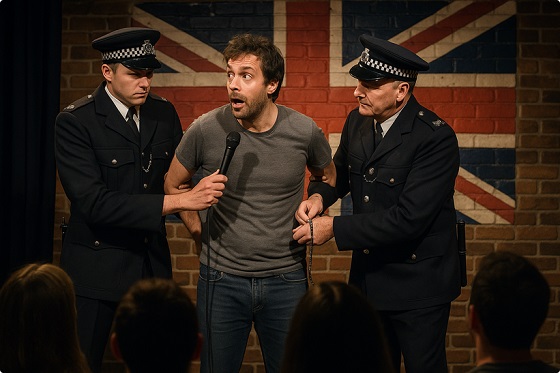
A Democracy That Can’t Take A Joke Won’t Tolerate Dissent
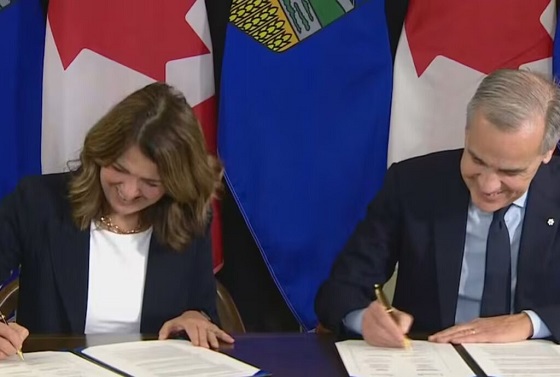
What the Data Shows About the New Canada-Alberta Pipeline Opportunity

The Trickster Politics of the Tanker Ban are Hiding a Much Bigger Reckoning for B.C.

While Trump has southern border secure, hundreds of thousands of illegal immigrants still flooding in from Canada
-
 Censorship Industrial Complex2 days ago
US Condemns EU Censorship Pressure, Defends X
-
 Banks2 days ago
To increase competition in Canadian banking, mandate and mindset of bank regulators must change
-
 Dan McTeague2 days ago
Will this deal actually build a pipeline in Canada?
-
 Opinion2 days ago
The day the ‘King of rock ‘n’ roll saved the Arizona memorial
-
 Focal Points2 days ago
Common Vaccines Linked to 38-50% Increased Risk of Dementia and Alzheimer’s
-
 espionage1 day ago
Western Campuses Help Build China’s Digital Dragnet With U.S. Tax Funds, Study Warns
-
 Bruce Dowbiggin1 day ago
Wayne Gretzky’s Terrible, Awful Week.. And Soccer/ Football.
-
 Business1 day ago
The EU Insists Its X Fine Isn’t About Censorship. Here’s Why It Is.