
Opinion
Words are not violence – Why Will Smith was wrong to strike Chris Rock.


This article submitted by Levi Kump
It is news to exactly no one, that Sunday night, Will Smith responded to a contentious, and arguably tasteless joke, by walking on stage at the Acadamy Awards and slapping the the offending party, one Chris Rock, across the face. Much has been made already about whether or not the incident was staged, though the ensuing furor has rendered that debate largely moot. Many people have chimed in on the issue, some saying the Smith was unequivocally wrong, and some, including no less than The National Post’s Barbara Kay, coming down on the the side of a face slap being fair play.
Let it be known, I believe Smith and Kay, are both wrong. First and foremost, because one of the tenets of civilization in general, is the old adage that, “ones right to get angry, stops at the next fellow’s nose”. Nothing new here. Setting aside for a moment that the slap was to the cheek/jaw area, I believe that notion still holds water. Genuine or not, this incident implies that there are some statements for which the only possible rebuttal, is the fist. The challenges with this way of thinking are legion, and until only a few years ago, seemed to have already been worked out in western society. Not the least of said problems is this: if words are violence itself, and answerable as such, then we no longer have any reason to use words. When one equates the verbal with the somatic, it is a very quick descent indeed, to using violence in any given situation. Why struggle for the ‘mot juste’, when one can move stright to a head kick?
Following this line of reasoning, we end up back, hundreds of years, to the time of, “might makes right”; which again, our civilization had once worked out, but now seems to be forgetting. One of the more common lines of reasoning for the “speech as violence” crowd, is that disparities in power give far more weight to some people’s words, than others. In the Smith/Rock debacle, this is hardly worth a mention, as both men are of the same demographic, read: multi-millionaires of the same skin tone. Though there are those who will point out, as did Barbera Kay, that the target of Rock’s joke, was not Will Smith himself, but rather his wife, Jada, who does in fact suffer from an auto immune disease, and whose hair loss is by no means her own fault. A powerful comedian making jokes about a/an (equally powerful?) woman’s physical condition should be off limits, or so goes the argument. The easy reply here is that there are
those, myself among them, who do not believe that anything should be off limits in speech.
Noting here that, not unlike our separation of words and action, society did away with the idea of ‘lese majest’ some time back. There are yet some who do not believe in this, and who think that the relative power of two parties (and exactly how do we quantify this?) matter to a verbal exchange. That the words of the more powerful party are in fact so weighty, that again, the only fair response, is a physical one. This begs the question, that if the words of the powerful are
unfairly weighted, how much more so are thier blows? It is to me, an untenable position. Slapping a man for speech only ends badly for everyone. Until very recently, we all seem to have understood this.
There was once a common convention, that words, for all their power, are clearly not violence. The fact that this is now somehow considered up for debate, does not bode well for society writ large. Any reasonable person will admit that words can be incredibly hurtful, damaging, and cruel. To deny this is foolish. Physical violence however, has all those dangers, along with a side order of split lips, contusions, and concussions. Indeed, whatever “damage” one suffers from words, one is still left with the ability to speak in rebuttal. A solid blow of any kind can not only dissuade retort, but neuter it completely. Perhaps this is what the proponents of violent response are after in the first place? If so, its disappointing. As I said, i thought we had worked this out.
Levi Kump is a former competitive international Muay Thai champion.

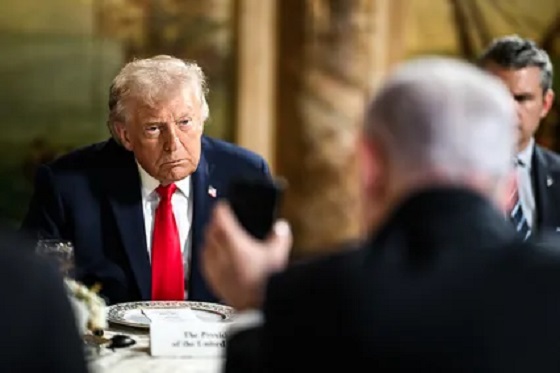

President Trump warned Friday that the United States stands ready to act if Iran’s regime escalates its crackdown on protesters, saying America would “come to their rescue” should peaceful demonstrators be violently killed as unrest spreads across the country. Writing on Truth Social, Trump said, “If Iran shoots and violently kills peaceful protesters, which is their custom, the United States of America will come to their rescue,” adding bluntly, “We are locked and loaded and ready to go.” His comments came as clashes between protesters and security forces erupted in multiple Iranian cities, leaving at least six people dead — the first confirmed fatalities since the latest wave of unrest intensified.
The demonstrations began as economic protests, driven by soaring prices, inflation, and a collapsing currency after years of sanctions tied to Iran’s nuclear program, but have quickly taken on a political edge. Shopkeepers in Tehran reportedly shut their doors in protest over economic stagnation, with similar actions and street demonstrations spreading into at least 15 cities, largely concentrated in western Iran. Iranian state media acknowledged deadly clashes in Lordegan and Azna, while state television reported that a member of Iran’s security forces was killed during unrest in Kouhdasht.
Tehran’s leadership responded sharply to Trump’s warning. Ali Larijani, head of Iran’s top security body, reportedly cautioned that U.S. involvement would “destabilize the entire region” and urged Trump to be “mindful of their soldiers’ safety.” Ali Shamkhani, an adviser to Supreme Leader Ali Khamenei, called Iran’s internal security a “red line,” warning that any American intervention would be met with a response. Even as Iranian officials attempt to strike a public tone of concern, the threat of force is unmistakable. President Masoud Pezeshkian described the protests over economic hardship as understandable and said Thursday that his government would “end up in hell” if it failed to fix the economy. At the same time, prosecutors and judiciary officials vowed zero tolerance. Lorestan prosecutor Ali Hasavand warned that participation in “illegal gatherings” or actions disturbing public order would be treated as crimes and punished “with the greatest firmness,” accusing “hostile individuals” of sowing chaos.
The unrest comes as Iran’s regional position appears weakened following setbacks to its allies in Gaza, Lebanon, and Syria, adding to pressure on the regime at home. While the current demonstrations remain smaller than the massive 2022 protests sparked by the death of Mahsa Amini — which left hundreds dead — the echoes are unmistakable. Similar nationwide unrest in 2019 over fuel prices eventually evolved into open calls to overthrow Iran’s clerical rulers. Trump’s message, characteristically direct, places Tehran on notice: if the regime chooses mass bloodshed again, he says the United States will not look away.
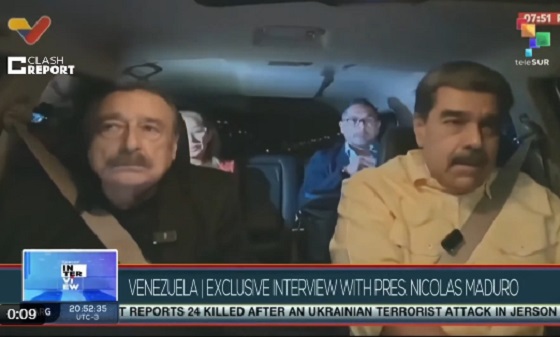
Venezuelan strongman Nicolás Maduro is striking a suddenly conciliatory tone toward Washington after a reported CIA drone strike targeted a cartel-linked docking area inside his country, claiming Caracas is now “ready” to negotiate with the United States on drug trafficking — and even dangling access to Venezuela’s oil sector as leverage.
In a sit-down interview recorded on New Year’s Eve with Spanish journalist Ignacio Ramonet and aired Thursday on state television, Maduro said the U.S. government has long known Venezuela is open to talks, insisting that if Washington wants a note-for-note agreement to combat narcotics flows, “we’re ready.”
He went further, suggesting that American energy firms could return in force, saying Venezuela is open to U.S. oil investment “whenever they want it, wherever they want it and however they want it,” explicitly referencing past dealings with Chevron.
Venezuelan President Maduro:
If the United States wants to seriously talk about an agreement to combat drug trafficking, we are ready. pic.twitter.com/3cWMyDxuC8
— Open Source Intel (@Osint613) January 2, 2026
The remarks come amid an aggressive U.S. pressure campaign that has seen at least 35 American strikes on suspected drug-smuggling vessels across the Caribbean and eastern Pacific since early September, operations U.S. officials say have killed more than 115 suspected traffickers.
Those actions are widely viewed as part of a broader effort to choke off cartel pipelines tied to the Maduro regime and destabilize a government Washington has long accused of functioning as a narco-state.
Last week’s strike — the first publicly acknowledged U.S. operation on Venezuelan soil since the maritime campaign began — was revealed by President Trump himself in a Dec. 26 radio interview, marking a sharp escalation.
Maduro refused to address the strike directly during the interview, saying only that he could “talk about it in a few days,” a silence that stood in contrast to his sudden eagerness to negotiate.
U.S. officials have been far less ambiguous. Secretary of State Marco Rubio said in December that the current relationship with Caracas is “intolerable,” accusing the regime of actively partnering with terrorist organizations and criminal networks that threaten U.S. national interests.
Maduro, who is under U.S. indictment on charges including drug trafficking, money laundering, and corruption, is now signaling flexibility just as American pressure tightens — a familiar pattern for a regime that has often talked cooperation when cornered, only to revert once the heat eases.
Whether Washington sees this latest outreach as a genuine shift or another tactical feint remains an open question, but the timing suggests the message was less about diplomacy than survival.

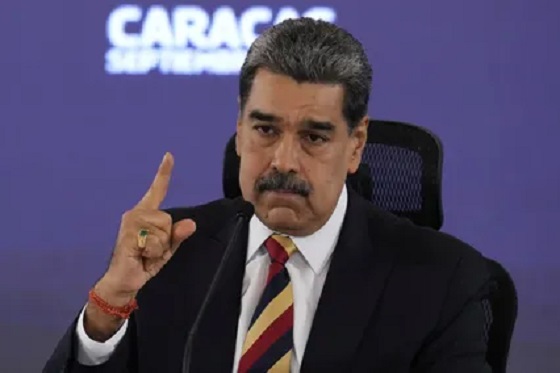
Trump confirms first American land strike against Venezuelan narco networks
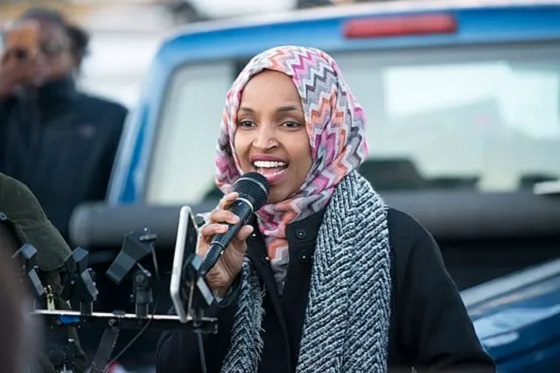
Disclosures reveal Minnesota politician’s husband’s companies surged thousands-fold amid Somali fraud crisis

Rulings could affect energy prices everywhere: Climate activists v. the energy industry in 2026
The Canadian Energy Centre’s biggest stories of 2025
-
International2 days ago
Trump confirms first American land strike against Venezuelan narco networks
-
 Business2 days ago
How convenient: Minnesota day care reports break-in, records gone
-
International20 hours ago
Maduro says he’s “ready” to talk
-
 Business2 days ago
The great policy challenge for governments in Canada in 2026
-
 Bruce Dowbiggin20 hours ago
The Rise Of The System Engineer: Has Canada Got A Prayer in 2026?
-
International20 hours ago
LOCKED AND LOADED: Trump threatens U.S. response if Iran slaughters protesters