
Opinion
Why treating the Homesless as victims only makes the problem worse

This article is from Substack
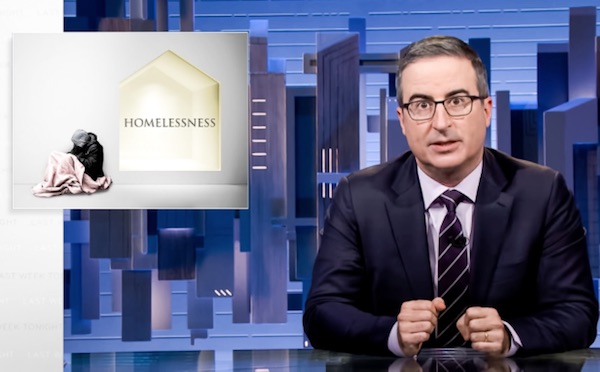
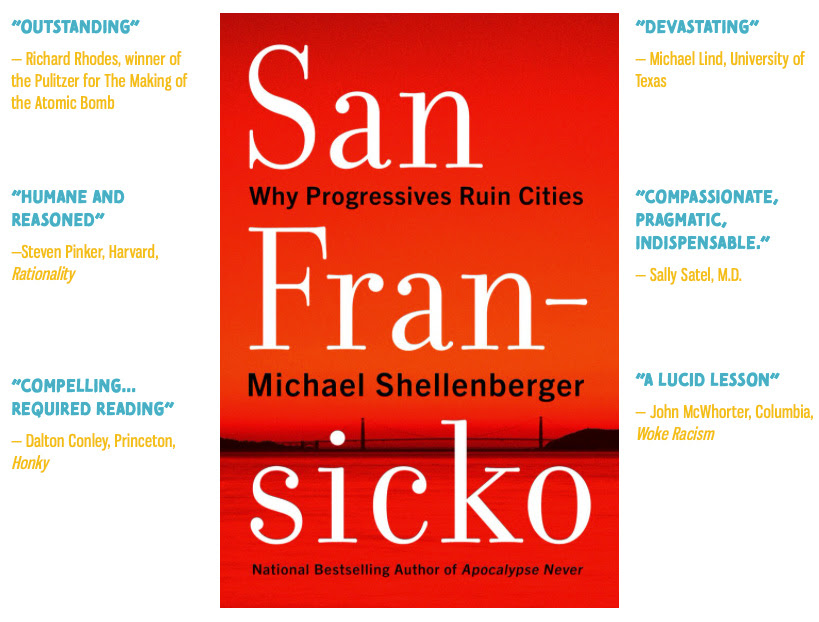
Bestselling author Michael Shellenberger has just published a new book, “San Fransicko” about the homeless crisis in San Francisco. Shellenberger has lived in San Fransisco for 30 years. In “San Fransicko” Shellenberger argues one of the root causes of the homeless crisis sweeping cities all over America (and Canada) is the victimization of homeless people. In this article, Michael Shellenberger talks about the prevalent theory that homeless people are all victims as portrayed by TV Host John Oliver.
Why John Oliver Is Wrong About Homelessness
HBO TV Comedian Repeats Myth that the Homeless Are Just Poor People in Need of Subsidized Housing
The intelligent and hilarious HBO comedian John Oliver last night aired a 25-minute segment on homelessness. In it, he attributed homelessness to poverty, high rents, and NIMBY neighborhood activists who block new housing developments. Oliver showed interviews with homeless people who say they would like to work full-time but are unable to do so because they have to live in homeless shelters.
Unfortunately, Oliver’s segment repeated many myths that are easy to debunk. The vast majority of people we call “homeless” are suffering from serious mental illness, addiction, or both. We do a great job of helping mothers and others who don’t suffer from addiction or untreated mental illness to benefit from subsidized housing, but don’t mandate the psychiatric and addiction care that many “homeless” require. And the best-available, peer-reviewed science shows that “Housing First” agenda Oliver promotes fails on its own terms, worsens addiction, and is one of the main reasons homelessness has grown so much worse.
It’s true that we need more housing and voluntary addiction and psychiatric care, including what is called “permanent supportive housing” for people suffering from mental illness. In my new book, San Fransicko, I advocate for universal psychiatric care, drug treatment on demand, and building of more shelter space for the homeless. And Oliver is right that the U.S. lacks the social safety net that European and other developed nations have.
But Oliver badly misdescribes the problem. For example, he notes that some cities lack sufficient homeless shelter. But he doesn’t acknowledge that it has been “Housing First” homelessness advocates who caused the lack of shelter by demanding that funding be diverted to apartments often costing $750,000 each.
And Oliver promotes policies that have made addiction, mental illness, and homelessness worse. He claims homelessness causes addiction when it is far more often the other way around. And Oliver completely ignores the overwhelming body of scientific research showing that using housing as a reward for abstinence, rather than giving it away as a right, is essential to reducing homelessness by reducing addiction.
Oliver was wrong to encourage more of the same policies that caused homelessness to increase in the U.S. over the last decade, but also wrong for suggesting that anyone who disagreed with him were racist and NIMBY “dicks” who cause violence against homeless people. Oliver closes his segment by ridiculing a white woman who expresses concern about subsidized housing bringing the homeless into her neighborhood.
Why is that? Why does such an intelligent, thoughtful, and compassionate journalist repeat easily-debunked myths about homelessness?
Part of it is just ignorance. Oliver appears to have relied entirely on Housing First advocates and not read anything that questions their narrative. As I document in San Fransicko, homeless advocates are not just small service providers but major academics at top universities including Columbia University and University of California, San Francisco. Those “Housing First” advocates have received hundreds of millions in grants from Marc Benioff, John Arnold, George Soros, and other donors to promote the notion that Housing First works.
Another part of it is ideological. Housing First advocates believe that housing, not shelter, is a right, and that governments have a moral obligation to provide it. They have spent 20 years trying to prove that giving away housing to addicts and the mentally ill works, but the studies show that it fails to address addiction and thus even keep people in apartments at higher rates than other methods. The only thing proven to work is to make housing a reward for good behavior, mostly abstinence but also things like taking one’s psychiatric medicines, and going to work.
The dominant view among progressives of homelessness, drugs, and mental illness stems from victim ideology, which was born in the 1960s. Starting in the late 1960s, progressives attacked any effort to hold people who receive welfare or subsidized accountable as “blaming the victim.” Today, many progressives even view drug dealers as victims.
Victim ideology categorizes people as victims or oppressors, and argues that nothing should be demanded of people categorized as victims. This is terrible for the mentally ill, who often need to be coerced into taking their medicines, so they don’t end up breaking the law, hurting people or themselves, and winding up in prison. And this is terrible for addicts, who need to be arrested, when breaking laws related to their addiction, such as public drug use, shoplifting, and public defecation.
In the end, Oliver’s 25 minute segment on homelessness is a perfect encapsulation of victim ideology and why it is so wrong on both the facts and on ethics. On the facts, Oliver misdescribes a homeless woman who is likely suffering from mental illness and/or drug addiction as merely down on her luck. And Oliver mixes together apparently sober and sane homeless families, temporarily down on their luck, with people are on the street because of addiction and untreated mental illness. Doing so is wrong, analytically, but also wrong, morally, since most addicts and the mentally ill need something very different from just a subsidized apartment unit.
If we are to solve homelessness rather than make it worse, we need intelligent and thoughtful comedians and influencers like Oliver to do their homework, rather than to repeat myths. I researched and wrote San Fransicko, in part, to make it easier for people to get the facts, rather than repeat what we were told, and to see that there’s a better way to help the homeless, whether addicted to drugs, mentally ill, or not.
The good news is that the conversation around drugs and homelessness is changing rapidly because the situation on the ground has grown so much worse. Environmental Progress and the California Peace Coalition are at the very beginning of our efforts to educate journalists, policymakers, and the public. And San Fransicko was published just three weeks ago.
As time passes, many Americans will see the consequence of treating what is fundamentally a problem of untreated mental illness and addiction as a problem of poverty, high rents, and NIMBYs. And some of them, perhaps even comedians like John Oliver, will come to find humor, and humility, from the fact that so many of us got it so wrong.
 |



Just in time for Christmas, the Liberals make a deal with the Bloc that will suppress religious expressions of belief
(The Rewrite will return to its usual format in 2026. In the meantime please enjoy this republication of Peter Menzies’s take on Bill C-9 and its threat to free speech and freedom of religion. And, please, have a Merry Christmas)
If you want to get some sense of what life in Canada could be like if the federal government’s new hate speech law passes, check out Finland.
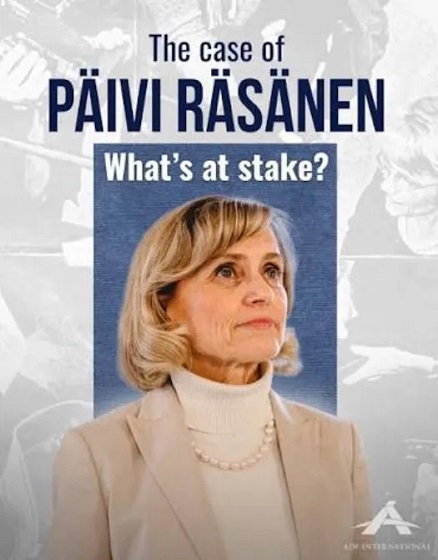
There, Päivi Räsänen, a medical doctor and Member of Parliament, and Bishop Juhana Pohjola of the Evangelical Lutheran Mission Diocese of Finland are awaiting the verdict of their third hate speech trial – all for the same issues – since 2019.
The prospect of a similar future “Bible Trial” now hangs over Canada thanks to the minority government’s openness to making a deal with the Bloc Quebecois to get Bill C-9 – An Act to amend the Criminal Code (hate propaganda, hate crime and access to religious or cultural places) – passed.
Already contentious, the contemplated amendment that would remove the current protections for sincerely held religious belief, could very well stifle the ability of Christians, Muslims, Jews and others to freely refer to their most sacred texts.
As the Canadian Conference of Catholic Bishops puts it: “the removal of this provision risks creating uncertainty for faith communities, clergy, educators, and others who may fear that the expression of traditional moral or doctrinal teachings could be misinterpreted as hate speech and could subject the speaker to proceedings that threaten imprisonment of up to two years.
“Eliminating a clear statutory safeguard will likely therefore have a chilling effect on religious expression, even if prosecutions remain unlikely in practice.”
Rasanen, Finland’s former Interior Minister, was charged under a section of the Finnish criminal code titled “war crimes and crimes against humanity” after jointly publishing a 2004 pamphlet with Pohjola that described traditional religious views on marriage and sexuality. Also involved were a 2019 live radio debate and a Tweet in which she questioned a decision by Finland’s majority church, the Finnish Evangelical Lutheran Church, to formally support a Helsinki Pride event.
Both she and Pohjola were acquitted at their initial trial and, again unanimously, upon appeal. The prosecution, determined to get convictions, then took the case all the way to Finland’s Supreme Court, where the third trial wound up on Oct. 30. At the time of writing, a verdict is pending. The accused face up to two years in prison if convicted.
Given that a total of six judges have, so far, not been convinced thay quoting Bible passages constitutes a hate crime, that level of punishment seems unlikely. But as Rasanen has written “the greatest danger is the threat of society-wide censorship and the crushing effect on freedom of speech and religion. A judgment against me would open the floodgates to a broad ban on the public expression of religious views or other beliefs and the threat of modern book burnings.”
While that may alarm those of us who still adhere to increasingly old-fashioned views on freedom and liberal democracy, there’s no doubt that the move to suppress religious expression – and some of its very unfashionable concerns regarding sexuality – has a strong fan base.
Quebec, where a crucifix inexplicably remains mounted in the National Assembly, appears particularly keen on this approach. Its Bill 21 banned the wearing of religious symbols or clothing by certain public employees and is now being extended to daycare workers and others. Its “burka ban” also insists a person’s face must be uncovered when receiving public services and is making it illegal to pray in public without government permission.
Prompted by the mass Islamo-Leftist coalition demonstrations that have occupied Montreal’s streets for the past two years, it seems unlikely that one would be busted for bowing one’s head to commune with the Almighty while sitting on a park bench. But the fact that it might be possible could just be enough to discourage one from doing so.
This is why the Bloc Quebecois is so keen to assert its leverage within a minority Parliament and stands ready to assist its passage if the exemption (“if, in good faith, the person expressed or attempted to establish by an argument an opinion on a religious subject or an opinion based on a belief in a religious text”) within current hate speech legislation for people sincerely motivated by their faith is removed.
Indeed, Bloc leader Yves-Francois Blanchet believed he had a deal but that the Liberals, led by a regular attendant at Roman Catholic Mass – Prime Minister Mark Carney – “fear a backlash” and may try to find another dance partner. That hesitance, according to Blanchet, may have motivated the suspension of a (Dec. 4) House of Commons Justice Committee.
Conservative MP Andrew Lawton also wondered on X if the committee was putting the bill on hold, stating “The Liberal chair of the Justice Committee says he cancelled today’s Bill C-9 meeting so MPs could “regroup.” He refuses to say whether he’ll call next Tuesday’s meeting.”
The deal now appears to be locked in, although Justice Minister Sean Fraser promised concerned faith groups he would hear them out over the winter.
Meanwhile, the very idea that the exemption might be removed has lit up Conservative Leader Pierre Poilievre, who, already opposed to Bill C-9 because of its restrictions on free speech, declared that it would “criminalize sections of the Bible, Qur’an, Torah and other sacred texts.”
I don’t know that it would. But it could. And that should be enough to alarm all those who believe in a God greater than the state. Just in time for Christmas, or whatever our politicians call it these days.
We note with sadness the passing Wednesday of Peter Arnett, whose work will be remembered vividly by those old enough to recall the first Gulf War and CNN’s hey day.
A New Zealander and later American too, Arnett made his name in war zones reporting for Associated Press, beginning in Vietnam. He won a Pulitzer prize for his sins, experienced controversy and lived to be 91. He tried and that’s all you can ask. Farewell, faithful servant.

Readers will notice a new DONATE button has been added. Please consider making use of it and help us save journalism from bad journalism.
(Peter Menzies is a commentator and consultant on media, Macdonald-Laurier Institute Senior Fellow, a past publisher of the Calgary Herald, a former vice chair of the CRTC and a National Newspaper Award winner. This commentary originally appeared in Epoch Times Canada)
The Rewrite is a reader-supported publication.
To receive new posts and support my work, consider becoming a free or paid subscriber.


It’s been nearly a year since I last wrote about the CBC. In the intervening months, the Prescott memo on bias at the BBC was released, whose stunning allegations of systemic journalistic malpractice “inspired” multiple senior officials to leave the corporation. Given how the institutional bias driving problems at the BBC is undoubtedly widely shared by CBC employees, I’d be surprised if there weren’t similar flaws embedded inside the stuff we’re being fed here in Canada.
Apparently, besides receiving nearly two billion dollars¹ annually in direct and indirect government funding, CBC also employs around a third of all of Canada’s full time journalists. So taxpayers have a legitimate interest in knowing what we’re getting out of the deal.
Naturally, corporate president Marie-Philippe Bouchard has solemnly denied the existence of any bias in CBC reporting. But I’d be more comfortable seeing some evidence of that with my own eyes. Given that I personally can easily go multiple months without watching any CBC programming or even visiting their website, “my own eyes” will require some creative redefinition.
So this time around I collected the titles and descriptions from nearly 300 stories that were randomly chosen from the CBC Top Stories RSS feed from the first half of 2025. You can view the results for yourself here. I then used AI tools to analyze the data for possible bias (how events are interpreted) and agendas (which events are selected). I also looked for:
- Institutional viewpoint bias
- Public-sector framing
- Cultural-identity prioritization
- Government-source dependency
- Social-progressive emphasis
Here’s what I discovered.
Story Selection Bias
Millions of things happen every day. And many thousands of those might be of interest to Canadians. Naturally, no news publisher has the bandwidth to cover all of them, so deciding which stories to include in anyone’s Top Story feed will involve a lot of filtering. To give us a sense of what filtering standards are used at the CBC, let’s break down coverage by topic.
Of the 300 stories covered by my data, around 30 percent – month after month – focused on Donald Trump and U.S.- Canada relations. Another 12-15 percent related to Gaza and the Israel-Palestine conflict. Domestic politics – including election coverage – took up another 12 percent, Indigenous issues attracted 9 percent, climate and the environment grabbed 8 percent, and gender identity, health-care worker assaults, immigrant suffering, and crime attracted around 4 percent each.
Now here’s a partial list of significant stories from the target time frame (the first half of 2025) that weren’t meaningfully represented in my sample of CBC’s Top Stories:
- Housing affordability crisis barely appears (one of the top voter concerns in actual 2025 polls).
- Immigration levels and labour-market impact.
- Crime-rate increases or policing controversies (unless tied to Indigenous or racialized victims).
- Private-sector investment success stories.
- Any sustained positive coverage of the oil/gas sector (even when prices are high).
- Critical examination of public-sector growth or pension liabilities.
- Chinese interference or CCP influence in Canada (despite ongoing inquiries in real life).
- The rest of the known galaxy (besides Gaza and the U.S.)
Interpretation Bias
There’s an obvious pattern of favoring certain identity narratives. The Indigenous are always framed as victims of historic injustice, Palestinian and Gazan actions are overwhelmingly sympathetic, while anything done by Israelis is “aggression”. Transgender representation in uniformly affirmative while dissent is bigotry.
By contrast, stories critical of immigration policy, sympathetic to Israeli/Jewish perspectives, or skeptical of gender medicine are virtually non-existent in this sample.
That’s not to say that, in the real world, injustice doesn’t exist. It surely does. But a neutral and objective news service should be able to present important stories using a neutral and objective voice. That obviously doesn’t happen at the CBC.
Consider these obvious examples:
- “Trump claims there are only ‘2 genders.’ Historians say that’s never been true” – here’s an overt editorial contradiction in the headline itself.
- “Trump bans transgender female athletes from women’s sports” which is framed as an attack rather than a policy debate.
And your choice of wording counts more than you might realize. Verbs like “slams”, “blasts”, and “warns” are used almost exclusively describing the actions of conservative figures like Trump, Poilievre, or Danielle Smith, while “experts say”, “historians say”, and “doctors say” are repeatedly used to rebut conservative policy.
Similarly, Palestinian casualties are invariably “killed“ by Israeli forces – using the active voice – while Israeli casualties, when mentioned at all, are described using the passive voice.
Institutional Viewpoint Bias
A primary – perhaps the primary job – of a serious journalist is to challenge the government’s narrative. Because if journalists don’t even try to hold public officials to account, then no one else can. Even the valuable work of the Auditor General or the Parliamentary Budget Officer will be wasted, because there will be no one to amplify their claims of wrongdoing. And Canadians will have no way of hearing the bad news.
So it can’t be a good sign when around 62 percent of domestic political stories published by the nation’s public broadcaster either quote government (federal or provincial) sources as the primary voice, or are framed around government announcements, reports, funding promises, or inquiries.
 |
In other words, a majority of what the CBC does involves providing stenography services for their paymasters.
Here are just a few examples:
- “Federal government apologizes for ‘profound harm’ of Dundas Harbour relocations”
- “Jordan’s Principle funding… being extended through 2026: Indigenous Services”
- “Liberal government announces dental care expansion the day before expected election call”
Agencies like the Bank of Canada, Indigenous Services Canada, and Transportation Safety Board are routinely presented as authoritative and neutral. By contrast, opposition or industry critiques are usually presented as secondary (“…but critics say”) or are simply invisible. Overall, private-sector actors like airlines, oil companies, or developers are far more likely to be criticized.
All this is classic institutional bias: the state and its agencies are the default lens through which reality is filtered.
Not unlike the horrors going on at the BBC, much of this bias is likely unconscious. I’m sure that presenting this evidence to CBC editors and managers would evoke little more than blank stares. This stuff flies way below the radar.
But as one of the AI tools I used concluded:
In short, this 2025 CBC RSS sample shows a very strong and consistent left-progressive institutional bias both in story selection (agenda) and in framing (interpretation). The outlet functions less as a neutral public broadcaster and more as an amplifier of government, public-sector, and social-progressive narratives, with particular hostility reserved for Donald Trump, Canadian conservatives, and anything that could be construed as “right-wing misinformation.”
And here’s the bottom line from a second tool:
The data reveals a consistent editorial worldview where legitimate change flows from institutions downward, identity group membership is newsworthy, and systemic intervention is the default solution framework.
You might also enjoy:
Is Updating a Few Thousand Readers Worth a Half Million Taxpayer Dollars? |
||||||
|
||||||
 |
||||||
| Plenty has been written about the many difficulties faced by legacy news media operations. You might even recall reading about the troubled CBC and the Liberal government’s ill-fated Online News Act in these very pages. Traditional subscription and broadcast models are drying up, and on-line ad-based revenues are in sharp decline. | ||||||
|
Subscribe to The Audit.
For the full experience, upgrade your subscription.


Argentina’s Milei delivers results free-market critics said wouldn’t work

‘Almost Sounds Made Up’: Jeffrey Epstein Was Bill Clinton Plus-One At Moroccan King’s Wedding, Per Report

Danielle Smith slams Skate Canada for stopping events in Alberta over ban on men in women’s sports
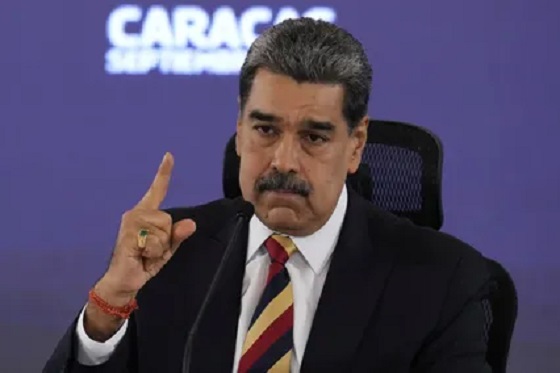
TOTAL AND COMPLETE BLOCKADE: Trump cuts off Venezuela’s oil lifeline
-
Business2 days ago
Argentina’s Milei delivers results free-market critics said wouldn’t work
-
 Health24 hours ago
FDA warns ‘breast binder’ manufacturers to stop marketing to gender-confused girls
-
 Daily Caller23 hours ago
Trump Reportedly Escalates Pressure On Venezuela With Another Oil Tanker Seizure
-
 espionage2 days ago
Carney Floor Crossing Raises Counterintelligence Questions aimed at China, Former Senior Mountie Argues
-
 Business1 day ago
Taxing food is like slapping a surcharge on hunger. It needs to end
-
Business14 hours ago
There’s No Bias at CBC News, You Say? Well, OK…
-
 Energy1 day ago
75 per cent of Canadians support the construction of new pipelines to the East Coast and British Columbia
-
 Health1 day ago
All 12 Vaccinated vs. Unvaccinated Studies Found the Same Thing: Unvaccinated Children Are Far Healthier