
Agriculture
Why Are Governments Attacking Farmers?

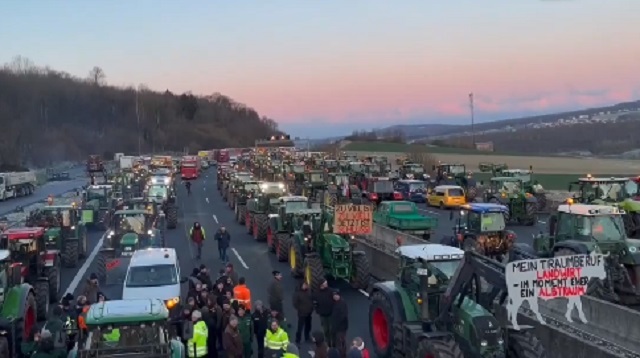
To approach the massive protests in Germany, especially for those who’ve heard very little about this massive upheaval, it might help to set up the context.
2024 is already proving to be a year of disruption and protest. 64 countries representing half of all people on the planet will be voting in national elections. Major elections will take place not just in the United States, but in the European Union, Russia, and in the world’s most populous democracy India.
Those conversations you’ve been having with only your most trusted cohorts, where you wonder how former friends and people you admire have become ideological combatants; are taking place all around the globe. We find ourselves identifying more and more people as either “far left” or “far right”. Even though we haven’t changed the way we think, we find we’ve also been identified by others as slipping into one of these “far” groups. Our sense of community and family are suffering and may not survive.
Why is this happening?
It comes down to where we choose to get information.
If you haven’t moved away from the legacy media yet, you’re far more likely to be disturbed by the growing numbers on the “far right”. You simply can’t understand how so many people you know have fallen victim to conspiracy theories and populist leaders who are trying to take the reigns of power.
If you have moved on to learn about the world through long form podcasts and some of the many new information platforms that have emerged, you’ll most likely be swayed by reams of information ignored by legacy media.
For tens of millions this started with the pandemic. A few months into 2020, podcasters and information sites began to notice that the average age of those dying from covid was older than normal life expectancy, that 86% of those who died were obese, that doctors around the world were successfully treating covid with cheap, repurposed drugs, and that masking, social distancing, lockdowns, and eventually covid vaccines made almost no impact on the spread of covid.
People in this camp tried to persuade those close to them that covid wasn’t as dangerous as they were lead to believe. Many conversations became emotional and annoying. One one side, raised voices of those desperate to share information. On the other side, perfectly intelligent people, informed by legacy media who had heard none of these things. Often they were told the opposite. A great example is how legacy media labelled one of the safest, cheapest and most effective drugs in world history (the developers won the Nobel Prize for inventing ivermectin) as ‘horse de-wormer’.
New media and long form podcasters have found the situation surrounding covid is the same for most other urgent situations. The inflation an energy crisis, the Russian attack of Ukraine, global warming (or climate change) and open border policies have only widened the information gap.
One side sees little reason to slow the movement of millions, or to slow the printing of money by governments unconcerned about sinking much, much further into debt. For this group the most important battles in the world are the fight to reduce carbon emissions and the war against Russia.
The other side sees a self inflicted inflation and energy crisis, a refusal to negotiate an end to the war in Ukraine, and a massive influx of immigrants beginning to cause societal upheaval.
As elections creep closer, the information gap is growing and the stakes are getting higher.
What does all this disruption and disunity have to do with massive demonstrations by German farmers? If you are a legacy media follower there is no connection. Legacy media outlets explain away this nation wide protest as farmers fighting against diesel fuel subsidies. By now, you should at least want to know what the podcasters and new media are reporting. Jordan Peterson is in that camp.
Last week, the world famous Canadian podcaster spoke with German farmer Anthony Lee and journalist Eva Vlaardingerbroek.
Eva Vlaardingerbroek is a Dutch journalist and Anthony Lee has become outspoken in recent months as he followed news of farmers struggling all across Europe. In the following videos (especially the longer one) the cause of these massive and spreading demonstrations will be explained by Eva, a new information reporter, and Anthony, a German farmer.
First a shorter video and for those with some more time their entire 100 minute long conversation.
From the YouTube channel of Jordan Peterson
A longer discussion on the ongoing farmers’ protest, the war on efficient agriculture, and net-zero goals creating excess electric vehicles while cutting off the generation of power.
This episode was recorded on January 15th, 2023
Dr. Peterson’s extensive catalog is available now on DailyWire+: https://bit.ly/3KrWbS8

Agriculture
Health Canada indefinitely pauses plan to sell unlabeled cloned meat after massive public backlash


From LifeSiteNews
Health Canada has indefinitely paused its plan to allow unlabeled cloned meat in grocery stores after thousands of Canadians, prominent figures, and industry leaders condemned the move.
Health Canada is pausing its plan to put unlabeled cloned meat in Canadian grocery stores, following public outcry.
In a November 19 update on its website, Health Canada announced an indefinite suspension of the decision to remove labels from cloned meat products after thousands of Canadians condemned the plan online.
“The Government of Canada has received significant input from both consumers and industry about the implications of this potential policy update,” the publication read. “The Department has therefore indefinitely paused the policy update to provide time for further discussions and consideration,” it continued, adding, “Until the policy is updated, foods made from cloned cattle and swine will remain subject to the novel food assessment.”
In late October, Health Canada quietly approved removing labels from foods derived from somatic cell nuclear transfer (SCNT) clones and their offspring. As a result, Canadians buying meat from the grocery store would have had no way of knowing if the product was cloned meat.
Many researchers have documented high rates of cloning failure, large offspring syndrome (LOS), placental abnormalities, early death, and organ defects in cloned animals. The animals are also administered heavy doses of antibiotics due to infections and immune issues.
Typically, the offspring of cloned animals, rather than the cloned animals themselves, are processed for human consumption. As a result, researchers allege that the health defects and high drug use does not affect the final product.
However, there are no comprehensive human studies on the effects of eating cloned meat, meaning that the side-effects for humans are unknown.
News of the plan spread quickly on social media, with thousands of Canadians condemning the plan and promising to switch to local meat providers.
“By authorizing the sale of meat from cloned animals without mandatory labeling or a formal public announcement, Health Canada risks repeating a familiar and costly failure in risk communication. Deeply disappointing,” food policy expert and professor at Dalhousie University Sylvain Charlebois wrote on X.
"By authorizing the sale of meat from cloned animals without mandatory labeling or a formal public announcement, Health Canada risks repeating a familiar and costly failure in risk communication. Deeply disappointing."
More on this week's Food Professor Podcast! https://t.co/UZTIcQzUN3
— The Food Professor (@FoodProfessor) October 30, 2025
Likewise, Conservative MP Leslyn Lewis warned, “Health Canada recently decided that meat from cloned animals and their offspring no longer needs a special review or any form of disclosure.”
“That means, soon you could buy beef or pork and have no idea how it was bred,” she continued. “Other countries debate this openly: the EU has considered strict labelling, and even the U.S. has admitted that cloned-offspring meat is circulating.”
“But here in Canada, the public wasn’t even told. This is about informed choice,” Lewis declared. “If government and industry don’t have to tell us when meat comes from cloned animals, then Canadians need to ask a simple, honest question: What else are we not being told?”
Health Canada recently decided that meat from cloned animals and their offspring no longer needs a special review or any form of disclosure. That means, soon you could buy beef or pork and have no idea how it was bred.
Other countries debate this openly: the EU has considered… pic.twitter.com/zCnqJOpvf3
— Dr. Leslyn Lewis (@LeslynLewis) November 14, 2025
Likewise, duBreton, a leading North American supplier of organic pork based out of Quebec, denounced the move, saying, “Canadians expect clarity, transparency, and meaningful consultation on issues that directly touch their food supply. As producers, we consider it our responsibility and believe our governing food authorities should too.”
According to a survey conducted by duBreton, 74 percent of Canadians believe that “cloned meat and genetic editing practices have no place in farm and food systems.”
Agriculture
Federal cabinet calls for Canadian bank used primarily by white farmers to be more diverse

From LifeSiteNews
A finance department review suggested women, youth, Indigenous, LGBTQ, Black and racialized entrepreneurs are underserved by Farm Credit Canada.
The Cabinet of Prime Minister Mark Carney said in a note that a Canadian Crown bank mostly used by farmers is too “white” and not diverse enough in its lending to “traditionally underrepresented groups” such as LGBT minorities.
Farm Credit Canada Regina, in Saskatchewan, is used by thousands of farmers, yet federal cabinet overseers claim its loan portfolio needs greater diversity.
The finance department note, which aims to make amendments to the Farm Credit Canada Act, claims that agriculture is “predominantly older white men.”
Proposed changes to the Act mean the government will mandate “regular legislative reviews to ensure alignment with the needs of the agriculture and agri-food sector.”
“Farm operators are predominantly older white men and farm families tend to have higher average incomes compared to all Canadians,” the note reads.
“Traditionally underrepresented groups such as women, youth, Indigenous, LGBTQ, and Black and racialized entrepreneurs may particularly benefit from regular legislative reviews to better enable Farm Credit Canada to align its activities with their specific needs.”
The text includes no legal amendment, and the finance department did not say why it was brought forward or who asked for the changes.
Canadian census data shows that there are only 590,710 farmers and their families, a number that keeps going down. The average farmer is a 55-year-old male and predominantly Christian, either Catholic or from the United Church.
Data shows that 6.9 percent of farmers are immigrants, with about 3.7 percent being “from racialized groups.”
National census data from 2021 indicates that about four percent of Canadians say they are LGBT; however, those who are farmers is not stated.
Historically, most farmers in Canada are multi-generational descendants of Christian/Catholic Europeans who came to Canada in the mid to late 1800s, mainly from the United Kingdom, Ireland, Ukraine, Russia, Italy, Poland, the Netherlands, Germany, and France.


From Underdog to Top Broodmare
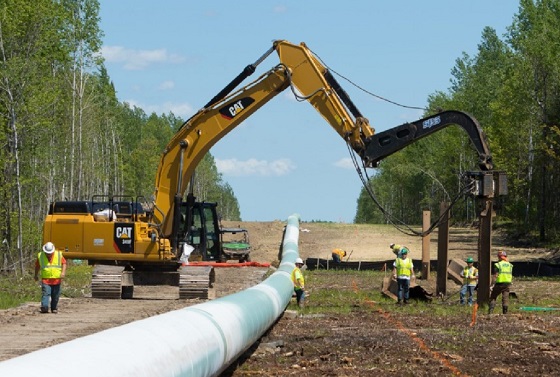
Ottawa and Alberta’s “MOU” a step in the right direction—but energy sector still faces high costs and weakened competitiveness

Canadians will soon be versed in massive West Coast LPG mega-project
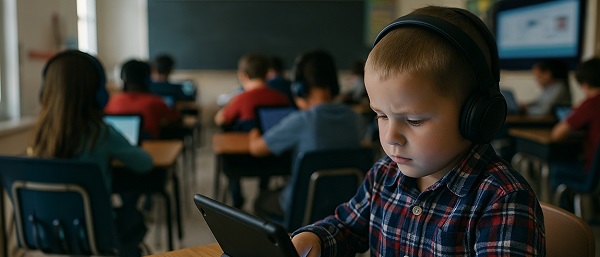
‘No Critical Thinking’: Parents Sound Alarm As Tech Begins To ‘Replace The Teacher’
-
Energy2 days ago
Canadians will soon be versed in massive West Coast LPG mega-project
-
 Daily Caller2 days ago
Tom Homan Predicts Deportation Of Most Third World Migrants Over Risks From Screening Docs
-
 Daily Caller9 hours ago
Tech Mogul Gives $6 Billion To 25 Million Kids To Boost Trump Investment Accounts
-
 Artificial Intelligence2 days ago
‘Trouble in Toyland’ report sounds alarm on AI toys
-
 National1 day ago
Media bound to pay the price for selling their freedom to (selectively) offend
-
 Alberta1 day ago
New era of police accountability
-
 C2C Journal1 day ago
Learning the Truth about “Children’s Graves” and Residential Schools is More Important than Ever
-
 Business10 hours ago
Recent price declines don’t solve Toronto’s housing affordability crisis