
illegal immigration
UN Budgets Millions for U.S.-Bound Migrants in 2024

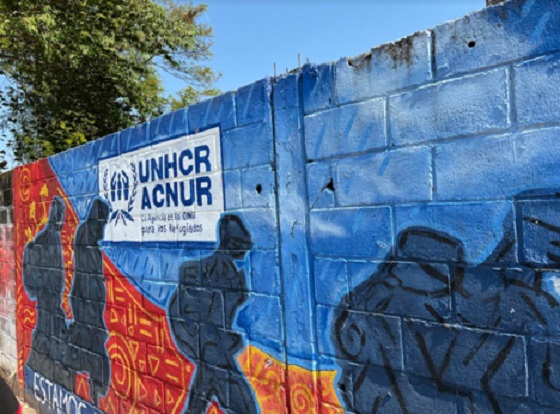
As this mural in Tapachula, Mexico, shows, UN agencies are well aware that their cash aid and assistance helps support illegal immigration over the U.S. southern border. January 2022 photo by Todd Bensman.
From the Center for Immigration Studies
By Todd Bensman
Public docs show cash handouts to help feed, transport, and house people headed for the U.S. border
Early on in America’s historic border crisis, now entering its fourth record-smashing year, some Republican lawmakers named a significant enabling culprit other than the usual Mexican cartel smugglers. They named the U.S. taxpayer-funded United Nations as essentially a co-smuggler after seeing my reports that the UN was handing out debit cards and cash vouchers to aspiring illegal border crossers on their way north.
One outraged group of 21 border-security-minded lawmakers even pitched a bill that would require the United States, the UN’s largest donor, to turn off the taxpayer money spigot. H.R. 6155 never caught fire, though, in no small part because “fact checks” claiming to debunk other reports like mine in the conservative press dissuaded broader media interest and left the American public in the dark.
But now the UN’s 2024 update to the “Regional Refugee and Migrant Response Plan” (RMRP for short), a planning and budget document for handing out nearly $1.6 billion in 17 Latin America countries, can cast a broad confirming light on the cash giveaways and much more aid for 2024 ahead — with the helping hands of 248 named non-governmental organizations. Despite the RMRP plan title naming Venezuelans as recipients of this aid operation, the document’s fine print (footnote on p. 14 and paragraph on p. 43, for instance) says the largesse goes to “all nationalities” and “multiple other nationalities”.

A Haitian shows his UN cash card outside a UN facility in Tapachula. He was there to complain the agency had not deposited money in the depleted card. January 2022 photo by Todd Bensman.
The documents clear up any mystery about what the UN and NGOs are doing on the migrant trails and leave no room for supposedly debunking “fact checks”.
In a nutshell, the UN and its advocacy partners are planning to spread $372 million in “Cash and Voucher Assistance (CVA)”, and “Multipurpose Cash Assistance (MCA)” to some 624,000 immigrants in-transit to the United States during 2024. That money is most often handed out, other UN documents show, as pre-paid, rechargeable debit cards, but also hard “cash in envelopes”, bank transfers, and mobile transfers the U.S. border-bound travelers can use for whatever they want.
The $372 million in planned cash giveaways to the 624,000 immigrants moving north and illegally crossing national borders “represents a significantly greater share of the financial requirements” for 2024, the RMRP says, but it is still only one part of much broader UN hemisphere-wide vision that aims to spend $1.59 billion assisting about three million people in 17 countries who emigrated from their home nations. Most will be “in-destination” recipients already supposedly settled in third countries, albeit in declining numbers, but a rising share of cash will go to the spiking numbers of “in-transit” immigrants launching journeys from those accommodating countries north to the United States.

Cash cards going out to immigrants in long lines at a camp in Reynosa, Mexico, in September 2021, photos that first drew ostensibly debunking fact checks. Photos by Todd Bensman.
Without distinction, both populations get access to UN cash but also “humanitarian transportation”, shelter, food, legal advice, personal hygiene products, health care, and “protection” against threats like human smuggling, and much more besides cash in envelopes or debit cards.
The cash handouts will be in the mix during 2024 as the UN and its private partners incorporate an “increased use of CVA” in, for instance, the $184 million it plans to provide 1.2 million people, $122 million for rent support and also “temporary collective shelter” for 473,000 people, and $25.8 million for “humanitarian transportation” to 129,000 people crossing borders. There’ll also be “expanded use of multi-purpose cash” for those claiming “gender-based violence”.
The UN’s 2024 Game Plan
The 130-page UN-spearheaded RMRP 2024 update went public in December and is readily accessible online, as is the original 2023-2024 plan it revises — sharply upward. It is the latest since the United Nations High Commissioner for Refugees and the UN’s International Organization for Migration started the program in 2018, originally for Venezuelans but now open to anyone in 17 nations of Latin America and the Caribbean. (For the complete list of involved groups, see p. 268, here, and explore their activities further with this handy interactive tool).
Some 57 international organizations would manage the handouts of $273 million, while 132 “national NGOs” and “civil service organizations” would handle $70 million in aid. Fifteen UN agencies would get the lion’s share at $1.2 billion.
The NGOs actively participated in crafting the RMRP 2024 Update, which amends a 2023-2024 plan released back in 2022 that at the time foresaw a decline in illegal immigration after 2023. It increased, instead.

A Nicaraguan on his way to the U.S. showed his UN cash card in Monterrey, Mexico. January 2022 photo by Todd Bensman.
“Country-level projections of in-transit movements for populations moving north through Central America and Mexico have been revised sharply upwards,” p. 44 explains in updating the 2024 RMRP update.
The reasons given include factors like “xenophobia” leading resettled migrants to leave for the United States. It does, finally, tag the real culprit: U.S. policies that created “newly established opportunities for regular pathways to move to the United States of America” for those who could make their way to northern Mexico.
The document makes clear in writing that the UN and these partners know their endeavor aids, abets, and makes possible the “onward movement” of immigrants who intend to illegally cross borders, especially to get into the United States.
None of them care. Twenty new groups joined the UN endeavor for 2024 for a total of 248.

Their plan frequently acknowledges the illegality, saying for instance, that one in three of the Venezuelan migrants the UN aims to help are in “irregular situations”, including those “who have crossed international borders without complying with all the legal and administrative requirements for entry and may not have the required documentation to do so”, as well as visa overstayers. The original 2023-2024 plan even spelled out that “special attention will be given to the use of [cash and voucher assistance] for in-transit populations, including the need for comprehensive solutions throughout the journey”.
The only expression of apparent concern about supporting people clearly intending to break U.S. law shows up on a page depicting a map with the thin red line of a migration route leading to the U.S. border at about El Paso. Someone took the trouble to add a footnote on that page noting that the map “does not imply official endorsement or acceptance by the UN”.

UN workers help long lines of immigrants apply for aid in Tapachula, Mexico. Photos by Todd Bensman.
Why hand out hundreds of millions of dollars as cash and services to hundreds of thousands planning to illegally follow that red line through UN member states, to include crossing the US border, when those nations don’t like or want it and must bear the political controversies of it?
“To support access to asylum procedures, migratory regularization activities, and socio-economic integration”, the plan says.
The money handout program “has taken on increasing importance”, it explains elsewhere, because it gives growing numbers of immigrants “the flexibility to cover their expenses and needs they deem most urgent, increasing their dignity and autonomy”.
Where It’ll Be Doled Out
Over the past three years, I have visited UN waystations featuring long lines of U.S.-bound immigrants applying for aid from clipboard-wielding workers handing out cash cards and other goodies, from Reynosa and Monterrey in the north of Mexico to Tapachula in the far south. But the waystations also appear everywhere along the trails much farther south.
The RMRP plan calls for distributing most of the cash, cash equivalents, and vouchers to migrants in Colombia and Ecuador, which are launch pads that sent 450,000 people through the Darian Gap jungle passage in Panama. The plan calls for 24 NGO partners to give money to 95,000 in Colombia and 59,000 in Mexico.
Some of the so-called transportation assistance is for local cab rides to stores or doctor appointments. But the UN agencies also know that aid will facilitate “increased onward movements” between countries of the “in-transit population” for 105,000 immigrants in Colombia, 25,000 in Brazil, 13,000 in Panama, and 3,700 in Mexico, to name a few places.
Likewise for “shelter”, $27.5 million is earmarked for 161,000 travelers in Colombia, $22.5 million for 179,000 in Ecuador, $18 million for 165,000 in Peru, and $4.3 million to help 33,000 in Mexico.
Political Fight or Flight
In years one and two of the historic mass migration crisis that President Biden’s let-them-all-in policies triggered, Republicans in the U.S. House of Representatives spoiled for a political fight over UN and NGO activity along the migrant routes because it was funded largely and ironically by the United States. And not just them. In December 2022, Texas Gov. Greg Abbott wrote Attorney General Ken Paxton asking him to investigate whether non-governmental organizations unlawfully assisted mass border crossings that overwhelmed the El Paso region.
Recent Congressional Research Service reporting reminds us that they had some legitimate grounds to complain; the United States has been the largest financial contributor to UN entities since the UN was established in 1945. Congress and the executive branch play key roles; Congress appropriates U.S. funding, while the executive branch shapes where the money will go through the State Department and the U.S. Mission to the United Nations in New York City.
Complaints, questions, and proposed legislation about the UN’s role in all of this may have gone cold, but as the latest RMRP plan reveals, the world body is as hot on the trail as ever.
Prior to his government experience, Bensman worked on staff for The Dallas Morning News, CBS, and Hearst Newspapers, covering the FBI, federal law enforcement and serving on investigative teams. He reported extensively on national security issues after 9/11 and worked from more than 25 countries in Latin America, the Middle East, and Africa. In Texas, he authored long-form investigative stories with emphases on border security related to illegal immigration and Mexico’s drug war. His reporting on human smuggling from Muslim-majority countries, Mexico’s drug war, and cross-border gun smuggling to cartels earned two National Press Club awards and an Inter-American Press Association award, among others.

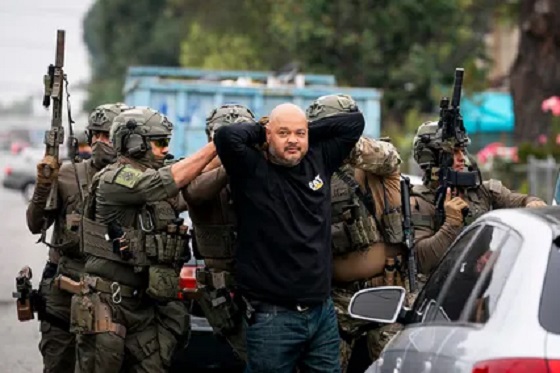

President Trump’s Department of Homeland Security is marking what officials are calling a landmark moment in U.S. immigration enforcement, announcing Wednesday that more than 2.5 million illegal aliens have now left the country since Trump returned to the Oval Office in January. DHS Secretary Kristi Noem said the surge reflects a sweeping, sustained crackdown driven by Immigration and Customs Enforcement teams that — according to internal tallies — have already removed more than 605,000 illegal aliens, most of whom were facing criminal charges or carrying prior convictions. Nearly two million more have opted to self-deport, a wave Noem attributes to stepped-up enforcement and the administration’s aggressive public messaging. She again urged those still in the country illegally to use the government’s CBP Home app, which offers a free one-way flight and a $1,000 stipend to expedite departure.
Senior DHS officials say arrests have climbed as well, with almost 600,000 illegal aliens taken into custody since January 20. “Illegal aliens are hearing our message to leave now,” DHS official McLaughlin said this week. “They know if they don’t, we will find them, we will arrest them, and they will never return.”
The administration argues the impact is being felt far beyond immigration courts and detention facilities, pointing to the U.S. housing market as one of the clearest signs of change. For six straight months, DHS says not a single illegal alien has been released into the interior from the southern border — a dramatic shift after years of mass inflows under President Biden. That decline, they say, is finally filtering into rent and home-price data after years of punishing increases.
Housing and Urban Development Secretary Scott Turner said Americans have now seen four consecutive months of rent decreases — the first sustained drop in years — as fewer illegal aliens compete for housing. Vice President JD Vance emphasized the connection even more bluntly: “The connection between illegal immigration and skyrocketing housing costs is as clear as day. We are proud to be moving in the right direction. Still so much to do.”
Research abroad and at home backs up the administration’s argument. Economists in Denmark released findings earlier this year showing that a one-percentage-point rise in local immigration over a five-year period drove private rental prices up roughly 6 percent and home prices up about 11 percent. The Center for Immigration Studies presented similar data to Congress last year, with researcher Steven Camarota testifying that a 5-percentage-point increase in a metro area’s recent-immigrant share was tied to a 12-percent rise in rent for U.S.-born households.
As DHS leaders frame it, Trump’s second-term enforcement machine is reshaping both border policy and household budgets — an approach they say is finally delivering relief to Americans who spent years squeezed by soaring housing costs and unchecked migration.
illegal immigration
EXCLUSIVE: Canadian groups, First Nation police support stronger border security
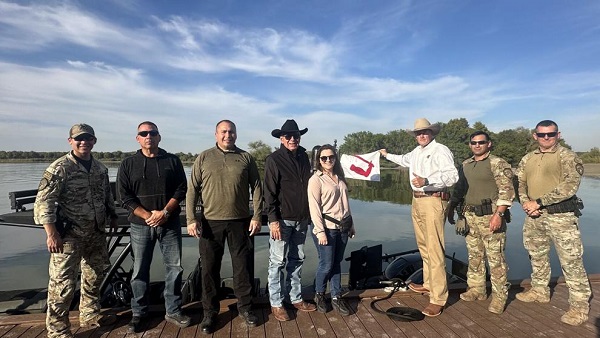
First Nation police chiefs join Texas Department of Public Safety marine units to patrol the Rio Grande River in Hidalgo County, Texas. L-R: Dwayne Zacharie, President of the First Nations Chiefs of Police Association, Ranatiiostha Swamp, Chief of Police of the Akwesasne Mohawk Territory, Brooks County Sheriff Benny Martinez, Jamie Tronnes, Center for North American Prosperity and Security, Goliad County Sheriff Roy Boyd. Photo: Bethany Blankley for The Center Square
From The Center Square
By
Despite Canadian officials arguing that the “Canada-U.S. border is the best-managed and most secure border in the world,” some Canadian groups and First Nation tribal police chiefs disagree.
This week, First Nation representatives traveled to Texas for the first time in U.S.-Canadian history to find ways to implement stronger border security measures at the U.S.-Canada border, including joining an Operation Lone Start Task Force, The Center Square exclusively reported.
Part of the problem is getting law enforcement, elected officials and the general public to understand the reality that Mexican cartels and transnational criminal organizations are operating in Canada; another stems from Trudeau administration visa policies, they argue.
When it comes to public perception, “If you tell Canadians we have a cartel problem, they’ll laugh at you. They don’t believe it. If you tell them we have a gang problem, they will absolutely agree with you 100%. They don’t think that gangs and cartels are the same thing. They don’t see the Hells Angels as equal to the Sinaloa Cartel because” the biker gang is visible, wearing vests out on the streets and cartel operatives aren’t, Jamie Tronnes, executive director of the Center of North American Prosperity and Security, told The Center Square in an exclusive interview.
The center is a US-based project of the MacDonald-Laurier Institute, the largest think tank in Canada. Tronnes previously served as a special assistant to the cabinet minister responsible for immigration and has a background in counterterrorism. She joined First Nation police chiefs to meet with Texas law enforcement and officials this week.
Another Canadian group, Future Borders Coalition, argues, “Canada has become a critical hub for transnational organized crime, with networks operating through its ports, banks, and border communities.” The Sinaloa and Jalisco New Generation Mexican cartels control the fentanyl, methamphetamine and cocaine business in Canada, partnering with local gangs like the Hells Angels and Chinese Communist Party (CCP)-linked actors, who launder profits through casinos, real estate, and shell companies in Vancouver and Toronto, Ammon Blair, a senior fellow at the Texas Public Policy Foundation, and others said at a coalition event prior to First Nation police chiefs and Tronnes coming to Texas.
“The ’Ndrangheta (Italian Mafia) maintains powerful laundering and import operations in Ontario and Quebec, while MS-13 and similar Central American gangs facilitate human smuggling and enforcement. Financial networks tied to Hezbollah and other Middle Eastern groups support laundering and logistics for these criminal alliances,” the coalition reports.
“Together, they form interconnected, technology-driven enterprises that exploit global shipping, cryptocurrency, and AI-enabled communications to traffic whatever yields profit – narcotics, weapons, tobacco, or people. Taking advantage of Canada’s lenient disclosure laws, fragmented jurisdictions, and weak cross-border coordination, these groups have embedded themselves within legitimate sectors, turning Canada into both a transit corridor and safe haven for organized crime,” the coalition reports.
Some First Nation reservations impacted by transnational crime straddle the U.S.-Canada border. One is the Akwesasne Mohawk Reservation, located in Ontario, Quebec, and in two upstate New York counties, where human smuggling and transnational crime is occurring, The Center Square reported. Another is the Tsawwassen First Nation (TWA) Reservation, located in a coastal region south of Vancouver in British Columbia stretching to Point Roberts in Washington state, which operates a ferry along a major smuggling corridor.
Some First Nation reservations like the TWA are suffering from CCP organized crime, Tronnes said. Coastal residents observe smugglers crossing their back yards, going through the reserve; along Canada’s western border, “a lot of fentanyl is being sent out to Asia but it’s also being made in Canada,” Tronnes said.
Transnational criminal activity went largely unchecked under the Trudeau government, during which “border security, national security and national defense were not primary concerns,” Tronnes told The Center Square. “It’s not to say they weren’t concerns, but they weren’t top of mind concerns. The Trudeau government preferred to focus on things like climate change, international human rights issues, a feminist foreign policy type of situation where they were looking more at virtue signaling rather than securing the country.”
Under the Trudeau administration, the greatest number of illegal border crossers, including Canadians, and the greatest number of known, suspected terrorists (KSTs) were reported at the U.S.-Canada border in U.S. history, The Center Square first reported. They include an Iranian with terrorist ties living in Canada and a Canadian woman who tried to poison President Donald Trump, The Center Square reported.
“Had it been a priority for the government to really crack down and provide resources for national security,” federal, provincial and First Nation law enforcement would be better equipped, funded and staffed, Tronnes said. “They would have better ways to understand what’s really happening at the border.”
In February, President Donald Trump for the first time in U.S. history declared a national emergency at the northern border and ordered U.S. military intervention. Months later, his administration acknowledged the majority of fentanyl and KSTs were coming from Canada, The Center Square reported.
Under a new government and in response to pressure from Trump, Canada proposed a $1.3 billion border plan. However, more is needed, the groups argue, including modernizing border technology and an analytics infrastructure, reforming disclosure and privacy rules to enable intelligence sharing, and recognizing and fully funding First Nation police, designating them as essential services and essential to border security.
“National security doesn’t exist without First Nation policing at the border,” Dwayne Zacharie, First Nations Chiefs of Police president, told The Center Square.


Death by a thousand clicks – government censorship of Canada’s internet

Schools should go back to basics to mitigate effects of AI

Danielle Smith slams Skate Canada for stopping events in Alberta over ban on men in women’s sports
Saskatchewan woman approved for euthanasia urged to seek medical help in Canada rather than US
-
Alberta2 days ago
Danielle Smith slams Skate Canada for stopping events in Alberta over ban on men in women’s sports
-
 International2 days ago
TOTAL AND COMPLETE BLOCKADE: Trump cuts off Venezuela’s oil lifeline
-
 Crime2 days ago
The Uncomfortable Demographics of Islamist Bloodshed—and Why “Islamophobia” Deflection Increases the Threat
-
 Daily Caller13 hours ago
‘Almost Sounds Made Up’: Jeffrey Epstein Was Bill Clinton Plus-One At Moroccan King’s Wedding, Per Report
-
 COVID-192 days ago
Senator Demands Docs After ‘Blockbuster’ FDA Memo Links Child Deaths To COVID Vaccine
-
 Business1 day ago
Canada Hits the Brakes on Population
-
 COVID-192 days ago
China Retaliates Against Missouri With $50 Billion Lawsuit In Escalating Covid Battle
-
 International2 days ago
Bondi Beach Shows Why Self-Defense Is a Vital Right