
Calgary
The Next Move For The Centre for Child and Adolescent Mental Health


The Centre for Child and Adolescent Mental Health, which is expected to open in the fall of 2021, is an upcoming facility to help people who struggle with mental health problems, as well as addictions, according to a CBC article. I believe that this is a very good idea, as there are people struggling with mental health in Calgary, and it isn’t just an issue adults face.
One unique idea the CBC article mentions about the project is that the people using the project will be able to sleep in their own homes at night. While I personally do not have much experience with mental health issues, I do find it more comfortable to sleep in my own room then somewhere completely new. I believe that idea would be useful to those dealing with mental health issues, if they feel the same way I do about sleeping arrangements, it would be a much more comfortable situation for the patients.
One aspect about this program that Alberta Health Services mentioned is that it will not have any beds for overnight stays. While it would be nice to have beds for overnight stays if the patient needs that type of therapy, Alberta Health Services said there are other places in Calgary that do have overnight stays, such as Alberta Children’s Hospital. According to the CBC article, David Weyant, who is an AHS board chair, said that the facility will make sure that patients that were hospitalized have a smooth transition back into the community, as well as going helping patients return home earlier, which suggests to me that the facility is meant to help people leave a hospitalized environment. Also, while it would be ideal for one place to have everything needed for mental health treatment, I’m not sure if that’s possible, so maybe leaving out overnight treatment is a good place to stop. Overall, while it would be nice if they included inpatient treatment if needed, there are places to cover that part of treatment.
There are several aspects of the program I like. The first aspect is the fact that they chose to include not only the thoughts of mental health centres worldwide when designing the program, but also the thoughts of young people and the families of young people who live in Calgary, according to the CBC article. I feel as though that it’s important, because while there is information to be gained from people who have had built similar facilities before, there is also the consideration of what would work specifically where the facility would be. For example, let’s just hypothetically say that there were no beds for youths that need inpatient care. That issue could come up when talking about issues that should be addressed, and maybe The Centre for Child and Adolescent Mental Health would include inpatient care. However, since there are places for inpatient mental health care in Calgary, the people designing the facility may not have considered it to be important.
Overall, I like the idea of the Centre for Child and Adolescent Mental Health. I would like to see how mental health in Calgary improves after the facility is open.
References
Alberta Health Services (May 25,2018) “Calgary Centre for Child and Adolescent Mental Health”. Retrieved from https://www.albertahealthservices.ca/assets/about/capitalprojects/ahs-cp-calgary-ccamh-q-and-a.pdf
Valleau, N. (Nov. 23, 2019). CBC. ‘Critical Lifesaving Project:’ New mental health centre for youth to open in Calgary. Retrieved from https://www.cbc.ca/news/canada/calgary/centre-child-adolescent-mental-health-calgary-addiction-1.5369854


From the Canadian Taxpayers Federation
The Canadian Taxpayers Federation is calling on the City of Calgary to scrap the Calgary Arts Development Authority after it spent $65,000 on a telephone line to the Bow River.
“If someone wants to listen to a river, they can go sit next to one, but the City of Calgary should not force taxpayers to pay for this,” said Kris Sims, CTF Alberta Director. “If phoning a river floats your boat, you do you, but don’t force your neighbour to pay for your art choices.”
The City of Calgary spent $65,194 of taxpayers’ money for an art project dubbed “Reconnecting to the Bow” to set up a telephone line so people could call the Bow River and listen to the sound of water.
The project is running between September 2024 and December 2025, according to documents obtained by the CTF.
The art installation is a rerun of a previous version set up back in 2014.
Emails obtained by the CTF show the bureaucrats responsible for the newest version of the project wanted a new local 403 area code phone number instead of an 1-855 number to “give the authority back to the Bow,” because “the original number highlighted a proprietary and commercial relationship with the river.”
Further correspondence obtained by the CTF shows the city did not want its logo included in the displays, stating the “City of Calgary (does NOT want to have its logo on the artworks or advertisements).”
Taxpayers pay about $19 million per year for the Calgary Arts Development Authority. That’s equivalent to the total property tax bill for about 7,000 households.
Calgary bureaucrats also expressed concern the project “may not be received well, perceived as a waste of money or simply foolish.”
“That city hall employee was pointing out the obvious: This is a foolish waste of taxpayers’ money and this slush fund should be scrapped,” said Sims. “Artists should work with willing donors for their projects instead of mooching off city hall and forcing taxpayers to pay for it.”

News release from the City of Calgary
Scotia Place, Calgary’s new event centre, designed as a place for community where there is room for everyone
The City of Calgary and Calgary Sports and Entertainment Corporation (CSEC) are excited to reveal the design for Calgary’s new event centre – formally named Scotia Place.
The design is influenced by the ancestral and historical land of Indigenous Peoples and the culturally significant site that embodies our shared purpose – to gather. It brings together Indigenous cultural perspectives with Calgary’s and the region’s natural beauty, reflecting the four elements of nature – fire, ice, land and air.
A striking feature of the building is the central structure with a textured flame motif that emulates a home fire, which is further amplified when it is lit at night. The home fire, a place of warmth and energy that brings people together to share stories of the past and create stories for the future, rises from the white, glacial-like forms that define the lower parts of the building.
“When you consider that Calgary is already the envy of other cities with a new world-class convention centre in the heart of the Culture + Entertainment District, the addition of Scotia Place is another signal to investors that our city understands how to build a future that leverages hospitality and hosting as its core strengths,” says Mayor Jyoti Gondek. “We are also acknowledging and honouring the foundational role that Indigenous communities have played for generations in making Calgary, and now Scotia Place, a space where we all belong.”
Scotia Place, which is scheduled to open in fall 2027, celebrates the area’s importance as a place for all and will be a landmark attraction in Calgary’s emerging Culture + Entertainment District. More than a building, however, the 10-acre city block is designed for community and connection and includes a community rink, outdoor and indoor plazas spaces, four restaurants, the Calgary Flames Team Store, and future development opportunity in the northeast corner. It will provide gathering places and amenities for the 8,000 people who will live in this new downtown neighbourhood.
“Calgary has a long history of hosting world-class events, drawing millions of visitors to the city each year, generating revenue for local businesses, and boosting the economy,” says Danielle Smith, Premier of the Province of Alberta. “With construction on the Calgary Rivers District and Event Centre now underway, Calgary is one step closer to a revitalized downtown that will bring new energy into the city, attract more exciting events, and create jobs to improve the quality of life for Calgarians.”
A development permit application for the facility was submitted on July 19, 2024. This was a significant milestone for the project team, consisting of CAA ICON, HOK-DIALOG, and CANA/Mortenson. People interested in following or commenting on the permit can find the application at Calgary.ca/dmap. The application is expected to be heard by the Calgary Planning Commission by end of 2024.
“This is an important day for Calgary,” says Councillor Sonya Sharp, Event Centre Committee Chair. “Today is about so much more than the designs of a building. Today is the unveiling of a place where Calgarians and visitors from around the world will make memories at concerts, and sport and community events. I hope that everyone is as excited as we are, knowing that Scotia Place will become the complete experience in our new Culture & Entertainment District.”
“At CSEC, a key component of our mission is to be the heartbeat of our community, create connections and bring people together,” said Robert Hayes, CSEC President and CEO. “Scotia Place will become the perfect home to achieve and share this mission with all Calgarians. Seeing the design brings the vision of so many contributors to life. We are especially thankful to the City of Calgary and the Province of Alberta for their leadership and support to help bring us to this point. In stride with our partner Scotiabank, we are very proud to play our role in presenting Scotia Place as the culmination of diligence and passion, that is now visual in this breathtakingly beautiful and meaningful facility.”
“For years we have seen firsthand the value these partnerships bring to the communities in which we operate and for our clients,” said Aris Bogdaneris, Group Head, Canadian Banking of Scotiabank. “Scotia Place introduces a bold new vision for what will be Alberta’s premier sports and entertainment venue. For nearly 20 years, Scotiabank has been a proud partner of Calgary Sports and Entertainment Corporation and together, we are committed to bring fans and our clients an unforgettable experience when they walk through the doors of Scotia Place.”
“We are excited to start the construction of the critical infrastructure needed to build thousands of new homes and to make the Calgary’s new Culture + Entertainment district a reality,” says Devin Dreeshen, Minister of Transportation and Economic Corridors. “Albertans expect basic infrastructure to be maintained and improved and this commitment from the province goes a long way in helping Calgary build these projects.”
Acknowledging the significance of the building’s location at the confluence of the Bow and Elbow Rivers on the ancestral land of the Treaty 7 Peoples and the Metis Nation, The City, CSEC, HOK-DIALOG and CAA ICON worked with an Indigenous Advisory Group that included representatives from the Treaty 7 Nations, the Métis Nation of Alberta, Region 3, and the Urban Indigenous community throughout the design process.
“It was great to be part of a truly representative voice that included all indigenous peoples of southern Alberta regarding the design of this center acknowledging the historic significance of the land it sits on to the Metis people,” said Carmen Lasante Captain of the Calgary Elbow Metis District. “Inclusivity is a core part of who the Metis are. The City has worked hard to include many diverse histories together in creating this space.”
“Engaging in the right way is fundamental to the success of relationship development with the Indigenous communities, as we have played a critical role in the identity of the land now known as the city of Calgary as the Indigenous nations are inextricable linked to the landscape and environment,” says Ira Provost, Piikani Nation Consultation
A key theme heard often during the Indigenous engagement sessions was “Come in, there is room”, making it clear that Scotia Place needs to be a place that is designed for all.
The public plazas are designed to honour the deep-rooted connection that Indigenous Peoples have with the land, incorporating representations of the tipi, Métis Trapper’s Tent, and elements of Alberta’s world-renown natural landscape.
An important design decision was to lower the event and ice surface so that the primary concourse will be at street-level. Calgarians and visitors will be able to move seamlessly between the curb, the primary concourse and the outdoor public plazas.
“We at DIALOG are thrilled to join forces with HOK and combine our unique expertise to transform Calgary’s Event Centre into the catalyst for a dynamic new urban community,” says Doug Cinnamon, Partner Architect at DIALOG.
“Other design principles including public realm activation, the integration of indigenous influences, public art & storytelling, sustainability, and a balance between past, present, and future is central to our vision. The ultimate goal is to ensure seamless accessibility, promote mixed uses, and create vibrant public areas for everyone to enjoy. This joint redesign represents an opportunity to spur investment into the area and enhance its cultural vitality, anchoring Calgary’s position as a thriving, bustling community hub.”
Scotia Place is a generational investment in Calgary’s emerging vibrant Culture + Entertainment District. A modern event centre with universal accessible design throughout and with energy and water conservation built in to maximize efficiencies and the ability to be net-zero by 2050, Scotia place is designed to serve Calgary’s growing community for decades to come.
Construction begins this week. Additional information about Scotia Place including design renderings, a video, and frequently asked questions is available on Calgary.ca/ScotiaPlace.

RFK Jr. says Hep B vaccine is linked to 1,135% higher autism rate

Blind to the Left: Canada’s Counter-Extremism Failure Leaves Neo-Marxist and Islamist Threats Unchecked
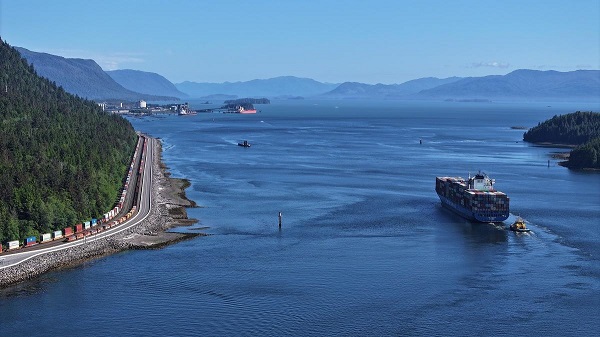
Why it’s time to repeal the oil tanker ban on B.C.’s north coast
Alberta Provincial Police – New chief of Independent Agency Police Service
-
 Agriculture2 days ago
Canada’s supply management system is failing consumers
-
 Alberta1 day ago
Alberta uncorks new rules for liquor and cannabis
-
 Energy20 hours ago
B.C. Residents File Competition Bureau Complaint Against David Suzuki Foundation for Use of False Imagery in Anti-Energy Campaigns
-
 COVID-1920 hours ago
Court compels RCMP and TD Bank to hand over records related to freezing of peaceful protestor’s bank accounts
-
 Crime1 day ago
Project Sleeping Giant: Inside the Chinese Mercantile Machine Linking Beijing’s Underground Banks and the Sinaloa Cartel
-
 International1 day ago
Trump transportation secretary tells governors to remove ‘rainbow crosswalks’
-
 Alberta23 hours ago
Alberta Next: Alberta Pension Plan
-
 C2C Journal17 hours ago
Canada Desperately Needs a Baby Bump