
COVID-19
The Federal COVID-19 Economic Response Plan



From the YouTube channel of Dr John Campbell
There aren’t many people as good at explaining complex medical situations at Dr. John Campbell. That’s probably because this British Health Researcher spent his career teaching medicine to nurses.
Over the last number of years, Campbell has garnered an audience of millions of regular people who want to understand various aspects of the world of medical treatment.
In this important video Campbell explains how the new mRNA platform of vaccines can cause very serious health outcomes.
Dr. Campbell’s notes for this video:
Excess Deaths in the United Kingdom: Midazolam and Euthanasia in the COVID-19 Pandemic https://www.researchgate.net/publicat… Macro-data during the COVID-19 pandemic in the United Kingdom (UK) are shown to have significant data anomalies and inconsistencies with existing explanations. This paper shows that the UK spike in deaths, wrongly attributed to COVID-19 in April 2020, was not due to SARS-CoV-2 virus, which was largely absent, but was due to the widespread use of Midazolam injections, which were statistically very highly correlated (coefficient over 90%) with excess deaths in all regions of England during 2020. Importantly, excess deaths remained elevated following mass vaccination in 2021, but were statistically uncorrelated to COVID injections, while remaining significantly correlated to Midazolam injections. The widespread and persistent use of Midazolam in UK suggests a possible policy of systemic euthanasia. Unlike Australia, where assessing the statistical impact of COVID injections on excess deaths is relatively straightforward, UK excess deaths were closely associated with the use of Midazolam and other medical intervention. The iatrogenic pandemic in the UK was caused by euthanasia deaths from Midazolam and also, likely caused by COVID injections, but their relative impacts are difficult to measure from the data, due to causal proximity of euthanasia. Global investigations of COVID-19 epidemiology, based only on the relative impacts of COVID disease and vaccination, may be inaccurate, due to the neglect of significant confounding factors in some countries. Graphs April 2020, 98.8% increase 43,796 January 2021, 29.2% increase 16,546 Therefore covid is very dangerous, This interpretation, which is disputable, justified politically the declaration of emergency and all public health measures, including masking, lockdowns, etc. Excess deaths and erroneous conclusions 2020, 76,000 2021, 54,000 2022, 45,000 This evidence of “vaccine effectiveness” was illusory, due to incorrect attribution of the 2020 death spike. PS Despite advances in modern information technology, the accuracy of data collection has not advanced in the United Kingdom for over 150 years, because the same problems of erroneous data entry found then are still found now in the COVID pandemic, not only in the UK but all over the world. We have independently discovered the same UK data problem and solution for assessing COVID-19 vaccination as Alfred Russel Wallace had 150 years ago in investigating the consequences of Vaccination Acts starting in 1840 on smallpox: The Alfred Russel Wallace as used by Wilson Sy “Having thus cleared away the mass of doubtful or erroneous statistics, depending on comparisons of the vaccinated and unvaccinated in limited areas or selected groups of patients, we turn to the only really important evidence, those ‘masses of national experience’…” https://archive.org/details/b21356336… Alfred Russel Wallace, 1880s–1890s 1840 Vaccination Act Provided free smallpox vaccination to the poor Banned variolation Vaccination compulsory in 1853, 1867 Why his interest? C 1885 The Leicester Anti-Vaccination demonstrations (1885) Growing public resistance to compulsory vaccination Wallace’s increasing involvement in social reform and statistical arguments Statistical critique of vaccination Government data on: Smallpox mortality trends before and after compulsory vaccination Case mortality rates Vaccination vs. sanitation effects Mortality trends before and after each Act, 1853 and 1867 “Forty-Five Years of Registration Statistics, Proving Vaccination to Be Both Useless and Dangerous” (1885) “Vaccination a Delusion; Its Penal Enforcement a Crime” (1898) Contributions to the Royal Commission on Vaccination (1890–1896) Wallace argued: Declining smallpox mortality was due to improved sanitation, not vaccination Official statistics were misinterpreted or biased Compulsory vaccination was unjust Re-vaccination did not reliably prevent outbreaks These views were strongly disputed, then and now. Wallace had a strong distrust of medical authority He and believed in: Statistical reasoning Social reform Opposition to coercive government measures The primacy of environmental and sanitary conditions in health
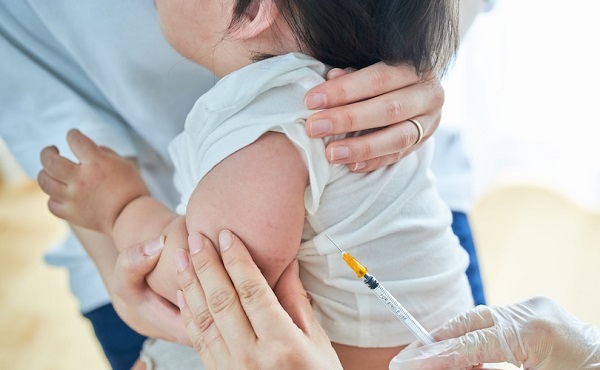
From LifeSiteNews
“This is a profound revelation. For the first time, the US FDA will acknowledge that COVID-19 vaccines have killed American children”
At least 10 children have died because of the COVID shots, according to a recently publicized email from Trump Food and Drug Administration (FDA) officials.
“At least 10 children have died after and because of receiving COVID-19 vaccination,” FDA Chief Medical Officer Vinay Prasad wrote on Friday in an email to staff, obtained by The Daily Caller.
“This is a profound revelation. For the first time, the US FDA will acknowledge that COVID-19 vaccines have killed American children,” Prasad said in the memo.
The finding corroborates that of the Centers for Disease Control and Prevention (CDC), which recently linked at least 25 pediatric deaths to the COVID shot, via information from the Vaccine Adverse Event Reporting System (VAERS). Both counts likely significantly underestimate the real number of pediatric deaths from the shots, considering that studies have found vaccine injuries have been seriously underreported to VAERS.
In his Friday memo, Prasad ripped the Biden administration for pressuring the injection of these experimental mRNA shots into children.
“Healthy young children who faced tremendously low risk of death were coerced, at the behest of the Biden administration, via school and work mandates, to receive a vaccine that could result in death,” wrote Prasad.
“In many cases, such mandates were harmful. It is difficult to read cases where kids aged 7 to 16 may be dead as a result of covid vaccines.”
The disturbing admission by the Trump administration’s health agency highlights the silence of the Biden administration about these deaths and raises further questions about its integrity or lack thereof.
“Why did it take until 2025 to perform this analysis, and take necessary further actions? Deaths were reported between 2021 and 2024, and ignored for years,” wrote Prasad. He acknowledged that the vaccines potentially killed more children on balance, considering that they had virtually no risk of dying from COVID.
“The truth is we do not know if we saved lives on balance,” he wrote. “It is horrifying to consider that the US vaccine regulation, including our actions, may have harmed more children than we saved. This requires humility and introspection.”
The Center for Biologics Evaluation and Research (CBER) will reportedly strengthen its safety protocols for vaccines, including by requiring more clinical trials as opposed to relying on antibody laboratory studies, modifying the annual flu vaccine release, and examining the effect of administering multiple vaccines in one round.
This year, the CDC removed COVID shots from its recommended “vaccines” for healthy children. A CDC panel had voted in 2022 to add the COVID shots to the childhood immunization schedule despite their experimental nature and the fact that they were produced in a fraction of the time ordinarily required to bring a vaccine to market.
The push for COVID shots for children was spearheaded at least in part by CBER Director Peter Marks, who pushed for full approval of the COVID shots even for the young and healthy and laid the foundation for COVID shot mandates.
A large, growing body of evidence shows that the mRNA shots were dangerous to human health in a wide variety of ways and caused deaths at a rate far exceeding usual safety standards for vaccines. As Dr. Mary Talley Bowden, an ear, nose and throat specialist in Houston, Texas, explained to Tucker Carlson in April:
Normally, the FDA will put a black box warning on a medication if there have been five deaths. They will pull it off the market if there have been 50. Well, according to VAERS, (the) Vaccine Adverse Event Reporting System – and it’s vastly under-reported, which I have seen firsthand – there have been 38,000 deaths from these COVID shots.
That number has since increased, according to VAERS, which now reports 38,773 deaths, 221,257 hospitalizations, 22,362 heart attacks, and 29,012 cases of myocarditis and pericarditis due to the COVID shot as of August 29, among other ailments.


From Underdog to Top Broodmare

Poilievre says West Coast Pipeline MOU is no guarantee

Will the New West Coast Pipeline MoU Lead to Results? Almost Certainly Not According to AI
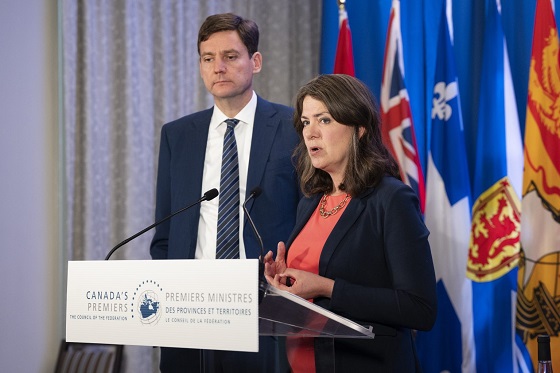
West Coast Pipeline MOU: A good first step, but project dead on arrival without Eby’s assent
-
 Daily Caller1 day ago
John Kerry Lurches Back Onto Global Stage For One Final Gasp
-
 Food16 hours ago
Canada Still Serves Up Food Dyes The FDA Has Banned
-
 National1 day ago
Eco-radical Canadian Cabinet minister resigns after oil deal approved
-
 Addictions16 hours ago
Manitoba Is Doubling Down On A Failed Drug Policy
-
 Alberta16 hours ago
Net Zero goal is a fundamental flaw in the Ottawa-Alberta MOU
-
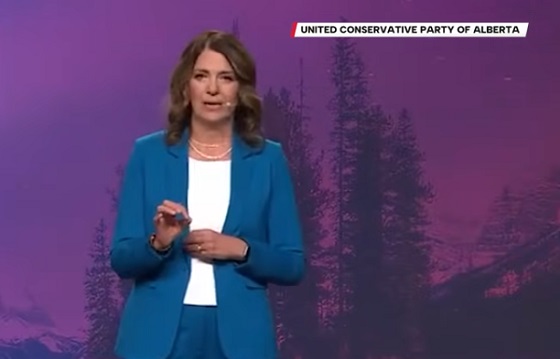 Alberta11 hours ago
Keynote address of Premier Danielle Smith at 2025 UCP AGM
-
COVID-1916 hours ago
FDA says COVID shots ‘killed’ at least 10 children, promises new vaccine safeguards
-
 National2 days ago
Alleged Liberal vote-buying scandal lays bare election vulnerabilities Canada refuses to fix