
Alberta
Red Deer South UCP constituency board member resigns in response to COVID-19 restrictions


A political firestorm is brewing in Alberta. The province’s response to COVID-19 is leading to a growing rift amongst members of Alberta’s UCP. In an effort to slow the spread of COVID the government’s approach has been to protect hospitals by limiting interactions between people. This has lead to thousands of job losses and months of painful uncertainty for small business owners. Increasingly, individual UCP politicians and Constituency Associations are calling on the Premier to take a new direction. They want the province to shift focus to provide comfortable quarantine sites for vulnerable citizens and the people who work with them, while the rest of Alberta returns to normal. In an effort to protect the fragile economy, a number of constituency associations are considering their strongest possible move. They’re deciding whether they should call for a leadership review which would be a direct challenge to Premier Jason Kenney.
In Central Alberta, Calvin Goulet-Jones a member of the Red Deer South UCP Board has resigned. In his resignation letter (below) Goulet-Jones says the UCP has abandoned the core principals which brought conservatives from different parties together. Janis Nett, President of the Red Deer South UCP Board says other members of the board support the decision Goulet-Jones has made, but they also support Red Deer South MLA Jason Stephan and the party. Nett says remaining board members are hoping a change in direction can be accomplished without fracturing conservatives into two more more parties in the next provincial election. The Red Deer South Constituency Association meets later this week and a discussion about how best to convince party leadership to change direction will be on the agenda.
Below is a post from the Facebook page of former Red Deer South Constituency Association board member Calvin Goulet-Jones.
Here is an excerpt of the my resignation letter to the local UCP board. I share this as a reminder of what the UCP was built on. For context, the content within the letter is relevant to the end of January. Please also note that this was not an admonishment of local board members, but a recognition that I can no longer be involved at this time for the reasons I state below.
It is no secret that times have changed and I strongly believe we have lost sight of the principles I feel we all hold dear. I am saddened when I look at the core principles that the UCP was built upon. I am saddened because it is so evident that the UCP has abandoned their foundation. They are no longer the party that Albertans elected.
Let me elaborate on the principles the UCP was built upon and where we find ourselves today.
Principle 1 – A robust civil society made up of free individuals, strong families, and voluntary associations.
We live in an era right now where individuals are not free. In fact, we live in an era where the freedom to earn an income is fined, where putting in an honest day’s work to put food on the table results in intimidation and strong families are being weakened as a result. This may not affect you, but it affects our society. When freedom is taken away from one individual it is taken away from all of us. Our society is neither robust, nor is it civil. In fact, it can be argued it is breaking down at the hands of our government.
Principle 2 – Freedom of speech, worship and assembly.
No one can take away the freedom to worship, including the government, however they certainly can put a major damper on it. Our government has intimidated and bullied churches severely beyond what could ever be deemed reasonable. Not only in Alberta but across this country the freedom to corporately worship has been taken away. The point is that this is a core principle of the UCP and the government seems to have not given it a second thought.
Principle 3 – Affirm the family as the building block of society and the means by which citizens pass on their values and beliefs and ensure that families are protected from intrusion by government.
The family is the building block of society, meanwhile families are suffering and children are bearing the brunt of the governments decisions. While the child help line has received an unprecedented amount of calls for help our government applies bandaids. This government is deconstructing the building block of society, mental health issues are rampant, and they have shifted the burden of covid and placed it upon the most vulnerable: Our children. They are affected by the very specific decisions that the government makes more than they will ever know.
Furthermore, the government’s logic is beyond reason. To say that a loved one may babysit your kids but that same loved one may not stay for dinner is absurd. To impose a fine to an individual who is struggling with loneliness and needs familiar company, yet allow a contractor to enter homes is mean spirited. I can go on, but I cannot imagine anyone can truly say that this government is busy ensuring that individuals are protected by the intrusion of government.
Principle 4 – Economic freedom in a market economy which encourages the creation of wealth through free enterprise, and protection of the right to own, enjoy and exchange property.
This government has shut down businesses and are bankrupting the individuals who own them. What’s more, this government has taken it further and has called those people who are soon to be homeless ‘selfish’. Alluding to the idea that they are greedy for wanting to earn an income. I find it very sad that the UCP has abandoned this principle as it is cornerstone policy that the UCP was built on. Free markets and private sector job creation. Instead, the UCP continues to actively work towards shutting small businesses down.
Principle 5 – Limited government, including low levels of taxation to help generate economic growth while allowing Albertans to enjoy the fruits of their own labour.
This government has given itself an unprecedented amount of power to intervene in any and every situation it deems fit. This is not limited government. The UCP speaks of low taxation while putting in policies that result in businesses and individuals earning a pittance. This government has literally made it a crime for certain people in our society to enjoy the fruits of their own labour by threatening fines and threatening prison.
Principle 6 – Fiscal responsibility, including balanced budgets, debt reduction, and respect for taxpayers’ money
The government has stifled growth and has ballooned debt. There was a reasonable point (back in March/April) where I can understand some of the decisions that were made. No one, including the government knew what was going on. We are well beyond that point though, yet the government continues to double down. Balanced budgets are a thing of fantasy, and we seem to live in a dream world that Trudeau himself would be proud of – that the government has an endless amount of money.
Principle 7 – Protecting public safety as a primary responsibility of government.
“Two Weeks to bend the curve.” “Stay home, stay safe.” “We are all in this together.” Three catch phrases used by our government to convince the public that abandoning your principles is worth it. Instead, this government is creating a never seen before amount of unrest. People are not happy. People are losing their homes and becoming desperate. It would be easy to say that this is because of the virus, but it is not. It is because of the specific decisions that our government is making.


From the Fraser Institute
By Nadeem Esmail, Mackenzie Moir and Lauren Asaad
In October, Alberta’s provincial government announced forthcoming legislative changes that will allow patients to pay out-of-pocket for any diagnostic test they want, and without a physician referral. The policy, according to the Smith government, is designed to help improve the availability of preventative care and increase testing capacity by attracting additional private sector investment in diagnostic technology and facilities.
Unsurprisingly, the policy has attracted Ottawa’s attention, with discussions now taking place around the details of the proposed changes and whether this proposal is deemed to be in line with the Canada Health Act (CHA) and the federal government’s interpretations. A determination that it is not, will have both political consequences by being labeled “non-compliant” and financial consequences for the province through reductions to its Canada Health Transfer (CHT) in coming years.
This raises an interesting question: While the ultimate decision rests with Ottawa, does the Smith government’s new policy comply with the literal text of the CHA and the revised rules released in written federal interpretations?
According to the CHA, when a patient pays out of pocket for a medically necessary and insured physician or hospital (including diagnostic procedures) service, the federal health minister shall reduce the CHT on a dollar-for-dollar basis matching the amount charged to patients. In 2018, Ottawa introduced the Diagnostic Services Policy (DSP), which clarified that the insured status of a diagnostic service does not change when it’s offered inside a private clinic as opposed to a hospital. As a result, any levying of patient charges for medically necessary diagnostic tests are considered a violation of the CHA.
Ottawa has been no slouch in wielding this new policy, deducting some $76.5 million from transfers to seven provinces in 2023 and another $72.4 million in 2024. Deductions for Alberta, based on Health Canada’s estimates of patient charges, totaled some $34 million over those two years.
Alberta has been paid back some of those dollars under the new Reimbursement Program introduced in 2018, which created a pathway for provinces to be paid back some or all of the transfers previously withheld on a dollar-for-dollar basis by Ottawa for CHA infractions. The Reimbursement Program requires provinces to resolve the circumstances which led to patient charges for medically necessary services, including filing a Reimbursement Action Plan for doing so developed in concert with Health Canada. In total, Alberta was reimbursed $20.5 million after Health Canada determined the provincial government had “successfully” implemented elements of its approved plan.
Perhaps in response to the risk of further deductions, or taking a lesson from the Reimbursement Action Plan accepted by Health Canada, the province has gone out of its way to make clear that these new privately funded scans will be self-referred, that any patient paying for tests privately will be reimbursed if that test reveals a serious or life-threatening condition, and that physician referred tests will continue to be provided within the public system and be given priority in both public and private facilities.
Indeed, the provincial government has stated they do not expect to lose additional federal health care transfers under this new policy, based on their success in arguing back previous deductions.
This is where language matters: Health Canada in their latest CHA annual report specifically states the “medical necessity” of any diagnostic test is “determined when a patient receives a referral or requisition from a medical practitioner.” According to the logic of Ottawa’s own stated policy, an unreferred test should, in theory, be no longer considered one that is medically necessary or needs to be insured and thus could be paid for privately.
It would appear then that allowing private purchase of services not referred by physicians does pass the written standard for CHA compliance, including compliance with the latest federal interpretation for diagnostic services.
But of course, there is no actual certainty here. The federal government of the day maintains sole and final authority for interpretation of the CHA and is free to revise and adjust interpretations at any time it sees fit in response to provincial health policy innovations. So while the letter of the CHA appears to have been met, there is still a very real possibility that Alberta will be found to have violated the Act and its interpretations regardless.
In the end, no one really knows with any certainty if a policy change will be deemed by Ottawa to run afoul of the CHA. On the one hand, the provincial government seems to have set the rules around private purchase deliberately and narrowly to avoid a clear violation of federal requirements as they are currently written. On the other hand, Health Canada’s attention has been aroused and they are now “engaging” with officials from Alberta to “better understand” the new policy, leaving open the possibility that the rules of the game may change once again. And even then, a decision that the policy is permissible today is not permanent and can be reversed by the federal government tomorrow if its interpretive whims shift again.
The sad reality of the provincial-federal health-care relationship in Canada is that it has no fixed rules. Indeed, it may be pointless to ask whether a policy will be CHA compliant before Ottawa decides whether or not it is. But it can be said, at least for now, that the Smith government’s new privately paid diagnostic testing policy appears to have met the currently written standard for CHA compliance.

Nadeem Esmail

Mackenzie Moir

Lauren Asaad
Policy Analyst, Fraser Institute

From the Fraser Institute
By Tegan Hill and Austin Thompson
In cities across the country, modest homes have become unaffordable for typical families. Calgary and Edmonton have not been immune to this trend, but they’ve weathered it better than most—largely by making it easier to build homes.
Specifically, faster permit approvals, lower municipal fees and fewer restrictions on homebuilders have helped both cities maintain an affordability edge in an era of runaway prices. To preserve that edge, they must stick with—and strengthen—their pro-growth approach.
First, the bad news. Buying a home remains a formidable challenge for many families in Calgary and Edmonton.
For example, in 2023 (the latest year of available data), a typical family earning the local median after-tax income—$73,420 in Calgary and $70,650 in Edmonton—had to save the equivalent of 17.5 months of income in Calgary ($107,300) or 12.5 months in Edmonton ($73,820) for a 20 per cent down payment on a typical home (single-detached house, semi-detached unit or condominium).
Even after managing such a substantial down payment, the financial strain would continue. Mortgage payments on the remaining 80 per cent of the home’s price would have required a large—and financially risky—share of the family’s after-tax income: 45.1 per cent in Calgary (about $2,757 per month) and 32.2 per cent in Edmonton (about $1,897 per month).
Clearly, unless the typical family already owns property or receives help from family, buying a typical home is extremely challenging. And yet, housing in Calgary and Edmonton remains far more affordable than in most other Canadian cities.
In 2023, out of 36 major Canadian cities, Edmonton and Calgary ranked 8th and 14th, respectively, for housing affordability (relative to the median after-tax family income). That’s a marked improvement from a decade earlier in 2014 when Edmonton ranked 20th and Calgary ranked 30th. And from 2014 to 2023, Edmonton was one of only four Canadian cities where median after-tax family income grew faster than the price of a typical home (in Calgary, home prices rose faster than incomes but by much less than in most Canadian cities). As a result, in 2023 typical homes in Edmonton cost about half as much (again, relative to the local median after-tax family income) as in mid-sized cities such as Windsor and Kelowna—and roughly one-third as much as in Toronto and Vancouver.
To be clear, much of Calgary and Edmonton’s improved rank in affordability is due to other cities becoming less and less affordable. Indeed, mortgage payments (as a share of local after-tax median income) also increased since 2014 in both Calgary and Edmonton.
But the relative success of Alberta’s two largest cities shows what’s possible when you prioritize homebuilding. Their approach—lower municipal fees, faster permit approvals and fewer building restrictions—has made it easier to build homes and helped contain costs for homebuyers. In fact, homebuilding has been accelerating in Calgary and Edmonton, in contrast to a sharp contraction in Vancouver and Toronto. That’s a boon to Albertans who’ve been spared the worst excesses of the national housing crisis. It’s also a demographic and economic boost for the province as residents from across Canada move to Alberta to take advantage of the housing market—in stark contrast to the experience of British Columbia and Ontario, which are hemorrhaging residents.
Alberta’s big cities have shown that when governments let homebuilders build, families benefit. To keep that advantage, policymakers in Calgary and Edmonton must stay the course.

Tegan Hill
Director, Alberta Policy, Fraser Institute

Austin Thompson
Senior Policy Analyst, Fraser Institute


Argentina’s Milei delivers results free-market critics said wouldn’t work

‘Almost Sounds Made Up’: Jeffrey Epstein Was Bill Clinton Plus-One At Moroccan King’s Wedding, Per Report
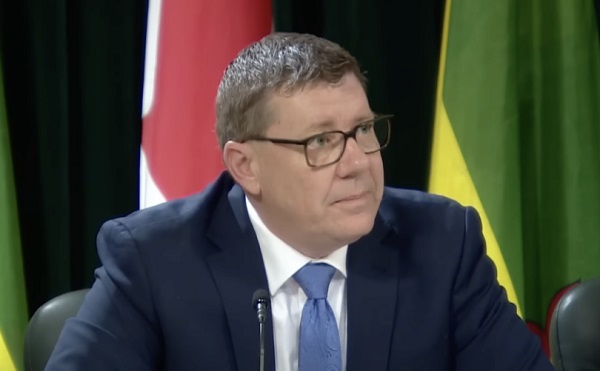
Saskatchewan woman approved for euthanasia urged to seek medical help in Canada rather than US

Danielle Smith slams Skate Canada for stopping events in Alberta over ban on men in women’s sports
-
Business2 days ago
Argentina’s Milei delivers results free-market critics said wouldn’t work
-
 espionage1 day ago
Carney Floor Crossing Raises Counterintelligence Questions aimed at China, Former Senior Mountie Argues
-
 Health18 hours ago
FDA warns ‘breast binder’ manufacturers to stop marketing to gender-confused girls
-
 Daily Caller17 hours ago
Trump Reportedly Escalates Pressure On Venezuela With Another Oil Tanker Seizure
-
 Business1 day ago
Taxing food is like slapping a surcharge on hunger. It needs to end
-
 Energy1 day ago
75 per cent of Canadians support the construction of new pipelines to the East Coast and British Columbia
-
 Business2 days ago
Deadlocked Jury Zeroes In on Alleged US$40 Million PPE Fraud in Linda Sun PRC Influence Case
-
 Health24 hours ago
All 12 Vaccinated vs. Unvaccinated Studies Found the Same Thing: Unvaccinated Children Are Far Healthier