
Business
Parliamentary Budget Officer shows bigger hole in federal budget

From the Canadian Taxpayers Federation
Author: Franco Terrazzano
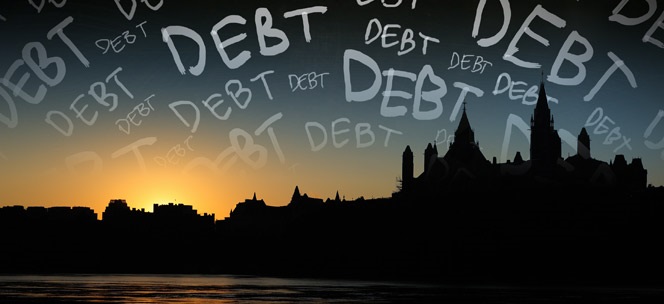
The Canadian Taxpayers Federation is calling on the federal government to immediately cut spending following the Parliamentary Budget Officer’s report showing the deficit already way over budget.
“As bad as the budget was, the independent budget watchdog is showing that federal finances are in even worse shape,” said Franco Terrazzano, CTF Federal Director. “The Trudeau government continues to mismanage our finances and that means more money wasted on interest charges, higher cost of living and more debt that Canadians’ kids and grandkids will have to pay back.”
The PBO’s October 2023 Economic and Fiscal Outlook shows this year’s deficit is expected to increase to $46.5 billion. That’s up from Budget 2023’s projected deficit of $40.1 billion.
The federal debt is expected to surpass $1.2 trillion this year, according to the PBO. The debt-to-GDP ratio is increasing to 42.6 per cent, despite Finance Minister Chrystia Freeland saying, “We are absolutely determined that our debt-to-GDP ratio must continue to decline.”

“The feds have already blown through their budgeted deficit projection by more than $6 billion and we’re only halfway through the budget year,” Terrazzano said. “And the government’s been solemnly signalling the bond rating agencies that it would get the debt-to-GDP ratio going down, but the PBO shows it’s going up.”
Interest on federal government debt will cost taxpayers $46.4 billion this year.
In its last budget, the government said it would find “savings of $15.4 billion over the next five years.” However, the PBO report shows the government announced “$28.6 billion in (net) new spending over 2022-23 to 2027-28.”
“Interest charges on the government’s credit card will cost taxpayers almost $4 billion every single month,” Terrazzano said. “That’s billions of dollars every month that can’t go to fixing potholes or lowering taxes because it’s going to the bond fund managers on bay street.
“Prime Minister Justin Trudeau must put down the credit card and pick up some scissors.”


From the Fraser Institute
By Callum MacLeod and Jake Fuss
The only taxes corporations face are on profits they distribute to shareholders. This allows the profits of Estonian firms to be reinvested tax-free permitting higher returns for entrepreneurs.
A new study found that the current decline in living standards is one of the worst in Canada’s recent history. While the economy has grown, it hasn’t kept pace with Canada’s surging population, which means gross domestic product (GDP) per person is on a downward trajectory. Carolyn Rogers, senior deputy governor of the Bank of Canada, points to Canada’s productivity crisis as one of the primary reasons for this stagnation.
Productivity is a key economic indicator that measures how much output workers produce per hour of work. Rising productivity is associated with higher wages and greater standards of living, but growth in Canadian productivity has been sluggish: from 2002 to 2022 American productivity grew 160 per cent faster than Canadian productivity.
While Canada’s productivity issues are multifaceted, Rogers pointed to several sources of the problem in a recent speech. Primarily, she highlighted strong business investment as an imperative to productivity growth, and an area in which Canada has continually fallen short. There is no silver bullet to revive faltering investment, but tax reform would be a good start. Taxes can have a significant effect on business incentives and investment, but Canada’s tax system has largely stood in the way of economic progress.
With recent hikes in the capital gains tax rate and sky-high compliance costs, Canada’s taxes continue to hinder its growth. Canada’s primary competitor is the United States, which has considerably lower tax rates. Canada’s rates on personal income and businesses are similarly uncompetitive when compared to other advanced economies around the globe. Uncompetitive taxes in Canada prompt investment, businesses, and workers to relocate to jurisdictions with lower taxes.
The country of Estonia offers one of the best models for tax reform. The small Baltic state has a unique tax system that puts it at the top of the Tax Foundation’s tax competitiveness index. Estonia has lower effective tax rates than Canada—so it doesn’t discourage work the way Canada does—but more interestingly, its business tax model doesn’t punish investment the way Canada’s does.

Their business tax system is a distributed profits tax system, meaning that the only taxes corporations face are on profits they distribute to shareholders. This allows the profits of Estonian firms to be reinvested tax-free permitting higher returns for entrepreneurs.
The demand for investment is especially strong for capital-intensive companies such as information, communications, and technology (ICT) enterprises, which are some of the most productive in today’s economy. A Bank of Canada report highlighted the lack of ICT investment as a major contributor to Canada’s sluggish growth in the 21st century.
While investment is important, another ingredient to economic growth is entrepreneurship. Estonia’s tax system ensures entrepreneurs are rewarded for success and the result is that Estonians start significantly more businesses than Canadians. In 2023, for every 1,000 people, Estonia had 17.8 business startups, while Canada had only 4.9. This trend is even worse for ICT companies, Estonians start 45 times more ICT businesses than Canadians on a per capita basis.
The Global Entrepreneurship Monitor’s (GEM) 2023/24 report on entrepreneurship confirms that a large part of this difference comes from government policy and taxation. Canada ranked below Estonia on all 13 metrics of the Entrepreneurial Framework. Notably, Estonia scored above Canada when taxes, bureaucracy, burdens and regulation were measured.
While there’s no easy solution to Canada’s productivity crisis, a better tax regime wouldn’t penalize investment and entrepreneurship as much as our current system does. This would allow Canadians to be more productive, ultimately improving living standards. Estonia’s business tax system is a good example of how to promote economic growth. Examples of successful tax structures, such as Estonia’s, should prompt a conversation about how Canadian governments could improve economic outcomes for citizens.
Authors:

From the Fraser Institute
Business investment in the extraction sector (again, excluding residential structures and adjusted for inflation) has declined from $101.9 billion to $49.7 billion, a reduction of 51.2 per cent
Canada has a business investment problem, and it’s serious. Total business investment (inflation-adjusted, excluding residential construction) declined by 7.3 per cent between 2014 and 2022. The decline in business investment in the extractive sector (mining, quarrying, oil and gas) is even more pronounced.
During that period, business investment in the extraction sector (again, excluding residential structures and adjusted for inflation) has declined from $101.9 billion to $49.7 billion, a reduction of 51.2 per cent. In fact, from 2014 to 2022, declines in the extraction sector are larger than the total decline in overall non-residential business investment.
That’s very bad. Now why is this happening?
One factor is the heavy regulatory burden imposed on Canadian business, particularly in the extraction sector. How do we know that proliferating regulations, and concerns over regulatory uncertainty, deter investment in the mining, quarrying and oil and gas sectors? Because senior executives in these industries tell us virtually every year in a survey, which helps us understand the investment attractiveness of jurisdictions across Canada.
And Canada has seen an onslaught of investment-repelling regulations over the past decade, particularly in the oil and gas sector. For example, the Trudeau government in 2019 gave us Bill C-69, also known as the “no new pipelines” bill, which amended and introduced federal acts to overhaul the governmental review process for approving major infrastructure projects. The changes were heavily criticized for prolonging the already lengthy approval process, increasing uncertainty, and further politicizing the process.

In 2019, Ottawa also gave us Bill C-48, the “no tankers” bill, which changed regulations for vessels transporting oil to and from ports on British Columbia’s northern coast, effectively banning such shipments and thus limiting the ability of Canadian firms to export. More recently, the government has introduced a hard cap on greenhouse gas emissions coming from the oil and gas sector, and new fuel regulations that will drive up fuel costs.
And last year, with limited consultation with industry or the provinces, the Trudeau government announced major new regulations for methane emissions in the oil and gas sector, which will almost inevitably raise costs and curtail production.
Clearly, Canada badly needs regulatory reform to stem the flood of ever more onerous new regulations on our businesses, to trim back gratuitous regulations from previous generations of regulators, and lower the regulatory burden that has Canada’s economy labouring.
One approach to regulatory reform could be to impose “regulatory cap and trade” on regulators. This approach would establish a declining cap on the number of regulations that government can promulgate each year, with a requirement that new regulations be “traded” for existing regulations that impose similar economic burdens on the regulated community. Regulatory cap-and-trade of this sort showed success at paring regulations in a 2001 regulatory reform effort in B.C.
The urgency of regulatory reform in Canada can only be heightened by the recent United States Supreme Court decision to overturn what was called “Chevron Deference,” which gave regulators powers to regulate well beyond the express intent of Congressional legislation. Removing Chevron Deterrence will likely send a lot of U.S. regulations back to the drawing board, as lawsuits pour in challenging their legitimacy. This will impose regulatory reform in and of itself, and will likely make the U.S. regulatory system even more competitive than Canada.
If policymakers want to make Canada more competitive and unshackle our economy, they must cut the red tape, and quickly.
Author:



Secret Service Director Kimberly Cheatle resigns after major backlash over Trump assassination attempt

Scotia Place – Calgary unveils design for new arena / events centre
Liberals offer no response as Conservative MP calls Trudeau a ‘liar’ for an hour straight

Employee wins lawsuit filed by gov’t agency after losing job for refusing COVID shot
-
National1 day ago
Liberals offer no response as Conservative MP calls Trudeau a ‘liar’ for an hour straight
-
 COVID-191 day ago
Leaked documents: German gov’t lied about shots preventing COVID, knew lockdowns did more harm than good
-
 Economy1 day ago
Kamala Harris’ Energy Policy Catalog Is Full Of Whoppers
-
 International1 day ago
Switzerland’s new portable suicide ‘pod’ set to claim its first life ‘soon’
-
Business1 day ago
Federal government seems committed to killing investment in Canada
-
 International20 hours ago
House Passes Bipartisan Resolution Establishing Trump Assassination Attempt Task Force
-
 Crime10 hours ago
Everything you need to know about the failed assassination attempt of Donald Trump
-
 Alberta1 day ago
‘Fireworks’ As Defence Opens Case In Coutts Two Trial