
Opinion
One of the world’s leading progressives says “I’m out”


This is a compelling read because of the insight but it’s even more remarkable considering the author. Michael Schellenberger not only founded and lead “Environmental Progress“, he was an Invited IPCC Reviewer and was named by Time Magazine “Hero of Environment”. Schellenberger is still a leading environmentalist, but his views have changed significantly over the years as he’s become disillusioned with the movement.
Michael Shellenberger is author of the best-selling “Apocalypse Never”
This newsletter was sent out to Michael Schellenberger’s subscribers on Substack

Why I Am Not A Progressive
And Why, From Climate Change to Homelessness, Liberal People Are Giving Up
For all of my adult life I have identified as a progressive. To me, being a progressive meant that I believed in empowerment. In 2002, when I co-founded a labor-environmental coalition to advocate for renewable energy, the symbol we chose to represent us was of Rosie the Riveter, an image of a woman factory worker during World War II flexing her muscle beneath the words, “We Can Do It!”. When President Barack Obama ran for office in 2008, it seemed fitting to me that he chose the slogan, “Yes we can!”
But now, on all the major issues of the day, the message from progressives is “No, you can’t.” No: poor nations like Bangladesh can’t adapt to climate change by becoming rich, insist progressives; rather, rich nations must become poor. No: we can’t prevent the staggering rise of drug deaths in the U.S., from 17,000 in 2000 to 93,000 in 2020, by helping people free themselves from addiction; rather, we must instead provide Safe Injection Sites and Safe Sleeping Sites, in downtown neighborhoods, where homeless addicts can use fentanyl, heroin, and meth safely.
Progressives insist they are offering hope. Many scientists and activists yesterday said that, while we have gone past the point of no return, when it comes to climate change, and that “No one is safe,” we can make the situation less bad by using solar panels, windmills, and electric cars, albeit at a very high cost to the economy. And in California, progressive leaders say that we just need to stick with the progressive agenda of Safe Injection Sites and Safe Sleeping Sites until we can build enough single unit apartments for the state’s 116,000 unsheltered homeless, most of whom are either addicted to hard drugs, suffering from untreated mental illness, or both.
But progressives are talking out of both sides of their mouth. Yesterday I debated a British climate scientist named Richard Betts on television. After I pointed out that he and his colleagues had contributed to one out of four British children having nightmares about climate change he insisted that he was all for optimism and that he agreed with me about nuclear power. But just hours earlier he had told the Guardian that we were “hopelessly unprepared” for extreme weather events, even though deaths from natural disasters are at an all time low and that, objectively speaking, humankind has never been more prepared than we are today.
And on the drug deaths crisis, the consensus view among Democrats in Sacramento is that “the problem is fundamentally unsolvable,” according to one of the Capitol’s leading lobbyists. Facing a recall that is growing in popularity, Governor Gavin Newsom yesterday tried to demonstrate that he believes he can solve the problem. He came to Berkeley California and cleaned up garbage created by an open air drug scene (“homeless encampment”) underneath a freeway underpass. A reporter for Politicoposted a picture of Newsom who he said was “looking tired, sweaty and dirty.” But a commenter noted that the video was shot at 12:12 pm and by 12:25 pm Newsom was holding a press conference. The governor hadn’t even bothered changing out of his Hush Puppies into work boots. People close to the governor say that it is Newsom himself who believes homelessness is a problem that cannot be solved.
The reason progressives believe that “No one is safe,” when it comes to climate change, and that the drug death “homelessness” crisis is unsolvable, is because they are in the grip of a victim ideology characterized by safetyism, learned helplessness, and disempowerment. This isn’t really that new. Since the 1960s, the New Left has argued that we can’t solve any of our major problems until we overthrow our racist, sexist, and capitalistic system. But for most of my life, up through the election of Obama, there was still a New Deal, “Yes we can!,” and “We can do it!” optimism that sat side-by-side with the New Left’s fundamentally disempowering critique of the system.
That’s all gone. On climate change, drug deaths, and cultural issues like racism, the message from progressives is that we are doomed unless we dismantle the institutions responsible for our oppressive, racist system. Those of us in Generation X who were raised to believe that racism was something we could overcome have been told in no uncertain terms that we were wrong. Racism is baked into our cultural DNA. Even apparently positive progressive proposals are aimed at fundamentally dismantling institutions. The Democrats’ $1 trillion infrastructure bill, supported by many Republicans, and their $3.5 trillion budget proposal, contain measures that would finance the continuing degradation of our electrical grids by increasing reliance on unreliable, weather-dependent renewables, and establish racial incentives for industries including trucking, where there is already a shortage of drivers in large measure because not enough of them can pass drug tests. And does anyone really believe that, if those bills pass, progressives will abandon their dark vision of the future and return to Rosie the Riveter?
Meanwhile, at the state and local level, progressive governments faced with worsening racial disparities in education and crime, are attempting to “solve” the problem by eliminating academic standards altogether, and advocating selective enforcement of laws based on who is committing them. Such measures are profoundly cynical. Progressives are effectively giving up on addressing racial disparities by ignoring them. But such is the logical outcome of victim ideology, which holds that we can divide the world into victims and oppressors, that victims are morally superior and even spiritual, and no change is possible until the system that produces victims and oppressors is overthrown.
To some extent none of this is new. After World War II, it was progressives, not conservatives, who led the charge to replace mental hospitals with community-based care. After the community-based care system fell apart, and severely mentally ill people ended up living on the street, addicted to drugs and alcohol, progressives blamed Reagan and Republicans for cutting the budget. But progressive California today spends more than any other state, per capita, on mental health, and yet the number of homeless, many of whom are mentally ill and suffering addiction, increased by 31% in California since 2010 even as they declined by 18 percent in the rest of the US.
Also after World War II, it was progressives, not conservatives, who insisted that the world was coming to an end because too many babies were being born, and because of nuclear energy. The “population bomb” meant that too many people would result in resource scarcity which would result in international conflicts and eventually nuclear war. We were helpless to prevent the situation through technological change and instead had to prevent people from having children and rid the world of nuclear weapons and energy. It took the end of the Cold War, and the overwhelming evidence that parents in poor nations chose to have fewer children, as parents in rich nations had before them, where they no longer needed them to work on the farm, for the discourse to finally fade.

But the will-to-apocalypse only grew stronger. After it became clear that the planet was warming, not cooling, as many scientists had previously feared, opportunistic New Left progressives insisted that climate change would be world-ending. There was never much reason to believe this. A major report by the National Academies of Science in 1982 concluded that abundant natural gas, along with nuclear power, would substitute for coal, and prevent temperatures from rising high enough to threaten civilization. But progressives responded by demonizing the authors of the study and insisting that anybody who disagreed that climate change was apocalyptic was secretly on the take from the fossil fuel industry.
Where there have been relatively straightforward fixes to societal problems, progressives have opposed them. Progressives have opposed the expanded use of natural gas and nuclear energy since the 1970s even though it was those two technologies that caused emissions to peak and decline in Germany, Britain and France during that decade. Progressive climate activists over the last 15 years hotly opposed fracking even though it was the main reason emissions in the US declined 22 percent between 2005 and 2020, which is 5 percentage points more than President Obama proposed to reduce them as part of America’s Paris climate agreement.
The same was the case when it came to drug deaths, addiction, and homelessness. People are shocked when I explain to them that the reason California still lacks enough homeless shelters is because progressives have opposed building them. Indeed, it was Governor Newsom, when he was Mayor of San Francisco, who led the charge opposing the construction of sufficient homeless shelters in favor of instead building single unit apartments for anybody who said they wanted one. While there are financial motivations for such a policy, the main motivation was ideological. Newsom and other progressives believe that simply sheltering people is immoral. The good is the enemy of the perfect.
As a result, progressives have created the apocalypse they feared. In California, there are “homeless encampments,” open drug scenes, in the parks, along the highways, and on the sidewalks. But the problem is no longer limited to San Francisco. A few days ago somebody posted a video and photo on Twitter of people in Philadelphia, high on some drug, looking exactly like Hollywood zombies. The obvious solution is to provide people with shelter, require them to use it, and mandate drug and psychiatric treatment, for people who break laws against camping, public drug use, public defecation, and other laws. But progressives insist the better solution is Safe Sleeping Sites and Safe Injection Sites.
Should we be surprised that an ideology that believes American civilization is fundamentally evil has resulted in the breakdown of that civilization? Most American progressives don’t hold such an extreme ideology. Most progressives want police for their neighborhoods. Most progressives want their own children, when suffering mental illness and addiction, to be mandated care. And most progressives want reliable electrical and water management systems for their neighborhoods.
But most progressives are also voting for candidates who are cutting the number of police for poor neighborhoods, insisting that psychiatric and drug treatment be optional, and that trillions be spent making electricity more expensive so we can harmonize with nature through solar panels made by enslaved Muslims in China, and through industrial wind projects built in the habitat of critically endangered whale species.
Does pointing all of this out make me a conservative? There are certainly things I support that many progressives view as conservative, including nuclear power, a ban on public camping, and mandating drug and psychiatric treatment for people who break the law. But other things I support might be fairly viewed as rather liberal, or even progressive, including universal psychiatric care, shelter-for-all, and the reform of police departments with the aims of reducing homicides, police violence, and improving the treatment of people with behavioral health disorders, whether from addiction or mental illness.
And there is a kind of victim ideology on the Right just as there is on the Left. It says that America is too weak and poor, and that our resources are too scarce, to take on our big challenges. On climate change it suggests that nothing of consequence can be done and that all energy sources, from coal to nuclear to solar panels, are of equal or comparable value. On drug deaths and homelessness it argues that parents must simply do a better job raising their children to not be drug addicts, and that we should lock up people, even the mentally ill, for long sentences in prisons and hospitals, with little regard for rehabilitation.
The two grassroots movements I have helped to create around energy and homelessness reject the dystopian victim ideologies of Right and Left. There are progressive and conservative members in both coalitions. But what unites us is our commitment to practical policies that are proven to work in the real world. We advocate for the maintenance and construction of nuclear plants that actually exist, or could soon exist, not futuristic reactors that likely never will. We advocate for Shelter First and Housing Earned, universal psychiatric care, and banning the open dealing of deadly drugs because those are the policies that have worked across the U.S. and around the world, and can be implemented right away.
If I had to find a word to describe the politics I am proposing it would be “heroic,” not liberal, conservative, or even moderate. We need a politics of heroism not a politics of victimhood. Yes, Bangladesh can develop and save itself from sea level rise, just as rich nations have; they are not doomed to hurricanes and flooding. Yes, people addicted to fentanyl and meth can recover from their addictions, with our help, and go on to live fulfilling and rewarding lives; they are not doomed to live in tents for the rest of their shortened lives. And yes, we can create an America where people who disagree on many things can nonetheless find common ground on the very issues that most seem to polarize us, including energy, the environment, crime, and drugs.
On October 12 HarperCollins will publish my second book in two years, San Fransicko, focused on drugs, crime, and homelessnes. It and Apocalypse Never will constitute a comprehensive proposal for saving our civilization from those who would destroy it. What both books have in common is the theme of empowerment. We are not doomed to an apocalyptic future, whether from climate change or homelessness. We can achieve nature, peace, and prosperity for all people because humans are amazing. Our civilization is sacred; we must defend and extend it.
San Fransicko was inspired, in part, by the work of the late psychiatrist, Victor Frankl, who was made famous by a book where he described how he survived the Nazi concentration camps by fixating on a positive vision for his future. During the darkest moments of Covid last year I was struck by how much my mood had improved simply by listening to his 1960s lectures on YouTube. Why, I wondered, had progressives embraced Frankl’s empowering therapy in their personal lives but demonized it in their political lives? Why had progressives, who had done so much to popularize human potential and self-help, claimed that promoting self-help in policies and politics were a form of “blaming the victim?”
Few of my conclusions will surprise anyone, though the agenda, and philosophy, that I am proposing might. It truly is a mix of values, policies, and institutions that one might consider progressive and conservative, not because I set out to make it that way, but because it was that combination that has worked so often in the past. But beyond the policies and values I propose there is a spirit of overcoming, not succumbing; of empowerment, not disempowerment; and of heroism, not victimhood. That spirit comes before, and goes beyond, political ideology and partisan identity. It says, against those who believe that America, and perhaps Western Civilization itself, are doomed: no they’re not. And to those who think we can’t solve big challenges like climate change, drug deaths, and homelessness, it says yes we can.



From StosselTV
As a presidential candidate, Donald Trump promised to “drain the swamp.” He didn’t.
Trump made government bigger. He hired new employees, doubled federal spending, and started a bunch of new programs. Now the swamp is bigger.
In our new video, Economist Ed Stringham explains the real way to drain the swamp is to cut the spending that swamp creatures feed on.
After 40+ years of reporting, I now understand the importance of limited government and personal freedom.
——————————————
Libertarian journalist John Stossel created Stossel TV to explain liberty and free markets to young people.

Prior to Stossel TV he hosted a show on Fox Business and co-anchored ABC’s primetime newsmagazine show, 20/20.
Stossel’s economic programs have been adapted into teaching kits by a non-profit organization, “Stossel in the Classroom.” High school teachers in American public schools now use the videos to help educate their students on economics and economic freedom. They are seen by more than 12 million students every year.
Stossel has received 19 Emmy Awards and has been honored five times for excellence in consumer reporting by the National Press Club. Other honors include the George Polk Award for Outstanding Local Reporting and the George Foster Peabody Award.
————
To get our new weekly video from Stossel TV, sign up here: https://www.johnstossel.com/#subscribe
————
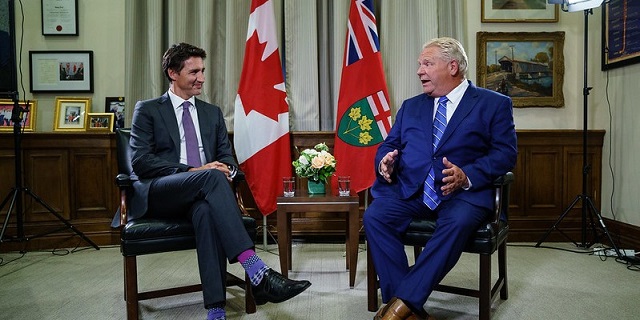
From the Fraser Institute
By Jason Clemens and Tegan Hill
Last week, with their latest tranche of corporate welfare for the electric vehicle (EV) sector, the Trudeau and Ford governments announced a $5.0 billion subsidy for Honda to help build an EV battery plant and ultimately manufacture EVs in Ontario. Here’s a challenge: if politicians in both governments truly believe these measures are in the public interest, they should tie their personal fortunes with the outcomes of these subsidies (a.k.a. corporate welfare).
One of the major challenges with corporate welfare is the horrendous economic incentives. The politicians and bureaucrats who distribute corporate welfare have no vested financial interest in the outcome of the program. Whether these programs are spectacularly successful (or more likely spectacular failures), the politicians and bureaucrats experience no direct financial gain or loss. Simply put, they’re investing taxpayer money, not their own.
Put differently, the discipline imposed on investors in private markets, such as the risk of losing money or even going out of business, is wholly absent in the government sector. Indeed, the history of corporate welfare in Canada, at both the federal and provincial levels, is rife with abject failures due in large measure to the absence of this investing discipline.
In the last 12 months in Ontario, automakers have been major beneficiaries of corporate welfare. The $5.0 billion for Honda is on top of $13.2 billion to Volkswagen and $15.0 billion to Stellantis. That equates to roughly $979 per taxpayer nationally for federal subsidies and an additional $1,372 for Ontario taxpayers. And these figures do not include the debt interest costs that will be incurred as both governments are borrowing money to finance the subsidies.
And there’s legitimate reason to be skeptical already of the potential success of these largescale industrial interventions by the federal (Liberal) and Ontario (Conservative) governments. EV sales in both Canada and the United States have not grown as expected by governments despite purchase subsidies. Disappointing EV sales have led several auto manufacturers including Toyota and Ford to scale-back their EV production plans.
There are also real concerns about the practical ability of EV manufacturers to secure required materials. Consider the minerals needed for EV batteries. According to a recent study, 388 new mines—including 50 lithium mines, 60 nickel mines and 17 cobalt mines—would be required by 2030 to meet EV adoption commitments by various governments. For perspective, there were a total of 340 metal mines operating across Canada and the U.S. in 2021. The massive task of finding, constructing and developing this level of new mines seems impractical and unattainable, meaning that EV plants being built now will struggle to secure needed inputs. Indeed, depending on the type of mine, it takes anywhere from six to 18 years to develop.
Which brings us back to the Trudeau and Ford governments. Given the economic incentive problems and practical challenges to a large-scale transition to EVs, would members of the Trudeau and Ford governments—including the prime minister and premier—want to attach a portion of their personal pensions to the success of these corporate welfare programs?
More specifically, assume an arrangement whereby those politicians would share the benefits of the program’s success but also share any losses through the value of their pensions. If the programs work as marketed, the politicians would enjoy higher valued pensions. But if the programs disappoint or even fail, their pensions would be reduced or even cancelled. Would these politicians still support billions in corporate handouts if their personal financial wellbeing was tied to the outcomes?
As the funding of private companies to develop the EV sector in Ontario continues with the support of taxpayer subsidies, Ontarians and all Canadians should consider the misalignment of economic incentives underpinning these subsidies and the practical challenges to the success of this industrial intervention.
Authors:


Tennessee Taking Lead In Protecting Civil Rights And Free Enterprise—And Stopping Political Debanking
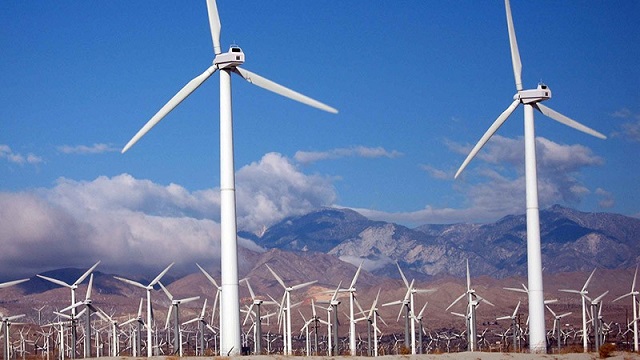
‘Gambling With The Grid’: New Data Highlights Achilles’ Heel Of One Of Biden’s Favorite Green Power Sources
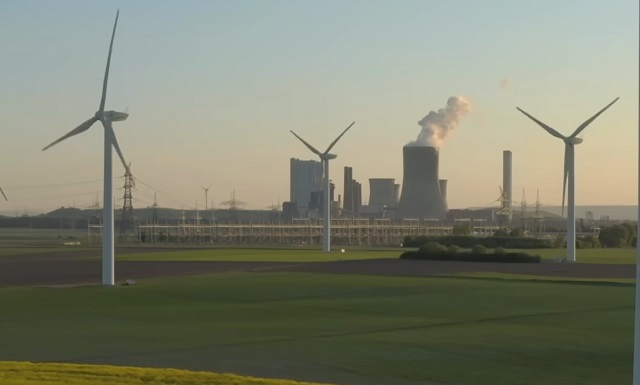
Market Realities Are Throwing Wrench In Biden’s Green Energy Dreams

Climate Murder? Media Picks Up Novel Legal Theory Suggesting Big Oil Is Homicidal
-
 Alberta2 days ago
Game changer: Trans Mountain pipeline expansion complete and starting to flow Canada’s oil to the world
-
 conflict1 day ago
Immigration Experts Warn Possible Biden Plan To Import Gazan Refugees Would Be ‘National Security Disaster’
-
 Addictions1 day ago
Canada’s ‘safer supply’ patients are receiving staggering amounts of narcotics
-
 illegal immigration1 day ago
Panama Elects President Vowing Shutdown Of Key Routes To US Used By Over Half A Million Migrants
-
 Brownstone Institute2 days ago
The Predictable Wastes of Covid Relief
-
 Great Reset1 day ago
All 49 GOP senators call on Biden admin to withdraw support for WHO pandemic treaty
-
Fraser Institute13 hours ago
Trudeau and Ford should attach personal fortunes to EV corporate welfare
-
 Bruce Dowbiggin1 day ago
Do It Once, Shame On You; Do It Twice, Shame On Me