
armed forces
If you care about Canada’s security, 2023 was a year of substantial disappointment

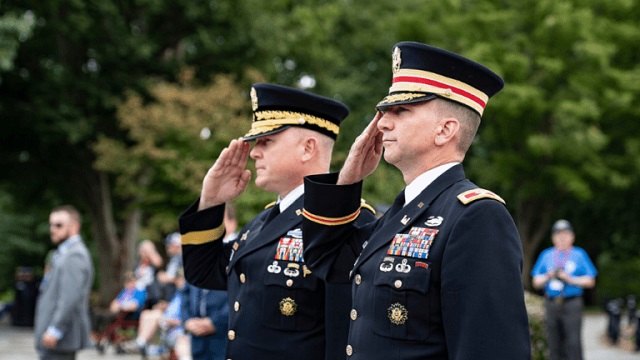
From the MacDonald Laurier Institute
And it’s unlikely to get any better in 2024
As the calendar turns over to 2024, I’ve been reflecting on the year that was in Canadian security and defence. It started off with great promise. There was the potential for a new defence policy update that would address many of the government’s shortcomings with respect to defence policy and the military capabilities of the armed forces, and there was the potential for the procurement of the P-8 alongside a number of other capabilities.
Furthermore, there was hope for progress in dealing with substantiative issues around culture change and recruitment/retention. After General Eyre’s directive on reconstitution in October 2022, there was good evidence to suggest that the political leadership understood the poor material shape the Canadian Armed Forces were in and would become more discriminating as to what missions it was sent on. Relatedly the government as a whole seemed to better understand the national security environment it found itself in, especially after the publication of the Indo-Pacific Strategy in November of 2022.
Yet the close of 2023 highlights just how much this was a year of substantial disappointment for those who care about Canada’s military, defence capabilities, and its place in the world.
Rather than the beginnings of a renewal, the CAF is in a worse state and facing an even deeper hole it needs to dig out of. The delay of the defence policy update, reportedly due to its cost, as well as the shuffling out of Anita Anand, a popular minister within the department, tore out the tender shoots of hope many military members had nurtured for the military’s revival. The announced budget cutbacks of approximately $1 billion dollars over the next three years further put this to bed.
While there were some funding announcements, such as the P-8 and the Remotely Piloted Air System program, they are being layered onto a military that has haemorrhaged much of its key personnel. Many individuals, who are already overtasked, rightly wonder who will be there to integrate, operate, or sustain these new capabilities.
None of this even acknowledges the increased threat environment or the massive technological change that is affecting a CAF that desperately requires modernization. While National Defence has outlined several efforts to address this challenge, such as the pan-domain strategy, its requirement to simply survive on an austere budget means there are no resources or intellectual capacity left to implement them.
Looking back at the past year, I have been searching for historical precedents to compare it to. One has come to mind a few times: 2003.
Similar to the present, the country was faced with a number of serious security challenges: 9/11, Afghanistan, and the debate over the impending Iraq war. The 2003 CAF faced serious material and manpower challenges—what General Rick Hillier would later describe as the “decade of darkness” of the 1990s. In 2003 the military faced multiple crises simultaneously: a rust-out crisis of aging military equipment, a personnel crisis, and multiple open-ended missions. As one influential study, titled “Canada Without Armed Forces” published in 2003 suggested:
The next government will be caught up in a cascading policy entanglement initiated by the rapid collapse of Canadian Forces core assets and core capabilities. This problem will inevitably disarm foreign policy as Canada repeatedly backs away from international commitments because it lacks adequate military forces. In these circumstances, new policy initiatives aimed at ‘being useful to the United States in our own interests’ may well be derailed.
Sound familiar? While some of the direst of predictions did not immediately emerge, they were only delayed. The military received substantial investments, but a large portion of it was tied to funding the operations in Afghanistan or helping build a military that would continue similar operations. Modernization was delayed on capabilities that would help defend Canada and its allies from great power conflict, and in some cases entire capability sets were retired with no replacement forthcoming.

Looking back at the past year, one way to look at my columns is that they are chronicling the consequences of the inadequate modernization of the Canadian Armed Forces since 2003. It is a likely outcome that by 2028, the country will likely have a navy and air force that are effectively unable to provide a basic level of defence in key areas, and an army that will be unable to assist our allies with previously announced commitments.
But this does not explain why we’ve arrived at this moment. Over the years, many observers of Canadian foreign and defence policy have noted that the fundamental “problem” of the country’s national defence is that there are no “pressing” threats to its security. I’ve personally had difficulties with this perspective, as it lazily excuses present-day inaction. It ignores (or, perhaps more accurately, confirms) the perspective that it is not actually to do with the threats themselves, but Canadians’ perception of them. One book, also published in 2003, diagnosed this problem well: Andrew Cohen’s While Canada Slept. It is still worth reading today.
From 1945 to 1968, successive Canadian governments from Louis St. Laurent to Lester B. Pearson viewed international security as a critical focus. Many had fought or been a direct participant in one or both World Wars and saw the ruinous cost of inaction and unpreparedness. They had built close relationships with senior officials of all of Canada’s major allies, which allowed them to tackle problems in lock-step with each other. Canada was present at the creation of the key institutes that have provided for our economic prosperity and security. Cohen’s book lamented the decline of Canada’s principal foreign policy instruments due to neglect that occurred even as Canadians agreed that being a good international partner was in the country’s national interest.
That really hasn’t improved over the subsequent twenty years. Rather, the reality is grimmer. Like in 2003, the international system has changed radically, this time with Russia and China actively undermining the rules-based order. In the 2000s, both Paul Martin (and later Stephen Harper) understood the poor material state of the CAF and made efforts to address it. Unlike then, however, the government of today has been extremely slow to acknowledge this reality, and in some cases ignores it for their own political interests.
This has given me the most pause over the past year. Rather than acknowledge or address the real possibility of capability collapse or the broader international challenges, the political leadership has chosen to obfuscate these issues and continue policies that have already contributed to the state it currently is in. There is a preference for big, showy announcements while ignoring the much more desperately needed substantial action to fix the armed forces and foreign policy writ large.
Just this week the minister of national defence announced the deployment nine helicopters to Latvia followed by sending a handful of personnel to support the multinational effort to provide security in the Red Sea. These are token contributions that are unsustainable in aggregate for the military, yet they serve the political purpose of showing Canada doing “something.” Domestic priorities, no matter how small, will trump international ones for this government.
This was evident last July at the NATO meeting in Latvia, which was focused on the threat posed by Russia and the war in Ukraine. Rather than focus on the topic at hand, Prime Minister Trudeau took to lecturing the assembled leaders on the threat posed by climate change, which was not well received by the gathering. Even in non-defence areas, such as with foreign interference, similar preferences are visible. The continual delay in establishing an inquiry while trying to control its scope is an example of putting parochial interests over that of the country writ large.
Considering the hope that the year started with and how it ended, it’s unlikely that much will change in 2024. Even a cursory look at the political interests of the Liberal and NDP parties (joined by their supply and confidence agreement) suggests that it is unlikely that the government will accelerate their spending on defence—rather they are more likely introduce more delays. Yet the military and other instruments of the country’s foreign and security policy will not be able to wait. Their failings need to be addressed now, or we will collectively suffer its consequences.
Richard Shimooka is a Hub contributing writer and a senior fellow at the Macdonald-Laurier Institute who writes on defence policy.


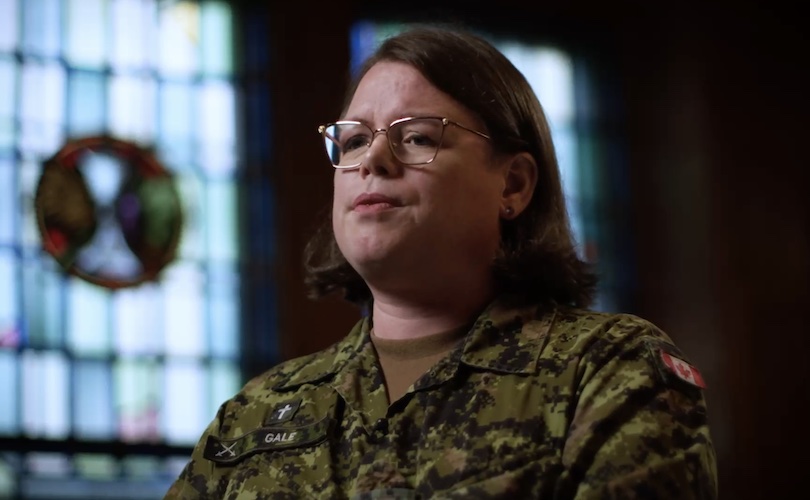
From LifeSiteNews
Canadian Armed Forces Captain ‘Beatrice’ Gale reportedly sought to grope a male soldier while drunk and was suspended just a few weeks after the Canadian military promoted him for ‘International Transgender Day of Visibility.’
Canadian Department of National Defence has suspended a “transgender” military chaplain it previously celebrated after he reportedly sought to grope a male soldier at the Royal Military College while drunk.
On March 28, the government highlighted Canadian Armed Forces Captain “Beatrice” Gale, a man who “identifies” as a woman, for “International Transgender Day of Visibility.” The military’s “first openly transgender chaplain” has been “a vocal advocate” for the so-called “rights” of transgender-identifying members, according to the press release, resulting “in policy changes that contributed to more inclusive gender-affirming medical care for CAF members.”
“I hope that being a transgender chaplain [sic] sends a message to the 2SLGBTQI+ community that the Royal Canadian Chaplain Service cares,” he said. “That it cares for that community.”
Just weeks later, however, the chaplain is generating a different kind of publicity.
True North reports that Gale’s chaplaincy has been revoked following a hearing finding he made an “inappropriate comment or request to another individual.”

Gale was determined to have violated the Queen’s Regulations and Orders by “behav[ing] in a manner that adversely affects the discipline, efficiency or morale of the Canadian Forces.” The specific details of the offense have not been officially confirmed, but, according to an anonymous source, he became inebriated at dinner and asked to grope a male lieutenant’s buttocks.
“The mandate for Captain Gale to serve as a Canadian military chaplain remains suspended. The Chaplain General will consider the implications of the summary hearing’s outcome to determine if additional administrative actions within their authority are required,” said DND spokesperson Andrée-Anne Poulin. Gale was docked two days pay and 20 days leave and is currently on administrative duty.
“If a male officer behaved in a similar manner towards a subordinate female, the situation would be dealt with differently, and the offender’s name would be leaked to the press. Unfortunately, there is a lack of equality in how the Canadian Armed Forces handle such allegations,” attorney Phillip Millar, a former combat officer who now represents Canadian soldiers, told True North.
He added that he once had a client who “was not granted the same leniency for much less serious alleged infractions. However, in the case of a transgender offender who held a position of trust as a padre and a senior in rank, the matter was simply swept under the rug.”
As is the case in the United States, Canada’s armed forces are currently struggling to attract recruits in the wake of adopting “woke” policies such as COVID-19 shot mandates, “climate change” lectures, and pro-LGBT “identity” initiatives.
The DND declared last month that increased “diversity and inclusivity” are “vital” to creating an effective military and that they “enrich the workplace.”
armed forces
Canadians are finally waking up to the funding crisis that’s sent the Canadian Armed Forces into a “death spiral”
From the Macdonald Laurier Institute
By By J.L. Granatstein
Must we wait for Trump to attack free trade between Canada and the US before our politicians get the message that defence matters to Washington?
Nations have interests – national interests – that lay out their ultimate priorities. The first one for every country is to protect its population and territory. It is sometimes hard to tell, but this also applies to Canada. Ottawa’s primary job is to make sure that Canada and Canadians are safe. And Canada also has a second priority: to work with our allies to protect their and our freedom. As we share this continent with the United States, this means that we must pay close attention to our neighbouring superpower.
Regrettably for the last six decades or so we have not done this very well. During the 1950s, the Liberal government of Louis St. Laurent in some years spent more than 7 percent of GDP on defence, making Canada the most militarily credible of the middle powers. His successors whittled down defence spending and cut the numbers of troops, ships, and aircraft. By the end of the Cold War, in the early 1990s, our forces had shrunk, and their equipment was increasingly obsolescent.
Another Liberal prime minister, Jean Chrétien, balanced the budget in 1998 by slashing the military even more, and by getting rid of most of the procurement experts at the Department of National Defence, he gave us many of the problems the Canadian Armed Forces face today. Canadians and their governments wanted social security measures, not troops with tanks, and they got their wish.
There was another factor of significant importance, though it is one usually forgotten. Lester Pearson’s Nobel Peace Prize for helping to freeze the Suez Crisis of 1956 convinced Canadians that they were natural-born peacekeepers. Give a soldier a blue beret and an unloaded rifle and he could be the representative of Canada as the moral superpower we wanted to be. The Yanks fought wars, but Canada kept the peace, or so we believed, and Canada for decades had servicemen and women in every peacekeeping operation.
There were problems with this. First, peacekeeping didn’t really work that well. It might contain a conflict, but it rarely resolved one – unless the parties to the dispute wanted peace. In Cyprus, for example, where Canadians served for three decades, neither the Greek- or Turkish-Cypriots wanted peace; nor did their backers in Athens and Ankara. The Cold War’s end also unleashed ethnic nationalisms, and Yugoslavia, for one, fractured into conflicts between Serbs, Croats, Bosnians, Christians, and Muslims, leading to all-out war. Peacekeepers tried to hold the lid on, but it took NATO to bash heads to bring a truce if not peace.
And there was a particular Canadian problem with peacekeeping. If all that was needed was a stock of blue berets and small arms, our governments asked, why spend vast sums on the military? Peacekeeping was cheap, and this belief sped up the budget cuts.
Even worse, the public believed the hype and began to resist the idea that the Canadian Armed Forces should do anything else. For instance, the Chrétien government took Canada into Afghanistan in 2001 to participate in what became a war to dislodge the Taliban, but huge numbers of Canadians believed that this was really only peacekeeping with a few hiccups.
Stephen Harper’s Conservative government nonetheless gave the CAF the equipment it needed to fight in Afghanistan, and the troops did well. But the casualties increased as the fighting went on, and Harper pulled Canada out of the conflict well before the Taliban seized power again in 2021.
Harper’s successor, Liberal Prime Minister Justin Trudeau, clearly has no interest in the military except as a somewhat rogue element that needs to be tamed, made comfortable for its members, and to act as a social laboratory with quotas for visible minorities and women.
Is this an exaggeration? This was Trudeau’s mandate letter to his defence minister in December 2021: “Your immediate priority is to take concrete steps to build an inclusive and diverse Defence Team, characterized by a healthy workplace free from harassment, discrimination, sexual misconduct, and violence.” DND quickly permitted facial piercings, coloured nail polish, beards, long hair, and, literally, male soldiers in skirts, so long as the hem fell below the knees. This was followed by almost an entire issue of the CAF’s official publication, Canadian Military Journal, devoted to culture change in the most extreme terms. You can’t make this stuff up.
Thus, our present crisis: a military short some 15,000 men and women, with none of the quotas near being met. A defence minister who tells a conference the CAF is in a “death spiral” because of its inability to recruit soldiers. (Somehow no one in Ottawa connects the culture change foolishness to a lack of recruits.) Fighter pilots, specialized sailors, and senior NCOs, their morale broken, taking early retirement. Obsolete equipment because of procurement failures and decade-long delays. Escalating costs for ships, aircraft, and trucks because every order requires that domestic firms get their cut, no matter if that hikes prices even higher. The failure to meet a NATO accord, agreed to by Canada, that defence spending be at least 2 percent of GDP, and no prospect that Canada will ever meet this threshold.
But something has changed.
Three opinion polls at the beginning of March all reported similar results: the Canadian public – worried about Russia and Putin’s war against Ukraine, and anxious about China, North Korea, and Iran (all countries with undemocratic regimes and, Iran temporarily excepted, nuclear weapons) – has noticed at last that Canada is unarmed and undefended. Canadians are watching with concern as Ottawa is scorned by its allies in NATO, Washington, and the Five Eyes intelligence sharing alliance.
At the same time, official Department of National Defence documents laid out the alarming deficiencies in the CAF’s readiness: too few soldiers ready to respond to crises and not enough equipment that is in working order for those that are ready.
The bottom line? Canadians finally seem willing to accept more spending on defence.
The media have been hammering at the government’s shortcomings. So have retired generals. General Rick Hillier, the former chief of the defence staff, was especially blunt: “[The CAF’s] equipment has been relegated to sort-of-broken equipment parked by the fence. Our fighting ships are on limitations to the speed that they can sail or the waves that they can sail in. Our aircraft, until they’re replaced, they’re old and sort of not in that kind of fight anymore. And so, I feel sorry for the men and women who are serving there right now.”
The Trudeau government has repeatedly demonstrated that it simply does not care. It offers more money for the CBC and for seniors’ dental care, pharmaceuticals, and other vote-winning objectives, but nothing for defence (where DND’s allocations astonishingly have been cut by some $1 billion this year and at least the next two years). There is no hope for change from the Liberals, their pacifistic NDP partners, or from the Bloc Québécois.
The Conservative Party, well ahead in the polls, looks to be in position to form the next government. What will they do for the military? So far, we don’t know – Pierre Poilievre has been remarkably coy. The Conservative leader has said he wants to cut wasteful spending and eliminate foreign aid to dictatorial regimes and corrupted UN agencies like UNRWA. He says he will slash the bureaucracy and reform the procurement shambles in Ottawa, and he will “work towards” spending on the CAF to bring us to the equivalent of 2 percent of GDP. His staff say that Poilievre is not skeptical about the idea of collective security and NATO; rather, he is committed to balancing the books.
What this all means is clear enough. No one should expect that a Conservative government will move quickly to spend much more on defence than the Grits. A promise to “work towards” 2 percent is not enough, and certainly not if former US President Donald Trump ends up in the White House again. Must we wait for Trump to attack free trade between Canada and the US before our politicians get the message that defence matters to Washington? Unfortunately, it seems so, and Canadians will not be able to say that they weren’t warned. After all, it should be obvious that it is in our national interest to protect ourselves.
J.L. Granatstein taught Canadian history, was Director and CEO of the Canadian War Museum, and writes on military and political history. His most recent book is Canada’s Army: Waging War and Keeping the Peace. (3rd edition).


A Fed-Controlled Digital Dollar Could Mean The End Of Freedom

The EV ‘Bloodbath’ Arrives Early
Alberta threatens to fight Trudeau government restrictions on Canada’s plastics industry

Principal at Calgary Elementary School charged with possession of child pornography

-
 Alberta2 days ago
Alberta’s vision for passenger rail
-
 Alberta2 days ago
Three Calgary massage parlours linked to human trafficking investigation
-
 Uncategorized2 days ago
Making Alberta a geothermal energy leader
-
 Canadian Energy Centre1 day ago
North America LNG project cost competitiveness
-
 conflict1 day ago
Columbia on Lockdown After pro-Palestinian Protesters Take Over Building, Hold Janitors Hostage
-
 Alberta16 hours ago
Official statement from Premier Danielle Smith and Energy Minister Brian Jean on the start-up of the Trans Mountain Pipeline
-
 Economy19 hours ago
Today’s federal government—massive spending growth and epic betting
-
 Economy17 hours ago
Young Canadians are putting off having a family due to rising cost of living, survey finds