
Business
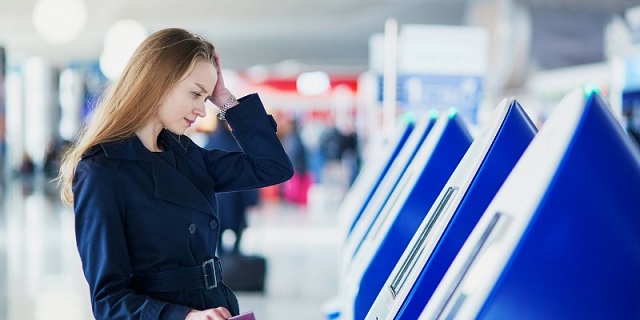
Here’s why your plane ticket is so expensive

From the Fraser Institute
By Alex Whalen and Jake Fuss
While the strike by WestJet mechanics lasted only a few days, many Canadian air travellers faced long delays and cancelled flights. More broadly, according to the Canadian Transportation Agency, customer complaints have hit an all-time high.
Yet many dissatisfied travellers likely don’t realize that Ottawa heavily contributes to their frustrations. Let’s look at the various ways federal policies and laws make air travel worse in Canada.
First, federal laws insulate Canada’s airlines from competition. Foreign airlines are subject to highly restrictive “cabotage” laws which, for example, dictate that foreign airlines cannot operate routes between Canadian cities. At the same time, foreign investors are forbidden from owning more than 49 per cent of Canadian airlines. By restricting international participation in the Canadian air travel market, these laws both deprive Canadian consumers of choice and insulate incumbent airlines from competition. When consumers have more choice, incumbents have a greater incentive to improve performance to keep pace with their competitors.
Second, a wide array of taxes and fees heavily influence the cost of airline tickets in Canada. Airport improvement fees, for example, average $32.20 per departing passenger at airports in Canada’s 10 largest markets. In contrast, airport improvement fees in the United States cannot exceed $4.50. And last year the Trudeau government increased the “air travellers security charge” by 32.85 per cent—this fee, which now ranges from $9.94 to $34.82 per flight, is higher in Canada than the U.S. across all flight categories. On the tax front, in addition to fuel taxes including the federal carbon tax, the federal excise tax on unleaded aviation gasoline in Canada is 10 cents per litre compared to 6.9 cents per litre in the U.S. And the U.S., unlike Canada, does not apply sales taxes to aviation fuel.
Third, air travel is a heavily regulated sector. Federal legislation generates thousands of provisions airlines must follow to operate legally in Canada. Of course, some regulation is necessary to ensure passenger safety, but each regulation adds administrative and compliance costs, which ultimately affect ticket prices. To lower the cost of air travel, the federal government should reduce the regulatory burden while maintaining safety standards.
Lastly, the ownership model of Canada’s airports results in a yearly transfer of rent to the federal government. The federal government used to own Canada’s national system of airports until they were transferred to private not-for-profit corporations in the early 1990s. However, these airports must still pay rent to the federal government—nearly half a billion dollars annually, according to the Canada Airports Council. As with the other examples listed above, these costs are ultimately passed on to consumers in the form of higher ticket prices.
While a precise estimate is difficult to obtain, various government policies, taxes and fees comprise a large share of the cost of each airline ticket sold in Canada. With complaints from travellers at all-time highs, the federal government should reduce the regulatory burden, increase competition, and lower fees and taxes. Policy reform for air travel in Canada is long overdue.
Authors:


From the Daily Caller News Foundation
A resurfaced 2018 video from a Minneapolis-area TV station shows how Somali scammers allegedly bilked Minnesota out of millions of dollars for services that they never provided.
Independent journalist Nick Shirley touched off a storm on social media Friday after he posted a photo of one day-care center, which displayed a banner calling it “The Greater Learing Center” on X, along with a 42-minute video that went viral showing him visiting that and other day-care centers. The surveillance video, which aired on Fox 9 in 2018 after being taken in 2015, showed parents taking kids into the center, then leaving with them minutes later, according to Fox News.
“They were billing too much, they went up to high,” Hennepin County attorney Mike Freeman told Fox 9 in 2018. “It’s hard to imagine they were serving that many people. Frankly if you’re going to cheat, cheat little, because if you cheat big, you’re going to get caught.”
Dear Readers:
As a nonprofit, we are dependent on the generosity of our readers.
Please consider making a small donation of any amount here.
Thank you!
Democratic Gov. Tim Walz of Minnesota was accused of engaging in “systemic” retaliation against whistleblowers in a Nov. 30 statement by state employees. Assistant United States Attorney Joe Thompson announced on Dec. 18 that the amount of suspected fraud in Minnesota’s Medicaid program had reached over $9 billion.
After Shirley’s video went viral, FBI Director Kash Patel announced the agency was already sending additional resources in a Sunday post on X, citing the case surrounding Feeding Our Future, which at one point accused the Minnesota government of racism during litigation over the suspension of funds after earlier allegations of fraud.
KSTP reported that the Quality Learning Center, one of the centers visited by Shirley, had 95 citations for violations from one Minnesota agency between 2019 to 2023.
President Donald Trump announced in a Nov. 21 post on Truth Social that he would end “Temporary Protected Status” for Somalis in the state in response to allegations of welfare fraud and said that the influx of refugees had “destroyed our country.”
Business
Disclosures reveal Minnesota politician’s husband’s companies surged thousands-fold amid Somali fraud crisis


Rep. Ilhan Omar’s latest financial disclosures reveal seemingly sudden wealth accumulation inside her household, even as Minnesota grapples with revelations of massive fraud that may have siphoned more than $9 billion from government programs. The numbers, drawn from publicly filed congressional reports, show two companies tied to Omar’s husband, Tim Mynett, surging in value at a pace that raises more questions than answers.
According to the filings, Rose Lake Capital LLC — a business advisory firm Mynett co-founded in 2022 — jumped from an assessed range of $1 to $1,000 in 2023 to between $5 million and $25 million in 2024. Even using the most conservative assumptions allowed under Congress’ broad valuation ranges, the company’s value would have increased thousands of times in a single year. The firm advertises itself as a facilitator of “deal-making, mergers and acquisitions, banking, politics and diplomacy.”
Archived versions of Rose Lake’s website once showcased an eye-catching lineup of political heavyweights: former Ambassador to Bahrain Adam Ereli, former Sen. Max Baucus, and prominent Democratic National Committee alumni William Derrough and Alex Hoffman. But as scrutiny surrounding Omar intensifies — particularly over whether her political network intersected with sprawling fraud schemes exposed in Minnesota — the company has quietly scrubbed its online footprint. Names and biographies of team members have vanished, and the firm has not clarified whether these figures remain involved. Omar’s office offered no comment when asked to explain the company’s sudden growth or the removal of its personnel listings.
Mynett, Omar’s third husband, has long been a controversial presence in her political orbit, but the dramatic swell in his business holdings comes at a moment when trust in Minnesota’s oversight systems is already badly shaken. Federal and state investigators now estimate that fraud involving pandemic-era and nonprofit programs may exceed $9 billion, a staggering figure for a state often held up as a model of progressive governance. For many residents, the revelation that Omar’s household wealth soared during the same period only deepens skepticism about who benefited from Minnesota’s expansive social-spending apparatus.
The financial story doesn’t stop with Rose Lake. A second Mynett-linked entity, ESTCRU LLC — a boutique winery registered in Santa Rosa, California — reported an assessed value of $1 million to $5 million in 2024. Just a year earlier, Omar disclosed its worth at $15,000 to $50,000. Despite the dramatic valuation spike, ESTCRU’s online storefront does not appear to function, its last social media activity dates back to early 2023, and the phone number listed on its website is no longer in service. As with Rose Lake, Omar’s office declined to comment on the winery’s sudden rise in reported value.
The House clerk has yet to release 2025 disclosures, leaving unanswered how these companies are performing today — and how such explosive growth materialized in the first place.


Largest fraud in US history? Independent Journalist visits numerous daycare centres with no children, revealing massive scam
Why Japan wants Western Canadian LNG

“Magnitude cannot be overstated”: Minnesota aid scam may reach $9 billion

Be Careful What You Wish For In 2026: Mark Carney With A Majority
-
 Business2 days ago
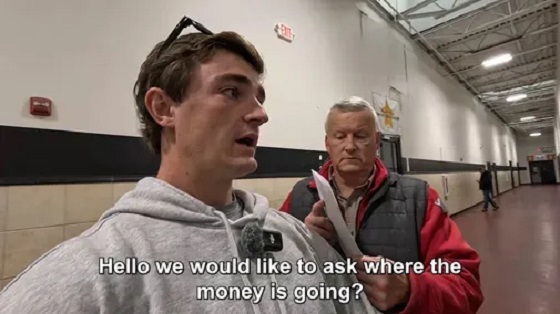
Mainstream media missing in action as YouTuber blows lid off massive taxpayer fraud
-
 International2 days ago
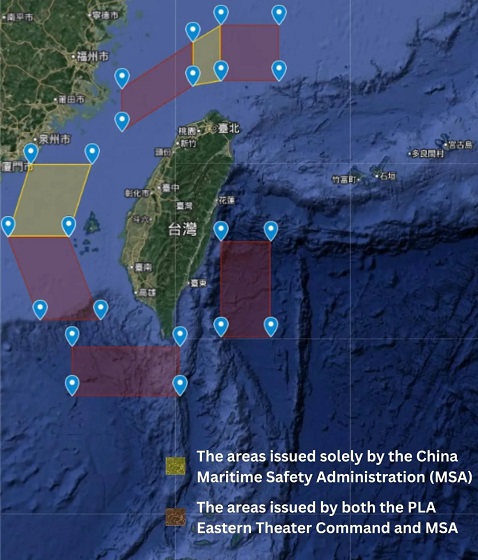
China Stages Massive Live-Fire Encirclement Drill Around Taiwan as Washington and Japan Fortify
-
 Energy2 days ago
Rulings could affect energy prices everywhere: Climate activists v. the energy industry in 2026
-
 Digital ID2 days ago
The Global Push for Government Mandated Digital IDs And Why You Should Worry
-
Business10 hours ago
Disclosures reveal Minnesota politician’s husband’s companies surged thousands-fold amid Somali fraud crisis
-
 Alberta10 hours ago
The Canadian Energy Centre’s biggest stories of 2025
-
 Business23 hours ago
DOOR TO DOOR: Feds descend on Minneapolis day cares tied to massive fraud
-
 Business22 hours ago
Canada needs serious tax cuts in 2026