
Opinion
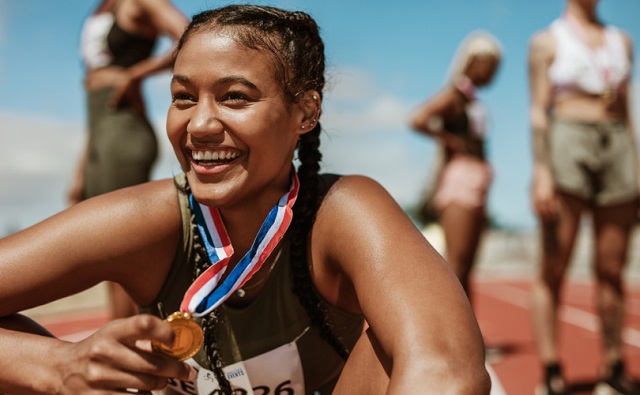
Female athletes are turning against gender-confused men dominating women’s sports

From LifeSiteNews
If female athletes came together and demanded, with one voice, that female sports be protected, they would be pushing at an open door.
What happens when obvious truths about the differences between the sexes are denied by the elites at the behest of the transgender movement? And what happens when female athletes discover that their rights mean less than the newly invented “rights” of trans-identifying men to invade their spaces?
We’ve seen the answer to that play out over the past few years. This month alone, a trans-identifying male beat his female competitors at an Oregon track meet by a full six seconds, with the video of him zipping across the finish line sparking outrage; a trans-identifying marathon runner announced that he will be competing in the full set of six marathon majors in Boston in the male, female and “non-binary” categories; and courts in West Virginia and Ohio ruled that trans-identifying males can compete on female sports teams.
In the meantime, U.K. culture secretary Lucy Frazer called for a ban on males in female sports after meeting with representatives of a number of female sports leagues, writing:
In competitive sport, biology matters. And where male strength, size and body shape gives athletes an indisputable edge, this should not be ignored. By protecting the female category, they can keep women’s competitive sport safe and fair and keep the dream alive for the young girls who dream of one day being elite sportswomen.
She concluded, “We must get back to giving women a level playing field to compete. We need to give women a sporting chance.” Refreshingly, she called on sporting bodies to take an “unambiguous position” on the matter.
That, of course, is common sense. What makes Frazer’s statements significant is that she does not, like most politicians trying to thread the needle by accepting transgender ideology but rejecting the inevitable conclusions thereof, make multiple references to “transgender women.” She instead refers to keeping male bodies out of female sports, much to the outrage of trans activists, who insist that males who identify as females are females, and thus have female bodies, because they said so.
Over the past several years, it has fallen largely to the few female sportswomen who dared to risk the opprobrium of the LGBT movement to speak for the majority and point out the unfairness of allowing males to invade their sporting domains; now, an increasing number are willing to speak out. A recent study conducted by Manchester Metropolitan and Swansea universities, published April 17 in the Journal of Sports Sciences, indicates that the majority of female athletes want women’s sports to be categorized by sex rather than “gender identity.”
Fifty-eight percent of respondents in the study of elite female athletes wanted categorization by biological sex; that rose to 77 percent among those classified as “world-class athletes” who had competed in Olympic or world championship finals. Researchers surveyed 175 “national, elite and world class female athletes – current and retired – from a range of sports and countries” and included “26 world champions, 22 Olympians and six Paralympians,” making it the largest study of its kind conducted thus far. A BBC Sports study last month found that over 100 elite U.K. female athletes “would be uncomfortable” with trans-identifying males competing in the female categories of their sports.
According to the study, there is one exception to the rule: the “majority of athletes competing in non-Olympic sports believe changing category should be allowed, with the highest rate of 74% among those in ‘precision’ sports such as archery.”
In short, the higher female athletes climb, the more likely they are to object to trans-identifying males competing in their categories. Most of these athletes, of course, remain unnamed. Imagine if they came out together and demanded, with one voice, that female sports be protected. It would constitute a cultural sea change – and I suspect the moment is right for them to do so. If they pushed, they would be pushing at an open door.


Crime
The Uncomfortable Demographics of Islamist Bloodshed—and Why “Islamophobia” Deflection Increases the Threat
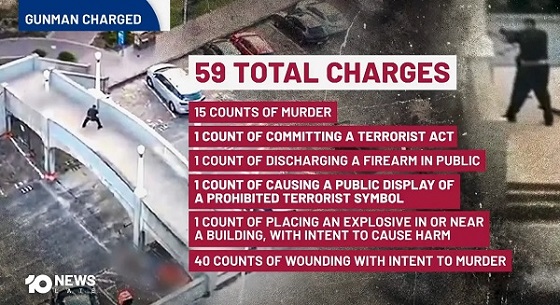

Addressing realities directly is the only path toward protecting communities, confronting extremism, and preventing further loss of life, Canadian national security expert argues.
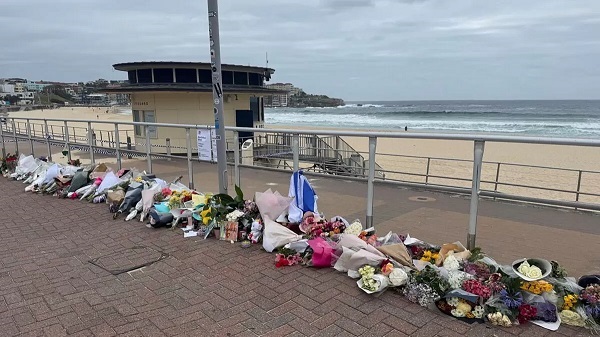
After attacks by Islamic extremists, a familiar pattern follows. Debate erupts. Commentary and interviews flood the media. Op-eds, narratives, talking points, and competing interpretations proliferate in the immediate aftermath of bloodshed. The brief interval since the Bondi beach attack is no exception.
Many of these responses condemn the violence and call for solidarity between Muslims and non-Muslims, as well as for broader societal unity. Their core message is commendable, and I support it: extremist violence is horrific, societies must stand united, and communities most commonly targeted by Islamic extremists—Jews, Christians, non-Muslim minorities, and moderate Muslims—deserve to live in safety and be protected.
Yet many of these info-space engagements miss the mark or cater to a narrow audience of wonks. A recurring concern is that, at some point, many of these engagements suggest, infer, or outright insinuate that non-Muslims, or predominantly non-Muslim societies, are somehow expected or obligated to interpret these attacks through an Islamic or Muslim-impact lens. This framing is frequently reinforced by a familiar “not a true Muslim” narrative regarding the perpetrators, alongside warnings about the risks of Islamophobia.
These misaligned expectations collide with a number of uncomfortable but unavoidable truths. Extremist groups such as ISIS, Al-Qaeda, Hamas, Hezbollah, and decentralized attackers with no formal affiliations have repeatedly and explicitly justified their violence through interpretations of Islamic texts and Islamic history. While most Muslims reject these interpretations, it remains equally true that large, dynamic groups of Muslims worldwide do not—and that these groups are well prepared to, and regularly do, use violence to advance their version of Islam.
Islamic extremist movements do not, and did not, emerge in a vacuum. They draw from the broader Islamic context. This fact is observable, persistent, and cannot be wished or washed away, no matter how hard some may try or many may wish otherwise.
Given this reality, it follows that for most non-Muslims—many of whom do not have detailed knowledge of Islam, its internal theological debates, historical divisions, or political evolution—and for a considerable number of Muslims as well, Islamic extremist violence is perceived as connected to Islam as it manifests globally. This perception persists regardless of nuance, disclaimers, or internal distinctions within the faith and among its followers.
THE COST OF DENIAL AND DEFLECTION
Denying or deflecting from these observable connections prevents society from addressing the central issues following an Islamic extremist attack in a Western country: the fatalities and injuries, how the violence is perceived and experienced by surviving victims, how it is experienced and understood by the majority non-Muslim population, how it is interpreted by non-Muslim governments responsible for public safety, and how it is received by allied nations. Worse, refusing to confront these difficult truths—or branding legitimate concerns as Islamophobia—creates a vacuum, one readily filled by extremist voices and adversarial actors eager to poison and pollute the discussion.
Following such attacks, in addition to thinking first of the direct victims, I sympathize with my Muslim family, friends, colleagues, moderate Muslims worldwide, and Muslim victims of Islamic extremism, particularly given that anti-Muslim bigotry is a real problem they face. For Muslim victims of Islamic extremism, that bigotry constitutes a second blow they must endure. Personal sympathy, however, does not translate into an obligation to center Muslim communal concerns when they were not the targets of the attack. Nor does it impose a public obligation or override how societies can, do, or should process and respond to violence directed at them by Islamic extremists.
As it applies to the general public in Western nations, the principle is simple: there should be no expectation that non-Muslims consider Islam, inter-Islamic identity conflicts, internal theological disputes, or the broader impact on the global Muslim community, when responding to attacks carried out by Islamic extremists. That is, unless Muslims were the victims, in which case some consideration is appropriate.
Quite bluntly, non-Muslims are not required to do so and are entitled to reject and push back against any suggestion that they must or should. Pointedly, they are not Muslims, a fact far too many now seem to overlook.
The arguments presented here will be uncomfortable for many and will likely provoke polarizing discussion. Nonetheless, they articulate an important, human-centered position regarding how Islamic extremist attacks in Western nations are commonly interpreted and understood by non-Muslim majority populations.
Non-Muslims are free to give no consideration to Muslim interests at any time, particularly following an Islamic extremist attack against non-Muslims in a non-Muslim country. The sole exception is that governments retain an obligation to ensure the safety and protection of their Muslim citizens, who face real and heightened threats during these periods. This does not suggest that non-Muslims cannot consider Muslim community members; it simply affirms that they are under no obligation to do so.
The impulse for Muslims to distance moderate Muslims and Islam from extremist attacks—such as the targeting of Jews in Australia or foiled Christmas market plots in Poland and Germany—is understandable.
Muslims do so to protect their own interests, the interests of fellow Muslims, and the reputation of Islam itself. Yet this impulse frequently collapses into the “No True Scotsman” fallacy, pointing to peaceful Muslims as the baseline while asserting that the attackers were not “true Muslims.”
Such claims oversimplify the reality of Islam as it manifests globally and fail to address the legitimate political and social consequences that follow Islamic extremist attacks in predominantly non-Muslim Western societies. These deflections frequently produce unintended effects, such as strengthening anti-Muslim extremist sentiments and movements and undermining efforts to diminish them.
The central issue for public discourse after an Islamic extremist attack is not debating whether the perpetrators were “true” or “false” Muslims, nor assessing downstream impacts on Muslim communities—unless they were the targets.
It is a societal effort to understand why radical ideologies continue to emerge from varying—yet often overlapping—interpretations of Islam, how political struggles within the Muslim world contribute to these ideologies, and how non-Muslim-majority Western countries can realistically and effectively confront and mitigate threats related to Islamic extremism before the next attack occurs and more non-Muslim and Muslim lives are lost.
Addressing these realities directly is the only path toward protecting communities, confronting extremism, and preventing further loss of life.
Ian Bradbury, a global security specialist with over 25 years experience, transitioned from Defence and NatSec roles to found Terra Nova Strategic Management (2009) and 1NAEF (2014). A TEDx, UN, NATO, and Parliament speaker, he focuses on terrorism, hybrid warfare, conflict aid, stability operations, and geo-strategy.
The Bureau is a reader-supported publication.
To receive new posts and support my work, consider becoming a free or paid subscriber.

By
Individuals and communities must take responsibility for their own safety.
|
||||||||||||||||||||||||||||||||||||||||||||||||||
|
|
||||||||||||||||||||||||||||||||||||||||||||||||||
|
||||||||||||||||||||||||||||||||||||||||||||||||||
|
||||||||||||||||||||||||||||||||||||||||||||||||||
|
||||||||||||||||||||||||||||||||||||||||||||||||||
|
||||||||||||||||||||||||||||||||||||||||||||||||||
|
||||||||||||||||||||||||||||||||||||||||||||||||||
|
||||||||||||||||||||||||||||||||||||||||||||||||||
|
||||||||||||||||||||||||||||||||||||||||||||||||||
|
||||||||||||||||||||||||||||||||||||||||||||||||||
|
||||||||||||||||||||||||||||||||||||||||||||||||||
|
||||||||||||||||||||||||||||||||||||||||||||||||||


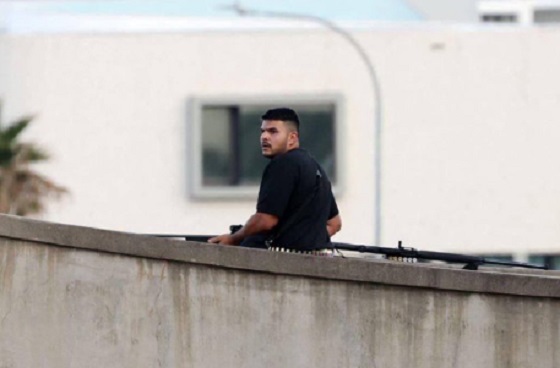
Terror in Australia: 12 killed after gunmen open fire on Hanukkah celebration

Death by a thousand clicks – government censorship of Canada’s internet
Hero bystander disarms shooter in Australian terror attack
Inflation Reduction Act, Green New Deal Causing America’s Energy Crisis
-
 Alberta6 hours ago
Danielle Smith slams Skate Canada for stopping events in Alberta over ban on men in women’s sports
-
 Health23 hours ago
Saskatchewan woman approved for euthanasia urged to seek medical help in Canada rather than US
-
 Indigenous22 hours ago
Residential school burials controversy continues to fuel wave of church arsons, new data suggests
-
 Health1 day ago
Canadian gov’t considers sharing census data on gender-confused children
-
 International22 hours ago
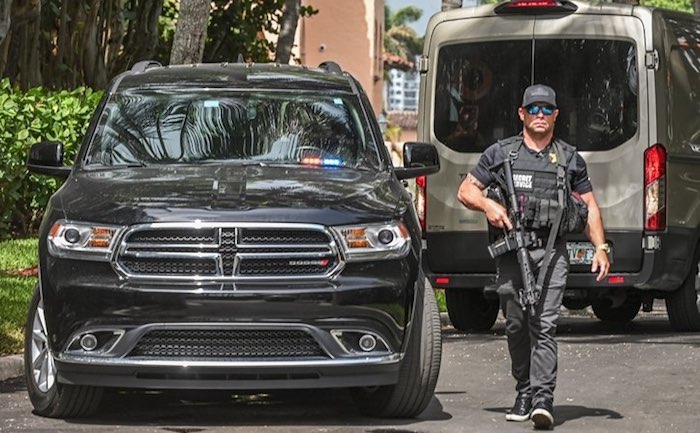
FBI didn’t think it had cause to raid Trump but DOJ did it anyway
-
 Crime2 days ago
Trump designates fentanyl a ‘weapon of mass destruction’
-
 Energy11 hours ago
Liberals Twisted Themselves Into Pretzels Over Their Own Pipeline MOU
-
 Digital ID2 days ago
Canada releases new digital ID app for personal documents despite privacy concerns