Connect with us
[bsa_pro_ad_space id=12]

Economy

Federal carbon tax hike will hurt future generations

Published

5 minute read

From the Fraser Institute

By Kenneth P. Green

” since 2005, emissions from China increased by a staggering 71.7 per cent. It’s absurd to think that, even if Canada could drive it’s GHG emissions to zero, there would be any measurable impact on the global climate. “

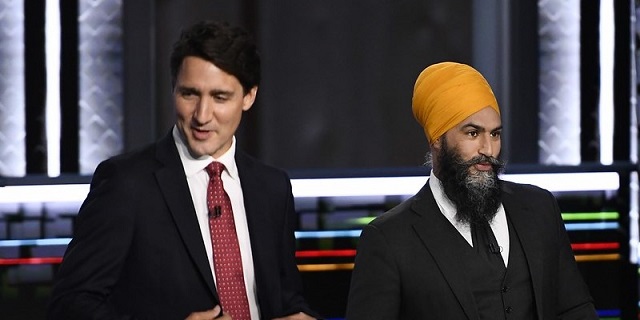
Despite calls from seven of Canada’s premiers (including one premier from his own party) to scrap the upcoming carbon tax hike, and the threat of a non-confidence vote by the Opposition in Parliament, Prime Minister Trudeau has doubled down as he tries to convince Canadians that somehow this tax, which is set to rise from $65 per tonne of greenhouse gas emissions (GHG) to $80/tonne on April 1, will really be good for them.

Speaking with reporters in Calgary (not coincidentally Premier Danielle Smith’s backyard), the prime minister said, “My job is not to be popular,” adding “My job is to do the right things for Canada now and do the right things for Canadians a generation from now” to “deliver that better future one generation from now, two generations from now.”

But Trudeau’s argument that somehow GHG reductions, which might stem from Canada’s carbon tax, will yield appreciable benefits of any kind—economic or environmental—now or in future is nonsense.

Why?

Because Canada’s share of global GHG emissions is slowly declining and small relative to the world’s larger emitters particularly China. Indeed, in 2021 Canada’s emissions comprised 1.5 per cent of global GHG emissions compared to 26 per cent for China (in 2018). And since 2005, emissions from China increased by a staggering 71.7 per cent. It’s absurd to think that, even if Canada could drive it’s GHG emissions to zero, there would be any measurable impact on the global climate. And no impact on climate means no improved environmental benefits for future generations.

Economically, the prime minister’s argument is even less compelling than the proclaimed environmental benefit. According to a study published by the Fraser Institute, implementing a $170 carbon tax would shrink Canada’s economy by 1.8 per cent and produce significant job losses and reduced real income in every province.

The cadre of Trudeau government policies, including the carbon tax and imposition of federal bills C-48 (which bans large oil tankers carrying crude oil off British Columbia’s north coast, limiting access to Asian markets) and C-69 (which introduces subjective criteria including the “social impact” of energy investment into the evaluation process of major energy projects), combined with impending regulations such as GHG emission caps, are contributing to a collapse in business investment and ultimately economic stagnation in Canada. Per-person gross domestic product (GDP)—a broad measure of living standards—has barely budged in the last nine years and in fact stood in 2014 at $58,162, which is $51 higher than at the end of 2023 (inflation-adjusted). In other words, living standards for Canadians have declined.

Capital investment, which contributes to economic growth and higher living standards, is also declining. A 2021 Fraser Institute study showed that the growth rate of overall capital expenditures in Canada slowed substantially from 2005 to 2019, and the growth rate from 2015 to 2019 was lower than in virtually any other period since 1970. Moreover, as recently as 2000 to 2010, overall capital investment in Canada enjoyed a substantially higher growth rate than in other developed countries, but from 2010 to 2019, Canada’s investment growth rate dropped substantially below that of the United States and many other developed countries. Corporate investment in Canada as a share of total investment was also the lowest among a set of developed countries from 2005 to 2019.

Far from delivering environmental or economic benefits for Canadians “one generation from now” or “two generations from now,” Prime Minister Trudeau’s policies have thrown serious shadows over the future economic prospects of Canadians who will find themselves less well-off and less economically capable of adapting to predicted climate risks whether manmade or natural.

Todayville is a digital media and technology company. We profile unique stories and events in our community. Register and promote your community event for free.

Follow Author

Business

Land use will be British Columbia’s biggest issue in 2026

Published on

By Resource Works

Tariffs may fade. The collision between reconciliation, property rights, and investment will not.

British Columbia will talk about Donald Trump’s tariffs in 2026, and it will keep grinding through affordability. But the issue that will decide whether the province can build, invest, and govern is land use.

The warning signs were there in 2024. Land based industries still generate 12 per cent of B.C.’s GDP, and the province controls more than 90 per cent of the land base, and land policy was already being remade through opaque processes, including government to government tables. When rules for access to land feel unsettled, money flows slow into a trickle.

The Cowichan ruling sends shockwaves

In August 2025, the Cowichan ruling turned that unease into a live wire. The court recognized the Cowichan’s Aboriginal title over roughly 800 acres within Richmond, including lands held by governments and unnamed third parties. It found that grants of fee simple and other interests unjustifiably infringed that title, and declared certain Canada and Richmond titles and interests “defective and invalid,” with those invalidity declarations suspended for 18 months to give governments time to make arrangements.

The reaction has been split. Supporters see a reminder that constitutional rights do not evaporate because land changed hands. Critics see a precedent that leaves private owners exposed, especially because unnamed owners in the claim area were not parties to the case and did not receive formal notice. Even the idea of “coexistence” has become contentious, because both Aboriginal title and fee simple convey exclusive rights to decide land use and capture benefits.

Market chill sets in

McLTAikins translated the risk into advice that landowners and lenders can act on: registered ownership is not immune from constitutional scrutiny, and the land title system cannot cure a constitutional defect where Aboriginal title is established. Their explanation of fee simple reads less like theory than a due diligence checklist that now reaches beyond the registry.

By December, the market was answering. National Post columnist Adam Pankratz reported that an industrial landowner within the Cowichan title area lost a lender and a prospective tenant after a $35 million construction loan was pulled. He also described a separate Richmond hotel deal where a buyer withdrew after citing precedent risk, even though the hotel was not within the declared title lands. His case that uncertainty is already changing behaviour is laid out in Montrose.

Caroline Elliott captured how quickly court language moved into daily life after a City Richmond letter warned some owners that their title might be compromised. Whatever one thinks of that wording, it pushed land law out of the courtroom and into the mortgage conversation.

Mining and exploration stall

The same fault line runs through the critical minerals push. A new mineral claims regime now requires consultation before claims are approved, and critics argue it slows early stage exploration and forces prospectors to reveal targets before they can secure rights. Pankratz made that critique earlier, in his argument about mineral staking.

Resource Works, summarising AME feedback on Mineral Tenure Act modernisation, reported that 69.5 per cent of respondents lacked confidence in proposed changes, and that more than three quarters reported increased uncertainty about doing business in B.C. The theme is not anti consultation. It is that process, capacity, and timelines decide whether consultation produces partnership or paralysis.

Layered on top is the widening fight over UNDRIP implementation and DRIPA. Geoffrey Moyse, KC, called for repeal in a Northern Beat essay on DRIPA, arguing that Section 35 already provides the constitutional framework and that trying to operationalise UNDRIP invites litigation and uncertainty.

Tariffs and housing will still dominate headlines. But they are downstream of land. Until B.C. offers a stable bargain over who can do what, where, and on what foundation, every other promise will be hostage to the same uncertainty. For a province still built on land based wealth, Resource Works argues in its institutional history that the resource economy cannot be separated from land rules. In 2026, that is the main stage.

Resource Works News

Continue Reading

Business

Socialism vs. Capitalism

Published on

Stossel TV

By John Stossel

People criticize capitalism. A recent Axios-Generation poll says, “College students prefer socialism to capitalism.”

Why?

Because they believe absurd myths. Like the claim that the Soviet Union “wasn’t real socialism.”

Socialism guru Noam Chomsky tells students that. He says the Soviet Union “was about as remote from socialism as you could imagine.”

Give me a break.

The Soviets made private business illegal.

If that’s not socialism, I’m not sure what is.

“Socialism means abolishing private property and … replacing it with some form of collective ownership,” explains economist Ben Powell. “The Soviet Union had an abundance of that.”

Socialism always fails. Look at Venezuela, the richest country in Latin America about 40 years ago. Now people there face food shortages, poverty, misery and election outcomes the regime ignores.

But Al Jazeera claims Venezuela’s failure has “little to do with socialism, and a lot to do with poor governance … economic policies have failed to adjust to reality.”

“That’s the nature of socialism!” exclaims Powell. “Economic policies fail to adjust to reality. Economic reality evolves every day. Millions of decentralized entrepreneurs and consumers make fine tuning adjustments.”

Political leaders can’t keep up with that.

Still, pundits and politicians tell people, socialism does work — in Scandinavia.

“Mad Money’s Jim Cramer calls Norway “as socialist as they come!”

This too is nonsense.

“Sweden isn’t socialist,” says Powell. “Volvo is a private company. Restaurants, hotels, they’re privately owned.”

Norway, Denmark and Sweden are all free market economies.

Denmark’s former prime minister was so annoyed with economically ignorant Americans like Bernie Sanders calling Scandanavia “socialist,” he came to America to tell Harvard students that his country “is far from a socialist planned economy. Denmark is a market economy.”

Powell says young people “hear the preaching of socialism, about equality, but they don’t look on what it actually delivers: poverty, starvation, early death.”

For thousands of years, the world had almost no wealth creation. Then, some countries tried capitalism. That changed everything.

“In the last 20 years, we’ve seen more humans escape extreme poverty than any other time in human history, and that’s because of markets,” says Powell.

Capitalism makes poor people richer.

Former Rep. Jamaal Bowman (D-N.Y.) calls capitalism “slavery by another name.”

Rep. Alexandria Ocasio-Cortez (D-N.Y.) claims, “No one ever makes a billion dollars. You take a billion dollars.”

That’s another myth.

People think there’s a fixed amount of money. So when someone gets rich, others lose.

But it’s not true. In a free market, the only way entrepreneurs can get rich is by creating new wealth.

Yes, Steve Jobs pocketed billions, but by creating Apple, he gave the rest of us even more. He invented technology that makes all of us better off.

“I hope that we get 100 new super billionaires,” says economist Dan Mitchell, “because that means 100 new people figured out ways to make the rest of our lives better off.”

Former Labor Secretary Robert Reich advocates the opposite: “Let’s abolish billionaires,” he says.

He misses the most important fact about capitalism: it’s voluntary.

“I’m not giving Jeff Bezos any money unless he’s selling me something that I value more than that money,” says Mitchell.

It’s why under capitalism, the poor and middle class get richer, too.

“The economic pie grows,” says Mitchell. “We are much richer than our grandparents.”

When the media say the “middle class is in decline,” they’re technically right, but they don’t understand why it’s shrinking.

“It’s shrinking because more and more people are moving into upper income quintiles,” says Mitchell. “The rich get richer in a capitalist society. But guess what? The rest of us get richer as well.”

I cover more myths about socialism and capitalism in my new video.

Continue Reading

Trending

X