
Economy
Wanted—a federal leader who will be honest about ‘climate’ policy

From the Fraser Institute
Poilievre’s anti-carbon tax rallies are popular, but what happens after we axe the tax? If he plans to replace it with regulatory measures aimed at achieving the same emission cuts he should tell his rally-goers that what he has in mind will hit them even harder than the tax they’re so keen to scrap.
Pierre Poilievre is leading anti-carbon tax rallies around the country, ginning up support for an old-fashioned tax revolt. In response, Justin Trudeau went to Calgary and trumpeted—what’s this?—his love of free markets. Contrasting the economic logic of using a carbon tax instead of regulatory approaches for reducing greenhouse gases, the prime minister slammed the latter: “But they all involve the heavy hand of government. I prefer a cleaner solution, a market-based solution and that is, if you’re behaving in a way that causes pollution, you should pay.” He added that the Conservatives would instead rely on the “heavy hand of government through regulation and subsidies to pick winners and losers in the economy as opposed to trusting the market.”
Amen to that. But someone should tell Trudeau that his own government’s Emission Reduction Plan mainly consists of heavy-handed regulations, subsidies, mandates and winner-picking grants. Within its 240 pages one finds, yes, a carbon tax. But also 139 additional policies including Clean Fuels Regulations, an electric vehicle mandate that will ban gasoline cars by 2035, aggressive fuel economy standards that will hike their cost in the meantime, costly new emission targets specifically for the oil and gas, agriculture, heavy industry and waste management sectors, onerous new energy efficiency requirements both for new buildings and renovations of existing buildings, new electricity grid requirements, and page upon page of subsidy funds for “clean technology” firms and other would-be winners in the sunlit uplands of the new green economy.
Does Trudeau oppose any of that? Hardly. But if he does, he could prove his bona fides regarding carbon pricing by admitting that the economic logic only applies to a carbon tax when used on its own. He doesn’t get to boast of the elegance of market mechanisms on behalf of a policy package that starts with a price signal then destroys it with a massive regulatory apparatus.
Trudeau also tried to warm his Alberta audience up to the carbon tax by invoking the menace of mild weather and forest fires. In fairness it was an unusual February in Calgary (which is obviously a sign of the climate emergency because we never used to get those). The month began with a week of above-zero temperatures hitting 5 degrees Celsius at one point, then there was a brief cold snap before Valentine’s Day, then the daytime highs soared to the low teens for nine days and the month finished with soupy above zero conditions. Weird.
Oops, that was 1981.

This year was weirder—February highs were above zero for 25 out of 28 days, 8 of which were even above 10 degrees C.
Oops again, that was 1991. Granted, February 2024 also had its mild patches, but not like the old days.
Of course, back then warm weather was just weather. Now it’s a climate emergency and Canadians demand action. Except they don’t want to pay for it, which is the main problem for politicians when trying to come up with a climate policy that’s both effective and affordable. You only get to pick one, and in practice we typically end up zero for two. You can claim your policy will yield deep decarbonization while boosting the economy, which almost every politician in every western country has spent decades doing, but it’s not true. With current technology, affordable policies yield only small temporary emission reductions. Population and economic growth swamp their effects over time, which is why mainstream economists have long argued that while we can eliminate some low-value emissions, for the most part we will just have to live with climate change because trying to stop it would cost far more than it’s worth.
Meanwhile the policy pantomime continues. Poilievre’s anti-carbon tax rallies are popular, but what happens after we axe the tax? If he plans to replace it with regulatory measures aimed at achieving the same emission cuts he should tell his rally-goers that what he has in mind will hit them even harder than the tax they’re so keen to scrap.
But maybe he has the courage to do the sensible thing and follow the mainstream economics advice. If he wants to be honest with Canadians, he must explain that the affordable options will not get us to the Paris target, let alone net-zero, and even if they did, what Canada does will have no effect on the global climate because we’re such small players. Maybe new technologies will appear over the next decade that change the economics, but until that day we’re better off fixing our growth problems, getting the cost of living down and continuing to be resilient to all the weather variations Canadians have always faced.
Author:


From the Canadian Taxpayers Federation
Author: Jay Goldberg
The Canadian Taxpayers Federation is criticizing the Trudeau and Ford governments to for giving $5 billion to the Honda Motor Company.
“The Trudeau and Ford governments are giving billions to yet another multinational corporation and leaving middle-class Canadians to pay for it,” said Jay Goldberg, CTF Ontario Director. “Prime Minister Justin Trudeau is sending small businesses bigger a bill with his capital gains tax hike and now he’s handing out billions more in corporate welfare to a huge multinational.
“This announcement is fundamentally unfair to taxpayers.”
The Trudeau government is giving Honda $2.5 billion. The Ford government announced an additional $2.5 billion subsidies for Honda.

The federal and provincial governments claim this new deal will create 1,000 new jobs, according to media reports. Even if that’s true, the handout will cost taxpayers $5 million per job. And according to Globe and Mail investigation, the government doesn’t even have a proper process in place to track whether promised jobs are actually created.
The Parliamentary Budget Officer has also called into question the government’s claims when it made similar multi-billion-dollar handouts to other multinational corporations.
“The break-even timeline for the $28.2 billion in production subsidies announced for Stellantis-LGES and Volkswagen is estimated to be 20 years, significantly longer than the government’s estimate of a payback within five years for Volkswagen,” wrote the Parliamentary Budget Officer said.
“If politicians want to grow the economy, they should cut taxes and red tape and cancel the corporate welfare,” said Franco Terrazzano, CTF Federal Director. “Just days ago, Trudeau said he wants the rich to pay more, so he should make rich multinational corporations pay for their own factories.”
From LifeSiteNews
If ‘the idea of a global corporate tax becomes normalized, we may eventually see other agreements to impose other taxes, on carbon, airfare, or who knows what.’
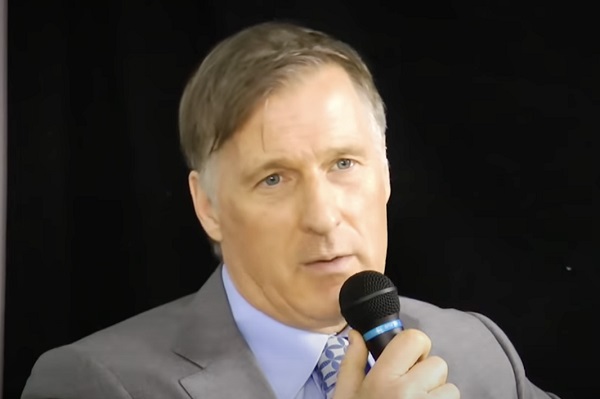
People’s Party of Canada leader Maxime Bernier has warned that the Liberal government’s push for World Economic Forum (WEF) “Global Tax” scheme should concern Canadians.
According to Canada’s 2024 Budget, Prime Minister Justin Trudeau is working to pass the WEF’s Global Minimum Tax Act which will mandate that multinational companies pay a minimum tax rate of 15 percent.
“Canadians should be very concerned, for several reasons,” People’s Party leader Maxime Bernier told LifeSiteNews, in response to the proposal.
“First, the WEF is a globalist institution that actively campaigns for the establishment of a world government and for the adoption of socialist, authoritarian, and reactionary anti-growth policies across the world,” he explained. “Any proposal they make is very likely not in the interest of Canadians.”
“Second, this minimum tax on multinationals is a way to insidiously build support for a global harmonized tax regime that will lower tax competition between countries, and therefore ensure that taxes can stay higher everywhere,” he continued.
“Canada reaffirms its commitment to Pillar One and will continue to work diligently to finalize a multilateral treaty and bring the new system into effect as soon as a critical mass of countries is willing,” the budget stated.
“However, in view of consecutive delays internationally in implementing the multilateral treaty, Canada cannot continue to wait before taking action,” it continued.
The Trudeau government also announced it would be implementing “Pillar Two,” which aims to establish a global minimum corporate tax rate.
“Pillar Two of the plan is a global minimum tax regime to ensure that large multinational corporations are subject to a minimum effective tax rate of 15 per cent on their profits wherever they do business,” the Liberals explained.
“The federal government is moving ahead with legislation to implement the regime in Canada, following consultations last summer on draft legislative proposals for the new Global Minimum Tax Act,” it continued.
According to the budget, Trudeau promised to introduce the new legislation in Parliament soon.
The global tax was first proposed by Secretary-General of Amnesty International at the WEF meeting in Davos this January.
“Let’s start taxing carbon…[but] not just carbon tax,” the head of Amnesty International, Agnes Callamard, said during a panel discussion.
According to the WEF, the tax, proposed by the Organization for Economic Co-operation and Development (OECD), “imposes a minimum effective rate of 15% on corporate profits.”
Following the meeting, 140 countries, including Canada, pledged to impose the tax.
While a tax on large corporations does not necessarily sound unethical, implementing a global tax appears to be just the first step in the WEF’s globalization plan by undermining the sovereignty of nations.
While Bernier explained that multinationals should pay taxes, he argued it is the role of each country to determine what those taxes are.
“The logic of pressuring countries with low taxes to raise them is that it lessens fiscal competition and makes it then less costly and easier for countries with higher taxes to keep them high,” he said.
Bernier pointed out that competition is good since it “forces everyone to get better and more efficient.”
“In the end, we all end up paying for taxes, even those paid by multinationals, as it causes them to raise prices and transfer the cost of taxes to consumers,” he warned.
Bernier further explained that the new tax could be a first step “toward the implementation of global taxes by the United Nations or some of its agencies, with the cooperation of globalist governments like Trudeau’s willing to cede our sovereignty to these international organizations.”
“Just like ‘temporary taxes’ (like the income tax adopted during WWI) tend to become permanent, ‘minimum taxes’ tend to be raised,” he warned. “And if the idea of a global corporate tax becomes normalized, we may eventually see other agreements to impose other taxes, on carbon, airfare, or who knows what.”
Trudeau’s involvement in the WEF’s plan should not be surprising considering his current environmental goals – which are in lockstep with the United Nations’ 2030 Agenda for Sustainable Development – which include the phasing out coal-fired power plants, reducing fertilizer usage, and curbing natural gas use over the coming decades.
The reduction and eventual elimination of so-called “fossil fuels” and a transition to unreliable “green” energy has also been pushed by the World Economic Forum – the aforementioned group famous for its socialist “Great Reset” agenda – in which Trudeau and some of his cabinet are involved.


Maxime Bernier warns Canadians of Trudeau’s plan to implement WEF global tax regime
UN attacks stay-at-home motherhood as ‘gender inequality’
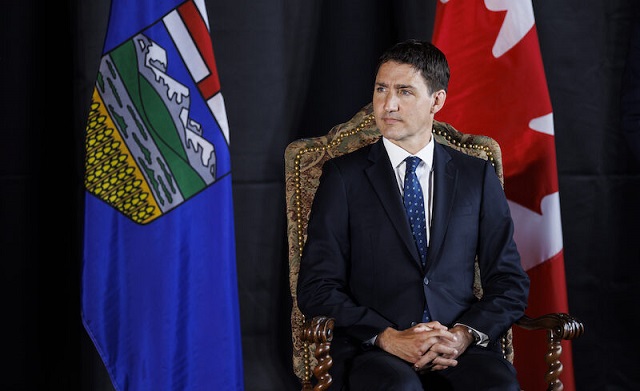
Desperate Liberals move to stop MPs from calling Trudeau ‘corrupt’
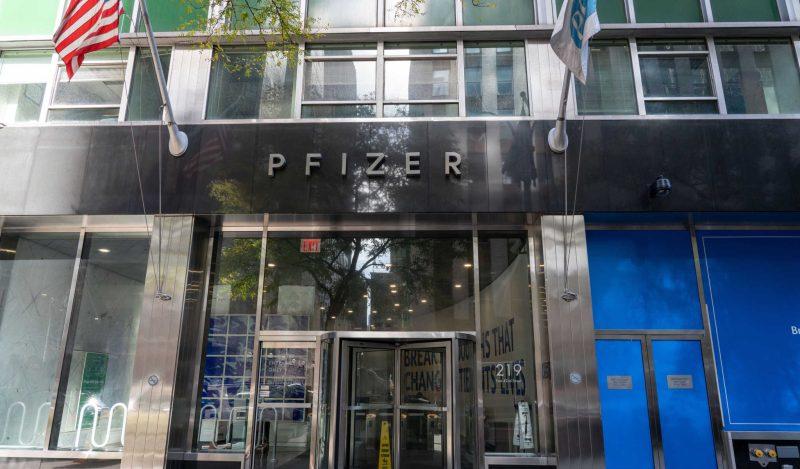
Pfizer reportedly withheld presence of cancer-linked DNA in COVID jabs from FDA, Health Canada
-
COVID-1911 hours ago
Pfizer reportedly withheld presence of cancer-linked DNA in COVID jabs from FDA, Health Canada
-
 Censorship Industrial Complex24 hours ago
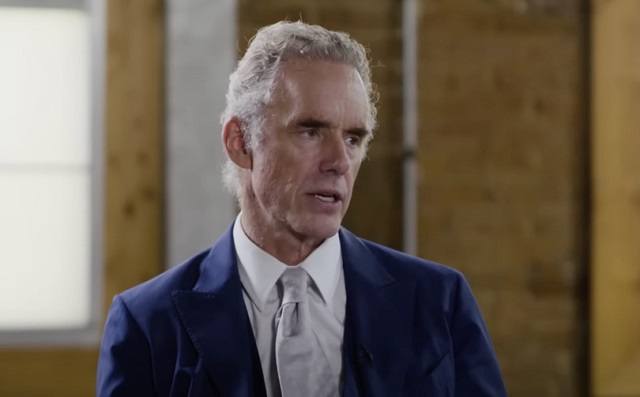
Jordan Peterson, Canadian lawyer warn of ‘totalitarian’ impact of Trudeau’s ‘Online Harms’ bill
-
 Alberta1 day ago
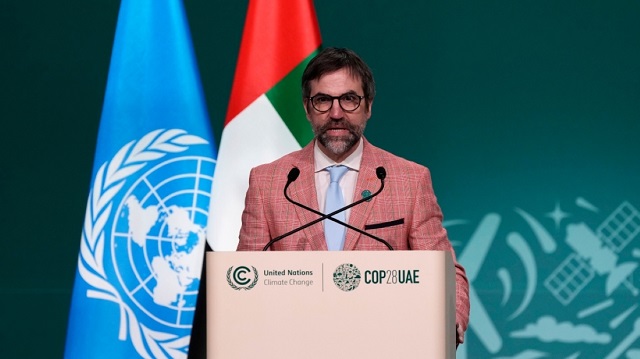
Alberta rejects unconstitutional cap on plastic production
-
 Alberta1 day ago
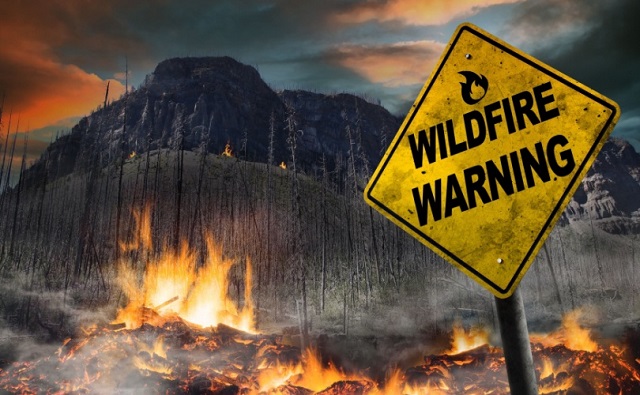
Alberta official reveals ‘almost all’ wildfires in province this year have been started by humans
-
 Bruce Dowbiggin1 day ago
Come For The Graduate Studies, Stay For The Revolution
-
Business1 day ago
Taxpayers criticize Trudeau and Ford for Honda deal
-
 Business2 days ago
Don’t be fooled by high-speed rail
-
 Alberta1 day ago
Political parties will be part of municipal elections in Edmonton and Calgary pilot projects