
Alberta
Death of Dogs from Ukraine a Concern for All


MEDIA RELEASE
Death of Dogs from Ukraine a Concern for All
June 24, 2020
The Alberta SPCA was saddened to learn dozens of puppies died while on route to Canada from Ukraine as part of a shipment of approximately 500 dogs last week, and we are pleased to hear an investigation is underway to determine what happened and to ensure a tragedy like this is not repeated. While is it unclear whether any of the dogs were destined for Alberta, we know small breed dogs are always in demand in our province and that dogs are brought into Alberta regularly for the purpose of selling them to local families.
The situation with the flight from Ukraine highlights the seedy side of dog breeding. These dogs were shipped to Canada because they are in demand here and families are willing to pay thousands of dollars for one. The value of the animals creates an environment where the health of dogs can be put at risk during long journeys to our country and our province, not to mention the unclear circumstances of how they were bred and raised before coming to Canada.
The Alberta SPCA encourages anyone looking to add a canine member to their family to do their homework and ask plenty of questions about the animal’s history. Any reputable breeder in Alberta will be willing to let you see the puppy in its home environment here, and allow you to meet the mother. If a breeder insists on meeting you in a neutral location to complete the transaction, this should be considered a red flag. It is up to all Albertans to limit animal neglect by not buying from groups or people who cannot prove the animal has been raised and treated humanely prior to adoption. It is likely the dogs on the flight would be sold as dogs rescued from Ukraine, but the sheer number of dogs indicates this was a breeding operation not a rescue mission.
It is also important to note there are lots of dogs in Alberta that need homes. When adopting any dog, we strongly encourage families to ask questions about the animals being adopted from any organization. There are dozens of groups who do great work to help find homes for pets in our province, but the industry is unregulated and there is nothing preventing any person or group from describing themselves as a “rescue.” All groups should be willing to share with you the history of the animals they are trying to find homes for. A quick search on the internet will help prospective owners determine if others have had poor experiences dealing with the organization they are considering adopting from.
And lastly, the Alberta SPCA supports any effort to strengthen the regulations and oversight of the importation of companion animals into Canada. The importation of dogs from other countries carries a risk of spreading diseases to both dogs and humans, not to mention the risk to the health of the dogs while in transport to Canada. While we appreciate the efforts of any group trying to help neglected animals in other parts of the world, our country needs to ensure we are not the end destination for dogs raised by unscrupulous breeders in other countries.
Read more on Todayville.



From the Fraser Institute
By Tegan Hill
According to last week’s fiscal update, the Smith government recorded a $8.3 billion surplus in 2024/25—$8 billion more than what the government projected in its original 2024 budget. But the good times won’t last forever.
Due largely to population growth, personal income tax revenue exceeded budget projections by $500 million. Business tax revenue exceeded budget expectations by $1.1 billion. And critically, thanks to relatively strong oil prices, resource revenue (e.g. oil and gas royalties) saw a $4.7 billion jump.
The large budget surplus is good news, particularly as it will be used to pay down government debt (which taxpayers must ultimately finance) and to invest for the future. But again, the good times could soon be over.
Recall, the Alberta government incurred a $17.0 billion budget deficit just a few years ago in 2020/21. And it wasn’t only due to COVID—until the recent string of surpluses, the government ran deficits almost every year since 2008/09, racking up significant amounts of debt, which still largely persists today. As a result, provincial government debt interest payments cost each Albertan $658 in 2024/25. Moreover, in February’s budget, the Smith government projected more deficits over the next three years.
Generally, Alberta’s fiscal fortunes follow the price of oil. Over the past decade, for example, resource revenue has been as low as $2.8 billion in 2015/16, while oil prices slumped to $US45.00 per barrel, and as high as $25.2 billion in 2022/23, when oil prices jumped to $US89.69 per barrel.
Put simply, resource revenue volatility fuels Alberta’s boom-and-bust cycle. In 2025/26, the West Texas Intermediate oil price will be a projected $US68.00 per barrel with projected resource revenue falling by $4.9 billion year-over-year.
But oil prices don’t need to dictate Alberta’s fiscal fortune. Indeed, if the Smith government restrains its spending, it can avoid deficits even when resource revenues fall.
There are plenty of ways to rein in spending. For instance, the government spends billions of dollars in subsidies (a.k.a. corporate welfare) to select industries and businesses in Alberta every year despite a significant body of research that shows these subsidies fail to generate widespread economic benefit. Eliminating these subsidies is a clear first step to deliver significant savings.
The budget surplus is undoubtedly positive for Albertans, but the good times could soon come to an end. To avoid deficits and debt accumulation moving forward, the Smith government should rein in spending.

Tegan Hill
Director, Alberta Policy, Fraser Institute

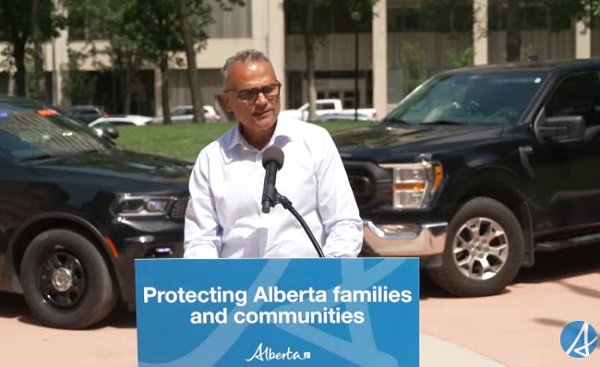
Sat Parhar has been appointed as the first chief of the Independent Agency Police Service, marking the next step toward a new municipal policing option.
The appointment of a new chief for the Independent Agency Police Service (IAPS) marks the next step in giving municipalities a new option for local policing and builds on the work already underway for the agency to assume the police-like duties currently carried out by the Alberta Sheriffs. The IAPS will empower municipalities to adopt strategies that effectively respond to their specific safety concerns, enhancing public safety across the province.
Chief Parhar brings more than 25 years of policing experience, including senior roles with the Calgary Police Service, most recently as deputy chief. His frontline policing experience and deep understanding of Alberta’s complex and diverse public safety landscape positions him to lead the agency as it takes shape and begins its work as a new municipal policing option, keeping communities safe.
Once operational, the agency will strengthen Alberta’s existing policing model and complement the province’s current police services, which includes the RCMP, Indigenous policing services and municipal police. It will help fill gaps and ensure law enforcement resources are deployed efficiently to meet Alberta’s evolving public safety needs and improve law enforcement response times, particularly in rural communities.
“Appointing Chief Sat Parhar is a key milestone in Alberta’s plan to give municipalities a real choice in how their communities are kept safe. This is about building a modern police service that reflects the priorities of Albertans, strengthens local decision-making, and ensures every corner of our province, especially rural areas, can count on responsive, effective law enforcement. With his decades of experience and deep understanding of Alberta’s policing landscape, he is the right leader to bring this vision to life.”
“This appointment signifies a significant step forward in our efforts to establish a more robust, community-focused policing model that is better equipped to meet the unique needs of our local residents. Under Chief Parhar’s visionary leadership, we are confident that we will develop a modern, efficient police service that not only enhances public safety but also aligns closely with the priorities and values of Albertans. His experience and commitment are vital in shaping an IAPS that is responsive, transparent, and dedicated to fostering trust and collaboration within the community, ultimately ensuring a safer and more connected society for all.”
Chief Parhar’s immediate priorities will be to hire an executive team and commence organizational planning such as developing key recruitment, training and other operational policies. Chief Parhar’s appointment is the first step of many to establishing the IAPS.
“It’s an honour to take on this role and help shape a modern police service built for Alberta. My focus from day one will be on setting high standards for professionalism, building strong relationships with our partners and ensuring this service reflects the needs and priorities of the communities we serve.”
The Independent Agency Police Service was formally created through regulation following the passing of Public Safety Statutes Amendment Act, 2024. The agency will operate as an independent Crown corporation, and will be renamed the Alberta Sheriffs Police Service, with its head office located in Calgary. The IAPS will be operationally independent from the provincial government with civilian oversight, consistent with all police services in Alberta.
“When it comes to policing, municipalities like ours deserve a choice – especially when the current system leaves us disadvantaged simply because of our size. We look forward to learning more about what that alternative will look like once an Alberta police agency is fully established and the options are clear. For us, this is about fairness, sustainability, and ensuring municipalities have access to policing solutions that reflect both their needs and their realities.”
Quick facts
- The regulation establishes the IAPS Provincial Corporation and its governance structure including board of directors, board of director powers, financial responsibilities and accountabilities.
Related news
- Expanding municipal police service options (April 7, 2024)

RFK Jr. says Hep B vaccine is linked to 1,135% higher autism rate
Alberta Independence Seekers Take First Step: Citizen Initiative Application Approved, Notice of Initiative Petition Issued

Blind to the Left: Canada’s Counter-Extremism Failure Leaves Neo-Marxist and Islamist Threats Unchecked

Why it’s time to repeal the oil tanker ban on B.C.’s north coast
-
Opinion1 day ago
Blind to the Left: Canada’s Counter-Extremism Failure Leaves Neo-Marxist and Islamist Threats Unchecked
-
Business2 days ago
Why it’s time to repeal the oil tanker ban on B.C.’s north coast
-
Alberta1 day ago
Alberta Provincial Police – New chief of Independent Agency Police Service
-
 Alberta2 days ago
Pierre Poilievre – Per Capita, Hardisty, Alberta Is the Most Important Little Town In Canada
-
 COVID-191 day ago
Top COVID doctor given one of Canada’s highest honors
-
 Business2 days ago
Latest shakedown attempt by Canada Post underscores need for privatization
-
 MxM News2 days ago
UPenn strips Lia Thomas of women’s swimming titles after Title IX investigation
-
 Agriculture8 hours ago
Canada’s supply management system is failing consumers