
Alberta
Chief Waquan thanks community and staff who committed years of time and effort on Teck Frontier project


From the Mikisew Crew Nation
February 24, 2020
Wood Buffalo, AB -Chief Archie Waquan respects Teck Frontier’s decision to withdraw its application for a proposed project in Wood Buffalo, Alberta. Mikisew Cree First Nation believes a new precedent has been set on how industry and government consult with First Nations on major projects.
Chief Archie Waquan, said, “Through our work with Teck, Alberta and Canada around this project, we built stronger relationships with government and industry on how consultation can proactively take cultural, environmental, social and community needs into account in decision-making. That good work stands as a model.”
Chief Waquan thanked the community and staff, who committed years of time and effort, in ensuring Mikisew’s interests were heard and its rights were protected through mitigation and accommodation measures. Chief Waquan also noted the innovative solutions to protect Wood Buffalo National Park, bison and cultural rights were realized because of a collaborative relationship between all parties.
Melody Lepine, Director of MCFN Government & Industry Relations, is with Chief Waquan in Ottawa today, meeting with Federal Environment Minister, Jonathan Wilkinson. “We must continue this important work, to protect the Ronald Bison herd, Wood Buffalo National Park, and other areas needing to be preserved in the area. The Nikechinahonan framework, utilized in this conversation, ensured cultural and environmental rights are to be upheld and protected. This is essential for a healthy Peace Athabasca Delta.”
Mikisew urges the Nikechinhonan framework is a positive blueprint that should be used in the future. The First Nation will continue to work with industry and government to build economic and employment opportunities in a way that respects the environment and treaty rights.
Alberta and two First Nations make deal for proposed oilsands mine



Keyera Corp.’s natural gas liquids facilities in Fort Saskatchewan. Photo courtesy Keyera Corp.
From the Canadian Energy Centre
By Will Gibson
Keyera ‘Canadianizes’ natural gas liquids with $5.15 billion acquisition
Sarnia, Ont., which sits on the southern tip of Lake Huron and peers across the St. Clair River to Michigan, is a crucial energy hub for much of the eastern half of Canada and parts of the United States.
With more than 60 industrial facilities including refineries and chemical plants that produce everything from petroleum, resins, synthetic rubber, plastics, lubricants, paint, cosmetics and food additives in the southwestern Ontario city, Mayor Mike Bradley admits the ongoing dialogue about tariffs with Canada’s southern neighbour hits close to home.
So Bradley welcomed the announcement that Calgary-based Keyera Corp. will acquire the majority of Plains American Pipelines LLP’s Canadian natural gas liquids (NGL) business, creating a cross-Canada NGL corridor that includes a storage hub in Sarnia.
“As a border city, we’ve been on the frontline of the tariff wars, so we support anything that helps enhance Canadian sovereignty and jobs,” says the long-time mayor, who was first elected in 1988.
The assets in Sarnia are a key piece of the $5.15 billion transaction, which will connect natural gas liquids from the growing Montney and Duvernay plays in B.C. and Alberta to markets in central Canada and the eastern U.S. seaboard.

Map courtesy Keyera Corp.
NGLs are hydrocarbons found within natural gas streams including ethane, propane and pentanes. They are important energy sources and used to produce a wide range of everyday items, from plastics and clothing to fuels.
Keyera CEO Dean Setoguchi cast the proposed acquisition as an act of repatriation.
“This transaction brings key NGL infrastructure under Canadian ownership, enhancing domestic energy capabilities and reinforcing Canada’s economic resilience by keeping value and decision-making closer to home,” Setoguchi told analysts in a June 17 call.
“Plains’ portfolio forms a fully integrated cross Canada NGL system connecting Western Canada supply to key demand centres across the Prairie provinces, Ontario and eastern U.S.,” he said.
“The system includes strategic hubs like Empress, Fort Saskatchewan and Sarnia – which provide a reliable source of Canadian NGL supply to extensive fractionation, storage, pipeline and logistics infrastructure.”
Martin King, RBN Energy’s managing director of North America Energy Market Analysis, sees Keyera’s ability to “Canadianize” its NGL infrastructure as improving the company’s growth prospects.
“It allows them to tap into the Duvernay and Montney, which are the fastest growing NGL plays in North America and gives them some key assets throughout the country,” said the Calgary-based analyst.
“The crown assets are probably the straddle plants in Empress, which help strip out the butane, ethane and other liquids for condensate. It also positions them well to serve the eastern half of the country.”
And that’s something welcomed in Sarnia.
“Having a Canadian source for natural gas would be our preference so we see Keyera’s acquisition as strengthening our region as an energy hub,” Bradley said.
“We are optimistic this will be good for our region in the long run.”
The acquisition is expected to close in the first quarter of 2026, pending regulatory approvals.
Meanwhile, the governments of Ontario and Alberta are joining forces to strengthen the economies of both regions, and the country, by advancing major infrastructure projects including pipelines, ports and rail.
A joint feasibility study is expected this year on how to move major private sector-led investments forward.
Alberta
Alberta school boards required to meet new standards for school library materials with regard to sexual content

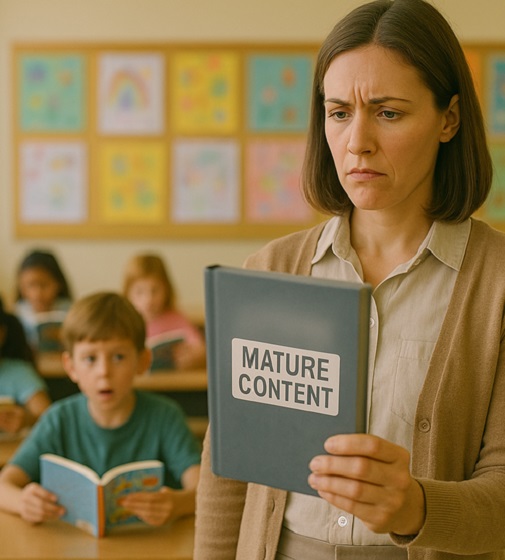
Alberta’s government has introduced new standards to ensure school library materials are age-appropriate.
School libraries should be safe and supportive places where students can learn and explore without being exposed to inappropriate sexual content. However, in the absence of a consistent standard for selecting age-appropriate library materials, school boards have taken different approaches, leading to concerns about safeguards in place.
In response to these concerns, and informed by feedback from education partners and the public, Alberta’s government has created standards to provide school boards with clear direction on the selection, availability and access to school library materials, such as books.
“Our actions to ensure that materials in school libraries don’t expose children to sexual content were never about banning books. These new standards are to ensure that school boards have clear guidance to ensure age-appropriate access to school library materials, while reflecting the values and priorities of Albertans.”
The new standards set clear expectations for school library materials with regard to sexual content and require school boards to implement policies to support these standards.
Standards for school library materials
Under the new standards, school libraries are not permitted to include library materials containing explicit sexual content. Non-explicit sexual content may be accessible to students in Grade 10 and above, provided it is age-appropriate.
“Protecting kids from explicit content is common sense. LGBTQ youth, like all children, deserve to see themselves in stories that are age-appropriate, supportive and affirming – not in material that sexualizes or confuses them.”
School boards must also regularly review their school library collections, publish a full list of available materials and ensure that a staff member supervises students’ access to school library materials. School boards will have to remove any materials with explicit sexual content from their school libraries by October 1.
School board policies and procedures
All school boards must have publicly available policies that align with the new standards for selecting and managing library materials by January 1, 2026. School boards can either create new policies or update existing ones to meet these requirements.
These policies must outline how school library materials are selected and reviewed, how staff supervise students’ access throughout the school day, and how a student, parent, school board employee or other member of the school community can request a review or removal of materials in the school library. School boards are also required to clearly communicate these policies to employees, students and parents before January 2026.
“A robust, grade- and age-appropriate library catalogue is vital for student success. We welcome the ministry’s initiative to establish consistent standards and appreciate the ongoing consultation to help craft a plan that will serve our families and communities well.”
“Red Deer Public Schools welcomes the new provincial standards for school library materials. Our division is committed to maintaining welcoming, respectful learning spaces where students can grow and thrive. Under the new standards for school libraries, we remain dedicated to providing learning resources that reflect our values and support student success.”
Quick facts
- The new standards will apply to public, separate, francophone, charter and independent schools.
- The ministerial order does not apply to municipal libraries located within schools or materials selected for use by teachers as learning and teaching resources.
- From May 26 to June 6, almost 80,000 people completed an online survey to provide feedback on the creation of consistent standards to ensure the age-appropriateness of materials available to students in school libraries.
Related information
- Ministerial Order
- School library standards engagement
- Reference Materials: Content warning: this document contains graphic content that may be disturbing to viewers and is not appropriate for young viewers. Viewer discretion is advised.
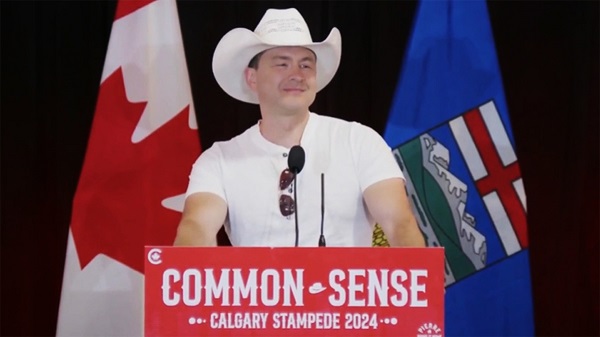
COWBOY UP! Pierre Poilievre Promises to Fight for Oil and Gas, a Stronger Military and the Interests of Western Canada

USAID Quietly Sent Thousands Of Viruses To Chinese Military-Linked Biolab

Canada’s euthanasia regime is already killing the disabled. It’s about to get worse

‘Far too serious for such uninformed, careless journalism’: Complaint filed against Globe and Mail article challenging Alberta’s gender surgery law
-
 Bruce Dowbiggin2 days ago
The Covid 19 Disaster: When Do We Get The Apologies?
-
 Crime1 day ago
Sweeping Boston Indictment Points to Vast Chinese Narco-Smuggling and Illegal Alien Labor Plot via Mexican Border
-
Alberta2 days ago
Alberta school boards required to meet new standards for school library materials with regard to sexual content
-
 International20 hours ago
Support for the Ukraine war continues because no one elected is actually in charge.
-
 Business20 hours ago
Trump slaps Brazil with tariffs over social media censorship
-
 Environment1 day ago
EPA releases report on chemtrails, climate manipulation
-
 Business24 hours ago
CBC six-figure salaries soar
-
 Addictions22 hours ago
Can addiction be predicted—and prevented?