
National
Canadian mayor has bank account garnished after standing up to LGBT activists

From LifeSiteNews
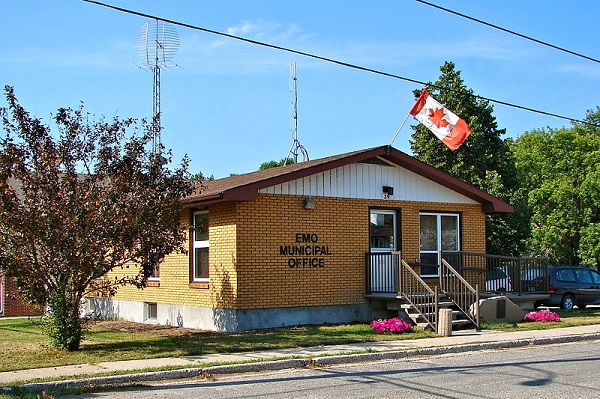
The garnishment was issued by the court and delivered to the CIBC in Emo, which is the only bank in that community.
LGBT activists aren’t used to politicians refusing to do what they say. That’s why Mayor Harold McQuaker of Emo, Ontario—population 1,200—has become a source of their ire.
As I reported previously, in 2020 Emo’s town council voted not to issue a “Pride Proclamation” or fly the LGBT flag. The town hall doesn’t even have a flagpole. In response, Borderland Pride sued the town, and last month the Ontario Human Rights Commission ordered the township to pay the LGBT group $10,000, and McQuaker was ordered to personally pay $5,000 and take a re-education class called “Human Rights 101.”
The town council has yet to vote on whether to pay the fine or appeal, but McQuaker told the Toronto Sun that he would not be “extorted” and thus would not be paying the fine, attending the re-education classes, or sanctioning “Drag Queen Story Hour” in the local library—one of the events Borderland Pride is calling for.
In response, Borderland Pride went around the mayor and requested that $5,000 be taken directly from his bank account. The request granted, they went on a victory lap on social media. “Sure, sex is great, but have you ever garnished your mayor’s bank account after he publicly refused to comply with a Tribunal’s order to pay damages?” the group posted on Facebook. The “damages,” of course, were the mayor declining to proactively endorse their ideology.
“Mayor McQuaker’s comments in the Toronto Sun and other media were very clear that he did not respect nor intend to comply with the Tribunal’s orders,” Borderland Pride told the Sun. “Consequently, it was apparent he would not voluntarily make payment of the damages ordered. We took immediate action to garnish his bank account. The garnishment was issued by the court and delivered to the CIBC in Emo, which is the only bank in that community.”
“There is no hearing or application to issue a notice of garnishment – it is a service provided at the court counter or online once a person has an order for the payment of money,” Borderland Pride stated. “Orders of the Tribunal can be enforced in the same manner as any civil judgment for the payment of money. We intend to ensure the Tribunal’s orders are complied with.” Joe Warmington of the Toronto Sun sounded the alarm:
Cancel culture is cancelling this mayor and digging into his personal savings too. On a weak premise that there is discrimination of LGBT people there, the enforcement is harsher than most violent criminals receive. It seems like a heavy-handed, undemocratic move, not to mention a violation of personal finances, and cruel and unusual punishment. It’s also a slippery slope. The state using legal instruments to take from one person and give to others amounts to communism and authoritarianism that should scare every citizen. First, we saw government and banks freezing accounts of pandemic lockdown protesters, seizing donations to crowdfunding sites, and now in woke Canada comes word they can raid bank accounts, too.
Despite Borderland Pride’s insistence that they are mere enforcers of tolerance, their Facebook page features post after post mocking those who object to the fact that their mayor and their community is being bullied. It also includes images like this:

The meaning of that picture is pretty clear—and just imagine if the roles were reversed. What would Borderland Pride say if a Christian posted a photo of a steamroller with a cross on it, chasing screaming people labeled “LGBT values” and “same-sex ‘marriage’” on it? I think we know. They would say that it was threatening and inappropriate. Yet a rainbow steamroller crushing screaming people labeled “Traditional Family” and “Christian values” and “Sanctity of marriage” is just fine. This isn’t just a double standard—it is a new standard, where the values of LGBT activists take precedence over those of everyone else.
Borderland Pride’s celebratory posts about garnishing the bank account of a 77-year-old great-grandfather tell us precisely who they are—many of the posts and comments from LGBT activists are frankly too vile to publish (suffice it to say they refer to performing sex acts in public). Canada is also getting a good look at the agenda of LGBT activists once again. They do not want “tolerance,” or to “live and let live”—they want their flag hanging from government buildings, politicians obediently proclaiming a celebration of their activities, and drag queens in local libraries.
It was never about tolerance.


From the Fraser Institute
By Tegan Hill
Last Friday, less than a week before Christmas, the Smith government quietly released the final report from its Alberta Next Panel, which assessed Alberta’s role in Canada. Among other things, the panel recommends that the federal government transfer some of its tax revenue to provincial governments so they can assume more control over the delivery of provincial services. Based on Canada’s experience in the 1990s, this plan could deliver real benefits for Albertans and all Canadians.
Federations such as Canada typically work best when governments stick to their constitutional lanes. Indeed, one of the benefits of being a federalist country is that different levels of government assume responsibility for programs they’re best suited to deliver. For example, it’s logical that the federal government handle national defence, while provincial governments are typically best positioned to understand and address the unique health-care and education needs of their citizens.
But there’s currently a mismatch between the share of taxes the provinces collect and the cost of delivering provincial responsibilities (e.g. health care, education, childcare, and social services). As such, Ottawa uses transfers—including the Canada Health Transfer (CHT)—to financially support the provinces in their areas of responsibility. But these funds come with conditions.
Consider health care. To receive CHT payments from Ottawa, provinces must abide by the Canada Health Act, which effectively prevents the provinces from experimenting with new ways of delivering and financing health care—including policies that are successful in other universal health-care countries. Given Canada’s health-care system is one of the developed world’s most expensive universal systems, yet Canadians face some of the longest wait times for physicians and worst access to medical technology (e.g. MRIs) and hospital beds, these restrictions limit badly needed innovation and hurt patients.
To give the provinces more flexibility, the Alberta Next Panel suggests the federal government shift tax points (and transfer GST) to the provinces to better align provincial revenues with provincial responsibilities while eliminating “strings” attached to such federal transfers. In other words, Ottawa would transfer a portion of its tax revenues from the federal income tax and federal sales tax to the provincial government so they have funds to experiment with what works best for their citizens, without conditions on how that money can be used.
According to the Alberta Next Panel poll, at least in Alberta, a majority of citizens support this type of provincial autonomy in delivering provincial programs—and again, it’s paid off before.
In the 1990s, amid a fiscal crisis (greater in scale, but not dissimilar to the one Ottawa faces today), the federal government reduced welfare and social assistance transfers to the provinces while simultaneously removing most of the “strings” attached to these dollars. These reforms allowed the provinces to introduce work incentives, for example, which would have previously triggered a reduction in federal transfers. The change to federal transfers sparked a wave of reforms as the provinces experimented with new ways to improve their welfare programs, and ultimately led to significant innovation that reduced welfare dependency from a high of 3.1 million in 1994 to a low of 1.6 million in 2008, while also reducing government spending on social assistance.
The Smith government’s Alberta Next Panel wants the federal government to transfer some of its tax revenues to the provinces and reduce restrictions on provincial program delivery. As Canada’s experience in the 1990s shows, this could spur real innovation that ultimately improves services for Albertans and all Canadians.

Tegan Hill
Director, Alberta Policy, Fraser Institute
From the Fraser Institute
By Jason Clemens and Niels Veldhuis
A number of pundits and commentators have observed the self-confidence and near-unilateralist approach of our prime minister, Mark Carney. The seemingly boundless self-assurance of the prime minister in his own abilities to do the right thing has produced legislation that sets the foundation for corruption.
Consider the Carney government’s signature legislation, known as the Building Canada Act (Bill C-5), which among other things established the Major Projects Office (MPO). The stated purpose of the MPO and the act is to create a process whereby the government—in practical terms, the prime minister and his cabinet—identify projects in the “national interest” and fast-track their approval by overriding existing laws and regulations.
Put differently, a small group of politicians are now able to circumvent the laws and regulations that apply to every other entrepreneur, businessowner and investor to expedite projects they deem will benefit the country. According to several reports, senators openly referred to the bill as the “trust me” act because it lacked details and guardrails, which meant “trusting” that the prime minister and cabinet would use these new powers reasonably and responsibly.
Rather than fix the actual policies causing problems, which include a litany of laws and regulations from the Trudeau era such as Bill C-69 (which added vague criteria to the approval process for large infrastructure projects including pipelines) and Bill C-48 (which bans oil tankers from docking in British Columbia ports), the Carney government chose to create a new bureaucracy and political process to get around these rules.
And that’s the problem. By granting itself power to get around rules that everyone else has to play by, the government created the opportunity for corruption. Entrepreneurs, businessowners and investors interested in infrastructure projects, particularly energy projects, now need to consider how to convince a handful of politicians of the merits of their project. This lays the groundwork for potentially corrosive and damaging corruption now and into the future. While this prime minister may have an infinite amount of confidence in his abilities to do the right thing, what about the next prime minister, or the next one? These rules will outlive Prime Minister Carney and his government.
And it’s not just the Carney government’s signature Build Canada Act. The more recent Bill C-15, which implements certain aspects of the federal budget, contains provisions similar to the Build Canada Act that would also allow cabinet ministers to circumvent existing laws and regulations. A number of commentators have raised red flags about how the legislation would empower any minister to exempt any entity (i.e. person or firm) from any law or regulation—except the Criminal Code—under the minister’s responsibility for up to six years in order to foster innovation. The underlying rationale is that we have laws and regulations on the books that impede experimentation and innovation.
Again, rather than undertake the difficult work of updating and modernizing existing laws and regulations to empower entrepreneurs, businessowners, workers, and investors, and ensure they all play by the same rules, the Carney government instead wants to create a new mechanism for a select few to be able to sidestep existing laws and regulations.
A different way to think about both legislative initiatives is that the prime minister and his ministers are now able to provide specific companies with enormous advantages over their competitors through the political system. Those advantages have enormous value, and that value creates the opportunity for corruption now and in the future.
The Carney government recognizes that our regulatory system is badly broken, otherwise it wouldn’t create these work-around laws. It should do the hard work, which it was elected to do, and actually fix the laws and regulations that impede economic development and progress for all entrepreneurs, businessowners and investors. Otherwise, we risk a future littered with stories of advantage and corruption for political insiders.

Jason Clemens
Executive Vice President, Fraser Institute

Niels Veldhuis


Australian PM booed at Bondi vigil as crowd screams “shame!”

There’s No Bias at CBC News, You Say? Well, OK…

Georgia county admits illegally certifying 315k ballots in 2020 presidential election
Mortgaging Canada’s energy future — the hidden costs of the Carney-Smith pipeline deal
-
 Energy2 days ago
The Top News Stories That Shaped Canadian Energy in 2025 and Will Continue to Shape Canadian Energy in 2026
-
 International2 days ago
$2.6 million raised for man who wrestled shotgun from Bondi Beach terrorist
-
Alberta2 days ago
Ottawa-Alberta agreement may produce oligopoly in the oilsands
-
 Frontier Centre for Public Policy17 hours ago
Tent Cities Were Rare Five Years Ago. Now They’re Everywhere
-
 Energy2 days ago
Western Canada’s supply chain for Santa Claus
-
 Opinion18 hours ago
Pope Leo XIV’s Christmas night homily
-
 armed forces18 hours ago
Remembering Afghanistan and the sacrifices of our military families
-
Fraser Institute3 hours ago
Carney government sowing seeds for corruption in Ottawa