
Business
Canada’s economy has stagnated despite Ottawa’s spin


From the Fraser Institute
By Ben Eisen, Milagros Palacios and Lawrence Schembri
Canada’s inflation-adjusted per-person annual economic growth rate (0.7 per cent) is meaningfully worse than the G7 average (1.0 per cent) over this same period. The gap with the U.S. (1.2 per cent) is even larger. Only Italy performed worse than Canada.
Growth in gross domestic product (GDP), the total value of all goods and services produced in the economy annually, is one of the most frequently cited indicators of Canada’s economic performance. Journalists, politicians and analysts often compare various measures of Canada’s total GDP growth to other countries, or to Canada’s past performance, to assess the health of the economy and living standards. However, this statistic is misleading as a measure of living standards when population growth rates vary greatly across countries or over time.
Federal Finance Minister Chrystia Freeland, for example, recently boasted that Canada had experienced the “strongest economic growth in the G7” in 2022. Although the Trudeau government often uses international comparisons on aggregate GDP growth as evidence of economic success, it’s not the first to do so. In 2015, then-prime minister Stephen Harper said Canada’s GDP growth was “head and shoulders above all our G7 partners over the long term.”
Unfortunately, such statements do more to obscure public understanding of Canada’s economic performance than enlighten it. In reality, aggregate GDP growth statistics are not driven by productivity improvements and do not reflect rising living standards. Instead, they’re primarily the result of differences in population and labour force growth. In other words, they aren’t primarily the result of Canadians becoming better at producing goods and services (i.e. productivity) and thus generating more income for their families. Instead, they primarily reflect the fact that there are simply more people working, which increases the total amount of goods and services produced but doesn’t necessarily translate into increased living standards.
Let’s look at the numbers. Canada’s annual average GDP growth (with no adjustment for population) from 2000 to 2023 was the second-highest in the G7 at 1.8 per cent, just behind the United States at 1.9 per cent. That sounds good, until you make a simple adjustment for population changes by comparing GDP per person. Then a completely different story emerges.
Canada’s inflation-adjusted per-person annual economic growth rate (0.7 per cent) is meaningfully worse than the G7 average (1.0 per cent) over this same period. The gap with the U.S. (1.2 per cent) is even larger. Only Italy performed worse than Canada.
Why the inversion of results from good to bad? Because Canada has had by far the fastest population growth rate in the G7, growing at an annualized rate of 1.1 per cent—more than twice the annual population growth rate of the G7 as a whole at 0.5 per cent. In aggregate, Canada’s population increased by 29.8 per cent during this time period compared to just 11.5 per cent in the entire G7.
Clearly, aggregate GDP growth is a poor tool for international comparisons. It’s also not a good way to assess changes in Canada’s performance over time because Canada’s rate of population growth has not been constant. Starting in 2016, sharply higher rates of immigration have led to a pronounced increase in population growth. This increase has effectively partially obscured historically weak economic growth per person over the same period.
Specifically, from 2015 to 2023, under the Trudeau government, inflation-adjusted per-person economic growth averaged just 0.3 per cent. For historical perspective, per-person economic growth was 0.8 per cent annually under Brian Mulroney, 2.4 per cent under Jean Chrétien and 2.0 per cent under Paul Martin.
Due to Canada’s sharp increase in population growth in recent years, aggregate GDP growth is a misleading indicator for comparing economic growth performance across countries or time periods. Canada is not leading the G7, or doing well in historical terms, when it comes to economic growth measures that make simple adjustments for our rapidly growing population. In reality, we’ve become a growth laggard and our living standards have largely stagnated for the better part of a decade.
Authors:



From The Center Square
By
After the self-described socialist Zohran Mamdani won the Democratic primary for mayor in New York, Dallas Mayor Eric Johnson invited New Yorkers and others to move to Dallas.
Mamdani has vowed to implement a wide range of tax increases on corporations and property and to “shift the tax burden” to “richer and whiter neighborhoods.”
New York businesses and individuals have already been relocating to states like Texas, which has no corporate or personal income taxes.
Johnson, a Black mayor and former Democrat, switched parties to become a Republican in 2023 after opposing a city council tax hike, The Center Square reported.
“Dear Concerned New York City Resident or Business Owner: Don’t panic,” Johnson said. “Just move to Dallas, where we strongly support our police, value our partners in the business community, embrace free markets, shun excessive regulation, and protect the American Dream!”
Fortune 500 companies and others in recent years continue to relocate their headquarters to Dallas; it’s also home to the new Texas Stock Exchange (TXSE). The TXSE will provide an alternative to the New York Stock Exchange and Nasdaq and there are already more finance professionals in Texas than in New York, TXSE Group Inc. founder and CEO James Lee argues.
From 2020-2023, the Dallas-Fort Worth-Arlington MSA reported the greatest percentage of growth in the country of 34%, The Center Square reported.
Johnson on Thursday continued his invitation to New Yorkers and others living in “socialist” sanctuary cities, saying on social media, “If your city is (or is about to be) a sanctuary for criminals, mayhem, job-killing regulations, and failed socialist experiments, I have a modest invitation for you: MOVE TO DALLAS. You can call us the nation’s first official ‘Sanctuary City from Socialism.’”
“We value free enterprise, law and order, and our first responders. Common sense and the American Dream still reside here. We have all your big-city comforts and conveniences without the suffocating vice grip of government bureaucrats.”
As many Democratic-led cities joined a movement to defund their police departments, Johnson prioritized police funding and supporting law and order.
“Back in the 1800s, people moving to Texas for greater opportunities would etch ‘GTT’ for ‘Gone to Texas’ on their doors moving to the Mexican colony of Tejas,” Johnson continued, referring to Americans who moved to the Mexican colony of Tejas to acquire land grants from the Mexican government.
“If you’re a New Yorker heading to Dallas, maybe try ‘GTD’ to let fellow lovers of law and order know where you’ve gone,” Johnson said.
Modern-day GTT movers, including a large number of New Yorkers, cite high personal income taxes, high property taxes, high costs of living, high crime, and other factors as their reasons for leaving their states and moving to Texas, according to multiple reports over the last few years.
In response to Johnson’s invitation, Gov. Greg Abbott said, “Dallas is the first self-declared “Sanctuary City from Socialism. The State of Texas will provide whatever support is needed to fulfill that mission.”
The governor has already been doing this by signing pro-business bills into law and awarding Texas Enterprise Grants to businesses that relocate or expand operations in Texas, many of which are doing so in the Dallas area.
“Texas truly is the Best State for Business and stands as a model for the nation,” Abbott said. “Freedom is a magnet, and Texas offers entrepreneurs and hardworking Texans the freedom to succeed. When choosing where to relocate or expand their businesses, more innovative industry leaders recognize the competitive advantages found only in Texas. The nation’s leading CEOs continually cite our pro-growth economic policies – with no corporate income tax and no personal income tax – along with our young, skilled, diverse, and growing workforce, easy access to global markets, robust infrastructure, and predictable business-friendly regulations.”

From the Fraser Institute
By Matthew Lau
At the beginning of June, the Canadian Dental Care Plan expanded to include all eligible adults. To be eligible, you must: not have access to dental insurance, have filed your 2024 tax return in Canada, have an adjusted family net income under $90,000, and be a Canadian resident for tax purposes.
As a result, millions more Canadians will be able to access certain dental services at reduced—or no—out-of-pocket costs, as government shoves the costs onto the backs of taxpayers. The first half of the proposition, accessing services at reduced or no out-of-pocket costs, is always popular; the second half, paying higher taxes, is less so.
A Leger poll conducted in 2022 found 72 per cent of Canadians supported a national dental program for Canadians with family incomes up to $90,000—but when asked whether they would support the program if it’s paid for by an increase in the sales tax, support fell to 42 per cent. The taxpayer burden is considerable; when first announced two years ago, the estimated price tag was $13 billion over five years, and then $4.4 billion ongoing.
Already, there are signs the final cost to taxpayers will far exceed these estimates. Dr. Maneesh Jain, the immediate past-president of the Ontario Dental Association, has pointed out that according to Health Canada the average patient saved more than $850 in out-of-pocket costs in the program’s first year. However, the Trudeau government’s initial projections in the 2023 federal budget amounted to $280 per eligible Canadian per year.
Not all eligible Canadians will necessarily access dental services every year, but the massive gap between $850 and $280 suggests the initial price tag may well have understated taxpayer costs—a habit of the federal government, which over the past decade has routinely spent above its initial projections and consistently revises its spending estimates higher with each fiscal update.
To make matters worse there are also significant administrative costs. According to a story in Canadian Affairs, “Dental associations across Canada are flagging concerns with the plan’s structure and sustainability. They say the Canadian Dental Care Plan imposes significant administrative burdens on dentists, and that the majority of eligible patients are being denied care for complex dental treatments.”
Determining eligibility and coverage is a huge burden. Canadians must first apply through the government portal, then wait weeks for Sun Life (the insurer selected by the federal government) to confirm their eligibility and coverage. Unless dentists refuse to provide treatment until they have that confirmation, they or their staff must sometimes chase down patients after the fact for any co-pay or fees not covered.
Moreover, family income determines coverage eligibility, but even if patients are enrolled in the government program, dentists may not be able to access this information quickly. This leaves dentists in what Dr. Hans Herchen, president of the Alberta Dental Association, describes as the “very awkward spot” of having to verify their patients’ family income.
Dentists must also try to explain the program, which features high rejection rates, to patients. According to Dr. Anita Gartner, president of the British Columbia Dental Association, more than half of applications for complex treatment are rejected without explanation. This reduces trust in the government program.
Finally, the program creates “moral hazard” where people are encouraged to take riskier behaviour because they do not bear the full costs. For example, while we can significantly curtail tooth decay by diligent toothbrushing and flossing, people might be encouraged to neglect these activities if their dental services are paid by taxpayers instead of out-of-pocket. It’s a principle of basic economics that socializing costs will encourage people to incur higher costs than is really appropriate (see Canada’s health-care system).
At a projected ongoing cost of $4.4 billion to taxpayers, the newly expanded national dental program is already not cheap. Alas, not only may the true taxpayer cost be much higher than this initial projection, but like many other government initiatives, the dental program already seems to be more costly than initially advertised.

Matthew Lau
Adjunct Scholar, Fraser Institute

RFK Jr. says Hep B vaccine is linked to 1,135% higher autism rate

Blind to the Left: Canada’s Counter-Extremism Failure Leaves Neo-Marxist and Islamist Threats Unchecked
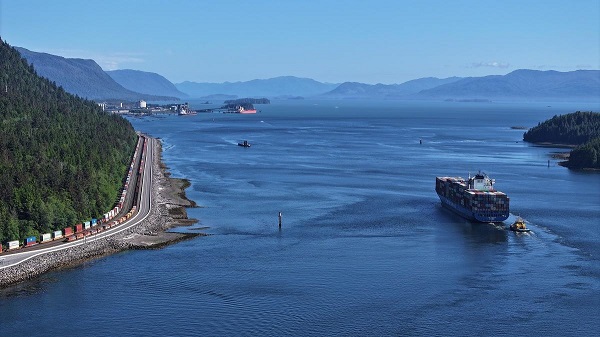
Why it’s time to repeal the oil tanker ban on B.C.’s north coast

Alberta Provincial Police – New chief of Independent Agency Police Service
-
 Agriculture2 days ago
Canada’s supply management system is failing consumers
-
 Alberta1 day ago
Alberta uncorks new rules for liquor and cannabis
-
 Energy20 hours ago
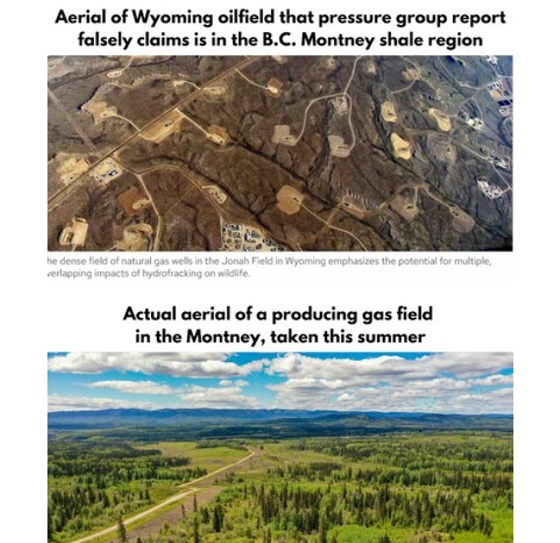
B.C. Residents File Competition Bureau Complaint Against David Suzuki Foundation for Use of False Imagery in Anti-Energy Campaigns
-
 COVID-1920 hours ago
Court compels RCMP and TD Bank to hand over records related to freezing of peaceful protestor’s bank accounts
-
 Crime2 days ago
Project Sleeping Giant: Inside the Chinese Mercantile Machine Linking Beijing’s Underground Banks and the Sinaloa Cartel
-
 International1 day ago
Trump transportation secretary tells governors to remove ‘rainbow crosswalks’
-
 Alberta24 hours ago
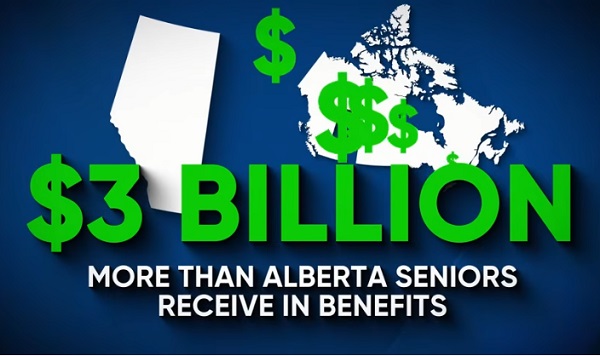
Alberta Next: Alberta Pension Plan
-
 C2C Journal18 hours ago
Canada Desperately Needs a Baby Bump