
Frontier Centre for Public Policy
Budget 2024 as the eve of 1984 in Canada


From the Frontier Centre for Public Policy
Those who claim there are unmarked burials have painted themselves into a corner. If there are unmarked burials, there have had to be murders because why else would anyone attempt to conceal the deaths?
The Federal Government released its Budget 2024 last week. In addition to hailing a 181% increase in spending on Indigenous priorities since 2016, “Budget 2024 also proposes to provide $5 million over three years, starting in 2025-26, to Crown-Indigenous Relations and Northern Affairs Canada to establish a program to combat Residential School denialism.” Earlier this spring, the government proclaimed:
The government anticipates the Special Interlocutor’s final report and recommendations in spring 2024. This report will support further action towards addressing the harmful legacy of residential schools through a framework relating to federal laws, regulations, policies, and practices surrounding unmarked graves and burials at former residential schools and associated sites. This will include addressing residential school denialism.
Like “Reconciliation,” the exact definition of what the Federal government means by “residential school denialism” is not clear. In this vague definition, there is, of course, a potential for legislating vindictiveness.
What further action is needed to address “the harmful legacy of residential schools” except to enforce a particular narrative about the schools as being only harmful? Is it denialism to point out that many students, such as Tomson Highway and Len Marchand, had positive experiences at the schools and that their successful careers were, in part, made possible by their time in residential school? If the study of history is subordinated to promoting a particular political narrative, is it still history or has it become venal propaganda?
Since the sensational May 27, 2021, claim that 215 children’s remains had been found in a Kamloops orchard, the Trudeau government has been chasing shibboleths. The Kamloops claim remains unsubstantiated to this day in two glaring ways: no names of children missing from the Kamloops IRS (Indian Residential Schools) have been presented and no human remains have been uncovered. For anyone daring to point out this absence of evidence, their reward is being the target of a witch hunt. As we recently witnessed in Quesnel, B.C., to be labeled as a residential school denialist is to be drummed out of civil society.
If we must accept a particular political narrative of the IRS as the history of the IRS, does our freedom of conscience and speech have any meaning?

To the discredit of the Truth and Reconciliation Commission, fictions of missing and murdered children circulating long before the Commission’s inception were subsumed by the TRC (Truth and Reconciliation Commission). Unmarked graves and burials were incorporated into the TRC’s work as probable evidence of foul play. In the end, the TRC found no evidence of any murders committed by any staff against any students throughout the entirety history of the residential schools. Unmarked graves are explained as formerly marked and lawful graves that had since become lost due to neglect and abandonment. Unmarked burials, if they existed, could be construed as evidence of criminal acts, but such burials associated with the schools have never been proven to exist.
Those who claim there are unmarked burials have painted themselves into a corner. If there are unmarked burials, there have had to be murders because why else would anyone attempt to conceal the deaths? If there are thousands of unmarked burials, there are thousands of children who went missing from residential schools. How could thousands of children go missing from schools without even one parent, one teacher, or one Chief coming forward to complain?
There are, of course, neither any missing children nor unmarked burials and the Special Interlocutor told the Senate Committee on Indigenous People: “The children aren’t missing; they’re buried in the cemeteries. They’re missing because the families were never told where they’re buried.”
Is it denialism to repeat or emphasize what the Special Interlocutor testified before a Senate Committee? Is combating residential school denialism really an exercise in policing wrongthink? Like the beleaguered Winston in Orwell’s 1984, it is impossible to keep up with the state’s continual revision of the past, even the recent past.
For instance, the TRC’s massive report contains a chapter on the “Warm Memories” of the IRS. Drawing attention to those positive recollections is now considered “minimizing the harms of residential schools.”
In 1984, the state sought to preserve itself through historical revision and the enforcement of those revisions. In the Trudeau government’s efforts to enforce a revision of the IRS historical record, the state is not being preserved. How could it be if the IRS is now considered to be a colossal genocide? The intent is to preserve the party in government and if it means sending Canada irretrievably down a memory hole as a genocidaire, so be it.
Michael Melanson is a writer and tradesperson in Winnipeg.


COVID-19
Peckford: Hallelujah! Supreme Court of Canada to hear Newfoundland and Labrador charter case

From the Frontier Centre for Public Policy
This will allow the SCC to address novel questions about the scope of mobility rights in Canada and the extent to which the government can limit Canadians’ rights to move freely around the country.
In what can only be considered a surprise move the SCC has agreed to hear an appeal of a decision of the Supreme Court of Newfoundland. Surprise because the Newfoundland and Labrador Court of Appeal refused to hear the appeal of this exact case.
For the Appeal Court it was the all too familiar excuse of the whole thing being too moot for the Court.
But now the SCC has agreed to hear the case. The parties, Kimberly Taylor and The Canadian Civil Liberties Association appealed to the court.
Here is a copy of the Civil Liberties Press Release dated April 26, 2024:
“Arbitrary travel restrictions infringe on the mobility rights of Canadians. CCLA’s challenge of Newfoundland government’s Bill 38 will continue before the Supreme Court of Canada (SCC), so that Canadians have clear, predictable, and stable answers to fundamental questions affecting their basic mobility rights.”
Back in May 2020, CCLA challenged the constitutionality of the Newfoundland government’s Bill 38 before the province’s Supreme Court. This Bill provided for a travel ban between provinces and other restrictive measures in the context of the COVID-19 pandemic. CCLA asked the Court to declare Bill 38 in violation of s.6 (mobility rights), as well as other Charter rights. CCLA also argued that the law could not be saved by s.1, which says that limits on rights must be reasonable and demonstrably justified. In September of 2020, the province’s Supreme Court found that the travel ban did violate the s.6 Charter right to mobility, but that such infringement could be justified under s.1. CCLA pursued this case before the Newfoundland and Labrador Court of Appeal. In August of 2023, the Court of Appeal refused to settle the merits of the appeal under the motive that it was moot, since the ban had been lifted. This was done despite all the parties urging the Court of Appeal to decide the appeal on the merits.
CCLA is pleased to learn that the SCC just granted its application seeking leave to appeal in this case. This will allow the SCC to address novel questions about the scope of mobility rights in Canada and the extent to which the government can limit Canadians’ rights to move freely around the country. CCLA is grateful for the excellent pro bono work of Paul Pape, Shantona Chaudhury and Mitchell McGowan from Pape Chaudry LLP in this file.”
Like the Association I am pleased that the highest court is going to hear the case. One can only assume that it will not just issue a silly moot decision given that they could have let the Court of Appeal decision of Newfoundland stand and not hear the case.
I hope the highest court considers the following given it is high time for the Constitution of This Country to be fairly applied and interpreted as written.
Courts have not the power to rewrite this sacred document. They are not omnipotent. That is for the people through its elected representatives as expressed in Section 38 of the Constitution Act 1982 in which the Charter is located—the Amending Formula.
The intent of Section 1 Of the Charter was that it could only be applied in a war, insurrection, the state being threatened circumstance. As one of the First Ministers involved and whose signature is on the original Patriation Agreement I submit this point of view was what was operative at the time of the construction of this section. All remaining First Ministers whose names are on that document are no longer with us. Sadly, no court has called me to provide my view.
This intent is clear In Section 4 (2) of the Charter:
“In time of real or apprehended war, invasion or insurrection, a House of Commons may be continued by Parliament and a legislative assembly may be continued by the legislature beyond five years if such continuation is not opposed by the votes of more than one-third of the members of the House of Commons or the legislative assembly, as the case may be.”
So, decisions that have been made concerning the Charter should only be made in this context. Numerous court deliberations here and in many western jurisdictions have considered intent in determining the legitimacy of legislation. This is not novel or new.
Hence, a glaring, fundamental mistake has occurred in interpreting our Charter. The blatant omission of considering the opening words of the Charter in any interpretation of legislation by the Courts is an abuse of the Charter, our Constitution. Where is the power provided the courts to engage is such omission? Those words are:
“Whereas Canada is founded upon principles that recognize the supremacy of God and the rule of law:”
The one reference of which I am aware in the Courts literature to any consideration of the opening words relating to God was by an Alberta Judge in a lower court foolishly indicated that the creators of the words did not identify God as being a Christian God. All the creators, the First Ministers, were Christians —that’s all. What an insult to our history and traditions and the authors?
And this has been allowed to stand?
And what about the rule of law? Little if anything has been done in considering and interpreting this point.
As for Section 1 itself of the Charter. If one can get past the previous points, which is impossible, but let’s speculate: the court in question in Newfoundland, like the courts across the land, have disfigured, misinterpreted the wording of this section —-
Rights and freedoms in Canada
The Canadian Charter of Rights and Freedoms guarantees the rights and freedoms set out in it subject only to such reasonable limits prescribed by law as can be demonstrably justified in a free and democratic society.
What is of crucial importance is ‘demonstrably justify ‘and a free and democratic society ‘—-is it not? Many try and evade confronting these concepts by emphasizing ‘reasonable ‘. But ‘reasonable ‘is qualified, if you will, with ‘as can be demonstrably justified ‘and ‘in a free and democratic society.’ This was deliberate by the creators and authors of this section.
So, as we all know such reasonable demonstration would be a cost benefit analysis, a tool used frequently by Government in considering new policies or programs —and this case especially when sacred rights enshrined in the constitution were to be taken way!!! Yet, there was none! And what about the Provincial Emergency Management organizations that were already established in all the provinces with immediate expertise. Were they consulted? Not one!
No such attempt was made, and the Governments did not conduct even a cursory cost benefit review and the courts eagerly accepted the one-sided Government narrative. Yet experts like Lt. Colonel David Redman, who had been involved in Emergency Management and had written extensively on it were never consulted!
And ‘free and democratic society? Was there any meaningful engagement of the Parliament of Canada or the Legislative Assemblies —-not really, ——only to delegate power to unelected bureaucrats and relieve the politicians of direct responsibility. Where were the Parliamentary Committees? The sober consideration of all points of view in an open public session? Of independent science? Does not free and democratic society entail such deliberations?
And to those courts / governments who talk about little time—in this Newfoundland case it was 6 months before The Supreme Court of the Province ruled and 15 months for the Court of Appeal to issue a non-decision! So much for serving the people!
As for the concept of ‘mootness ‘that has been most dramatically used by the Federal Court and the Federal Court of Appeal and The Court of Appeal in Newfoundland? This is a construct of the court not the Constitution.
It denies a citizen the right to know whether a government action to which a citizen was subjected violates the Charter. Should a court idea of mootness, refusing to rule on whether a government action of only months before overruling the people’s right to know if their rights and freedoms were violated? Is this not the role of the Court? To protect the rights and freedoms of the citizens from Government overreach? That was and is the whole point of the Charter.
Whether the Government action is presently operative or not should be irrelevant, especially when millions of citizens were involved and especially when it involved rights and freedoms protected under the Charter, our Constitution. There may be a role for mootness if a frivolous matter is established but by any measure what we are discussing is anything but a frivolous matter, even though The Newfoundland Court of Appeal in calling the whole thing ‘moot ‘had the gall to find the Government’s action of denying rights ‘fleeting.’ Courts have abdicated their solemn responsibilities to the people in the exaggerated use of such Court constructed procedures.
So the highest court can go back to ‘first principles’, and examine intent and the opening words of the Charter and place them in full context in any interpretation of the Charter. If this were done then Section 1 of the Charter would not even be in play. Constructing a hypothetical i.e. considering Section 1 of the Charter during the so called ‘covid emergency’, well, even if we do, the Government and Court reasoning would have failed as demonstrated above.
There is an opportunity through this case as well as the one in which I am involved for our highest court to get it right——to return to the full constitution and re-establish the ‘supremacy of God and the rule of law, ‘the legitimate role of Parliament, to the plain meaning of demonstrably justify, and the importance of intent in interpreting our Charter.
Is the Supreme Court of Canada up to the challenge?
Will our Constitution, our democracy be restored?
The Honourable A. Brian Peckford P.C. is the last living First Minister who helped craft the Canadian Charter of Rights
Watch – Leaders on the Frontier: Brian Peckford on Saving Canada’s Democracy | Frontier Centre For Public Policy (fcpp.org) January 20, 2022

From the Frontier Centre for Public Policy
Newly arriving immigrants require housing, infrastructure and services right away. But even including other construction workers with the 2 percent who are qualified, working-age artisans, immigrants don’t come close to building the housing they occupy. Along with paying taxes to support new arrivals, oppressive housing and living costs then deter procreation for many would-be parents in the existing population.
The relationship between GDP, productivity, and immigration
It is almost universally accepted that Canada needs immigration and the corresponding population increase to keep the economy going. That is how experts say we are supposed to get economic growth along with improvements in productivity and higher per capita GDP.
But how much of that is true?
First, GDP as a measure of economic activity and national prosperity has limitations. Adjusted for both inflation and the increase in Canada’s population, per capita GDP was in free fall in 2022 and 2023—at minus 2.6 and minus 3.9 respectively.
GDP says nothing about its distribution among the population. Inflation enriches those who own housing and other hard assets, but leaves behind those who do not own them. Notably, with demand overwhelming supply, immigrants’ housing needs and other requirements generate inflation and widen the gap between rich and poor.
It is also necessary to consider what GDP comprises. There is a rough and ready distinction between investment and consumption although the distinction is fuzzy. Broadly speaking, new and more efficient machinery improve productivity, enabling workers to deliver more value for the time they spend working. The consumption part of GDP includes a long list of activities necessary for sustaining life—everything from buying groceries to fixing broken windows, retailing goods made in China, and maintaining the superstructure of government.
Conventional wisdom is that immigration is necessary to make up for the decline in the home-grown population resulting from the birth rate below replacement. But that represents a vicious circle. Much of Canada’s GDP involves building homes and infrastructure, and supporting immigrants—all consumption components. Newly arriving immigrants require housing, infrastructure and services right away. But even including other construction workers with the 2 percent who are qualified, working-age artisans, immigrants don’t come close to building the housing they occupy. Along with paying taxes to support new arrivals, oppressive housing and living costs then deter procreation for many would-be parents in the existing population.

Many employers and politicians promote immigration. That is because immigrants tend to be more industrious and reliable than young home-grown Canadians. Immigrants and their children are generally prepared to work at current pay rates without clock-watching. And there is less pressure to install labour-saving equipment when a pool of people is ready and willing to work for what they get paid.
It’s also necessary to consider that for decades, technology, robots, and more efficient use of labour have been eliminating jobs. Some estimates have it that up to a third of all current jobs will disappear over the next 10 to 15 years. All this said, I look to history and other countries for how changes in population impact productivity and community well-being. In recorded history, the biggest advances in real per capita income occurred in Europe after the bubonic plague killed about half the population between 1347 and 1352. The shortage of labour made workers much more valuable. Feudalism ended and there was a huge surge in wages rates and women’s rights.
In recent times, the population of Japan has been expanding only slowly, and is declining now. In 2023, business capital investments hit a record high at US $223 billion, up 17 percent from the previous year. The question now is whether productivity gains will be enough to sustain its ageing and shrinking population. For Canada, in contrast, per capita business investment, adjusted for inflation and population, has been declining and was sharply lower in 2022-23.
There is another problem. Too many immigrants expect to take advantage of our generous welfare. It may cost $1,000 per person per month to support an immigrant who does not immediately get a job. That must be many times more than it costs to keep that person in a refugee camp.
Of course, Canada has the duty to take in refugees at risk of persecution. And, as Singapore does, employers should be able to hire immigrants for specific top-end jobs where Canada does not have the home-grown expertise.
It is no long-term answer to support people in camps. Troubled countries—Haiti, for example—need security and business investment to enable their self reliance. Countries like Canada need to generate their own wealth to make that possible and not just for the good of our own citizens. This requires diverting GDP back to the non-residential business investment that is the lifeblood of a healthy and sustainable economy.
Colin Alexander’s degrees include Politics, Philosophy, and Economics from Oxford. His latest book is Justice on Trial.


‘Gambling With The Grid’: New Data Highlights Achilles’ Heel Of One Of Biden’s Favorite Green Power Sources
Market Realities Are Throwing Wrench In Biden’s Green Energy Dreams
Tennessee Taking Lead In Protecting Civil Rights And Free Enterprise—And Stopping Political Debanking

Climate Murder? Media Picks Up Novel Legal Theory Suggesting Big Oil Is Homicidal

-
 Alberta21 hours ago
Game changer: Trans Mountain pipeline expansion complete and starting to flow Canada’s oil to the world
-
 Brownstone Institute2 days ago
Book Burning Goes Digital
-
 Addictions21 hours ago
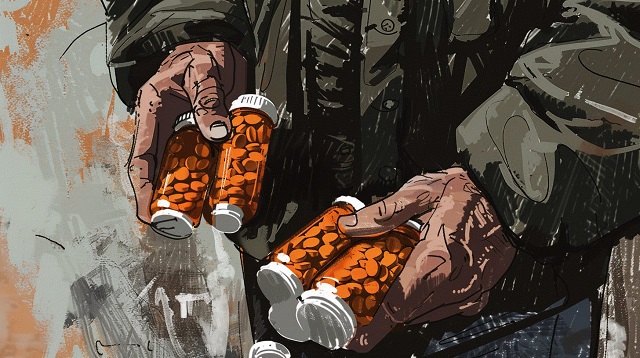
Canada’s ‘safer supply’ patients are receiving staggering amounts of narcotics
-
 conflict17 hours ago
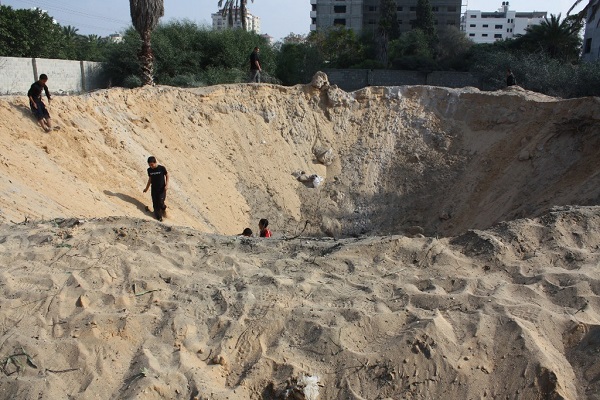
Immigration Experts Warn Possible Biden Plan To Import Gazan Refugees Would Be ‘National Security Disaster’
-
 Brownstone Institute1 day ago
The Predictable Wastes of Covid Relief
-
 conflict2 days ago
Over 200 Days Into War, Family Of American Hostage in Gaza Strives For Deal To Bring Son Home
-
 Bruce Dowbiggin18 hours ago
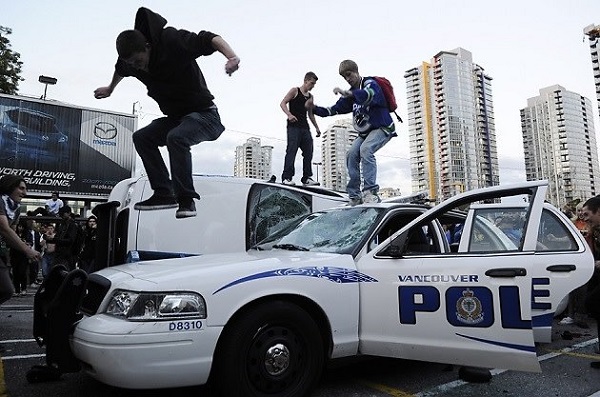
Do It Once, Shame On You; Do It Twice, Shame On Me
-
 illegal immigration12 hours ago
Panama Elects President Vowing Shutdown Of Key Routes To US Used By Over Half A Million Migrants