
Business
Rhetoric—not evidence—continues to dominate climate debate and policy



From the Fraser Institute
Myths, fallacies and ideological rhetoric continue to dominate the climate policy discussion, leading to costly and ineffective government policies,
according to a new study published today by the Fraser Institute, an independent, nonpartisan Canadian public policy think-tank.
“When considering climate policies, it’s important to understand what the science and analysis actually show instead of what the climate alarmists believe to be true,” said Kenneth P. Green, Fraser Institute senior fellow and author of Four Climate Fallacies.
The study dispels several myths about climate change and popular—but ineffective—emission reduction policies, specifically:
• Capitalism causes climate change: In fact, according to several environment/climate indices and the Fraser Institute’s annual Economic Freedom of the World Index, the more economically free a country is, the more effective it is at protecting its environment and combatting climate change.

• Even small-emitting countries can do their part to fight climate change: Even if Canada reduced its greenhouse gas emissions to zero, there would be
little to no measurable impact in global emissions, and it distracts people from the main drivers of emissions, which are China, India and the developing
world.
• Vehicle electrification will reduce climate risk and clean the air: Research has shown that while EVs can reduce GHG emissions when powered with
low-GHG energy, they often are not, and further, have offsetting environmental harms, reducing net environmental/climate benefits.
• Carbon capture and storage is a viable strategy to combat climate change: While effective at a small scale, the benefits of carbon capture and
storage to reduce global greenhouse gas emissions on a massive scale are limited and questionable.
“Citizens and their governments around the world need to be guided by scientific evidence when it comes to what climate policies make the most sense,” Green said.
“Unfortunately, the climate policy debate is too often dominated by myths, fallacies and false claims by activists and alarmists, with costly and ineffective results.”

Kenneth P. Green
Senior Fellow, Fraser Institute


Yakk Stack

(Only 5 Days Left!) Claim Yours Before It’s GONE FOREVER
Hey, all.
Imagine this…you’re slicing into that fresh loaf from Loblaws or just making a Wonder-ful sammich, the one you’ve bought hundreds of times over the years, and suddenly… ka-ching!
A fat check lands in your mailbox.
Not from a lottery ticket, not from a side hustle – from the very store that’s been quietly owing you money for two decades of illegal price fixing.
Sound too good to be true?
It’s real.
It’s court-approved.
And right now, on December 7, 2025, you’ve got exactly 5 days to grab your share before the door slams shut. Don’t let this slip away – keep reading, feel that spark of possibility ignite, and let’s get you paid.
Back in 2001, you were probably juggling work, kids, or just surviving on that weekly grocery run. Little did you know, while you were reaching for the President’s Choice white bread or those golden rolls, Loblaws and their cronies were playing a sneaky game of price-fixing. They jacked up the cost of packaged bread across Canada – every loaf, every bun, every sneaky sandwich slice. For 20 years. From coast to coast to coast.
And now…the courts have spoken. $500 million in settlements to make it right. That’s not pocket change – that’s your money, recycled back into your life.
Given the number of people who will be throwing in a claim…this ain’t gunna be life-changing cash…but also, given the cost of food in Canada, it’s better than sweet fuck all, which you will receive by NOT doing this.
If you’re a Canadian resident (yep, that’s you, unless you’re in Quebec with your own sweet deal), and you’ve ever bought bread for your family – not for resale, just real life – between January 1, 2001, and December 31, 2021… you’re in.
No receipts needed.
No fancy proofs.
Just you, confirming your story, and boom – eligible.
Quick check: Were you under 18 back then?
Or an exec at Loblaw?
Nah, skip it.
But for the rest of us everyday schleps…Jackpot.
Again…the clock’s ticking on this.
Claims opened on September 11, 2025, and slam shut on December 12, 2025.
That’s this Friday.
Payments roll out in 2026, 6-12 months later, straight to your bank or mailbox.
Here’s what you need to do…
- Breathe deep, click → HEREQuebec frens →HERE
- 10 second form that’s completed by your autofill…30 seconds off of a mobile device.
- Hit submit and wait for that sweet cash to hit your account.
Again…this won’t be life saving money and most certainly ain’t gunna hit your account before Christmas.
And before you go out an Griswald yourself into a depost on pool in the backyard…you may only end up with enough cash for the Jam-of-the-Month…the gift that truly does give, all year round…just be a little patient.
If you end up with a couple of backyard steaks in time for summer…
Some treats for the children or grandchildren…
Maybe just a donation to the foodbank…
This is what’s owed to you. Your neighbors. Friends. Family.
Take advantage!
Banks
To increase competition in Canadian banking, mandate and mindset of bank regulators must change
From the Fraser Institute
By Lawrence L. Schembri and Andrew Spence
Canada’s weak productivity performance is directly related to the lack of competition across many concentrated industries. The high cost of financial services is a key contributor to our lagging living standards because services, such as payments, are essential input to the rest of our economy.
It’s well known that Canada’s banks are expensive and the services that they provide are outdated, especially compared to the banking systems of the United Kingdom and Australia that have better balanced the objectives of stability, competition and efficiency.
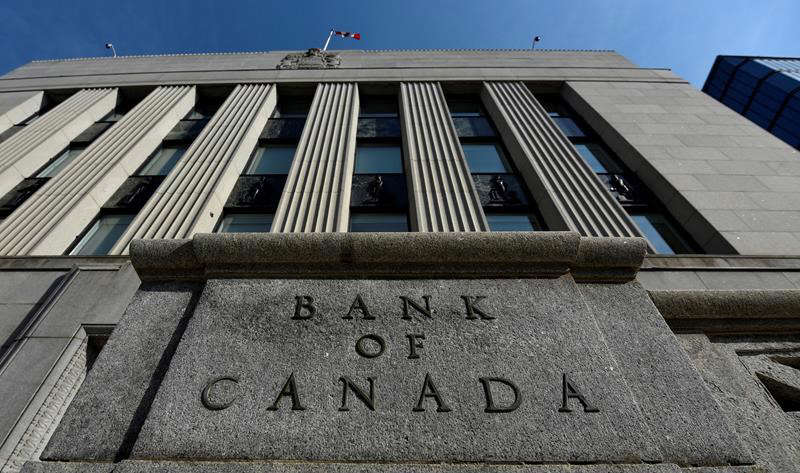
Canada’s banks are increasingly being called out by senior federal officials for not embracing new technology that would lower costs and improve productivity and living standards. Peter Rutledge, the Superintendent of Financial Institutions and senior officials at the Bank of Canada, notably Senior Deputy Governor Carolyn Rogers and Deputy Governor Nicolas Vincent, have called for measures to increase competition in the banking system to promote innovation, efficiency and lower prices for financial services.
The recent federal budget proposed several new measures to increase competition in the Canadian banking sector, which are long overdue. As a marker of how uncompetitive the market for financial services has become, the budget proposed direct interventions to reduce and even eliminate some bank service fees. In addition, the budget outlined a requirement to improve price and fee transparency for many transactions so consumers can make informed choices.
In an effort to reduce barriers to new entrants and to growth by smaller banks, the budget also proposed to ease the requirement that small banks include more public ownership in their capital structure.
At long last, the federal government signalled a commitment to (finally) introduce open banking by enacting the long-delayed Consumer Driven Banking Act. Open banking gives consumers full control over who they want to provide them with their financial services needs efficiently and safely. Consumers can then move beyond banks, utilizing technology to access cheaper and more efficient alternative financial service providers.
Open banking has been up and running in many countries around the world to great success. Canada lags far behind the U.K., Australia and Brazil where the presence of open banking has introduced lower prices, better service quality and faster transactions. It has also brought financing to small and medium-sized business who are often shut out of bank lending.
Realizing open banking and its gains requires a new payment mechanism called real time rail. This payment system delivers low-cost and immediate access to nonbank as well as bank financial service providers. Real time rail has been in the works in Canada for over a decade, but progress has been glacial and lags far behind the world’s leaders.
Despite the budget’s welcome backing for open banking, Canada should address the legislative mandates of its most important regulators, requiring them to weigh equally the twin objectives of financial system stability as well as competition and efficiency.
To better balance these objectives, Canada needs to reform its institutional framework to enhance the resilience of the overall banking system so it can absorb an individual bank failure at acceptable cost. This would encourage bank regulators to move away from a rigid “fear of failure” cultural mindset that suppresses competition and efficiency and has held back innovation and progress.
Canada should also reduce the compliance burden imposed on banks by the many and varied regulators to reduce barriers to entry and expansion by domestic and foreign banks. These agencies, including the Office of the Superintendent of Financial Institutions, Financial Consumer Agency of Canada, Financial Transactions and Reports Analysis Centre of Canada, the Canada Deposit Insurance Corporation plus several others, act in largely uncoordinated manner and their duplicative effort greatly increases compliance and reporting costs. While Canada’s large banks are able, because of their market power, to pass those costs through to their customers via higher prices and fees, they also benefit because the heavy compliance burden represents a significant barrier to entry that shelters them from competition.
More fundamental reforms are needed, beyond the measures included in the federal budget, to strengthen the institutional framework and change the regulatory mindset. Such reforms would meaningfully increase competition, efficiency and innovation in the Canadian banking system, simultaneously improving the quality and lowering the cost of financial services, and thus raising productivity and the living standards of Canadians.

Lawrence L. Schembri
Senior Fellow, Fraser Institute

Andrew Spence


Media bound to pay the price for selling their freedom to (selectively) offend

Sometimes An Ingrate Nation Pt. 2: The Great One Makes His Choice

Recent price declines don’t solve Toronto’s housing affordability crisis

From Exception to Routine. Why Canada’s State-Assisted Suicide Regime Demands a Human-Rights Review
-
National2 days ago
Media bound to pay the price for selling their freedom to (selectively) offend
-
Bruce Dowbiggin2 days ago
Sometimes An Ingrate Nation Pt. 2: The Great One Makes His Choice
-
Business1 day ago
Recent price declines don’t solve Toronto’s housing affordability crisis
-
 MAiD1 day ago
Health Canada report finds euthanasia now accounts for over 5% of deaths nationwide
-
 Daily Caller1 day ago
Tech Mogul Gives $6 Billion To 25 Million Kids To Boost Trump Investment Accounts
-
 Automotive21 hours ago
Power Struggle: Governments start quietly backing away from EV mandates
-
 Energy1 day ago
Unceded is uncertain
-
 Business22 hours ago
New Chevy ad celebrates marriage, raising children