
Business
Recent price declines don’t solve Toronto’s housing affordability crisis


From the Fraser Institute
By Jake Fuss and Austin Thompson
House prices in Toronto are declining. But the city’s affordability crisis is far from over—and government policies will likely make it worse.
While most Torontonians know there’s a crisis, the numbers make it clear. According to our new study, in 2023 (the latest year of available data), a family earning the city’s median after-tax income ($60,510) had to save $216,240 (the equivalent of 42.9 months of its after-tax income) for a 20 per cent downpayment on a typical home of any type (single-detached, semi-detached, condominium). But even if that family could somehow clear this monumental hurdle, it then had to dedicate 110.2 per cent of its after-tax income for monthly mortgage payments ($5,557)—a financial impossibility, unless the family can share housing costs (e.g. live-in tenants) or rely on financial support from elsewhere.
At this point, some long-time Toronto residents might recall their own difficult home purchase and think, “Hasn’t it always been this bad?” But just a decade ago, the hurdles weren’t nearly as high.
For example, in 2014 in Toronto, a 20 per cent downpayment cost 26.4 months of median after-tax family income—not 42.9 months. And the monthly mortgage payment on a typical home purchase required 56.0 per cent of median after-tax family income—not 110.2 per cent. So yes, typical homes have been broadly unaffordable for median-income-earning Toronto families for years, but it’s way worse now.
For Torontonians priced out of homeownership, renting has not offered much relief. In 2023, Toronto had the least affordable rents in Canada. The monthly cost of the median rental unit was $1,750, equal to 34.7 per cent of the median after-tax family income. That’s up from $1,110 (or 27.7 per cent of after-tax income) in 2014.

Fast-forward to today, and Torontonians should view reports of “crashing” home prices in the proper context. Typical home prices peaked at $1.27 million in the first quarter of 2022. By the second quarter of 2025, they had fallen to $1.00 million. That’s a marked decline, but prices remain well above pre-pandemic levels and far beyond the reach of most typical families.
And while the fall in house prices hasn’t been enough to restore affordability, it has caused a steep contraction in homebuilding as builders take a more cautious approach to development at a time when the city still needs more new homes to improve affordability.
This unhealthy dynamic, where price declines weigh heavily on housing construction, is made worse by government policy. Despite hundreds of millions of taxpayer dollars spent on housing initiatives by the federal government, the Ford government and Toronto City Hall, key provincial and municipal policies continue to impose needless costs and restrictions on new housing.
For example, Toronto homebuilders must endure costly wait times of more than two years for municipal approvals—more than three times longer than in Vancouver and seven times longer than in Edmonton. New high-rise developments in Toronto face municipal charges of $134,900 per unit compared to $38,100 in Ottawa and $6,900 in Edmonton. Meanwhile, the Ford government has backed away from several critical recommendations from its own Housing Task Force, which would make it easier to build more and denser housing, such as allowing fourplexes provincewide without special approval.
Of course, federal immigration policy, particularly over the last five years, has increased demand for new homes in Toronto and across the country. But even so, if not for lengthy approval processes, sky-high fees and restrictive land-use policies, many more new homes would be built in Toronto today despite declining prices. Homes only get built when buyers can cover the cost of construction plus a reasonable return on investment for developers. But when governments drive up costs, increase uncertainty and claim a significant share of the final sale price through fees and charges, projects that might otherwise proceed can become financially unviable. The result is less new housing, fewer options for buyers and a slower path to improved affordability.
To help improve housing affordability, Toronto needs a steady flow of new homebuilding. Torontonians should demand faster approvals, lower fees and more sensible rules on what types of homes can be built.

Jake Fuss
Director, Fiscal Studies, Fraser Institute

Austin Thompson
Senior Policy Analyst, Fraser Institute

From the Fraser Institute
By Gary Mauser
The government told Cape Bretoners they had two weeks to surrender their firearms to qualify for reimbursement or “buyback.” The pilot project netted a grand total of 22 firearms.
Five years after then-prime minister Justin Trudeau banned more than 100,000 types of so-called “assault-style firearms,” the federal government recently made the first attempt to force Canadians to surrender these firearms.
It didn’t go well.
The police chief in Cape Breton, Nova Scotia, volunteered to run a pilot “buyback” project, which began last month. The government told Cape Bretoners they had two weeks to surrender their firearms to qualify for reimbursement or “buyback.” The pilot project netted a grand total of 22 firearms.
This failure should surprise no one. Back in 2018, a survey of “stakeholders” warned the government that firearms owners wouldn’t support such a gun ban. According to Prime Minister Carney’s own Privy Council Office the “program faces a risk of non-compliance.” And federal Public Safety Minister Gary Anandasangaree was recently recorded admitting that the “buyback” is a partisan maneuver, and if it were up to him, he’d scrap it. What’s surprising is Ottawa’s persistence, particularly given the change in the government and the opportunity to discard ineffective policies.
So what’s really going on here?
One thing is for certain—this program is not, and never has been, about public safety. According to a report from the federal Department of Justice, almost all guns used in crimes in Canada, including in big cities such as Toronto, are possessed illegally by criminals, with many smuggled in from the United States. And according to Ontario’s solicitor general, more than 90 per cent of guns used in crimes in the province are illegally imported from the U.S. Obviously, the “buyback” program will have no effect on these guns possessed illegally by criminals.
Moreover, Canadian firearms owners are exceptionally law-abiding and less likely to commit murder than other Canadians. That also should not be surprising. To own a firearm in Canada, you must obtain a Possession and Acquisition Licence (PAL) from the RCMP after initial vetting and daily monitoring for possible criminal activity. Between 2000 and 2020, an average of 12 PAL-holders per year were accused of homicide, out of approximately two million PAL-holders. During that same 10-year period, the PAL-holder firearms homicide rate was 0.63 (per 100,000 PAL-holders) compared to 0.72 (per 100,000 adult Canadians)—that’s 14 per cent higher than the rate for PAL-holders.
In other words, neither the so-called “assault-style firearms” nor their owners pose a threat to the public.
And the government’s own actions belie its claims. If these firearms are such a threat to Canadians, why slow-roll the “buyback” program? If inaction increased the likelihood of criminality by law-abiding firearms owners, why wait five years before launching a pilot program in a small community such as Cape Breton? And why continue to extend the amnesty period for another year, which the government did last month at the same time its pilot project netted a mere 22 firearms?
To ask those questions is to answer them.
Another question—how much will the “buyback” program cost taxpayers?
The government continues to block any attempt to disclose the full financial costs (although the Canadian Taxpayers Federation has launched a lawsuit to try to force the government to honour its Access to Information Act request). But back in 2020 the Trudeau government said it would cost $200 million to compensate firearms owners (although the Parliamentary Budget Officer said compensation costs could reach $756 million). By 2024, the program had spent $67.2 million—remember, that’s before it collected a single gun. The government recently said the program’s administrative costs (safe storage, destruction of hundreds of thousands of firearms, etc.) would reach an estimated $1.8 billion. And according to Carney’s first budget released in November, his government will spend $364 million on the program this fiscal year—at a time of massive federal deficits and debt.
This is reminiscent of the Chretien government’s gun registry fiasco, which wound up costing more than $2 billion even after then-justice minister Allan Rock promised the registry program would “almost break even” after an $85 million initial cost. The Harper government finally scrapped the registry in 2012.
As the Carney government clings to the policies of its predecessor, Canadians should understand the true nature of Ottawa’s gun “buyback” program and its costs.

Gary Mauser
Professor Emeritus, Simon Fraser University
Alberta
Emissions Reduction Alberta offering financial boost for the next transformative drilling idea
From the Canadian Energy Centre
$35-million Alberta challenge targets next-gen drilling opportunities
‘All transformative ideas are really eligible’
Forget the old image of a straight vertical oil and gas well.
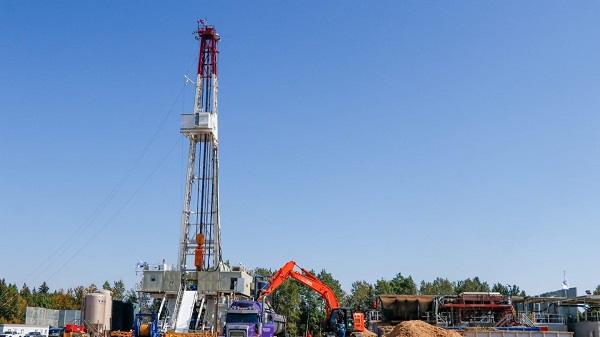
In Western Canada, engineers now steer wells for kilometres underground with remarkable precision, tapping vast energy resources from a single spot on the surface.
The sector is continually evolving as operators pursue next-generation drilling technologies that lower costs while opening new opportunities and reducing environmental impacts.
But many promising innovations never reach the market because of high development costs and limited opportunities for real-world testing, according to Emissions Reduction Alberta (ERA).
That’s why ERA is launching the Drilling Technology Challenge, which will invest up to $35 million to advance new drilling and subsurface technologies.
“The focus isn’t just on drilling, it’s about building our future economy, helping reduce emissions, creating new industries and making sure we remain a responsible leader in energy development for decades to come,” said ERA CEO Justin Riemer.
And it’s not just about oil and gas. ERA says emerging technologies can unlock new resource opportunities such as geothermal energy, deep geological CO₂ storage and critical minerals extraction.
“Alberta’s wealth comes from our natural resources, most of which are extracted through drilling and other subsurface technologies,” said Gurpreet Lail, CEO of Enserva, which represents energy service companies.
ERA funding for the challenge will range from $250,000 to $8 million per project.
Eligible technologies include advanced drilling systems, downhole tools and sensors; AI-enabled automation and optimization; low-impact rigs and fluids; geothermal and critical mineral drilling applications; and supporting infrastructure like mobile labs and simulation platforms.
“All transformative ideas are really eligible for this call,” Riemer said, noting that AI-based technologies are likely to play a growing role.
“I think what we’re seeing is that the wells of the future are going to be guided by smart sensors and real-time data. You’re going to have a lot of AI-driven controls that help operators make instant decisions and avoid problems.”
Applications for the Drilling Technology Challenge close January 29, 2026.


From Underdog to Top Broodmare

Landmark 2025 Study Says Near-Death Experiences Can’t Be Explained Away

STUDY: TikTok, Instagram, and YouTube Shorts Induce Measurable “Brain Rot”
Red Deer’s Jason Stephan calls for citizen-led referendum on late-term abortion ban in Alberta
-
 COVID-192 days ago
FDA says COVID shots ‘killed’ at least 10 children, promises new vaccine safeguards
-
 Alberta2 days ago
Net Zero goal is a fundamental flaw in the Ottawa-Alberta MOU
-
 Addictions2 days ago
Manitoba Is Doubling Down On A Failed Drug Policy
-
 Food2 days ago
Canada Still Serves Up Food Dyes The FDA Has Banned
-
 COVID-192 days ago
The dangers of mRNA vaccines explained by Dr. John Campbell
-
 Energy1 day ago
Canadians will soon be versed in massive West Coast LPG mega-project
-
 Alberta2 days ago
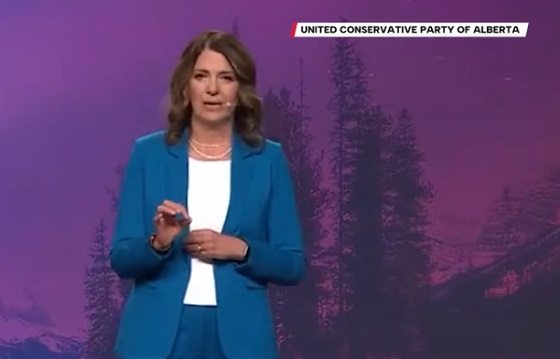
Keynote address of Premier Danielle Smith at 2025 UCP AGM
-
 Artificial Intelligence1 day ago
‘Trouble in Toyland’ report sounds alarm on AI toys