
Alberta
OPINION: Marlin Schmidt on water allocation in the Bow River Basin


Marlin Schmidt, MLA for Edmonton-Gold Bar, Environment and Parks Critic for Alberta’s Official NDP Opposition
The wise allocation of water in Alberta is essential to the sustainable development of an economy that works for all Albertans while preserving our precious natural heritage.
In 2007, Alberta recognized that limits for water allocation in the Bow River basin had been exceeded. No more new allocations of water have been allowed and Albertans have carefully managed the water resources in the basin since then. Fortress Mountain Holdings’ recent application to haul away and sell more than half of the 98 million litres a year it currently has the license to use threatens the careful management of water in the Bow River basin.
The original operators of Fortress Mountain were granted a license in 1968 to use 98 million litres of water per year from a tributary to Galatea Creek to prepare food and provide drinking water to skiers at the resort. The current owners claim that more than half of that allocation is not needed for those purposes and now want permission from Alberta Environment and Parks to haul 50 million litres of water per year away and sell it to the highest bidder. Allowing current license holders to subsidize their business operations with the sale of the unused portions of their licenses moves Alberta further away from the goal of sustainable development and would put the future of our river ecosystems at great risk.
Much has changed in the Bow River basin since 1968 – the demands on the river ecosystem have increased significantly with the twin pressures of population growth and climate change. Re-allocating 50 million litres of water would increase that pressure in a very ecologically sensitive area. It would also set a dangerous precedent for future allocations of water resources. If this application is approved, there’s nothing that will prevent future water license holders from selling their unused water allocations, and while the license holders may profit, our watersheds will pay the price.
Additionally, we must remember that this water allocation would be given priority over all other allocations granted after 1968 under Alberta’s “first-in-time first-in-right water” allocation system. This means that Fortress Mountain would receive priority for this use over a whole host of other users during times of extreme water shortage. Is selling bottled water really a higher priority for the people in the Bow River basin ahead of so many agricultural and municipal water uses? Most Albertans who have talked to me about this issue don’t think so.
Revenues from the sale of the water would apparently fund the goals that the owners have for the development of the resort, including environmentally sound development, living wages for staff, charitable and community activities, as well as reclamation of the site. I support those stated goals, but it should be the skiers who use the resort who pay for those activities. The other Bow River water users and the ecosystem should not be asked to pay for others’ enjoyment of a ski facility.
Alberta Environment and Parks must live up to its mandate of supporting sustainable development now and for future generations. Rejecting Fortress Mountain Holding’s water application would be a step in the right direction.
Marlin Schmidt
Environment & Parks Critic
Alberta’s Official NDP Opposition

Alberta
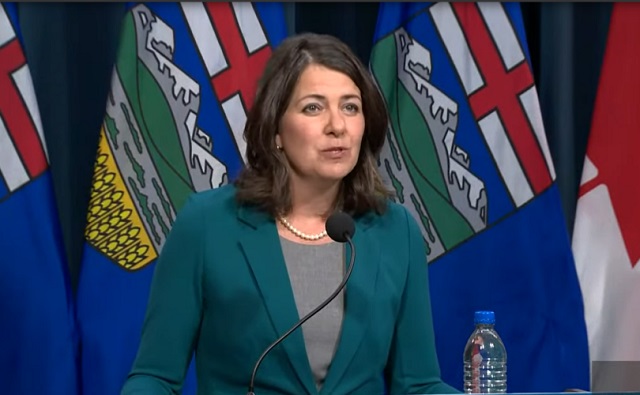
Danielle Smith warns arsonists who start wildfires in Alberta that they will be held accountable

From LifeSiteNews
The Alberta government has created an ad campaign highlighting the fact that most fires are caused by humans and not ‘climate change,’ as many left-leaning politicians claim.
In preparation for the so-called wildfire “season,” Alberta Premier Danielle Smith sternly warned anyone caught starting blazes in her province, including arsonists, that they will face charges and be held fully “liable” for all costs associated with the fires.
“As we approach the wildfire season, it is important to understand that 67% of wildfires in Alberta are started by people,” Smith posted Monday on X.
“If you start a wildfire, you can be charged, fined, and held liable for all costs associated with fighting the wildfire.”
Smith made the comments after last year revealing that most of the wildfires in her province (500 of the 650) were caused by humans and not “climate change,” as has been pushed by the legacy media and opposition politicians.
“All I know is in my province we have 650 fires and 500 of them were human caused,” she said, “so we have to make sure that when people know that when it’s dry out there and we get into forest fire season that they’re being a lot more careful because anytime you end up with an ignition that happens it can have devastating consequences.”
To go along with Smith’s Monday message, the Alberta government has also created an ad campaign highlighting the fact that most fires are caused by humans and not “climate change,” as many left-leaning politicians claim.
As reported by LifeSiteNews last year, Smith ordered arson investigators to look into why some of the wildfires that raged across the vast expanse of the province had “no known cause” shortly after they spread.
During the campaign of Alberta’s 2023 election, Smith, whose United Conservative Party won a majority government, had to pause to deal with many wildfires that suddenly, out of nowhere, ravaged the province. The fires came on suddenly and uncharacteristically considering the heavy snowfall in the province in early March and rain in April.
LifeSiteNews reported that despite the arrest of multiple arsonists, Canada’s mainstream media and the federal government have been pushing a narrative attributing the recent wildfires to “climate change.”
Indeed, in January, LifeSiteNews reported that a man from Quebec admitted to starting 14 forest fires himself. This put a chill to the legacy media’s push that the fires in the province were caused by “climate change.”
However, statistics from Canada’s National Fire Database show that wildfires have gone down in recent years and peaked in 1989.
As for Canadian Prime Minister Justin Trudeau, he has repeatedly used “climate change” and forest fires as a catalyst for propping up his government’s much-maligned carbon tax, which Smith opposes. He has blamed the fires on “climate change.”
A June 2017 peer-reviewed study by two scientists and a veteran statistician confirmed that most of the recent global warming data have been “fabricated by climate scientists to make it look more frightening.”
Trudeau has been calling for increased bans on Canada’s natural resources, of which Alberta has in abundance.
Smith has vowed to fight Trudeau on his attacks against Alberta’s oil and gas industry.
The reduction and eventual elimination of so-called “fossil fuels” and a transition to unreliable “green” energy has also been pushed by the World Economic Forum (WEF), the globalist group behind the socialist “Great Reset” agenda in which Trudeau and some of his cabinet are involved.
News release from Free Alberta Strategy
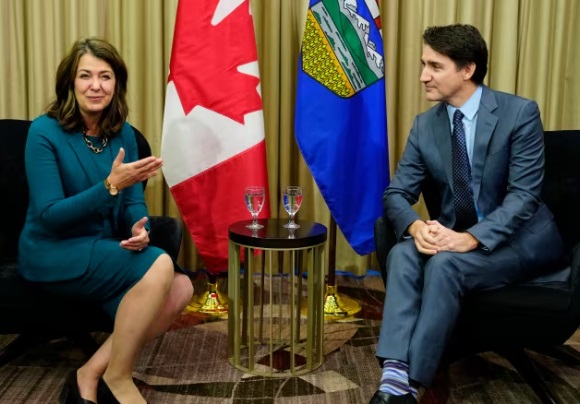
Premier Danielle Smith had a message for Ottawa last week.
Keep out.
On Wednesday, the Premier rolled out her latest weapon in the fight against federal intrusions into provincial jurisdiction.
If passed, Bill 18 – the Provincial Priorities Act – aims to align federal funding with provincial priorities, ensuring that said funding reflects Alberta’s interests.
The legislation stipulates that any agreements between the federal government and any provincial entities – including municipalities – must receive provincial approval to be considered valid.
Smith has already given it a nickname: “the stay-out-of-my-backyard bill.”
It’s an apt description of the legislation, especially considering that’s what the federal government has been doing for years – encroaching into Alberta’s jurisdiction.
The legislation shouldn’t come as a surprise to anyone.
We all know that most deals the Alberta government enters into with the federal government don’t work out for Albertans.
We end up paying more in federal taxes than gets spent in federal spending on the programs.
The programs come laden with restrictive conditions that undermine our autonomy, and are often detrimental to our ability to provide the services.
This is especially true with regard to the recent agreement between Ottawa and the provinces that allows the federal government to nationalize childcare.
The childcare agreement has come under heavy criticism due to funding shortfalls in the deal.
It also applies to housing, where despite Alberta accounting for 12% of the national population and experiencing the most rapid population growth, it received a mere 2.5% of the total $1.5 billion in federal housing funding last summer.
Jason Nixon, Minister of Seniors, Community and Social Services, is in charge of housing in Alberta – which is provincial jurisdiction.
On the latest rollout of conditional federal housing handouts, Nixon isn’t buying.
“We will not be bribed, with our own money, to increase the time it takes to get homes built with green energy that makes homes more expensive.”
The theory also applies to the federal government’s latest gambit – doing an end-around provincial negotiations and going directly to municipalities, who seem more interested in taking the money than the conditions attached.
Municipalities are provincial jurisdiction.
Bill 18 mandates that entities within Alberta’s jurisdiction, such as municipalities, universities, school boards, housing agencies, and health authorities, must seek the province’s approval before engaging in, modifying, extending, or renewing agreements with Ottawa.
Agreements between the federal government and provincial entities lacking Alberta’s endorsement will be deemed illegal under this legislation.
That’s Premier Smith’s message.
She’s had enough of it.
“It is not unreasonable for Alberta to demand fairness from Ottawa. They have shown time and again that they will put ideology before practicality, which hurts Alberta families and our economy. We are not going to apologize for continuing to stand up for Albertans so we get the best deal possible.
“Since Ottawa refuses to acknowledge the negative impacts of its overreach, even after losing battles at the Federal and Supreme Courts, we are putting in additional measures to protect our provincial jurisdiction to ensure our province receives our fair share of federal tax dollars and that those dollars are spent on the priorities of Albertans.”
Municipal Affairs Minister Ric McIver had additional thoughts:
“For years, the federal government has been imposing its agenda on Alberta taxpayers through direct funding agreements with cities and other provincial organizations. Not only does Alberta not receive its per capita share of federal taxpayer dollars, the money we do receive is often directed towards initiatives that don’t align with Albertan’s priorities.
“Albertans from all corners of the province expect our federal share of taxes for roads, infrastructure, housing and other priorities – not federal government political pet projects and programs in select communities.”
The Provincial Priorities Act is based on existing provincial legislation in Quebec – called “An Act Respecting the Ministère du Conseil executif” – which prohibits any municipal body from entering into or negotiating an agreement with the federal government or its agencies without express authorization from the Quebec government.
That’s right – the Quebec government has the same rule!
So, this boils down to the same argument we’ve been making for years – if Ottawa wants to step into our backyard, it must first seek Alberta’s approval.
Enough is enough – we won’t stand idly by as our interests are trampled upon.
It’s time for Ottawa to recognize Alberta’s autonomy and respect our right to determine our own future.
At the Free Alberta Strategy, we know that constant vigilance is necessary – for every fence we put up, the federal government tries to find a way around it.
We’ll continue to bring you information about what’s happening in Alberta’s backyard and fighting to keep Ottawa out.
The Free Alberta Strategy Team


Trudeau admits immigration too much for Canada to ‘absorb’ but keeps target at record high

Trudeau’s new online censorship law – Problems with Bill C-63 / the Online Arms Law

Western leadership’s detachment from reality is causing terror and death across the globe

Decarbonization deal opens new chapter in Alberta-Japan relationship
-
 Business2 days ago
Business investment key to addressing Canada’s productivity crisis
-
 Jordan Peterson2 days ago
Jordan Peterson slams CBC for only interviewing pro-LGBT doctors about UK report on child ‘sex changes’
-
 International2 days ago
Brussels NatCon conference will continue freely after court overturns police barricade
-
 Business2 days ago
Federal budget fails to ‘break the glass’ on Canada’s economic growth crisis
-
Alberta1 day ago
Danielle Smith warns arsonists who start wildfires in Alberta that they will be held accountable
-
 Economy2 days ago
Federal government remains intransigent on emissions cap despite dire warnings of harm
-
 Addictions2 days ago
Liberal MP blasts Trudeau-backed ‘safe supply’ drug programs, linking them to ‘chaos’ in cities
-
 Frontier Centre for Public Policy1 day ago
The Smallwood solution