
Business
Is there a cure for Alzheimer’s Disease?


The Alzheimer’s Lie That Made Big Pharma Billions
The collapse of the Amyloid theory
Remember Aduhelm? It was Biogen’s $56,000/year Alzheimer’s drug that didn’t even work.
Worse, it caused brain swelling, brain bleeding, and sudden falls in patients—and the FDA approved it anyway.
But the truth is, you don’t need deep pockets to treat Alzheimer’s. You just need to look at what Big Pharma can’t monetize.
This report exposes the real causes behind Alzheimer’s—and the cheap treatment options you should explore instead.
The following information is based on a report originally published by A Midwestern Doctor. Key details have been streamlined and editorialized for clarity and impact. Read the original report here.

This information comes from the work of medical researcher A Midwestern Doctor. For all the sources and details, read the full report below.
Why Isn’t There a Cure for Alzheimer’s Disease?
 |
Modern medicine is addicted to the biochemical model of disease because it creates a pipeline for expensive, patentable drugs, and it often leaves patients and their families in the dark, rather than empowered and in control.
It’s not about finding root causes. It’s about finding something you can bill for.
That’s why the industry has spent decades treating Alzheimer’s like a “chemical imbalance” in the brain caused by amyloid plaques—even though hundreds of trials targeting amyloid have failed.
The more the theory collapsed, the harder the system doubled down. Just like cholesterol and heart disease, the medical machine kept pushing the failed model long after it broke.
The amyloid hypothesis was unstoppable. Billions poured in. Researchers who questioned it were pushed to the margins.
Critics called it “amyloid mafia” because no alternative view got funded or even considered.
Meanwhile, real scientists were finding deeper drivers of Alzheimer’s. Things like chronic inflammation, metabolic dysfunction, and mitochondrial collapse.
But these discoveries never gained traction because they didn’t lead to blockbuster drugs.
The entire field locked onto a theory that would never cure the disease but could generate infinite research dollars.
By 2006, the amyloid hypothesis was in trouble. The failed trials and contradictory evidence began piling up and could no longer be ignored. So the medical establishment pivoted instead of admitting any error.
They claimed the real problem was a toxic oligomer called Aβ*56.
An article in Nature declared that they found the smoking gun. It became one of the most cited Alzheimer’s studies ever. The authors became stars. Pharma reinvested billions chasing a new chemical villain.
The field was saved! But there was no truth here, just a convenient new molecule used to justify research funding.
 |
The entire foundation of modern Alzheimer’s research rested on one “blockbuster discovery.” But what if the discovery never existed?
It was a scandal of epic proportions.
A neuroscientist reviewing experimental drug data in 2021 noticed suspicious Western blots. When he looked a little deeper, he found multiple Alzheimer’s papers filled with manipulated images, all traced back to the same author of the famous 2006 study.
So he kept digging. And what he uncovered was stunning!
At least 20 fraudulent papers tied to this researcher, 10 directly involving the molecule the entire amyloid theory now depended on.
The field’s “master proof” was built on completely fabricated data.
Let that sink in.
 |
The NIH was informed in early 2022. And guess what?
They did nothing about it.
Actually, they did worse than nothing—they gave the suspect researcher a $764,792 grant a few months later.
It wasn’t until 2024 that the paper was finally retracted, and even then the authors insisted the fraud didn’t change their conclusions.
Billions of dollars and two decades of research fueled by manipulated images—and the establishment still defended the theory today.
What a joke.
 |
Why are they protecting a disproven model? Why would they continue to push a hypothesis built on doctored data?
Because amyloid research is worth hundreds of billions of dollars—across drugs, trials, funding, and Medicare reimbursements. Seven million Alzheimer’s patients represent an enormous revenue stream.
And with no cure, they’re set to increase customers as people age.

If the amyloid theory collapses, so does the entire financial architecture tied to it. So the system pushes forward—regardless of fraud, failure, or human cost.
And the average person continues to trust this system.
 |
Big Pharma eventually produced monoclonal antibodies that cleared amyloid from the brain. The FDA called it a breakthrough. The investors celebrated. News headlines said there was hope.
Except there was a problem. A big problem. Removing amyloid didn’t actually help anyone.
The first drug, Aduhelm, didn’t improve cognition. At all.
In fact, an FDA advisory panel voted 10–0 against approval, calling it a disaster.
But the FDA approved it anyway. Three advisors resigned in protest, calling it the worst drug decision in modern history!
 |
Why was it so bad? Just take a look at these side effects:
• Brain swelling
• Brain bleeding
• Migraines
• Delirium
• Sudden falls
• Dangerous infusion reactions
Up to 41% of patients experienced serious brain complications.
And it costs a sickening $56,000 per year.
Congress actually launched an investigation. But the FDA still greenlit it—and even quietly approved the next two monoclonals, despite similarly weak results and similarly high risk.
Because it’s not about a cure.
The new drugs caused brain bleeding… but that wasn’t even the most disturbing part.
The incentives behind the approval process will shock you. Don’t miss the full report from A Midwestern Doctor.
Those second and third drugs weren’t much better.
They still caused massive brain swelling and bleeding, just at slightly lower percentages.
And their “benefits” were so tiny—slowing decline by a fraction of a point on a scale where patients need 1–2 points for them and their families to notice anything.
Despite aggressive marketing and FDA cheerleading, the market ultimately rejected these drugs. Aduhelm earned only $5 million before it was pulled. The replacements sold modestly but never lived up to the hype.
Why? Because people quickly realized they didn’t work. Hopeful families didn’t see any improvement. Doctors didn’t either. The risks outweighed the rewards, and thankfully people started to notice.
And yet the system keeps pushing the same model—even as evidence mounts that amyloid might be protective, not harmful.
 |
You read that right. Amyloid may actually be protective.
One of the few successful Alzheimer’s protocols, RECODE, treats amyloid as the brain’s attempt to shield itself from metabolic and inflammatory damage. So removing it may worsen the underlying disease.
This helps explain why amyloid-clearing drugs cause so much harm.
They very well may be ripping off the brain’s band-aids while exposing and ignoring the deeper wounds.
 |
Therapies that do help (and don’t cost an arm and a leg) remain completely ignored.
A trial using MCTs from coconut oil showed 80% of patients improved or stabilized over six months of use. That’s better than any amyloid drug in existence.
Patients around the world have reported similar benefits simply from adding coconut oil to their routine! No side effects. No brain bleeds. And of course, no $30,000 price tag.
 |
The Alzheimer’s story is really a story about American medicine. We don’t have a cure not because the disease is too complex, but because the system isn’t designed to cure anything.
It’s designed to manage your symptoms while profiting off of them.
Until we move away from profit-first frameworks and toward root-cause medicine, we’ll continue to lose the war on chronic disease.
Thankfully, we’re closer now than ever before to making this necessary shift.
If you or someone you love is facing cognitive decline, this report is essential reading. It explains the entire collapse of the amyloid model, the fraud no one wants to talk about, the real mechanisms behind Alzheimer’s, and the natural therapies that actually help.
This thread barely scratches the surface—the full article is one of the most important things you’ll ever read about Alzheimer’s.
Thanks for reading! This information was based on a report originally published by A Midwestern Doctor.
Key details were streamlined and editorialized for clarity and impact. Read the original report here.

Alberta
Emissions Reduction Alberta offering financial boost for the next transformative drilling idea

From the Canadian Energy Centre
$35-million Alberta challenge targets next-gen drilling opportunities
‘All transformative ideas are really eligible’
Forget the old image of a straight vertical oil and gas well.
In Western Canada, engineers now steer wells for kilometres underground with remarkable precision, tapping vast energy resources from a single spot on the surface.
The sector is continually evolving as operators pursue next-generation drilling technologies that lower costs while opening new opportunities and reducing environmental impacts.
But many promising innovations never reach the market because of high development costs and limited opportunities for real-world testing, according to Emissions Reduction Alberta (ERA).
That’s why ERA is launching the Drilling Technology Challenge, which will invest up to $35 million to advance new drilling and subsurface technologies.
“The focus isn’t just on drilling, it’s about building our future economy, helping reduce emissions, creating new industries and making sure we remain a responsible leader in energy development for decades to come,” said ERA CEO Justin Riemer.
And it’s not just about oil and gas. ERA says emerging technologies can unlock new resource opportunities such as geothermal energy, deep geological CO₂ storage and critical minerals extraction.
“Alberta’s wealth comes from our natural resources, most of which are extracted through drilling and other subsurface technologies,” said Gurpreet Lail, CEO of Enserva, which represents energy service companies.
ERA funding for the challenge will range from $250,000 to $8 million per project.
Eligible technologies include advanced drilling systems, downhole tools and sensors; AI-enabled automation and optimization; low-impact rigs and fluids; geothermal and critical mineral drilling applications; and supporting infrastructure like mobile labs and simulation platforms.
“All transformative ideas are really eligible for this call,” Riemer said, noting that AI-based technologies are likely to play a growing role.
“I think what we’re seeing is that the wells of the future are going to be guided by smart sensors and real-time data. You’re going to have a lot of AI-driven controls that help operators make instant decisions and avoid problems.”
Applications for the Drilling Technology Challenge close January 29, 2026.


From the Daily Caller News Foundation
The global war business scored record revenues in 2024 amid multiple protracted proxy conflicts across the world, according to a new industry analysis released on Monday.
The top 100 arms manufacturers in the world raked in $679 billion in revenue in 2024, up 5.9% from the year prior, according to a new Stockholm International Peace Research Institute (SIPRI) study. The figure marks the highest ever revenue for manufacturers recorded by SIPRI as the group credits major conflicts for supplying the large appetite for arms around the world.
“The rise in the total arms revenues of the Top 100 in 2024 was mostly due to overall increases in the arms revenues of companies based in Europe and the United States,” SIPRI said in their report. “There were year-on-year increases in all the geographical areas covered by the ranking apart from Asia and Oceania, which saw a slight decrease, largely as a result of a notable drop in the total arms revenues of Chinese companies.”
Notably, Chinese arms manufacturers saw a large drop in reported revenues, declining 10% from 2023 to 2024, according to SIPRI. Just off China’s shores, Japan’s arms industry saw the largest single year-over-year increase in revenue of all regions measured, jumping 40% from 2023 to 2024.
American companies dominate the top of the list, which measures individual companies’ revenue, with Lockheed Martin taking the top spot with $64,650,000,000 of arms revenue in 2024, according to the report. Raytheon Technologies, Northrop Grumman and BAE Systems follow shortly after in revenue,
The Czechoslovak Group recorded the single largest jump in year-on-year revenue from 2023 to 2024, increasing its haul by 193%, according to SIPRI. The increase is largely driven by their crucial role in supplying arms and ammunition to Ukraine.
The Pentagon contracted one of the group’s subsidiaries in August to build a new ammo plant in the U.S. to replenish artillery shell stockpiles drained by U.S. aid to Ukraine.
“In 2024 the growing demand for military equipment around the world, primarily linked to rising geopolitical tensions, accelerated the increase in total Top 100 arms revenues seen in 2023,” the report reads. “More than three quarters of companies in the Top 100 (77 companies) increased their arms revenues in 2024, with 42 reporting at least double-digit percentage growth.”


From Underdog to Top Broodmare

Landmark 2025 Study Says Near-Death Experiences Can’t Be Explained Away

STUDY: TikTok, Instagram, and YouTube Shorts Induce Measurable “Brain Rot”
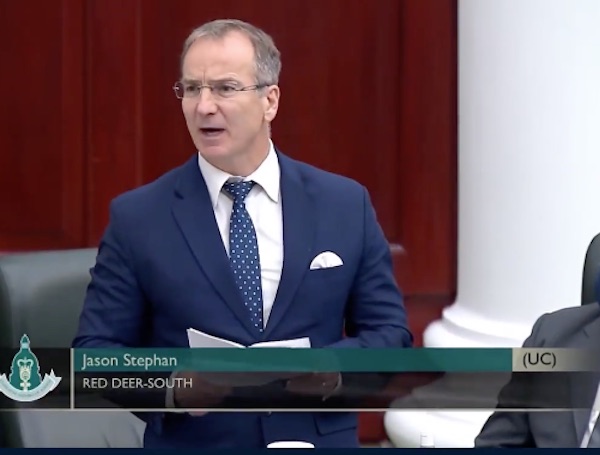
Red Deer’s Jason Stephan calls for citizen-led referendum on late-term abortion ban in Alberta
-
 Agriculture2 days ago
Health Canada pauses plan to sell unlabeled cloned meat
-
 Artificial Intelligence1 day ago
Google denies scanning users’ email and attachments with its AI software
-
 Health1 day ago
Organ donation industry’s redefinitions of death threaten living people
-
 National2 days ago
Alleged Liberal vote-buying scandal lays bare election vulnerabilities Canada refuses to fix
-
 COVID-191 day ago
FDA says COVID shots ‘killed’ at least 10 children, promises new vaccine safeguards
-
 Alberta1 day ago
Net Zero goal is a fundamental flaw in the Ottawa-Alberta MOU
-
 Addictions2 days ago
The Death We Manage, the Life We Forget
-
 Addictions1 day ago
Manitoba Is Doubling Down On A Failed Drug Policy