
Business
The Climate-Risk Industrial Complex and the Manufactured Insurance Crisis

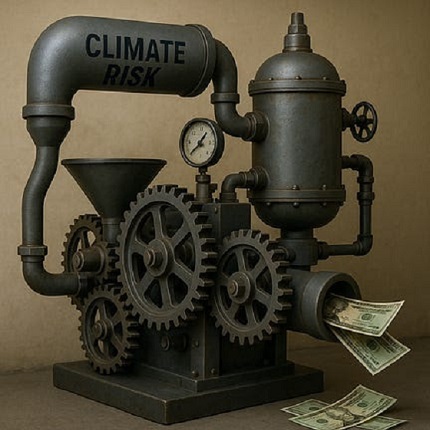


We’ve all seen the headlines — such as the below — loudly proclaiming that due to climate change the insurance industry is in crisis, and even that total economic collapse may soon follow. For instance, since 2019, the New York Times, one of the primary champions of this narrative, has published more than 1,250 articles on climate change and insurance.
 |
Climate advocates have embraced the idea of a climate-fueled insurance crisis as it neatly ties together the hyping of extreme weather and alleged financial consequences for ordinary people. The oft-cited remedy to the claimed crisis is, of course, to be found in energy policy: “The only long-term solution to preserve an insurable future is to transition from fossil fuels and other greenhouse-gas-emitting industries.”
However, it is not just climate advocates promoting the notion that climate change is fundamentally threatening the insurance industry. A climate-risk industrial complex has emerged in this space and a lot of money is being made by a lot of people. The virtuous veneer of climate advocacy serves to discourage scrutiny and accountability.
In this series, I take a deep dive into the “crisis,” its origins, its politics, and its tenuous relationship with actual climate science.¹ Today, I kick things off by sharing three fundamental, and perhaps surprising, facts that go a long way to explaining why insurance prices have increased and who benefits:
- Property/casualty insurance is raking in record profits;
- Insurance underwriting returns vary year-to-year but show no trend;
- “Climate” risk assessments are unreliable and a cause of higher insurance prices.
Grab a cup of coffee, settle in, and let’s go . . .
If you value the deep dives such as this one, which you will find no where else,
please consider supporting THB with a paid subscription!
Property/casualty insurance is raking in record profits
This year is shaping up to be an extremely profitable year for the property/casualty (P/C) insurance industry. In a report covering the first six months of 2025, the National Association of Insurance Commissioners (NAIC) shares the good news (emphasis added):
Despite heavy catastrophe losses, including the costliest wildfires on record, the U.S. Property & Casualty (P&C) industry recorded its best mid-year underwriting gain in nearly 20 years.
In the second half of 2025, returns got even better for the P/C industry. According to a new report from S&P Global Intelligence, as reported by Carrier Management (emphases added):
For U.S. P/C insurers, it just doesn’t get any better than this. . . With a combined ratio of 89.1 for third-quarter 2025, the U.S. property/casualty insurance industry had its best quarter in at least a quarter of a century—and maybe longer, S&P Market Intelligence said.
Taking a longer view, the extremely profitable 2025 follows significant industry profitability in 2023 and 2024, according to the National Association of Insurance Commissioners (NAIC), as shown in the figure below.
 |
What accounts for the high profits?
The NAIC explains:
Strong premium growth, driven largely by rate increases, coupled with abating economic inflation . . . Net income nearly doubled compared to last year, attributed to the underwriting profit and healthy investment returns.
Below, I’ll pick up the issue of rate increases and explore one big reason why they have occurred.
If there is a P/C insurance crisis, it may be in figuring out how to explain its impressive returns at the same time that the climate lobby is telling everyone that the industry is collapsing.
Insurance underwriting returns vary year-to-year but show no trend
The P/C industry makes money primarily in two ways — underwriting of insurance policies and investment income. Typically, insurance companies seek to break even, or lose little, on insurance underwriting and earn profits on investment income.
Warren Buffet, in his 2009 letter to Berkshire Hathaway shareholders, explained concisely how the P/C industry works:
Our property-casualty (P/C) insurance business has been the engine behind Berkshire’s growth and will continue to be. It has worked wonders for us. We carry our P/C companies on our books at $15.5 billion more than their net tangible assets, an amount lodged in our “Goodwill” account. These companies, however, are worth far more than their carrying value– and the following look at the economic model of the P/C industry will tell you why.
Insurers receive premiums upfront and pay claims later. In extreme cases, such as those arising from certain workers’ compensation accidents, payments can stretch over decades. This collect-now, pay-later model leaves us holding large sums– money we call “float”– that will eventually go to others. Meanwhile, we get to invest this float for Berkshire’s benefit. Though individual policies and claims come and go, the amount of float we hold remains remarkably stable in relation to premium volume. Consequently, as our business grows, so does our float.
If premiums exceed the total of expenses and eventual losses, we register an underwriting profit that adds to the investment income produced from the float. This combination allows us to enjoy the use of free money– and, better yet, get paid for holding it. Alas, the hope of this happy result attracts intense competition, so vigorous in most years as to cause the P/C industry as a whole to operate at a significant underwriting loss. This loss, in effect, is what the industry pays to hold its float. Usually this cost is fairly low, but in some catastrophe-ridden years the cost from underwriting losses more than eats up the income derived from use of float.
The figure below, using data from the Insurance Information Institute, shows the underwriting performance of the P/C industry from 2004 to 2024.

The time series shows lots of ups and downs, but no trend — by design, as Buffet explained. There are certainly no signs of an underwriting crisis, much less indications of a coming collapse. The P/C industry looks both well-managed and healthy.
“Climate” risk assessments are unreliable and a cause of higher insurance prices
 |
If profits are high and underwriting is steady, then what then accounts for increasing insurance prices — which, as of the end of 2024, increased 29 consecutive quarters in a row (above)?
A big part of the answer is Climate Change. But not how you might think.
A decade ago, Mark Carney — then Governor of the Bank of England and today Prime Minister of Canada — gave an influential speech titled, Breaking the Tragedy of the Horizon – climate change and financial stability.
Carney argued that the insurance industry was at risk due to changes in the climatology of extreme events that were not properly understood by experts in the industry:
[T]here are some estimates that currently modelled losses could be undervalued by as much as 50% if recent weather trends were to prove representative of the new normal. . . Such developments have the potential to shift the balance between premiums and claims significantly, and render currently lucrative business non-viable.
Coincident with Carney’s 2015 speech, the Bank of England released a report on the impacts of climate change on the insurance industry, and noted that conventional catastrophe modeling did not effectively consider a changing climate. The Bank of England kicked off a longstanding campaign to convince people that extreme weather events were changing dramatically in the near term.
Subsequently, in 2019, the Bank of England required firms to assess their “climate risks.” This guidance was updated last week. In (a coordinated) parallel effort, national and international organizations focused on “climate risk” to the financial sector started multiplying — such as the Climate Financial Risk Forum and the Network for Greening the Financial System.
The climate-risk industry was born circa 2019.
There is an incredible story to be told here (and Jessica Weinkle is the go-to expert), but for today, the key takeaways are that (a) the notion of “climate risk” to finance, including insurance, led to the creation of a “climate risk” industry, and (b) within this industry, a new family of risk assessment vendors emerged, promising to satisfy the new demands for climate risk disclosure and risk modeling.
The Global Association of Risk Professionals (GARP) explains:
As this [“climate risk”] was a new discipline for most financial firms, many turned to third party providers (“vendors”) to help them with different areas of expertise. There are now many physical risk data vendors, which offer a variety of services to financial institutions. While vendor offerings often sound alike — providing projections of how physical risk could evolve for locations across a range of risks and climate scenarios — they can differ significantly in terms of features, approach, or suitability for specific needs, and the underlying models that these providers use differ in methodology and assumptions.
GARP just published an incredibly important study that assessed how 13 different “climate risk” vendors modeled physical risk and risk of loss across 100 individual structures around the world.²
The results are shocking — given how they are used in industry, but should not be surprising — given what we know about modeling.
There is absolutely no consensus across vendors about “climate risk” in terms of either physical risks or risks of loss.
The figure below shows, for 100 different properties around the world, the differences in modeled 200-year flood risk across the 13 vendors, as refelcted in modeled flood heights. The maximum difference among the properties across vendors is about 12 meters and the median difference is about 2.7 meters — These are huge differences.
 |
In terms of risk of loss, the models have an even greater spread. The figure below shows that for a modeled 200-year flood, 10 properties are modeled by at least one vendor to have total losses (100%) while another vendor models the same properties to have no losses, under the exact same event. The median difference between minimum and maximum modeled loss ratio is 30% — Another huge number.³
 |
Insurance pricing does not scale linearly with increasing modeled loss ratios. Consider that the difference between a modeled 10% loss ratio and a 40% loss ratio (i.e., the 30% median difference across vendors from above) might result in a 10x increase in insurance rates. Risk adverse insurers have incentives to price at the most extreme modeled loss.
Model inaccuracies, unceratinties, spread, and ambiguity are feature not flaws when it comes to making money. “Climate risk” modeling has resulted in a financial windfall not just for the newly created climate analytics industry, but also for insurers and reinsurers who have seen the envelope of modeled losses expand. The need for new models, of questionabl fidelity, are necessary to satisfy industry guidance and government regulators.
The net result has been a seemingly scientific justification for increasing insurance rates.⁴
There are of course real changes in physical risk, exposure, and vulnerability as well as the regulatory and political contexts within which the P/C industry must operate. The discipline of catastrophe modeling has long integrated these factors to assess risks. As insurance policies and reinsurance contracts are typically implemented on a one-year basis, and this well-positioned to incorporate changng perceptions of risk, this series will explore why a new “climate risk” assessment industry was even needed in the first place.
What about that “climate risk”? THB readers will be very familiar with the science of extreme events and climate change, which, as reported here, happens to be consistent with both the Intergovernmental Panel on Climate Change and those in the legacy catastrophe modeling community.
One of those modeling firms, Verisk, gets the last word for today:
We estimate about 1% of year-on-year increases in AAL [Average Annual Loss] are attributable to climate change. Such small shifts can easily get lost behind other sources of systematic loss increase discussed in this report, such as inflation and exposure growth. The random volatility from internal climate variability also dwarfs the small positive climate change signal.
Before you go — If you learned something from this post, please click that “ Like” button — More likes mean that THB rises in the Substack algorithm and gets in front of more readers. More readers mean that THB reaches more people in more places, broadening understandings and discussions of complex issues where science meets politics. Thanks!
Comments, questions, discussion, critique — all welcome!
If you value THB please consider subscribing. Paid subscribers make THB go and also have access to THB Pro, with PDFs of some of my books, THB Insider, Five Figures, and paywalled THB posts. Plus you get to participate in the lively, diverse, and informed discussions under every post. Thank you!


From LifeSiteNews

Of the Royal Canadian Mounted Police’s fleet of 1,200 drones, 79% pose national security risks due to them being made in China
Canada’s top police force spent millions on now near-useless and compromised security drones, all because they were made in China, a nation firmly controlled by the Communist Chinese Party (CCP) government.
An internal report by the Royal Canadian Mounted Police (RCMP) to Canada’s Senate national security committee revealed that $34 million in taxpayer money was spent on a fleet of 973 Chinese-made drones.
Replacement drones are more than twice the cost of the Chinese-made ones between $31,000 and $35,000 per unit. In total, the RCMP has about 1,228 drones, meaning that 79 percent of its drone fleet poses national security risks due to them being made in China.
The RCMP said that Chinese suppliers are “currently identified as high security risks primarily due to their country of origin, data handling practices, supply chain integrity and potential vulnerability.”
In 2023, the RCMP put out a directive that restricted the use of the made-in-China drones, putting them on duty for “non-sensitive operations” only, however, with added extra steps for “offline data storage and processing.”
The report noted that the “Drones identified as having a high security risk are prohibited from use in emergency response team activities involving sensitive tactics or protected locations, VIP protective policing operations, or border integrity operations or investigations conducted in collaboration with U.S. federal agencies.”
The RCMP earlier this year said it was increasing its use of drones for border security.
Senator Claude Carignan had questioned the RCMP about what kind of precautions it uses in contract procurement.
“Can you reassure us about how national security considerations are taken into account in procurement, especially since tens of billions of dollars have been announced for procurement?” he asked.
“I want to make sure national security considerations are taken into account.”
The use of the drones by Canada’s top police force is puzzling, considering it has previously raised awareness of Communist Chinese interference in Canada.
Indeed, as reported by LifeSiteNews, earlier in the year, an RCMP internal briefing note warned that agents of the CCP are targeting Canadian universities to intimidate them and, in some instances, challenge them on their “political positions.”
The final report from the Foreign Interference Commission concluded that operatives from China may have helped elect a handful of MPs in both the 2019 and 2021 Canadian federal elections. It also concluded that China was the primary foreign interference threat to Canada.
Chinese influence in Canadian politics is unsurprising for many, especially given former Prime Minister Justin Trudeau’s past admiration for China’s “basic dictatorship.”
As reported by LifeSiteNews, a Canadian senator appointed by Trudeau told Chinese officials directly that their nation is a “partner, not a rival.”
China has been accused of direct election meddling in Canada, as reported by LifeSiteNews.
As reported by LifeSiteNews, an exposé by investigative journalist Sam Cooper claims there is compelling evidence that Carney and Trudeau are strongly influenced by an “elite network” of foreign actors, including those with ties to China and the World Economic Forum. Despite Carney’s later claims that China poses a threat to Canada, he said in 2016 the Communist Chinese regime’s “perspective” on things is “one of its many strengths.”


Europe calls it transparency, but it looks a lot like teaching the internet who’s allowed to speak.
|
When the European Commission fined X €120 million on December 5, officials could not have been clearer. This, they said, was not about censorship. It was just about “transparency.”
They repeat it so often you start to wonder why.
The fine marks the first major enforcement of the Digital Services Act, Europe’s new censorship-driven internet rulebook.
It was sold as a consumer protection measure, designed to make online platforms safer and more accountable, and included a whole list of censorship requirements, fining platforms that don’t comply.
The Commission charged X with three violations: the paid blue checkmark system, the lack of advertising data, and restricted data access for researchers.
None of these touches direct content censorship. But all of them shape visibility, credibility, and surveillance, just in more polite language.
Musk’s decision to turn blue checks into a subscription feature ended the old system where establishment figures, journalists, politicians, and legacy celebrities got verification.
The EU called Musk’s decision “deceptive design.” The old version, apparently, was honesty itself. Before, a blue badge meant you were important. After, it meant you paid. Brussels prefers the former, where approved institutions get algorithmic priority, and the rest of the population stays in the queue.
The new system threatened that hierarchy. Now, anyone could buy verification, diluting the aura of authority once reserved for anointed voices.
Reclaim The Net is sustained by its readers.
Your support fuels the fight for privacy, free speech and digital civil liberties while giving you access to exclusive content, practical how to guides, premium features and deeper dives into freedom-focused tech.
Become a supporter here.
However, that’s not the full story. Under the old Twitter system, verification was sold as a public service, but in reality it worked more like a back-room favor and a status purchase.
The main application process was shut down in 2010, so unless you were already famous, the only way to get a blue check was to spend enough money on advertising or to be important enough to trigger impersonation problems.
Ad Age reported that advertisers who spent at least fifteen thousand dollars over three months could get verified, and Twitter sales reps told clients the same thing. That meant verification was effectively a perk reserved for major media brands, public figures, and anyone willing to pay. It was a symbol of influence rationed through informal criteria and private deals, creating a hierarchy shaped by cronyism rather than transparency.
Under the new X rules, everyone is on a level playing field.
Government officials and agencies now sport gray badges, symbols of credibility that can’t be purchased. These are the state’s chosen voices, publicly marked as incorruptible. To the EU, that should be a safeguard.
The second and third violations show how “transparency” doubles as a surveillance mechanism. X was fined for limiting access to advertising data and for restricting researchers from scraping platform content. Regulators called that obstruction. Musk called it refusing to feed the censorship machine.
The EU’s preferred researchers aren’t neutral archivists. Many have been documented coordinating with governments, NGOs, and “fact-checking” networks that flagged political content for takedown during previous election cycles.
They call it “fighting disinformation.” Critics call it outsourcing censorship pressure to academics.
Under the DSA, these same groups now have the legal right to demand data from platforms like X to study “systemic risks,” a phrase broad enough to include whatever speech bureaucrats find undesirable this month.
The result is a permanent state of observation where every algorithmic change, viral post, or trending topic becomes a potential regulatory case.
The advertising issue completes the loop. Brussels says it wants ad libraries to be fully searchable so users can see who’s paying for what. It gives regulators and activists a live feed of messaging, ready for pressure campaigns.
The DSA doesn’t delete ads; it just makes it easier for someone else to demand they be deleted.
That’s how this form of censorship works: not through bans, but through endless exposure to scrutiny until platforms remove the risk voluntarily.
The Commission insists, again and again, that the fine has “nothing to do with content.”
That may be true on a direct level, but the rules shape content all the same. When governments decide who counts as authentic, who qualifies as a researcher, and how visibility gets distributed, speech control doesn’t need to be explicit. It’s baked into the system.
Brussels calls it user protection. Musk calls it punishment for disobedience. This particular DSA fine isn’t about what you can say, it’s about who’s allowed to be heard saying it.
TikTok escaped similar scrutiny by promising to comply. X didn’t, and that’s the difference. The EU prefers companies that surrender before the hearing. When they don’t, “transparency” becomes the pretext for a financial hammer.
The €120 million fine is small by tech standards, but symbolically it’s huge.
It tells every platform that “noncompliance” means questioning the structure of speech the EU has already defined as safe.
In the official language of Brussels, this is a regulation. But it’s managed discourse, control through design, moderation through paperwork, censorship through transparency.
And the louder they insist it isn’t, the clearer it becomes that it is.
|
|
|
|
Reclaim The Net Needs Your
With your help, we can do more than hold the line. We can push back. We can expose censorship, highlight surveillance overreach, and amplify the voices of those being silenced.
If you have found value in our work, please consider becoming a supporter.
Your support does more than keep us independent. It also gives you access to exclusive content, deep dive exploration of freedom focused technology, member-only features, and practical how-to posts that help you protect your rights in the real world.
You help us expand our reach, educate more people, and continue this fight.
Please become a supporter today.
Thank you for your support.
|


Tech Mogul Gives $6 Billion To 25 Million Kids To Boost Trump Investment Accounts
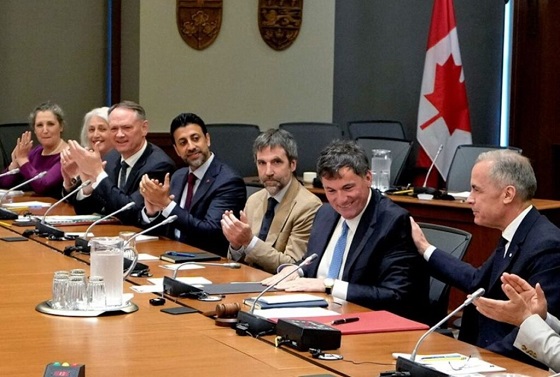
Carney’s Toronto cabinet meetings cost $530,000

Recent price declines don’t solve Toronto’s housing affordability crisis

Health Canada report finds euthanasia now accounts for over 5% of deaths nationwide

Alberta Sports Hall of Fame Announces Class of 2026 Inductees

Integration Or Indignation: Whose Strategy Worked Best Against Trump?

While Trump has southern border secure, hundreds of thousands of illegal immigrants still flooding in from Canada
-
 Business2 days ago
Why Does Canada “Lead” the World in Funding Racist Indoctrination?
-
 Media2 days ago
They know they are lying, we know they are lying and they know we know but the lies continue
-
 Focal Points2 days ago
The West Needs Bogeymen (Especially Russia)
-
 Censorship Industrial Complex1 day ago
US Condemns EU Censorship Pressure, Defends X
-
 Dan McTeague1 day ago
Will this deal actually build a pipeline in Canada?
-
 Banks1 day ago
To increase competition in Canadian banking, mandate and mindset of bank regulators must change
-
 Business1 day ago
Loblaws Owes Canadians Up to $500 Million in “Secret” Bread Cash
-
 Opinion1 day ago
The day the ‘King of rock ‘n’ roll saved the Arizona memorial