
Alberta
Province to respond to 358 COVID-19 cases in High River – Alberta Update


From the Province of Alberta
Update 35: COVID-19 pandemic in Alberta (April 17 at 4:15 p.m.)
There are now 1,124 confirmed recovered cases of COVID-19 in the province.
A total of 239 new cases have been reported, bringing the total number of cases to 2,397.
No Albertans have died since the last report.
Latest updates
- Cases have been identified in all zones across the province:
- 1,673 cases in the Calgary zone
- 429 cases in the Edmonton zone
- 135 cases in the North zone
- 77 cases in the Central zone
- 68 cases in the South zone
- 15 cases in zones yet to be confirmed
- Of these cases, there are currently 60 people in hospital, 13 of whom have been admitted to intensive care units (ICU).
- 400 cases are suspected of being community acquired.
- A total of 50 Albertans have died from COVID-19 to date: 34 in the Calgary zone, eight in the Edmonton zone, seven in the North zone, and one in the Central zone.
- To date, 270 cases have been confirmed at continuing care facilities, and 32 residents at these facilities have died.
- There have been 89,144 people tested for COVID-19 and a total of 92,805 tests performed by the lab. In the last 24 hours, 3,831 people have been tested.
- Effective immediately, Alberta Health Services will assume administration of Manoir du Lac in McLennan. Learn more here.
- The 310 call centre is assuming standard hours of operation, from 8:15 a.m. to 6 p.m. weekdays, and will not be open this weekend.
Expanded testing
- Alberta Health continues to closely monitor outbreak situations, and is working with employers and Alberta Health Services to expand testing to asymptomatic residents and staff in continuing care facilities and outbreak sites in the coming days. All workers from all companies at outbreak sites will be offered this opportunity.
- Additionally, Alberta’s testing capacity is rapidly expanding and anyone with symptoms anywhere in the province can now be tested.
- Those with symptoms of COVID-19, including cough, fever, runny nose, sore throat, or shortness of breath, should complete an online COVID-19 self-assessment. After completing the form, there is no need to call 811.
- Alberta’s testing capacity is currently approximately 7,000 samples per day, and the laboratory network is working to increase this capacity.
Camping reservations temporarily suspended
- Alberta Parks has suspended online campsite reservations and is refunding customers who have booked up to May 19.
- The decision is in line with other jurisdictions, such as Ontario, British Columbia, Saskatchewan and Parks Canada, which have also suspended or delayed camping reservations.
Wastewater management
- As the regulator of municipal wastewater systems, Environment and Parks is aware of reports from municipalities that some homeowners are flushing inappropriate items down toilets, such as disinfectant wipes or paper towels.
- Albertans should avoid flushing items not intended for toilets because they can block sanitary lines, create service disruptions and cause sewer backups.
Temporary suspension of applications for emergency social services funding
- Effective April 21, the Government of Alberta will be temporarily suspending applications for emergency social services funding to charities, not-for-profits and civil society organizations to support their COVID-19 response.
- Government has received more than 600 applications for the $30-million fund. Current applications are being reviewed, and approvals for urgent requests will occur before reopening application intake.
Mental health supports
- Confidential supports are available to help with mental health concerns. The Mental Health Help Line at 1-877-303-2642 and the Addiction Help Line at 1-866-332-2322 are available between 7 a.m. and 11 p.m., seven days a week.
- Online resources provide advice on handling stressful situations or ways to talk with children.
Family violence prevention
- A 24-hour Family Violence Information Line is available at 310-1818 to get anonymous help in more than 170 languages.
- Alberta’s One Line for Sexual Violence is available at 1-866-403-8000, from 9 a.m. to 9 p.m.
- Information sheets and other resources on family violence prevention are available at alberta.ca/COVID19.
Quick facts
- The most important measure Albertans can take to prevent respiratory illnesses, including COVID-19, is to practise good hygiene.
- This includes cleaning your hands regularly for at least 20 seconds, avoiding touching your face, coughing or sneezing into your elbow or sleeve, and disposing of tissues appropriately.
- For recommendations on protecting yourself and your community, visit alberta.ca/COVID19.
- All Albertans need to work together to overcome COVID-19. Albertans are asked to share acts of kindness they have experienced in their community during this difficult time by using the hashtag #AlbertaCares.

Alberta
Red Deer Doctor critical of Alberta’s COVID response to submit report to Danielle Smith this May

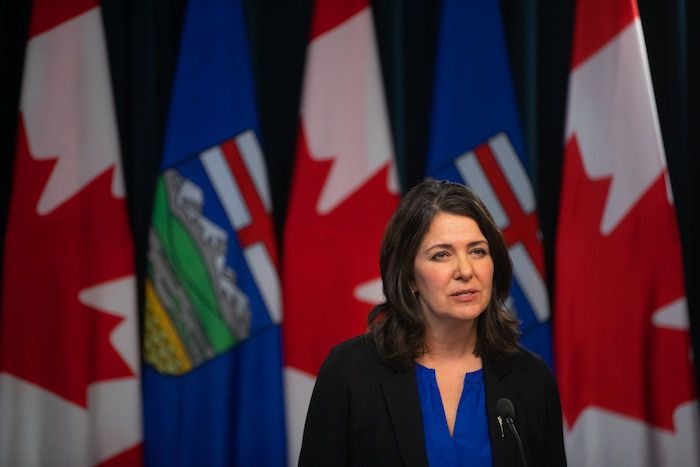
From LifeSiteNews
Leading the task force is Dr. Gary Davidson, who was skeptical of mandates at the time.
Alberta Premier Danielle Smith will soon be receiving a little-known report she commissioned which tasked an Alberta doctor who was critical of the previous administration’s handling of COVID to look into how accurate the province’s COVID data collection was, as well as the previous administration’s decision-making process and effectiveness.
As noted in a recent Globe and Mail report, records it obtained show that just less than one month after becoming Premier of Alberta in November of 2022, Smith tasked then-health minister Jason Copping to create the COVID data task force.
Documents show that the Alberta government under Smith gave the new task force, led by Dr. Gary Davidson – who used to work as an emergency doctor in Red Deer, Alberta – a sweeping mandate to look at whether the “right data” was obtained during COVID as well as to assess the “integrity, validity, reliability and quality of the data/information used to inform pandemic decisions” by members of Alberta Health Services (AHS).
As reported by LifeSiteNews in 2021, Davidson said during the height of COVID that the hospital capacity crisis in his province was “created,” was not a new phenomenon, and had nothing to do with COVID.
“We have a crisis, and we have a crisis because we have no staff, because our staff quit, because they’re burned out, they’re not burnt out from COVID,” Davidson said at the time.
Davidson also claimed that the previous United Conservative Party government under former Premier Jason Kenney had been manipulating COVID statistics.
In comments sent to the media, Smith said that in her view it was a good idea to have a “contrarian perspective” with Davidson looking at “everything that happened with some fresh eyes.”
“I needed somebody who was going to look at everything that happened with some fresh eyes and maybe with a little bit of a contrarian perspective because we’ve only ever been given one perspective,” she told reporters Tuesday.
“I left it to [Davidson] to assemble the panel with the guidance that I would like to have a broad range of perspectives.”
Smith took over from Kenney as leader of the UCP on October 11, 2022, after winning the leadership of the party. The UCP then won a general election in May 2023. Kenney was ousted due to low approval ratings and for reneging on promises not to lock Alberta down during COVID.
After assuming her role as premier, Smith promptly fired the province’s top doctor, Deena Hinshaw, and the entire AHS board of directors, all of whom oversaw the implementation of COVID mandates.
Under Kenney, thousands of nurses, doctors, and other healthcare and government workers lost their jobs for choosing to not get the jabs, leading Smith to say – only minutes after being sworn in – that over the past year the “unvaccinated” were the “most discriminated against” group of people in her lifetime.
As for AHS, it still is promoting the COVID shots, for babies as young as six months old, as recently reported by LifeSiteNews.
Task force made up of doctors both for and against COVID mandates
In addition to COVID skeptic Dr. Gary Davidson, the rather secretive COVID task force includes other health professionals who were critical of COVID mandates and health restrictions, including vaccine mandates.
The task force was given about $2 million to conduct its review, according to The Globe and Mail, and is completely separate from another task force headed by former Canadian MP Preston Manning, who led the Reform Party for years before it merged with another party to form the modern-day Conservative Party of Canada.
Manning’s task force, known as the Public Health Emergencies Governance Review Panel (PHEGRP), released its findings last year. It recommend that many pro-freedom policies be implemented, such as strengthening personal medical freedoms via legislation so that one does not lose their job for refusing a vaccine, as well as concluding that Albertans’ rights were indeed infringed upon.
The Smith government task force is run through the Health Quality Council of Alberta (HQCA) which is a provincial agency involved in healthcare research.
Last March, Davidson was given a project description and terms of reference and was told to have a final report delivered to Alberta’s Health Minister by December of 2023.
As of now, the task force’s final report won’t be available until May, as per Andrea Smith, press secretary to Health Minister Adriana LaGrange, who noted that the goal of the task force is to look at Alberta’s COVID response compared to other provinces.
According to the Globe and Mail report, another person working on the task force is anesthetist Blaine Achen, who was part of a group of doctors that legally challenged AHS’s now-rescinded mandatory COVID jab policy for workers.
Some doctors on the task force, whom the Globe and Mail noted held “more conventional views regarding the pandemic,” left it only after a few meetings.
In a seeming attempt to prevent another draconian crackdown on civil liberties, the UCP government under Smith has already taken concrete action.
The Smith government late last year passed a new law, Bill 6, or the Public Health Amendment Act, that holds politicians accountable in times of a health crisis by putting sole decision-making on them for health matters instead of unelected medical officers.

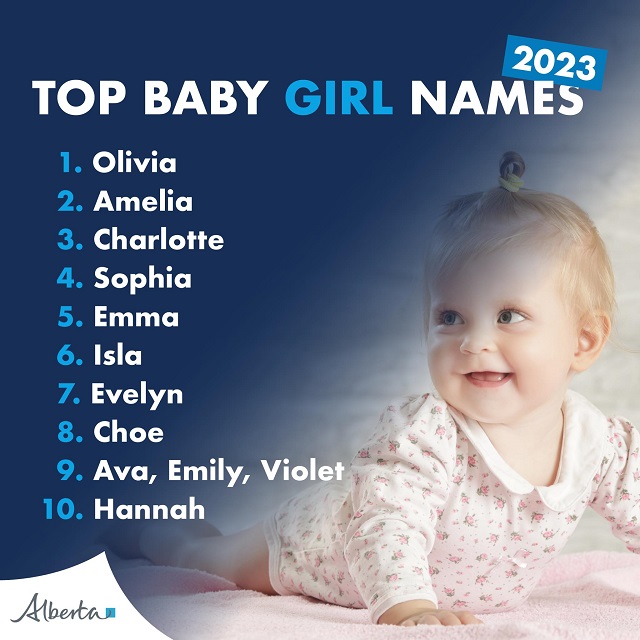
Olivia and Noah continue to reign as top baby names in 2023.

Olivia and Noah are once again topping the lists in Alberta, highlighting the enduring appeal of the names. Olivia maintains a record setting streak as the most popular girls name in Alberta for the 11th year in a row, while Noah remains top pick for boys’ names for a fifth consecutive year.
“Congratulations to those who welcomed a new addition to their family in 2023. Bringing a child into the world is a truly momentous occasion. Whether the name you chose was in the top 10 or one of a kind, these names are only the beginning of the endless possibilities that lie ahead for each child. I look forward to supporting this generation by ensuring Alberta remains a place where they can thrive.”
In choosing names for their new arrivals, parents appear to have found inspiration in a variety of places. Some parents may have been inspired by plants like Ivy, Rose, Juniper, Poppy, Azalea or in nature like Wren, River, Meadow and Flora.
Others may have taken a literary approach with names like Bennett, Sawyer, Juliet and Atticus or been inspired by notable names from religious texts like Eve, Noah, Mohammed and Gabriel.
As always, popular culture may have had an influence through famous musicians (Aretha, Lennon, Presley, Hendrix), athletes (Beckham, Crosby, Evander), and even fairytale princesses (Tiana, Jasmine, Aurora, Ariel, Belle).
Quick facts
- A total of 47,263 births were registered in Alberta in 2023
- Notable changes to the early 2020s lists:
- Evelyn rose to seventh place on the girls’ names list after tying for 19th place in 2022.
- Emily returned to the top 10 list for girls after taking a short break in 2021 and 2022 after a 10-year stretch in the top 10 that started in 2010.
- Violet has cracked the top 10 list for the first time in at least four decades, tying with Ava and Emily in ninth place.
- The top 10 boys’ names remain the same as last year but with a slight change in order.
- Historically, girls’ names that held the No. 1 spot for the longest consecutive time period include:
- Olivia: 11 years (2013-2023)
- Jessica: six years (1990-1995)
- Emily: five years (1998-2002)
- Historically, boys’ names that held the No. 1 spot for the longest consecutive time period include:
- Ethan: nine years (2001-2009)
- Liam: seven years (2010-2016)
- Matthew: five years (1995-1999)
- Noah: five years (2019-2023)
- Parents have up to one year to register their child’s birth. As a result, the list of 2023 baby names and birth statistics may change slightly.
Boys’ names and frequency – top 10 names 2018-23
(In brackets is the number of babies with each name)
| Place | Boy Names (2023) | Boy Names
(2022) |
Boy Names (2021) | Boy Names (2020) | Boy Names (2019) | Boy Names (2018) |
| 1 | Noah (276) | Noah (229) | Noah (274) | Noah (239) | Noah (275) | Liam (225) |
| 2 | Liam (181) | Liam (176) | Jack (220) | Oliver (229) | Liam (234) | Oliver (212) |
| 3 | Oliver (178) | Theodore (173) | Oliver (208) | Liam (206) | Oliver (225) | Noah (199) |
| 4 | Theodore (173) | Oliver (172) | Liam (198) | Benjamin (182) | Ethan (213) | Ethan (188) |
| 5 | Jack (153) | Jack (159) | Theodore (191) | William (178) | Jack (198) | Logan (182)
Lucas (182) |
| 6 | Henry (146) | William (146) | William (174) | Jack (169) | William (185) | Jacob (181) |
| 7 | Lucas (140) | Benjamin (138) | Ethan (162) | Lucas (163) | Lucas (174) | William (178) |
Girls’ names and frequency – top 10 names 2018-2023
(In brackets is the number of babies with each name)
| Place | Girl Names (2023) | Girl Names
(2022) |
Girl Names (2021) | Girl Names (2020) | Girl Names (2019) | Girl Names (2018) |
| 1 | Olivia (210) | Olivia (192) | Olivia (210) | Olivia (236) | Olivia (229) | Olivia (235) |
| 2 | Amelia (145) | Sophia (152) | Charlotte (166) | Emma (184) | Charlotte (188) | Emma (230) |
| 3 | Sophia
(138) |
Emma (149) | Ava (165) | Charlotte (161) | Sophia (181) | Charlotte (175) |
| 4 | Charlotte
(135) |
Amelia (133) | Emma (164) | Ava (159) | Emma (178) | Emily (164) |
| 5 | Emma (133) | Harper (125) | Amelia (161) | Sophia (151) | Ava (161) | Ava (161) |
| 6 | Isla (120) | Charlotte (117) | Sophia (137) | Amelia (145) | Amelia (159) | Abigail (153) |
| 7 | Evelyn (114) | Ava (115) | Isla (135) | Isla (133) | Emily (150) | Harper (150) |
| 8 | Chloe (101)
Violet (101) |
Isla (101) | Abigail (120)
Chloe (120) |
Emily (127) | Abigail (141) | Sophia (146) |
| 9 | Ava (99) Emily (99) |
Lily (100) | Evelyn (119) | Lily (123) | Hannah (137) | Amelia (145) |
| 10 | Hannah (98)
Hazel (98) |
Chloe (92) | Aria (112) | Abigail (114) | Elizabeth (124) | Elizabeth (130) |
Related information

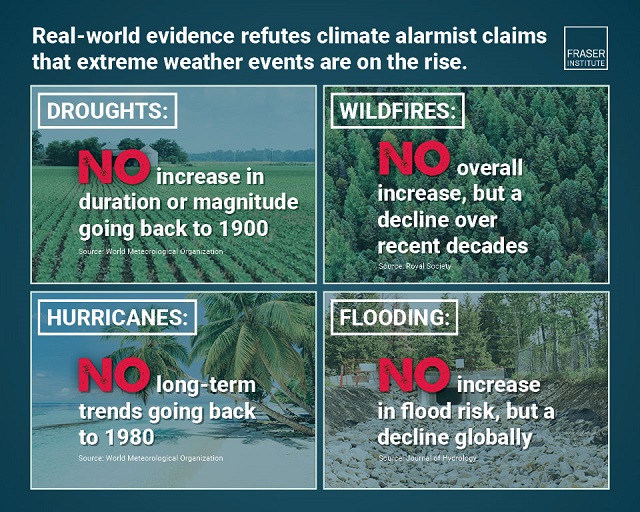
Extreme Weather and Climate Change
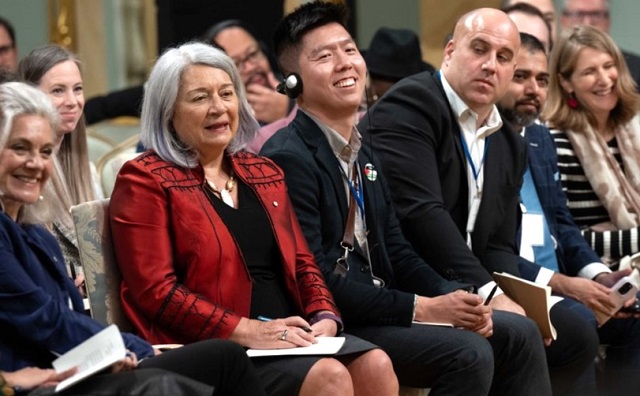
Canada’s Governor General slammed for hosting partisan event promoting Trudeau’s ‘hate speech’ bill

Telegram founder tells Tucker Carlson that US intel agents tried to spy on user messages

Canada’s economy has stagnated despite Ottawa’s spin
Danielle Smith warns arsonists who start wildfires in Alberta that they will be held accountable

Canadian receives one-year jail sentence, lifetime firearms ban for setting church on fire
German parliament passes law allowing minors to change their legal gender once a year
-
 Energy1 day ago
A Wealth-Creating Way of Reducing Global CO2 Emissions
-
 conflict1 day ago
Col. Douglas Macgregor: US is ‘facing disaster’ as it funds overseas wars while bankrupt
-
 COVID-192 days ago
WHO Official Admits the Truth About Passports
-
 Alberta2 days ago
Province to stop municipalities overcharging on utility bills
-
 COVID-1917 hours ago
Inquiry shows Canadian gov’t agencies have spent $10 million on social media ads for COVID jabs
-
 International2 days ago
UN attacks stay-at-home motherhood as ‘gender inequality’
-
 Business17 hours ago
Federal government’s ‘fudget budget’ relies on fanciful assumptions of productivity growth
-
 Energy2 days ago
Reflections on Earth Day