
Internet
Jordan Peterson moves to US, says Trudeau’s Canada may soon become ‘totalitarian hell hole’


From LifeSiteNews

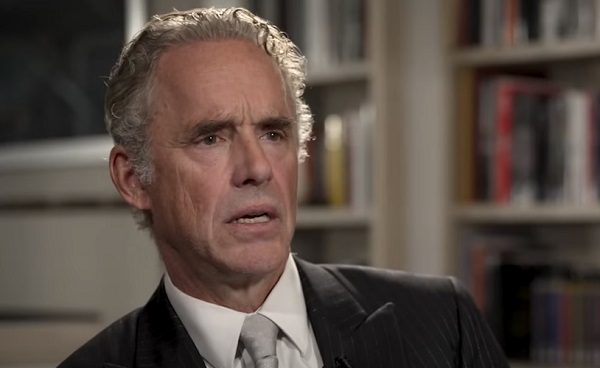
Popular Canadian psychologist Dr. Jordan Peterson has moved to the United States, citing new censorship laws in the works from the Trudeau government, which he said would make living in Canada akin to being in a ‘totalitarian hell hole.’
Popular Canadian psychologist Dr. Jordan Peterson has moved to the United States, citing as one reason new censorship laws in the works from the Trudeau government, which he said would make living in Canada akin to being in a “totalitarian hell hole.”
Peterson made the announcement in a recent podcast with his daughter, Mikhaila Peterson Fuller. The father and daughter talked about a host of different things, but Mikhaila at one point said, “Welcome to moving to America formally.”
“I guess that’s what happened, isn’t it?” said Peterson. “Is this the big announcement?”
Thanks to the authoritarian Liberal thugs in our government, Canada has lost a national treasure.
Jordan Peterson has announced that he is officially moving to the States.
This made me sad. pic.twitter.com/wlHFAjiZ82
— 🅾️ Kat Kanada (@KatKanada_TM) December 12, 2024
When it comes to the Trudeau government, he took direct aim at its Bill C-63, or the Online Harms Act. Put forth under the guise of protecting children from exploitation online, the bill seeks to expand the scope of “hate speech” prosecutions, and even desires to target such speech retroactively.
The law also calls for the creation of a Digital Safety Commission, a digital safety ombudsperson, and the Digital Safety Office, all tasked with policing internet content.
“[With] the new legislation that the Liberals are attempting to push through Bill C-63, I’d be living in a totalitarian hell hole if that legislation passes, and it could well pass,” he said.
“The tax situation is out of hand. The government in Canada at the federal level is incompetent beyond belief and it’s become uncomfortable for me in my neighborhood in Toronto,” he added.
He went on to note how living in the United States, where his daughter Mikhaila resides, comes with “decided advantages.”
Peterson observed that another reason for ditching his hometown of Toronto for sunny Florida was his ongoing battle with the College of Psychologists and Behavioural Analysts of Ontario.
“The issue with the College of Psychologists is very annoying, to say the least,” he said.
He has been embattled with the CPO after it mandated he undergo social media “training” to keep his license after he made posts on X, formerly Twitter, criticizing Trudeau and LGBT activists. He recently noted how the CPO offered him a deal to “be bought” in which the legal fees owed to them after losing his court challenge could be waived, but only if he agreed to quit his job as a psychologist.
Peterson recently demanded an apology from Trudeau after the Canadian prime minister accused him of being funded by Russian state media.
For his part, he has been critical of Trudeau and his Liberal government for years.


From LifeSiteNews
Google claims that multiple media reports are misleading and that nothing has changed with its service.
Tech giant Google is claiming that reports earlier this week released by multiple major media outlets are false and that it is not using emails and attachments to emails for its new Gemini AI software.
Fox News, Breitbart, and other outlets published stories this week instructing readers on how to “stop Google AI from scanning your Gmail.”
“Google shared a new update on Nov. 5, confirming that Gemini Deep Research can now use context from your Gmail, Drive and Chat,” Fox reported. “This allows the AI to pull information from your messages, attachments and stored files to support your research.”
Breitbart likewise said that “Google has quietly started accessing Gmail users’ private emails and attachments to train its AI models, requiring manual opt-out to avoid participation.”
Breitbart pointed to a press release issued by Malwarebytes that said the company made the changed without users knowing.
After the backlash, Google issued a response.
“These reports are misleading – we have not changed anyone’s settings. Gmail Smart Features have existed for many years, and we do not use your Gmail content for training our Gemini AI model. Lastly, we are always transparent and clear if we make changes to our terms of service and policies,” a company spokesman told ZDNET reporter Lance Whitney.
Malwarebytes has since updated its blog post to now say they “contributed to a perfect storm of misunderstanding” in their initial reporting, adding that their claim “doesn’t appear to be” true.
But the blog has also admitted that Google “does scan email content to power its own ‘smart features,’ such as spam filtering, categorization, and writing suggestions. But this is part of how Gmail normally works and isn’t the same as training Google’s generative AI models.”
Google’s explanation will likely not satisfy users who have long been concerned with Big Tech’s surveillance capabilities and its ongoing relationship with intelligence agencies.
“I think the most alarming thing that we saw was the regular organized stream of communication between the FBI, the Department of Homeland Security, and the largest tech companies in the country,” journalist Matt Taibbi told the U.S. Congress in December 2023 during a hearing focused on how Twitter was working hand in glove with the agency to censor users and feed the government information.
If you use Google and would like to turn off your “smart features,” click here to visit the Malwarebytes blog to be guided through the process with images. Otherwise, you can follow these five steps courtesy of Unilad Tech.
- Open Gmail on Desktop and press the cog icon in the top right to open the settings
- Select the ‘Smart Features’ setting in the ‘General’ section
- Turn off the ‘Turn on smart features in Gmail, Chat, and Meet’
- Find the Google Workplace smart features section and opt to manage the smart feature settings
- Switch off ‘Smart features in Google Workspace’ and ‘Smart features in other Google products’
On November 11, a class action lawsuit was filed against Google in the U.S. District Court for the Northern District of California. The case alleges that Google violated the state’s Invasion of Privacy Act by discreetly activating Gemini AI to scan Gmail, Google Chat, and Google Meet messages in October 2025 without notifying users or seeking their consent.




From Underdog to Top Broodmare

Federal major projects list raises questions
Google denies scanning users’ email and attachments with its AI software

Crown seeks to punish peaceful protestor Chris Barber by confiscating his family work truck “Big Red”

Poilievre says West Coast Pipeline MOU is no guarantee

Health Canada indefinitely pauses plan to sell unlabeled cloned meat after massive public backlash

Alberta and Ottawa ink landmark energy agreement
-
 COVID-192 days ago
The dangers of mRNA vaccines explained by Dr. John Campbell
-
 Alberta2 days ago
Keynote address of Premier Danielle Smith at 2025 UCP AGM
-
 Artificial Intelligence2 days ago
‘Trouble in Toyland’ report sounds alarm on AI toys
-
 National1 day ago
Media bound to pay the price for selling their freedom to (selectively) offend
-
 Daily Caller2 days ago
Tom Homan Predicts Deportation Of Most Third World Migrants Over Risks From Screening Docs
-
 Energy2 days ago
Canadians will soon be versed in massive West Coast LPG mega-project
-
 Bruce Dowbiggin1 day ago
Sometimes An Ingrate Nation Pt. 2: The Great One Makes His Choice
-
 Business5 hours ago
Canada’s future prosperity runs through the northwest coast